
Lake Como is a landscape that slows the pulse. Its deep waters mirror the surrounding peaks, and the air carries a stillness that feels almost medicinal. For travellers aged 50 to 70 seeking rest and wellness, a spa day here offers more than pampering—it offers genuine restoration. But the experience varies wildly depending on where you go, when you book, and what you expect. This practical guide walks you through the essentials: how to book, what is included, the accessibility of changing rooms and pools, sensible pacing, and local etiquette. We steer you toward calm venues over lively ones, because your day should feel like a long, quiet exhale.
 AI-edited
Which spa should I choose for a calm, restorative day?
For a quiet, restorative day, choose QC Terme San Pellegrino for an authentic thermal experience, or the T Spa at Grand Hotel Tremezzo for lake views and luxury. Both prioritise calm over crowds.
Lake Como is not known for natural thermal springs on its shores, but the region offers two distinct spa experiences. The most authentic thermal option lies inland, at QC Terme San Pellegrino in the Val Brembana. It is a public thermal spa rather than a hotel facility, so anyone can book it. Admission covers the whole wellness circuit (the operator counts 45 separate practices) and includes a robe, a towel and a pair of slippers. A five-hour entry starts at €58 and an open-ended day entry at €74, though the centre notes that prices vary with the date and the availability of each session. It opens daily at 09:00 and closes at 23:00 from Sunday to Thursday, midnight on Friday and Saturday. Children under 14 and pregnant women are not admitted.
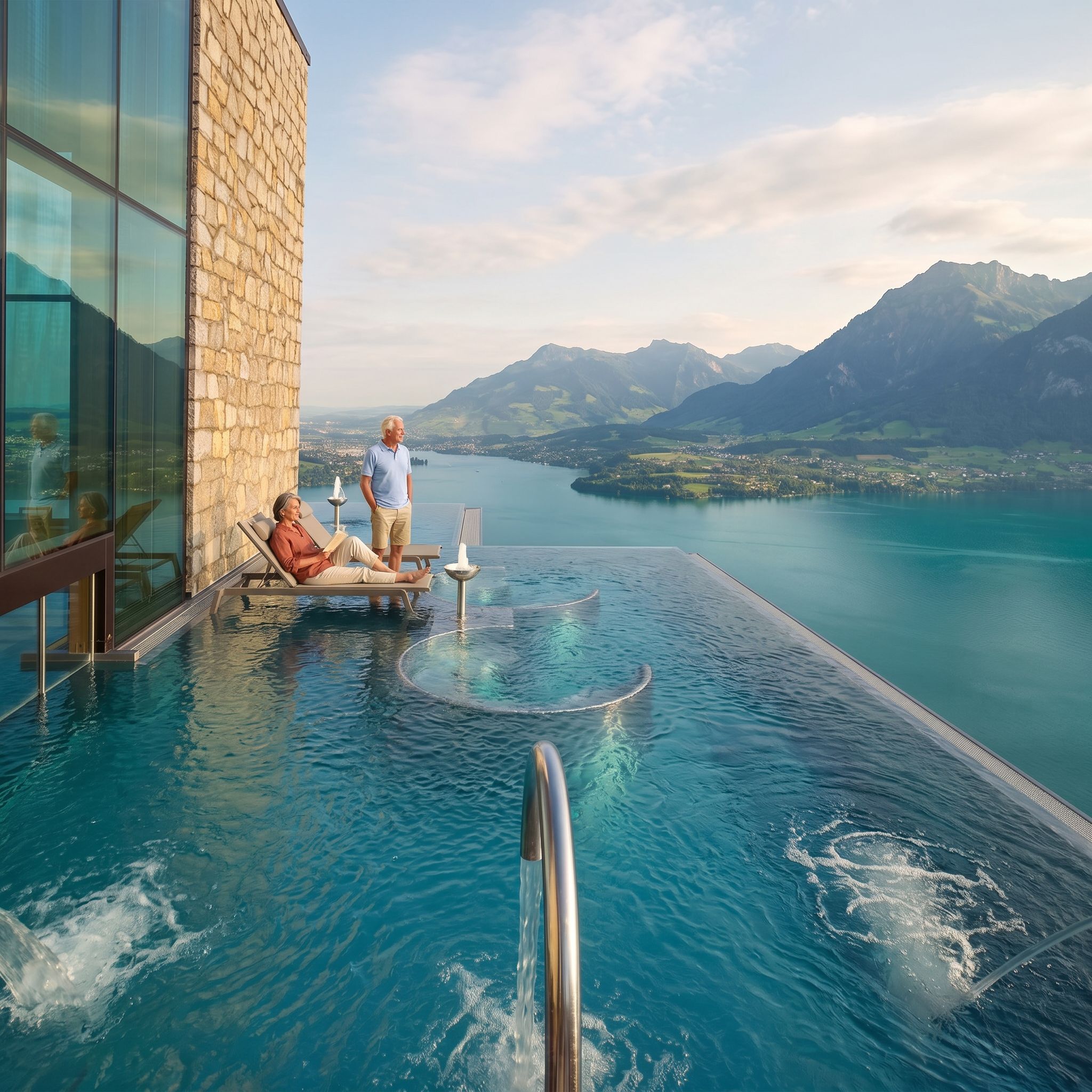
For a luxury spa day with lake views, the T Spa at Grand Hotel Tremezzo has an infinity pool with an outdoor jacuzzi, a panoramic sauna with lake views, an aromatic steam bath and a tepidarium. There is no simple day ticket: the hotel states that external guests may use the T Spa by booking a treatment of at least 50 minutes, while the floating lake pool and the beach stay reserved for residents. Fifty-minute massages are €200 on the spa's own price list and a 25-minute express massage is €120. The atmosphere is refined and quiet, especially on weekday mornings. The spa at Grand Hotel Villa d'Este in Cernobbio works differently again: its pools and wellness rooms belong to the Villa d'Este Sporting Club, and the club rules limit them to hotel residents and members, with a member's guest admitted on weekdays only, by prior authorisation and on a daily ticket.
Distance shapes the day. Villa d'Este at Cernobbio is about ten minutes from Como town and Grand Hotel Tremezzo roughly forty minutes along the western shore, so either suits a half-day. San Pellegrino Terme is a longer run through the Val Brembana and is better treated as a full day out. For a deeper dive into the region's highlights, see our guide to Lake Como's Highlights, Chosen for the Over-50s.
How do I book, and what is included in a spa pass?
Book directly through the spa's website or by phone at least one week in advance. A standard spa pass includes access to pools, saunas, steam rooms, and relaxation areas, but treatments like massages are extra.
Most Lake Como spas require advance booking, especially during peak season (July and August). For QC Terme San Pellegrino, book online: the centre asks for a credit card only as a guarantee and takes payment on site. The admission fee covers the entire wellness journey and includes a robe, a towel, a pair of slippers and the evening Aperiterme. At the hotel spas the arrangement is different, because the treatment is the entry. A fifty-minute massage at T Spa costs €200, an eighty-minute one €250, and a 25-minute express massage €120. Villa d'Este takes Beauty Center bookings by appointment and publishes no tariff online.
Always ask what is included before you pay. At QC Terme San Pellegrino the five-hour entry carries a €12 supplement if you stay beyond a thirty-minute grace period, and cheaper evening slots start at 17:00 and 19:30. At the hotel spas the treatment is what buys you access, and everything beyond it is priced separately. Regione Lombardia counted 18,625,897 arrivals and 50,911,486 overnight stays across the region in 2023, 16.8 per cent above 2019, the last year before the pandemic, so booking early is worth the trouble in high season.
How accessible are the changing rooms and pools?
Accessibility varies, and very little of it is documented. Grand Hotel Tremezzo is listed with a lift by the regional tourism register, and its spa areas are reached from that lift. For every other detail, ask the venue itself before you book rather than relying on a general assurance.
The accessible-travel operator Sage Traveling is blunt about the region: the terrain alone, it writes, makes it challenging to find a truly accessible hotel here, and while most hotel websites claim to accommodate wheelchair users, only a few are genuinely step-free throughout. Regione Lombardia's tourism register lists a lift at Grand Hotel Tremezzo, and the T Spa's own guide says the changing rooms, panoramic relaxation lounge and infinity pool are reached from the main lift in the hotel lobby. Beyond that, none of these venues publishes step counts, pool lifts or accessible changing rooms, so treat any assurance you have not heard from the venue itself as unconfirmed.
If you have mobility concerns, call the spa directly and ask about step-free access to pools, saunas, and steam rooms. Some venues offer accessible treatment rooms and private suites. The Mandarin Oriental, Lago di Como, at Blevio, describes six treatment rooms including two private Spa Suites, a zen garden and a lakeside wet area with whirlpool, ice pool, saline bath, Finnish sauna and steam bath. It makes no accessibility claim of its own. For more on comfortable accommodation options, see Where to Stay on Lake Como When Comfort Comes First.
What is sensible pacing for a spa day?
Plan for a three-hour visit. Arrive early, alternate between heat and cool experiences, and take a 20-minute rest between each session. Overdoing it leads to fatigue, not relaxation.
A spa day should feel unhurried. Start with a warm shower, then spend 15–20 minutes in a sauna or steam room. Follow with a cool plunge or a cold shower for 30 seconds to one minute. Rest for at least 20 minutes in a relaxation area before repeating the cycle. Most spas recommend no more than three sauna sessions per visit. Drink water between each session—herbal tea is often provided in relaxation lounges.
If you book a treatment, schedule it mid-visit. A massage after two sauna sessions allows your muscles to be warm and receptive. After the treatment, return to the relaxation area for 30 minutes before using the pools. Avoid eating a heavy meal before or during your spa day. A light breakfast or lunch is fine, but save the full meal for after your visit. The goal is to leave feeling restored, not drained.
What is the etiquette at Lake Como spas?
Etiquette is straightforward: shower before entering pools, wear a swim cap in thermal pools, keep voices low, and avoid using phones in relaxation areas. Nudity is common in saunas but not in pools.
Italian spa culture values quiet and respect. Swim caps are compulsory in many Italian pools, so pack one rather than discovering the rule at the door. At QC Terme San Pellegrino the ticket covers a robe, a towel and a pair of slippers; at T Spa robes and slippers are provided, and you are expected to wear them in common areas. Saunas are typically nude or towel-only, but pools require swimwear. If you are uncomfortable with nudity, choose a spa that offers textile sauna sessions or book a private treatment suite.
Phone use is strictly prohibited in relaxation areas and treatment rooms. Many spas have designated quiet zones where conversation is discouraged. Tipping is not expected but appreciated—€5 to €10 for a therapist is standard. If you are unsure about any rule, ask at reception. Staff are accustomed to international guests and happy to explain local customs.
When are the calmest times to visit?
The calmest times are the first hour or two after a weekday opening — QC Terme San Pellegrino opens at 09:00 — and mid-week afternoons (Wednesday–Thursday). Avoid weekends, especially Saturday afternoons, and the month of August.
Lake Como's spa scene follows predictable rhythms. Early mornings are the quietest, especially at luxury hotels where guests are often still at breakfast. Mid-week visits (Wednesday and Thursday) see fewer day-trippers. The shoulder seasons—late April to June and September—offer pleasant weather with fewer crowds. July and August are peak tourist months, with August being the busiest as Italians take their annual holiday. Lake Como Travel's climate guide in fact puts May, June and August among the months with the most rainy days, and names July the hottest, averaging 22°C with daytime highs of 27°C.
If you are visiting during high season, book the first slot the venue offers — 09:00 at QC Terme San Pellegrino — and plan to leave by noon. This avoids the midday rush and gives you the rest of the day to explore the lake or rest at your hotel. For a practical guide to getting around, see Getting to Lake Como: Airports, Trains and Transfers – A Senior's Practical Guide.
What are the therapeutic benefits of the thermal waters?
Warm mineral bathing is used in Italy for arthritis, joint pain and respiratory complaints, and thermal cures are prescribed through the national health service. What any individual water contains, though, is not published by the venues in this guide, so treat specific mineral claims with care.
Lake Como itself is not a thermal spring destination: Regione Lombardia's register of thermal establishments lists ten of them and none is in the province of Como. The nearest genuine thermal water is at San Pellegrino Terme, an hour inland from Lecco. What follows is the general picture from Italian balneology, not a reading of any pool named here. Sulphur-rich waters are used against musculoskeletal complaints such as arthritis and fibromyalgia. Magnesium supports muscle relaxation and stress reduction. Calcium strengthens bones and improves skin health. Thermal steam therapy helps clear respiratory passages, which is particularly beneficial for seniors with asthma or allergies.
Regular thermal bathing also improves circulation, lowers blood pressure, and promotes deep sleep. Many guests report feeling a sense of calm that lasts for days after a single visit. For the best therapeutic results, plan at least two spa sessions during your stay, spaced 48 hours apart to allow your body to rest and absorb the benefits.
What should I bring and wear?
Bring a swimsuit, swim cap (if visiting thermal pools), flip-flops, a water bottle, and a light robe if you prefer your own. Most luxury spas provide robes, towels, and slippers.
For QC Terme San Pellegrino you need little more than a swimsuit and a swim cap: the robe, towel and slippers come with the ticket. At T Spa lockers are available for personal effects, and the hotel asks guests to leave jewellery and valuables in the room safe rather than in the spa. If you are sensitive to temperature changes, bring a lightweight scarf or shawl for the relaxation area. Some guests find the air conditioning in relaxation lounges too cool after a hot sauna.
Leave valuables at your hotel. Most spas have lockers, but they are small. A small cross-body bag for your phone, room key, and payment card is sufficient. Avoid wearing jewellery in thermal pools—minerals can tarnish metals, and chlorine can damage gemstones.
"Huge thermal circuit: tons of facilities and space to relax. Hassle-free: bathrobes, towel, flip-flops are provided upon arrival." — from a Google review of QC Terme San Pellegrino, July 2026
What about meals and hydration?
Most spas have a café or restaurant serving light meals. Hydrate before, during, and after your visit. Avoid alcohol and caffeine on spa day.
QC Terme San Pellegrino has its own bistro, with a wellness lunch and the evening Aperiterme included in the admission fee. At Grand Hotel Tremezzo the T Spa relaxation lounge serves light refreshments, and the hotel's restaurants are a few steps away. A light lunch of salad, grilled fish, or vegetable soup is ideal. Avoid heavy, greasy, or spicy foods that can cause discomfort during heat sessions. Herbal tea, infused water, and fresh juice are excellent choices. Alcohol and caffeine are dehydrating and can interfere with the therapeutic effects of thermal waters.
Bring a reusable water bottle. Most spas have water stations in relaxation areas. Aim to drink at least 500ml of water per hour during your visit. If you feel dizzy, nauseous, or overly tired, take a break in a cool area and drink water slowly. These symptoms are usually signs of dehydration or overheating.
How do I get to the spas?
QC Terme San Pellegrino is a drive of about 90 minutes from Como town, or an hour from Lecco, and no ferry goes there. The lakeside hotels are reached by car, taxi or water taxi. Driving times are short, but traffic can be heavy in summer.
QC Terme San Pellegrino sits at Viale della Vittoria 53 in San Pellegrino Terme, in the Val Brembana: roughly 90 minutes by car from Como town and about an hour from Lecco, and not reachable by lake ferry. The T Spa at Grand Hotel Tremezzo is in Tremezzina, a 40-minute drive from Como. Villa d'Este in Cernobbio is just 10 minutes from Como town. For both luxury spas, a water taxi from Como is a scenic and relaxing option, though it costs more than a car or taxi.
None of the three venues publishes what parking it has, so allow extra time to find a space in summer. If you are staying at a hotel on the lake, ask the concierge to arrange transport. For more on getting to the region, see Getting to Lake Como: Airports, Trains and Transfers – A Senior's Practical Guide.


