
The Amalfi Coast rewards travellers with drama: cliffs that plunge into a blue sea, pastel villages stacked like sugar cubes, and lemon groves scenting every breeze. Yet for travellers aged 50 to 70 who value comfort over conquest, the same cliffs present a challenge. The coast's beauty is vertical, and many of its most famous hotels sit at the top of long staircases that test even the fittest knees. This guide curates a shortlist of properties where sleep quality, lift access, step-free arrival and attentive service take priority, so you can enjoy the scenery without spending your holiday counting steps.
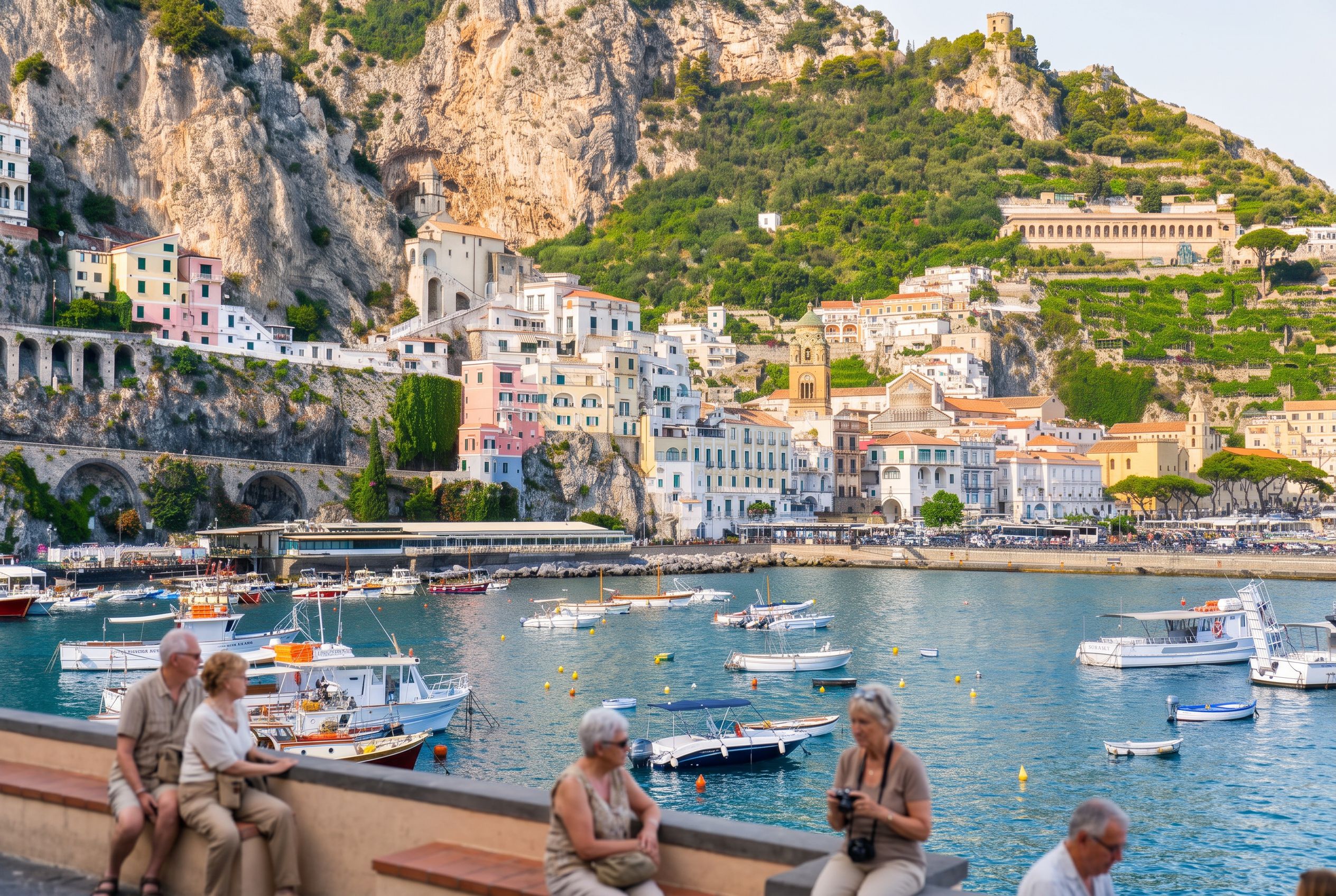
Amalfi town emerges as the most practical base for a comfort-first stay. Its main piazza is flat, the ferry dock sits two minutes from the cathedral, and the bus terminus is right beside it, according to a car-free travel guide to the coast. The town's seafront is level, and the area near the port is described as relatively flat by seasoned travellers. This makes Amalfi a sensible home base from which to explore the more demanding towns such as Positano and Ravello, each of which has its own character and its own accessibility trade-offs. For a broader view of the region, our complete guide to the Amalfi Coast for travellers over 50 covers town-by-town planning in depth.
 AI-edited
What makes a hotel comfortable on this coast?
Comfort on the Amalfi Coast hinges on four things: a lift that reaches your floor, a step-free or gently ramped entrance, a quiet room away from corridors and bells, and a bathroom you can use without contortion.
Guest feedback gathered across the coast reveals a consistent pattern. Thin walls, early cathedral bells, street noise and rooms near lifts are the most common sleep disruptors, while properties set back from traffic with working lifts and attentive staff earn the warmest praise. The coast's older buildings often lack elevators entirely, and many smaller guesthouses require climbing stairs to reach reception. For travellers with limited mobility, the planning rule is simple: confirm the lift reaches your specific floor, ask about the number of steps from the street to the entrance, and request a room away from the bar and lift lobby. Properties rarely publish these details, so a direct enquiry before booking is the only reliable way to know.
The coast's terrain means that even hotels with excellent access inside may sit above the road, requiring a short climb or a hotel shuttle. A hotel can be perfectly accessible once you are inside yet unreachable if the driveway is steep.
Furore Grand Hotel, which opened above Furore in 2024, deals with the slope on its own grounds: the hotel says lifts serve every floor across its terraced levels and connect the rooms with the restaurants and spa, and its concierge arranges private transfers from Naples and Salerno. Our closer look at Furore Grand Hotel sets out what the hotel documents on rooms, bathrooms and pool access.
Which hotels make the comfort shortlist?
Four properties stand out for documented accessibility features: Borgo Santandrea near Amalfi, Hotel Il Nido in Amalfi, Palazzo Suriano Heritage Hotel in Vietri sul Mare, and Hotel Le Agavi in Positano. Each offers something different, from a universally accessible elevator to the beach at Borgo Santandrea to a walk-in shower at Palazzo Suriano.
The strongest match for travellers who need guaranteed access is Borgo Santandrea, perched 79 to 50 metres above sea level between Amalfi and Conca dei Marini. The property states it has an accessible room and a universally accessible elevator from the road down to its private sandy beach, according to a luxury hotel listing. The hotel welcomes guests aged 10 and older, which suits a quieter adult atmosphere, and describes its setting as secluded and romantic. WiFi runs throughout the resort, and there is a heated saltwater pool. The property does not publish step counts or a walking-distance breakdown from the road to reception, so confirm the exact route when booking.
In Amalfi town itself, Hotel Il Nido is supported by traveller reports of a lift to all floors and a driveway or ramp suitable for rolling luggage. The same reports describe the hotel as very easy to navigate, though no measured distance from the port or town centre is documented. A travel forum advises guests to ask the hotel directly whether all rooms are elevator-accessible and to clarify the access route from the port and town centre before arrival. This is sensible advice for any property on the coast.
Further east, Palazzo Suriano Heritage Hotel in Vietri sul Mare offers documented elevator access to upper floors and a walk-in shower, according to its listing. The hotel sits 0.4 miles from the centre of Vietri, which has the distinction of being the only town on the coast with its own train station, connecting directly to Naples and Salerno by rail. Check-in is after 3:00 PM and check-out before 10:30 AM. Vietri is on the eastern edge of the coast rather than in the core Amalfi-Positano-Ravello cluster, so factor in travel time if you plan to explore the western towns daily.
In Positano, Hotel Le Agavi documents a free private beach reachable by lift, which is rare on this coast where beach access usually means hundreds of steps. The hotel also has an outdoor heated pool and two restaurants. Positano itself is famously vertical, with everything connected by stairways and steep lanes, so a hotel with a lift to the beach addresses the single greatest mobility challenge in that town. The property does not document step-free access beyond the beach lift, so enquire about the route from the road to your room.
How do I get there without struggle?
Naples Airport is the main gateway, about 63 kilometres from Amalfi by road, roughly 60 minutes with clear roads and no stops. A private accessible van from the airport to Amalfi is the most practical transfer, with one accessibility guide citing a typical price range of €180 to €220.
For rail travellers, the documented chain is Naples to Sorrento by train, then onward by bus along the coast. Vietri sul Mare is the exception, with its own train station providing direct rail connections to Naples and Salerno. If you are staying in Amalfi town, the ferry is a gentler option than the cliff-hugging bus: ferries connect Amalfi with Salerno, Positano, Maiori and Minori in the main season, and boarding is by ramp on some routes. The ferry season runs from late March or April through October, with Travelmar now operating year-round on select routes. One-way ferry fares start at €9, with Amalfi to Positano costing €9 to €10 and taking about 20 to 25 minutes in the main season.
The bus network run by SITA Sud connects Sorrento to Amalfi on the western half and Amalfi to Salerno on the eastern half, with no direct service from Sorrento or Positano to Salerno, so you change in Amalfi. Buses run from approximately 5:15 AM to around 10:00 to 10:30 PM in summer, with reduced service on Sundays. Tickets are not sold onboard in the standard system, so buy them in advance at a tobacconist, newsagent or bar displaying the SITA sign. A 24-hour unlimited COSTIERASITA bus pass costs €12, verified in February 2025. One-way tickets start at €1.80 for a single zone, such as Positano to Praiano, and €2.60 for two zones, such as Positano to Amalfi or Sorrento.
For those who prefer not to drive the winding coastal road, the CMS Amalfi Coast sustainable mobility consortium operates shuttle services with reserved seats and GPS tracking, bookable via app or multilingual website. The Green Line runs Positano to Amalfi, the Blue Line Maiori to Amalfi, and the Orange Line Ravello to Amalfi. These services offer a middle ground between the crowded public bus and a private car.
What should I ask about accessibility before booking?
Ask four questions of every property: Does the lift reach my exact floor? How many steps lead from the street to the entrance? Is there a walk-in shower with a grab bar? And which rooms are quietest, away from the bar, lift and street?
For Borgo Santandrea, the accessible room and universally accessible elevator to the beach are stated, but the property does not publish whether all rooms have step-free access from the corridor. Hotel Il Nido's lift to all floors is reported by travellers, yet the same reports advise confirming that your specific room is elevator-accessible. Hotel Le Agavi's beach lift is documented, but the route from the road to the room is not.
The detail is simply not documented. No property in the shortlist publishes step counts, decibel measurements or soundproofing specifications. The general statement from one accessible-travel provider that hotels on the coast have entrances without steps or with slight ramps, elevators sized for wheelchairs, and bathrooms with roll-in showers and grab bars applies to that provider's listed hotels, not to every property on the coast. Treat each hotel individually and verify what matters to you.
How do I find a quiet room for good sleep?
Guest feedback across the coast points to the same sleep disruptors: thin walls, early cathedral bells, street noise and rooms near lifts. Properties set back from traffic with attentive staff earn the warmest praise, while those on busy roads or with hard surfaces that amplify footsteps draw the most complaints.
The synthesis of verified guest reviews for Hotel La Bussola in Amalfi offers a useful template for what comfort looks like in practice. The hotel sits on a quieter, low-traffic stretch near the end of the street, a short walk of under five minutes from the ferry port, bus stop and town centre. An elevator is available, which older guests found helpful for avoiding the area's stairs and for moving luggage. Rooms and public areas are consistently described as spotless, with daily housekeeping. Staff at reception, breakfast and the rooftop bar are repeatedly praised for being friendly and attentive, arranging airport transfers, tours and restaurant reservations. The included breakfast offers a wide selection served in a dining room with sea views, with staff plating the food rather than offering a self-serve buffet.
The same review set carries a caveat worth noting: the rooftop bar has panoramic views and serves cocktails at €18 to €22 with complimentary snacks, but it can be lively with music until around 11 PM, and guests in third-floor rooms may hear chair and table movement from the bar above until closing. This is exactly the kind of detail to raise when booking, so you can request a room on a lower floor or away from the bar side of the building. On-site parking is available at around €30 per 24 hours, which is rare and convenient in busy Amalfi.
As of September 2026, Hotel La Bussola holds a Google rating of 4.4 out of 5 from 618 reviews.
"Our room had access to the large balcony with an incredible view of the city in the hillside. They also have a solarium out front that's only €25 for chairs and an umbrella and it was a perfect way to spend one of our days." — a guest wrote on Google in August 2026
Is half-board worth taking?
Half-board makes sense where the evening meal is a genuine destination rather than a convenience.
For travellers who value a settled evening after a day of sightseeing, half-board removes the nightly question of where to eat and the effort of climbing back to a hilltop hotel after dinner. On the Amalfi Coast, where many hotels sit above the road, this convenience carries real weight.
The coast's dining scene rewards exploration, and several hotels have invested heavily in their restaurants. Palazzo Avino in Ravello completed multiple 2024 upgrades including a renovated and expanded Michelin-starred restaurant, and Santa Caterina in Amalfi added a rooftop restaurant and cocktail bar called Senzafine in June 2025. If you are considering a spa-focused stay, our guide to the best spa hotels on the Amalfi Coast covers properties where wellness facilities justify a longer stay. For most travellers, a flexible bed-and-breakfast rate with the option to dine in when convenient offers the best of both worlds.
What should I know about health and safety?
Amalfi town has a documented civic hospital with a 24-hour emergency ward, and the municipality runs a community virtual clinic for non-emergency care. Farmacia Internazionale is a named local pharmacy, and Italy's standard emergency numbers are 112 for police and 118 for ambulance and medical emergencies.
A safety guide for the Amalfi Coast names Farmacia Internazionale in Amalfi as a local pharmacy, and notes that night-duty pharmacies post their schedules on their doors, which is useful after hours. The same guide describes Amalfi as one of the places where emergency crews move fast compared with remote coves. The municipality also documents a new community virtual clinic in Amalfi, adding a local health-service layer for consultations that do not require a hospital visit, as reported by the Comune di Amalfi.
For beach access, Amalfi's Marina Spiaggia has a documented inclusive beach project running from June to October, providing free assistance for people with disabilities or motor difficulties, including qualified operators, floating chairs and a walkway to sunbeds and umbrellas. This municipal program creates an accessible section of the beach with seating and supervised support, as described by Visit Amalfi. If swimming matters to you, this removes the greatest barrier the coast presents.
Ask when booking whether any seasonal offers apply, but do not expect an age-based discount to be advertised.
When should I visit for maximum comfort?
May, September and early October offer the best combination of warm weather and manageable crowds, according to climate guides and the coast's own tourism data. The 2025 season saw July and August arrivals drop 8 to 10 percent compared with the previous year, while September and October became the busiest months.
The Costa d'Amalfi tourist district reported that in 2025, July and August were down 8 to 10 percent in arrivals and presences versus the same period the year before, with September and October replacing them as the busiest months. This shift suggests travellers are already discovering the comfort advantages of the shoulder season. A climate guide for the region recommends May or September as the best times to visit, with less busy conditions from November to March. For Amalfi municipality specifically, the practical season runs April to October because rainfall is strongly seasonal, with the lowest rainfall in July and August and the highest in November.
Winter daytime highs in Amalfi hover around 12 to 13°C in January and February, rising to about 30°C in July and August, then easing to 21°C in October. warm enough for sea views from a terrace, quiet enough for good sleep, and with ferries and buses running on their main-season schedules. The ferry season runs from late March or April through October, so an early October visit still benefits from full maritime connections.
How do the towns compare for comfort?
Amalfi town is the most walkable base, with a flat seafront and accessible cathedral square. Sorrento, technically on the Sorrentine peninsula rather than the Amalfi Coast proper, is repeatedly described as relatively flat with large open areas. Positano is the least forgiving, with everything connected by stairways and steep lanes.
Amalfi, Maiori, Minori and Cetara are the most walkable settlements on the coast, flat or nearly flat and compact once you arrive. Amalfi town sits at sea level with a flat main piazza, and the ferry dock is two minutes from the cathedral. The area behind the main square climbs steeply and is mainly reached by stairways, so choose a hotel near the seafront rather than up the hillside. A seasoned-adults forum thread notes a 2-euro elevator down to the marina for ferries in Amalfi, which helps with luggage.
Positano is famously vertical, and forum advice consistently warns that its beauty comes with a stair-heavy layout. One Fodor's forum post mentions hotels on the main road with vans that can take guests as far down as possible, with Villa Franco given as an example of a property offering views while avoiding some stairs. Another tip suggests getting off at the second bus stop in Positano to avoid some stairs, and ferry passengers should know that the dock sits at beach level, requiring stairs to explore above the waterfront. The views from Villa Cimbrone in Ravello are excellent and do not require steps once you arrive by transport, but the town itself is not a flat base.
Sorrento, while not on the Amalfi Coast proper, is repeatedly recommended as a comfortable base for older travellers, with forum posters describing it as relatively flat with hotels and restaurants easier to reach than in the cliff towns. Sorrento also has an elevator to the seaside. Many seasoned travellers choose to sleep in Sorrento and day-trip to the coast rather than stay in the steepest towns. The drive from Sorrento railway station to Amalfi is about 31 kilometres along the coast road, about 60 minutes with clear roads.
What does a comfort-first stay cost?
Rates vary widely by season and booking channel, so treat any figure as indicative.
One Booking.com region page states there are 64 accessible hotels bookable in the Amalfi Coast region, while another gives a figure of 75 and a weekend average price of €778.09. A Tripadvisor listing counts 21 accessible hotels with prices from £100. These region-level figures give a sense of the market's breadth, but they do not establish what any individual property charges for a specific room on a specific date. Rates are indicative and vary by season and booking channel.
For planning purposes, expect to pay a premium for documented accessibility features, as Borgo Santandrea and Hotel Le Agavi occupy the luxury end of the market. Hotel Il Nido and Palazzo Suriano Heritage Hotel sit in more moderate brackets. The most reliable approach is to compare rates across booking platforms for your exact dates, then contact the property directly to confirm the room's accessibility features before committing. On-site parking at Hotel La Bussola costs around €30 per 24 hours, which is rare and convenient in busy Amalfi.
Transport costs are more predictable. A 24-hour unlimited COSTIERASITA bus pass costs €12, verified in February 2025, and one-way ferry fares start at €9. A private accessible van from Naples Airport to Amalfi typically costs €180 to €220, according to one accessibility guide. For those arriving by train, Vietri sul Mare's own station eliminates the need for a coastal bus transfer entirely.
What is the bottom line for comfort-first travellers?
Choose Amalfi town as your base, book a hotel with a documented lift and a quiet room away from the bar, confirm the approach from the street has no unexpected stairs, and visit in May or September. The coast's beauty rewards those who plan around its verticality rather than against it.
Borgo Santandrea offers the most complete documented accessibility package, including an accessible room and a universally accessible elevator to the beach, making it the strongest choice for those who need guaranteed access. Hotel Il Nido in Amalfi provides a lift to all floors in a town with a flat seafront, suiting travellers who want to step out directly into the most walkable base on the coast. Palazzo Suriano Heritage Hotel in Vietri sul Mare combines elevator access with a walk-in shower and the convenience of a train station, ideal for those arriving by rail. Hotel Le Agavi in Positano addresses that town's greatest challenge with a lift to its private beach, for travellers who insist on staying in the coast's most photogenic but least forgiving town.
No property publishes step counts, soundproofing specifications or decibel measurements, and the absence of a mention is never evidence that a feature is missing. A direct enquiry about the lift's reach, the entrance route and the quietest rooms will resolve most uncertainties before you commit. The coast's rewards are considerable: sea views that justify the journey, towns of extraordinary beauty, and a cuisine that celebrates the lemon and the sea. With the right hotel and the right season, travellers aged 50 to 70 can enjoy all of it without the stairs defining the holiday.


