
Lake Garda rewards travellers who plan their suitcase as carefully as their itinerary. The difference between a glorious week and a frustrating one often comes down to what is in your bag — and on your feet. For travellers aged 50 to 70, the practical realities of cobbled lanes, ferry gangways and July heat demand a packing strategy that prioritises comfort without sacrificing style.
This guide focuses exclusively on what to pack and how to move comfortably around the lake. For advice on the best months to visit, see our dedicated guide to when to visit Lake Garda for warm days and small crowds. If you are planning wine country excursions, our Lake Garda wine tasting guide covers Bardolino and Valpolicella in detail.
 AI-edited
What shoes survive cobbles and ferry gangways?
Pack one pair of cushioned walking sneakers with good tread as your primary shoe, plus one pair of supportive sandals for evenings and water shoes for pebble beaches. Avoid flat fashion sandals entirely — they are the single most common packing mistake visitors make on Garda's uneven surfaces.
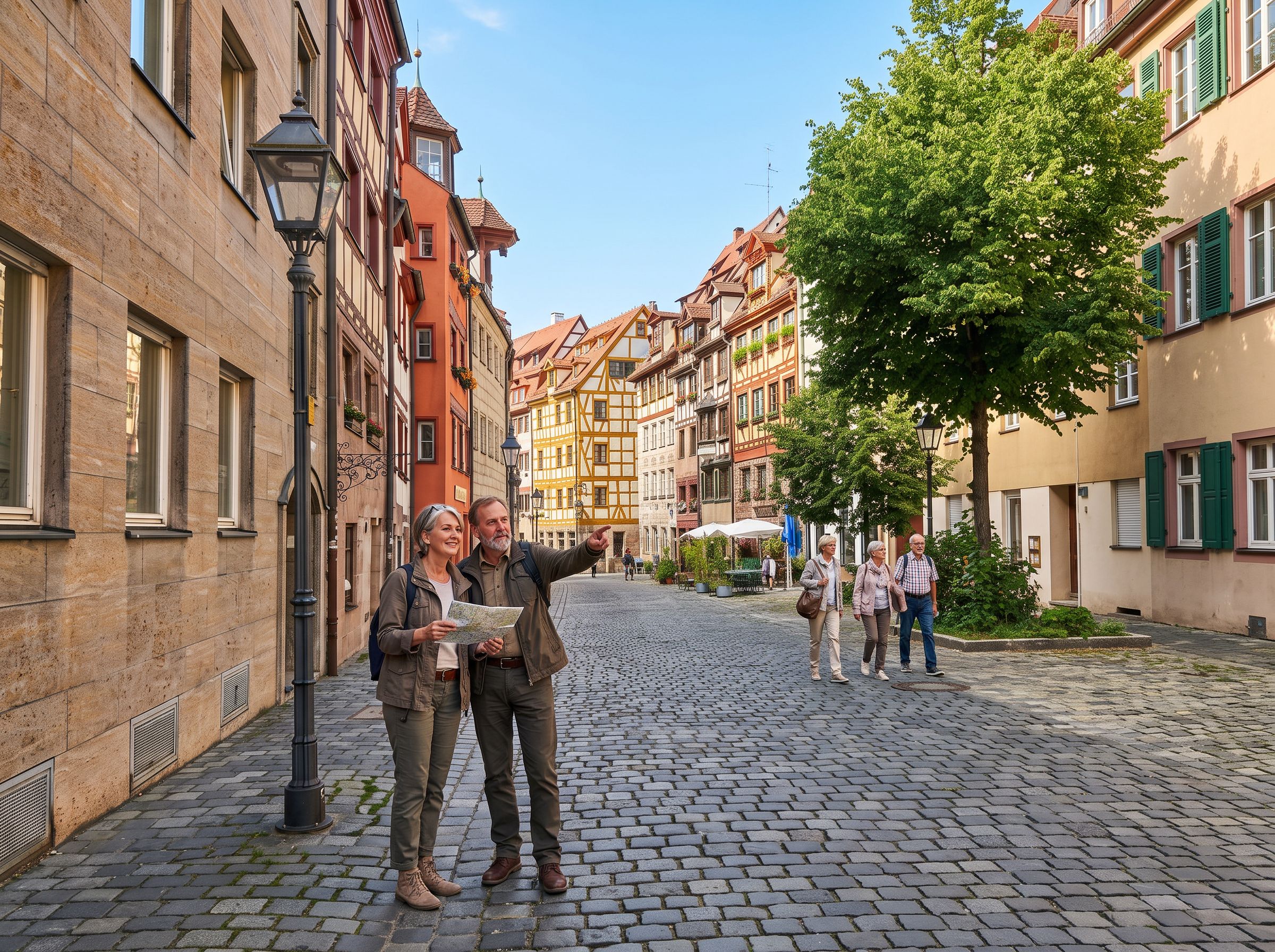
The lake's towns were built long before comfort was a design consideration. Sirmione's castle approach, Malcesine's climb to the Monte Baldo cable car, and even the "flat" promenades of Desenzano all feature uneven stone, gaps between paving slabs, and the occasional slippery metal drain cover. Ferry gangways add another challenge: they move underfoot, and the gap between pier and boat can be wider than expected when the lake is choppy.
Guest reviews consistently reinforce this footwear-first approach. Poiano Garda Resort Hotel, on the hillside above the town of Garda, held a 4.3/5 rating on Google from 3,314 reviews as of August 2026, and guests there keep returning to the same point: the way back from town is uphill, and the shoes you chose that morning decide how it feels.
The three-shoe system
You do not need a shoe for every occasion — you need three that cover every situation:
- Primary walking shoes: Cushioned sneakers or lightweight hiking shoes with lugged soles. These handle cobbles, promenades, and the occasional hillside trail. Look for breathable mesh uppers; closed shoes trap heat in July.
- Evening sandals: Supportive styles with ankle straps and a small heel (2-3 cm maximum). You will wear these for dinners, ferry rides, and strolls after dark when the day's heat has faded.
- Water shoes: Essential for Garda's pebble beaches. Unlike sandy coasts, most swimming spots here are rocky, and bare feet will protest within minutes. Neoprene aquashoes with grippy soles cost little and pack flat.
If you have balance concerns, consider lightweight walking poles with rubber tips. Poles take weight off the knees on the descents, which is where Garda's stepped lanes are hardest work. They fold to fit in a daypack and are invaluable on ferry ramps.
How do I handle the steps and steep streets?
Choose a base on the south lake — Desenzano del Garda or Peschiera del Garda — where the terrain is flatter and train access is direct. Plan your day around elevation: do hillier excursions in the morning, and save flat promenade walks for the afternoon heat.
Lake Garda's topography is deceptive. Maps show short distances between towns and say nothing about the gradient, and the elevation changes are significant. Garda town, for instance, looks compact on paper but involves a steady climb from the lakefront to the upper streets. Poiano Garda Resort Hotel, perched above Garda, lies roughly 1.6 km from the lakefront by road, and that kilometre and a half is uphill on the way back; guest reviews on Google describe a free shuttle bus into town and note that it runs to the main season rather than all year.
For a no-car trip, Desenzano and Peschiera are the most practical bases. Both sit on the Milan-Venice main line — the stations are Desenzano del Garda-Sirmione and Peschiera del Garda — and their lakefront promenades are relatively flat. From these hubs, ferries connect to the rest of the lake. The trade-off is that the prettiest hill towns — Malcesine, Limone, Riva del Garda — take more effort to reach. For the eastern shore there is a neat alternative: the Garda Link combined ticket, sold through Trenitalia, runs to Verona Porta Nuova and on by ATV bus every 30 minutes to Lazise, Bardolino, Garda, Torri del Benaco and Malcesine.
Planning your walking day
Splitting the day into two active periods with a long break in the middle is the rhythm that works in a Garda summer. This is not just about heat — it is about protecting your knees and energy for the places you actually want to see.
| Time | Activity | Why it works |
|---|---|---|
| 08:00–11:00 | Hill towns, viewpoints, active sightseeing | Cooler temperatures, fewer crowds, fresh energy |
| 11:00–16:00 | Lunch, siesta, pool, lakeside café | Hottest hours — rest and rehydrate |
| 16:00–20:00 | Ferry rides, flat promenades, shopping | Heat eases, light is beautiful, shops reopen |
| 20:00 onwards | Dinner, evening stroll | Pleasant temperatures, lakeside atmosphere |
This rhythm also helps you avoid the worst of the crowds. Ferry piers and the well-known viewpoints fill from late morning to mid-afternoon, which is exactly the stretch you want to be spending sitting down.
What layers do I need in summer?
Pack light, breathable clothing for daytime — cotton, linen, or technical fabrics — plus one light sweater or jacket for evenings. Even in July, the lake breeze after sunset can feel surprisingly cool, and summer thunderstorms arrive quickly.
The lake basin is mild for its latitude, and the water moderates the extremes. At Torbole on the northern shore, the 1991-2020 averages put July at a daily high of 30°C against a nightly low of 18°C — a swing of twelve degrees between the hottest part of the afternoon and the small hours. In settled summer weather the Adige valley inland can reach 35 to 36°C while a breeze still moves across the water.
June is a step down rather than a different season: the same records give June an average high of 28°C against a low of 16°C, and May 24°C against 13°C. Cool evenings are therefore normal from spring right through August. Bring layers even in peak summer, and do not trust the midday forecast to predict the evening.
For rain, pack a compact packable jacket rather than an umbrella. Summer thunderstorms on Garda are intense but brief — you will want something that goes on and off quickly without occupying a hand. A light rain shell also doubles as a windbreaker on ferry crossings, where the breeze can be brisk even on calm days.
What about luggage itself?
This deserves attention because it affects everything else. Stepped old towns and ferry piers are no place for a heavy suitcase. If you are moving between bases, keep your main bag under 15 kg and use a daypack for daily excursions.
Test the weight at home before you commit to it: load the bag exactly as you plan to travel and carry it up and down a full flight of stairs. If that is unpleasant in your own hallway, it will be worse on a pier. For travellers 50-70, this is not abstract advice — it is the difference between enjoying a hill town and dreading it.
Consider a wheeled bag with sturdy wheels (not the flimsy spinner type) for train stations and ferry piers, and pack a small foldable duffel for day trips. If you are staying in one base for a week, you can pack lighter than you think — sink-washing or a local laundromat means you need only 4-5 days of clothing.
What swimwear and beach gear should I bring?
Bring at least two swimsuits so one can dry while you wear the other, plus a quick-dry towel and water shoes. Most of Garda's beaches are pebbly rather than sandy, and the lake's rocky entry points are uncomfortable without proper footwear.
Lake Garda's swimming culture is different from the Mediterranean coast. The beaches that exist are mostly pebbles or grass, and many hotels have their own lidos with concrete platforms and ladders into the water. The lake itself is clean and refreshing, but the entry points are rarely gentle.
For spa days — and Garda has excellent thermal spas, particularly around Sirmione and Colà — pack a modest swimsuit that you feel comfortable wearing in a wellness setting. Italian spas tend to be more conservative than northern European ones, and some require swim caps in pools.
A quick-dry towel is worth its weight: hotel pool towels are usually provided, but a compact travel towel is useful for ferry days, impromptu swims, and picnics. Microfibre versions pack to almost nothing.
How do I protect against the summer heat?
Sun protection is non-negotiable: a wide-brimmed hat, quality sunglasses, and high-SPF sunscreen that you reapply at midday. Carry a reusable water bottle and refill it constantly — dehydration is the most common health issue among visitors in July and August.
The sun at Lake Garda is intense, and the lake's reflective surface amplifies its effects. What feels like a gentle morning walk can produce significant exposure by 10 a.m. The altitude is modest — the lake sits at about 65 metres above sea level — but the combination of southern latitude and water reflection is potent.
Choose a hat with a brim that shades your face and neck, not just a baseball cap. Sunglasses should offer full UV protection; the glare off the water is genuinely uncomfortable without them. For sunscreen, use SPF 50 and reapply every two hours, more often if you are swimming or sweating.
Mosquito repellent is another essential, particularly for evenings near the water. Multiple packing guides list it as a requirement, and the still water around the lake's edges attracts insects at dusk. Apply repellent before heading out for dinner, not after the bites start.
Medication and health essentials
Carry any prescription medicines in their original packaging, along with a written list of your medications and allergies. This is more useful than trying to match brand names at a local pharmacy — Italian pharmacists are helpful, but generic names differ across countries.
Pack a small first-aid kit with blister plasters, simple pain relief, and any personal medications. Pharmacies are present in every town around the lake, and the staff can advise on minor ailments. For more serious concerns, your hotel can direct you to the nearest guardia medica (out-of-hours doctor). Italy's universal emergency number is 112. For a fuller picture, see our guide to health and pharmacies on Lake Garda.
What about ferry days — what do I pack?
For ferry days, use a small daypack with layers, water, sunscreen, and a snack. Ferries are the best way to see the lake without driving, but they are slower than they look on a map: the full run from Desenzano in the south to Riva del Garda in the north is a half-day outing, not a hop.
Navigazione Laghi runs the ferry network across Lake Garda with passenger boats, fast services and the Maderno-Torri del Benaco car ferry. Check which timetable covers your dates: the 2026 summer timetable ran from 29 March to 4 October, with the fuller peak-season pattern from 16 May, and a separate winter timetable applies outside that window. For travellers without a car, the boats are the primary way to explore the lake's northern reaches.
Ferry accessibility varies by pier and vessel, and the operator says as much itself: not all wharves are easily accessible to disabled or reduced-mobility passengers. Boarding is always assisted by the crew and uses a gangway at least 80 cm wide with a non-slip surface, whose slope changes with the level of the lake; since 2016 the ships and the main piers have carried light, portable ramps that remove the step between jetty and walkway. Since the 2018 season the printed timetables also mark the sailings best suited to wheelchair passengers, and staff at ticket offices can advise on the best piers.
On board, the upper decks offer the best views but the most sun exposure. The lower saloons are cooler and sheltered but have limited visibility. Pack both options into your day: start on the upper deck for the approach to a town, then move below for the longer stretches. Time the day so the return leg falls late in the afternoon, when the lakeside towns thin out.
"At those hours, it was much quieter and less crowded than during the day, making it much more enjoyable to explore. The weather was also more comfortable than during the hotter daytime hours," one Google reviewer wrote in August 2026 about visiting Malcesine's old town late in the day.
For a detailed look at staying in style on the lake's western shore, our Grand Hotel Fasano dossier covers one of the region's most elegant properties.
What should I leave at home?
Leave the fashion heels, the heavy jeans, and the "just in case" formal wear. You will not need them. Pack light, washable clothing in breathable fabrics, and remember that Italy has shops — you can buy anything you forgot.
The advice that survives every packing list is the same: pack less than you think you need. Buy lightweight, well-supported shoes early and break them in over weeks rather than days. And count on sink-washing or a laundromat, which roughly halves what you have to carry.
What to leave behind:
- Heavy denim: Too hot for summer days, too bulky for luggage. Choose lightweight trousers or skirts instead.
- Multiple formal outfits: One "nice" outfit for a special dinner is plenty. Most restaurants on the lake are casual.
- Full-size toiletries: Buy what you need locally. Italian pharmacies and supermarkets stock everything from sunscreen to shampoo.
- Valuables: Leave expensive jewellery at home. You will not need it, and it adds worry.
For electrical items, Italy uses standard European plugs (Type F and Type L sockets). A multi-country adaptor is the safest choice, as some older buildings still have the three-pronged Italian sockets. Check your devices — many modern chargers handle both voltage standards, but verify before plugging in.
What does a final checklist look like?
The short answer is three pairs of shoes, four to five days of light washable clothing, two swimsuits, sun protection and a small health kit, all in a bag you can carry up a flight of stairs. Everything below fits that outline, and anything you forget can be bought locally.
Here is the complete packing list in one place:
| Category | Items | Quantity |
|---|---|---|
| Footwear | Cushioned walking shoes, supportive sandals, water shoes | 3 pairs |
| Clothing | Light tops, shorts/skirts, one light sweater, one rain shell | 4-5 outfits |
| Swimwear | Swimsuits, quick-dry towel | 2 suits |
| Sun protection | Wide-brim hat, sunglasses, SPF 50 sunscreen | As needed |
| Health | Prescriptions in original packaging, blister plasters, pain relief, mosquito repellent | Small kit |
| Daypack | Reusable water bottle, snacks, layers for ferry days | 1 bag |
| Electronics | Multi-country adaptor, chargers, power bank | As needed |
One final thought on the season: if you have flexibility, consider late May or early September rather than July and August. The temperatures are more comfortable, the crowds thinner, and the experience closer to what you imagined. The Veneto shore of the lake alone counted more than 14.7 million overnight stays in 2024, on figures the Camera di Commercio di Verona compiled from Istat data — the lake is busy, and planning around the crowds is part of the strategy. One date to check if you travel outside those months: the Malcesine-Monte Baldo cable car, the easiest way to get high above the lake without climbing, runs all year apart from March and from November until mid-December, when it closes for maintenance.
Pack well, walk wisely, and the lake will do the rest.


