
Hoi An is one of Southeast Asia's great value towns, and the numbers bear that out. A realistic daily budget runs from 1,200,000 to 2,500,000 VND (about US$47 to US$98) per person, according to Vietnam Tourism's 2026 budget guide. That range covers a comfortable room, meals, local transport and some paid sightseeing, but it excludes international flights. Where the arithmetic gets interesting is in the split: street food, bicycles and heritage tickets cost very little, while tailoring, spa treatments, resort dining and private drivers can push a day past US$200.
For travellers aged 50 to 70, the sensible question is not "what is the cheapest possible day?" but "what does a genuinely comfortable day cost?" The answer depends less on the town than on four choices: where you sleep, how you move, how often you eat in restaurants rather than at stalls, and how much tailoring and spa time you build in. This guide works through each of those, using published figures rather than guesses.
What does a comfortable day in Hoi An actually cost?
A comfortable day in Hoi An costs roughly US$90 to US$150 per person, assuming two people share a good mid-range room, eat a mix of local and sit-down meals, use taxis selectively and include occasional paid sightseeing. For a couple, that is about US$180 to US$300 per day, or US$1,260 to US$2,100 for a week, before international flights.
Vietnam Tourism's 2026 guide puts a realistic daily budget at 1,200,000 to 2,500,000 VND (US$47 to US$98) per person. A separate 2025 cost guide cited puts a mid-range Hoi An visit at US$89 per person per day, or approximately US$617 for one week, though those figures are averages rather than a guaranteed comfortable itinerary. Another guide reports a mid-range total of US$96 to US$157 per day, depending on hotel, meals, activities and transport choices.
The spread is wide because "comfortable" is doing a lot of work. A well-reviewed three-star hotel at about ₫900,000 (US$34) per night, shared between two, costs US$17 per person. A boutique property at US$50 to US$90 per night doubles that. Neither is wrong; they simply buy different trips.
What do hotels cost by tier?
Accommodation splits into three clear tiers in Hoi An. Vietnam Tourism's 2026 guide lists budget rooms at 250,000 to 500,000 VND (US$10 to US$20) per night, mid-range at 700,000 to 1,500,000 VND (US$28 to US$59), and luxury at 2,500,000 VND (US$98) and up. Resort properties push well past 6,000,000 VND (US$235).
A guide aimed at 2026 travellers places comfortable accommodation at roughly 500,000 to 1,200,000 VND per night, while boutique resorts range from about 1.5 to 5 million dong.
For a couple sharing, the arithmetic is straightforward. A US$50 room costs US$25 each. A US$90 room costs US$45 each. That difference of US$20 per person per day is often the single largest variable in a Hoi An budget, and it is the one most worth thinking about carefully.
| Tier | VND per night | Approximate US$ |
|---|---|---|
| Budget | 250,000 to 500,000 | US$10 to US$20 |
| Mid-range | 700,000 to 1,500,000 | US$28 to US$59 |
| Luxury | 2,500,000 and up | US$98 and up |
| Resort (Anantara, Four Seasons, Victoria) | 6,000,000 and up | US$235 and up |
Rates are indicative and vary by season and booking channel. The dry season from February to May brings the best weather for exploring, and pricing tends to reflect that.
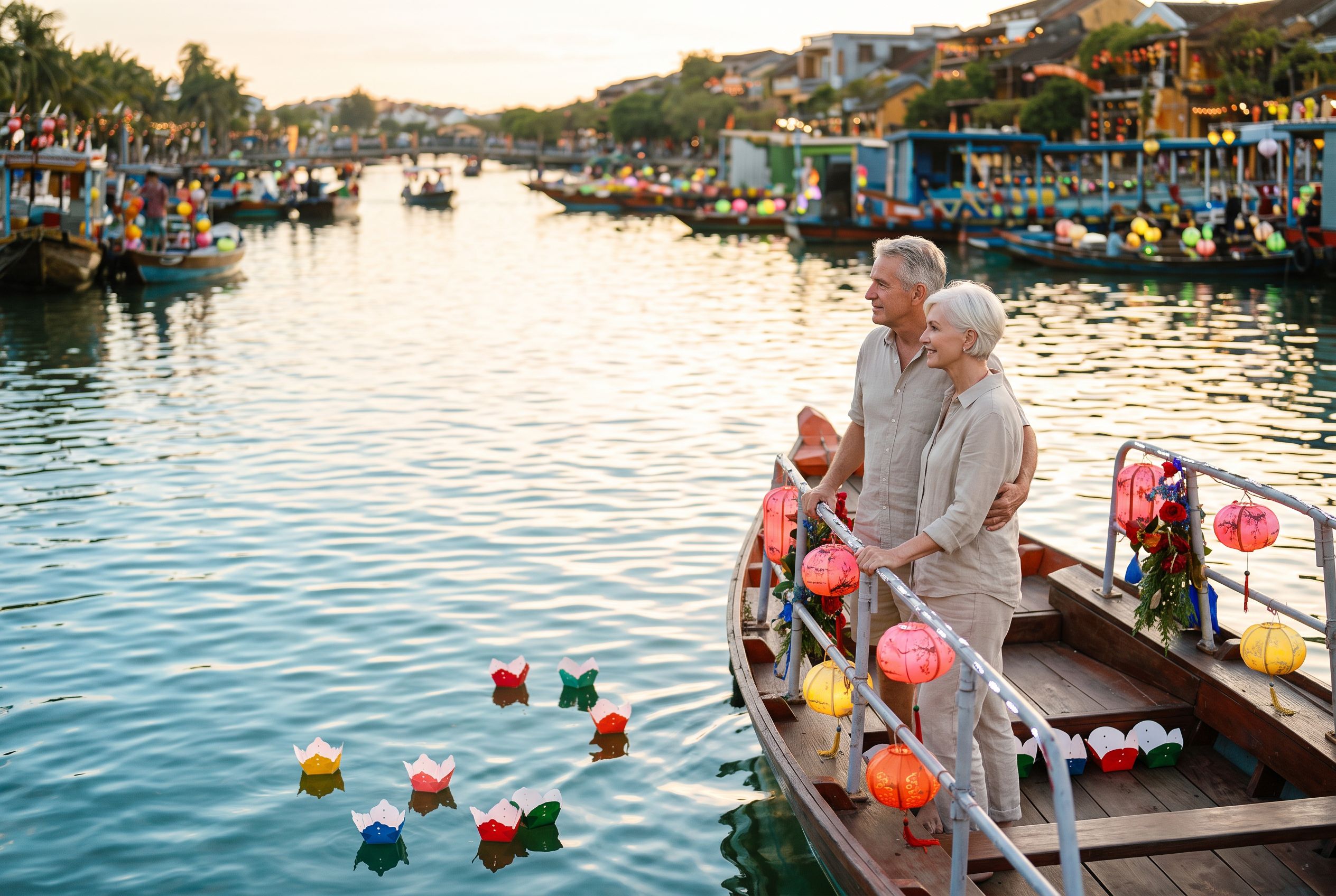 AI-edited
For those weighing a resort stay, our closer look at Four Seasons Resort The Nam Hai covers what the top of the market actually delivers.
What do meals and drinks cost?
Food is where Hoi An is remarkably good value. Street food and local eateries run 20,000 to 50,000 VND (US$0.80 to US$2) per dish, according to Vietnam Tourism's 2026 guide. Sit-down restaurants charge 60,000 to 120,000 VND (US$2.40 to US$4.70). A cao lau at the stalls on Tran Phu's back alleys costs 35,000 to 45,000 VND (US$1.40 to US$1.80).
Banh Mi Phuong charges 35,000 VND (US$1.40) for its famous pork version. A Reddit post covering a month in Hoi An reported approximately 30,000 VND for bánh mì, under 100,000 VND for chicken rice and a drink, and around 250,000 VND for what the poster called a "nice dinner."
The jump comes with Western food, wine and hotel dining. A Tripadvisor discussion dated December 2024 reported local meals at roughly A$10 to A$15 per person in small restaurants, while high-end restaurants and hotels could cost more than ten times as much. One forum example described a US$50 hotel, US$20 dinner per person and US$8 wine, showing how quickly costs rise when choosing upscale lodging and Western-style dining.
For a comfortable trip, allow roughly US$20 to US$35 per person per day for breakfast, lunch and dinner at a mixture of local restaurants and more polished establishments. US$15 to US$30 is consistent with the reported prices for local breakfasts, lunches and a good dinner.
What do transfers and local transport cost?
The airport transfer from Da Nang International Airport runs 250,000 to 350,000 VND (US$9.80 to US$13.70) via Grab, or 400,000 VND (US$15.70) through a hotel-arranged driver, according to Vietnam Tourism's 2026 guide. The yellow public bus number 1 runs from the airport to Hoi An's central bus station for 20,000 VND (US$0.80).
Hoi An sits on Vietnam's central coast, 30 kilometres south of Da Nang International Airport, and the road journey is reported as approximately 45 minutes. The town has no airport or railway station of its own, so every arrival involves a transfer.
Within Hoi An, walking and bicycles are the principal options for the Ancient Town. Bicycle rental costs 30,000 to 50,000 VND (US$1.20 to US$2) per day, and many hotels provide them free. Motorbike rental runs 120,000 to 150,000 VND (US$4.70 to US$5.90) per day. An Bang Beach is a 15-minute bicycle ride from the Ancient Town.
Allow roughly 80,000 to 200,000 VND (US$3 to US$8) per day for bicycles, occasional Grab rides or taxis. Around US$6 to US$20 per person per day is a practical allowance for walking, bicycles, Grab and occasional taxis.
| Journey or rental | VND | Approximate US$ |
|---|---|---|
| Grab, Da Nang airport to Hoi An | 250,000 to 350,000 | US$9.80 to US$13.70 |
| Hotel-arranged driver, same route | 400,000 | US$15.70 |
| Public bus number 1, airport to Hoi An | 20,000 | US$0.80 |
| Bicycle rental, per day | 30,000 to 50,000 | US$1.20 to US$2 |
| Motorbike rental, per day | 120,000 to 150,000 | US$4.70 to US$5.90 |
For a comfortable arrival, a pre-booked airport car is more predictable than relying on an unreserved taxi. The public bus is the cheapest option by a wide margin, but the source does not document step-free boarding, wheelchair spaces, luggage assistance or senior fares. Travellers who need those details should confirm with the operator before relying on the bus.
What do tours, tailoring and treatments cost?
Paid experiences in Hoi An are modestly priced by international standards. The Ancient Town combo ticket costs 120,000 VND (US$4.70) and covers five attractions. Cooking classes run 500,000 to 1,200,000 VND (US$20 to US$47). A half-day My Son Sanctuary tour with transport costs 400,000 to 600,000 VND (US$15.70 to US$23.50).
Cham Islands snorkelling runs 500,000 to 800,000 VND (US$19.60 to US$31.40). Evening boat rides along the Thu Bon River cost 150,000 VND (US$5.90) for a 20-minute trip. A September 2024 Reddit trip report described paying 100,000 VND for a two-person boat ride, though the queue was long and the ride lasted only about five minutes.
Tailoring is where Hoi An's reputation meets its budget. Vietnam Tourism's 2026 guide lists a basic shirt at 400,000 to 600,000 VND (US$15.70 to US$23.50), and a full suit at 1,500,000 to 3,000,000 VND (US$59 to US$118) depending on fabric and the shop's reputation. The safety source specifically warns about tailor shops that over-promise quality or rapid delivery, so it is worth treating very fast turnaround claims with care.
Budget US$15 to US$40 per person per day for entrance tickets, guided visits, cooking or craft experiences and similar activities. Add US$10 to US$30 per person daily for boat trips, classes, tours, tailoring-related transport, drinks and unexpected taxis.
What are sample daily budgets for frugal, mid and comfortable styles?
Three styles produce three very different days. A frugal day can run under US$30 per person. A mid-range day lands around US$60 to US$90. A comfortable day runs US$90 to US$150, and a higher-comfort day with boutique hotels, private drivers, fine dining and spa treatments can exceed US$200 per person.
The figures below draw on the published ranges. They assume two people sharing a room, which halves the accommodation cost per person. They exclude international flights and visas.
| Category | Frugal | Mid-range | Comfortable |
|---|---|---|---|
| Accommodation (per person, shared) | US$5 to US$10 | US$14 to US$30 | US$25 to US$45 |
| Meals and drinks | US$5 to US$10 | US$15 to US$30 | US$20 to US$35 |
| Local transport | US$1 to US$3 | US$3 to US$8 | US$6 to US$20 |
| Activities and tickets | US$2 to US$5 | US$15 to US$40 | US$15 to US$40 |
| Extras (spa, tailoring, drinks) | US$0 to US$5 | US$10 to US$30 | US$20 to US$50 |
A Reddit budget discussion reported a Hoi An stay at about US$15 for a private guesthouse room, US$1 bicycle hire, US$2 breakfast, and local dishes costing 30,000 to 45,000 VND. That is the frugal end, and it is genuinely achievable. The same discussion repeatedly described US$50 as sufficient for comfortable travel, including a private room, restaurant meals, bars and some remaining spending money.
For two people already in Vietnam, a practical allowance is roughly A$100 to A$150 per day, excluding international flights. That covers a comfortable hotel, local meals, taxis or occasional tours, and sightseeing. A Tripadvisor discussion dated December 2024 described A$100 per day as "so comfortable" and A$50 as already decent, while another participant reported spending about A$85 per day in Vietnam.
How much should I budget for a week or two weeks?
For a couple travelling comfortably, one week in Hoi An runs about US$1,260 to US$2,100 before international flights. Two weeks roughly doubles that.
These figures assume a comfortable hotel, local meals, taxis or occasional tours, and sightseeing. They do not include international airfare, visas, shopping or expensive excursions. A separate 2025 cost guide puts a mid-range Hoi An visit at approximately US$617 for one week, though its figures are averages rather than a guaranteed comfortable itinerary.
The "Is US$1,000 enough for two weeks in Vietnam?" question has a documented answer in the research. For one person, A$1,000 is enough for two weeks in Vietnam if international flights and major internal travel are excluded and the itinerary is mainly budget-to-comfortable. For two people sharing accommodation in Hoi An, A$1,000 would be possible only with tighter spending; the recorded comfortable figure of A$100 per day would be about A$1,400 for two weeks for one spending unit, before shopping and expensive tours.
Hoi An's food and casual drinks can be inexpensive compared with Britain, but accommodation, tailor-made clothing, organised excursions and resort restaurants can substantially raise the total. The available Hoi An-specific traveller evidence supports "good value," not a single official national budget.
Where is Hoi An remarkably good value, and where does it climb?
Hoi An is outstanding value on street food, local meals, bicycle hire, heritage tickets and casual drinks. It climbs steeply on resort accommodation, tailoring, organised excursions, spa treatments and Western-style dining. The town rewards travellers who spend on the right room and keep the rest local.
The value side is well documented. Street food and local eateries at 20,000 to 50,000 VND (US$0.80 to US$2) per dish are among the cheapest in the region. Bicycle rental at US$1.20 to US$2 per day makes the beach and countryside genuinely accessible without a car. The Ancient Town combo ticket at 120,000 VND (US$4.70) covers five attractions from a list of about 20, including the Japanese Covered Bridge, assembly halls and old houses.
The climb side is equally clear. Resort properties such as the Anantara, Four Seasons and Victoria push past 6,000,000 VND (US$235) per night. Higher-comfort travel with boutique hotels, private drivers, fine dining and spa treatments can raise the budget to US$200 or more per person per day. Tailoring, while reasonable by Western standards, is a discretionary cost that can add hundreds of dollars to a trip.
For travellers aged 50 to 70, the most useful spending decision is the room. Reviews portray Hoi An as capable of offering comfortable, attentive accommodation without requiring luxury-hotel spending, but the "comfortable" part of the budget is best spent on the right room rather than only on the hotel's headline category.
What should older travellers know before booking?
Hoi An is largely flat and walkable in the Ancient Town, but sidewalks are often uneven and may be used for motorcycle parking. Several reviewed properties have no lift. For travellers aged 50 to 70, the practical advice is to stay near the Old Town, request a ground-floor or lift-accessible room directly, and pre-arrange a vehicle for the beach, countryside and airport.
Vietnam Tourism states that sidewalks in Hoi An are often uneven and may be used as motorcycle parking areas, which creates possible obstacles for people using sticks, walkers or wheelchairs. The same source says wheelchair users face significant challenges on streets outside hotels.
Lift access is a specific concern. Reviews of Hai Au explicitly say there is no lift and advise choosing a rear, higher-floor room only if guests can manage stairs. Thanh Van also has no elevator, and Tripadvisor reviews warn that luggage may need to be carried up flights of stairs. Hoian Central Hotel has no lift, with reviews recommending a first-floor room for guests with mobility limitations. The Signature Hoi An is described as a two-storey property without lifts.
Several reviewed properties link lower comfort to traffic, neighbouring activity, construction, roosters or internal hallway noise. A Tripadvisor review of Hoi An Historic Hotel dated 16 April 2024 reported traffic horns from about 5 a.m., construction noise from 7:30 a.m. to 5 p.m., doors slamming overnight and housekeeping noise from 6:30 a.m.
On health, Hoi An Hospital is reported on Tran Hung Dao Street and is described as suitable for minor medical problems. No international hospital in Hoi An itself was documented; for serious treatment, sources direct visitors to medical facilities in Da Nang, approximately 40 to 50 minutes by car. Pharmacies are widely available throughout Hoi An municipality, commonly identified by green-cross signs, though the source does not identify a single formally designated nearest pharmacy by name and address. Our guide to health and peace of mind in Hoi An covers this ground in more detail.
On safety, Hoi An is generally described as safe for visitors, with low reported violent crime against tourists. The more relevant practical risks are road safety, particularly motorbike traffic on routes between Hoi An and Da Nang, flooding during the October to November period, and commercial disputes with tailor shops that promise rapid delivery or premium fabrics.
For a slower trip with rest days, tailor fittings and time at the coast, five to seven nights suits travellers aged 50 to 70. Our five-day Hoi An itinerary for the over-50s sets out one way to structure that time.
When is the cheapest time to go, and what changes?
The dry season from February to May brings the best weather for exploring, according to Vietnam Tourism's 2026 guide. The wetter months from September through January are cheaper but carry real risk of heavy rain and flooding, particularly in low-lying parts of Hoi An. June and July are among the hottest months.
A published Hoi An guide estimates roughly US$25 to US$45 per day in the rainy season and US$35 to US$60 in the dry season, excluding accommodation. That seasonal gap reflects both weather and demand. The most comfortable period for walking and sightseeing is commonly identified as February to April, when conditions are drier and milder.
October and November are typically among the more problematic wet months for low-lying Hoi An. A November 2025 Reddit discussion specifically warned that Hoi An can be quite rainy in late August and early September. A month-long Reddit report described generally pleasant conditions of about 25°C, with several rainy days when temperatures fell to around 18°C, and recommended carrying a lightweight raincoat, pricing a basic poncho at about 20,000 VND.
If your dates are flexible, the shoulder weeks around February and April offer a reasonable balance of weather and price. If they are not, budget for the season you are travelling in and pack accordingly.
For travellers planning around the monthly lantern festival, our guide to the Hoi An Lantern Festival and the year's rhythms explains what changes and when. A September 2024 Reddit trip report advised checking the schedule before booking.
What are the practical details worth knowing?
Cash matters. A month-long Reddit report said an ATM card was rejected at the first machine tried, and using another bank resolved the problem. Tourist areas generally have English available. Everyday necessities including toiletries, sunscreen and electrolytes are readily available in Hoi An, reducing the need to overpack.
Booking platforms such as GetYourGuide and Klook were described as useful in the same report, with activities generally needing booking only one or two days ahead.
Hoi An Heritage states that one ticket is valid throughout a stay of up to three days. Another source says heritage-site visits may be treated as valid for 24 hours, so visitors should confirm the current rule at the official counter. The town's controlled visiting hours are listed as 9:00 to 21:30 in summer and 9:00 to 21:00 in winter.
On the heritage ticket, Hoi An Heritage's published notice states a 50% Ancient Town-ticket discount for qualifying Vietnamese elderly people under Vietnam's Elderly Law. It does not document a general over-65 discount for foreign visitors. The same notice lists exemptions for children under 16 and people with severe disabilities, plus several Vietnamese-specific 50% discounts. It does not state that these concessions apply universally to foreign visitors.
Packing should respond to the documented climate: lightweight breathable clothing, a compact waterproof jacket or umbrella, quick-drying shoes with good grip, a sun hat, high-factor sunscreen, insect repellent, a refillable water bottle, any regular medication in original packaging, and a small torch or phone light for uneven or poorly lit walking areas.
Finally, the Japanese Covered Bridge reopened in August 2024 after an approximately two-year restoration costing an estimated 20 billion dong. The work addressed its foundations, wooden structure and roof, so visitors can now see the restored landmark rather than a construction site.


