
The imperial spa town of Bad Ischl, a 22-kilometre drive from Hallstatt that takes a little under half an hour, offers a restorative day of brine baths and salt therapy that feels worlds away from the tourist crowds. For travellers aged 50 to 70 seeking genuine wellness rather than a quick dip, the Salzkammergut Thermal Spa at the EurothermenResort provides a practical, accessible, and deeply soothing experience rooted in a tradition that dates back to 1823.
The journey begins before you even enter the water. Bad Ischl was named the European Capital of Culture 2024, and the town’s spa heritage is woven into its identity. As you walk from the train station—the spa sits directly opposite—you’ll notice the quiet elegance of the Kurpark and the shaded Esplanade where 19th-century visitors once took their constitutionals. This is not a theme park; it is a working health resort where the water itself is the main attraction.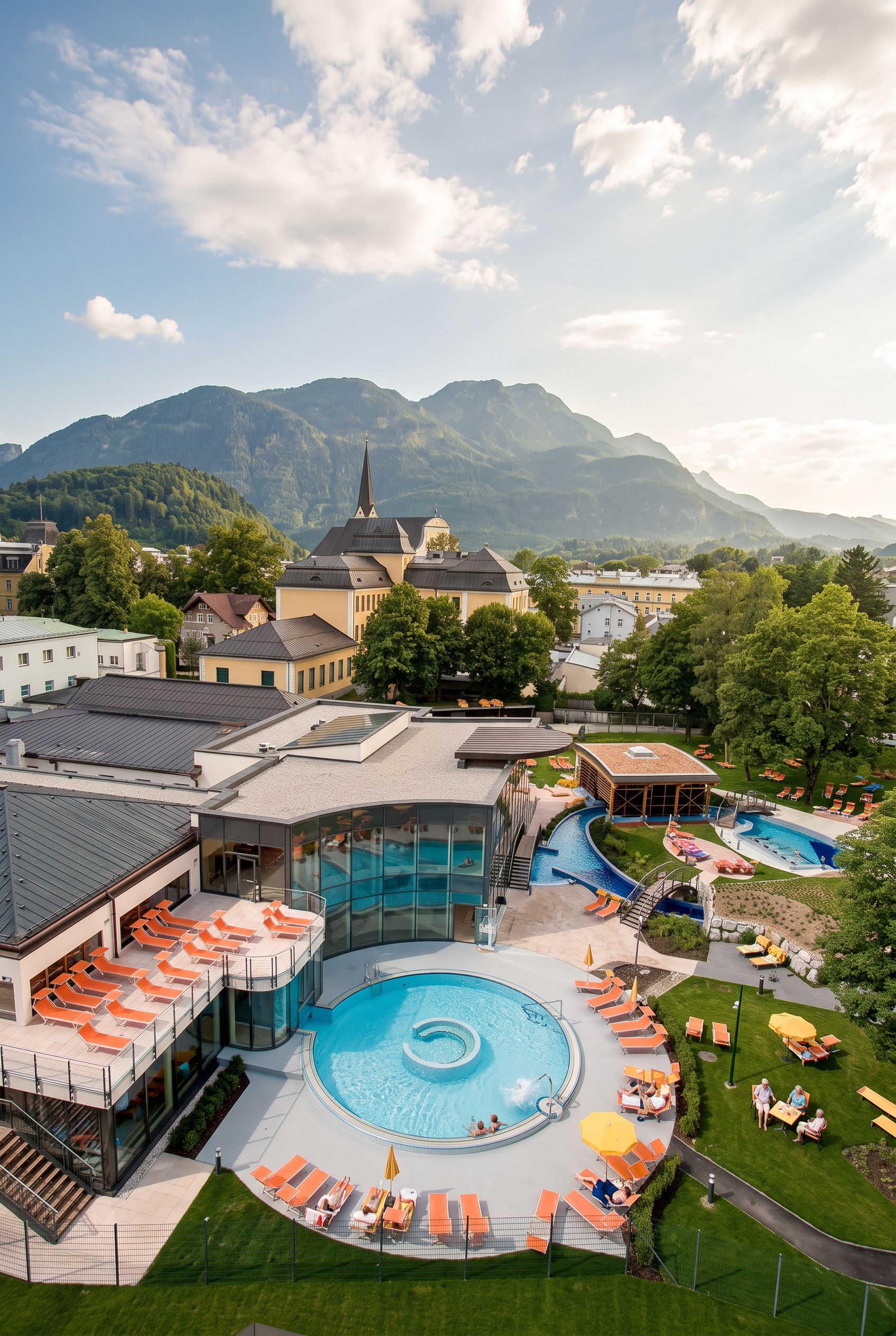 AI-edited
Why choose Bad Ischl for a spa day?
Bad Ischl has drawn brine from the Perneck salt mountain since 1563, and the resort applies it against complaints of the airways, the musculoskeletal system and the skin. The bathing water carries a 3% salt concentration — the same as the Adriatic — so it is naturally buoyant, gentle on joints and ideal for seniors who want to move freely without strain.
The therapeutic properties of the local springs are well documented. The town of Bad Ischl dates its status as a spa town to 1823, when the salt-works physician Josef Götz and the Viennese doctor Franz Wirer began treating patients with brine. The bathing water today carries three per cent salt, the same as the Adriatic, and the resort also draws on Austria’s second-strongest sulphur spring, which it uses in its therapy baths rather than in the public pools. Guests consistently report that the warm saline pools help with circulation, joint stiffness, and overall relaxation. Unlike some modern wellness centres that prioritise flashy features over substance, Bad Ischl’s approach is straightforward: warm salt water, fresh Alpine air, and time to let your body reset. For those staying in Hallstatt, Bad Ischl is one of three dedicated thermal spas within easy reach, and the easiest to fold into a day that also takes in a town. The drive covers about 22 kilometres along the B145, a scenic route that follows the Traun River, and takes a little under half an hour. If you are relying on public transport, allow for one extra step: Hallstatt’s railway station sits on the far shore of the lake, and the ferry that crosses to it leaves the landing stage in the middle of the village to meet each train. Bad Ischl station is at the other end, a short walk from the spa entrance. For a full overview of getting around the region, see our guide to getting to Hallstatt and the Salzkammergut.What brine and salt treatments are offered?
The core experience is the brine bath itself: indoor and outdoor pools filled with warm, salt-saturated water. Beyond floating, you can book specific Sole-Anwendungen (salt applications), including inhalation therapy for respiratory health, salt scrubs, and targeted hydrotherapy sessions.
The outdoor area holds what the regional tourist board calls Austria’s only open-air river landscape: the Lazy River winds through the salt grotto and the Gradierwerk, a brine graduation wall that atomises fine salt mist over bubble seats. Recent guests praise this feature as the highlight for older visitors—the gentle current carries you along with minimal effort. The water temperature is kept warm enough to be comfortable even when outside temperatures drop below freezing, which makes it a year-round destination. For those with specific health concerns, the spa offers targeted treatments. The salt aerosol inhalation rooms are particularly beneficial for asthma, bronchitis, and allergies. These sessions run in the Physikarium, the resort’s therapy centre, by appointment from Monday to Saturday, and cost €26. If that is more organisation than you want, the Gradierwerk out in the thermal garden does something similar for nothing extra: brine is atomised at around 34 °C over bubble seats with foot-massage jets, and it is included in every thermal ticket.| Treatment | Duration | Approximate cost (€) | Best for |
|---|---|---|---|
| Brine bath, thermal day ticket | Full day | €34 / €35 | General relaxation, joint relief |
| Brine bath, four-hour ticket | Up to 4 hours | €31.50 / €32.50 | A short, unhurried visit |
| Brine inhalation (Physikarium) | By appointment | €26 | Respiratory health, allergies |
| Brine and sulphur tub bath | By appointment | €32.80 | Musculoskeletal recovery |
| Natural-salt body scrub | About 20 min | €41.60 | Skin health |
| Salzprinz brine massage | 25 or 50 min | €61.90 / €107.10 | Deep relaxation |
How accessible are the changing rooms and pools?
The Salzkammergut tourist board lists the spa as wheelchair-suitable without assistance, with ramp access to the building and an accessible WC, while noting that not every point of Austria’s ÖNORM accessibility standard is met. Guests holding a disability pass of 50% or more pay half the standard single-ticket price. Ask the spa about pool-entry aids before you travel.
The changing areas have lockable lockers, and the resort runs a VIP account card that draws entry and any food or drink from a pre-loaded balance at €6.10 per half hour, capped at the price of the day ticket — worth knowing if you expect to come back. The showers are spacious, and the tourist board’s entry for the spa lists an accessible WC. One practical note: towels are not included in the entry fee. A bath towel costs €8.50 to rent and a bathrobe €10.50, so bringing your own is a sensible way to save a few euros — and you will need one, because the house rules require a towel or robe on every seat and lounger. The sauna area, known as the Relaxium, is a textile-free zone with an age limit of 16, and it opens at 11am rather than 9am; on Thursday mornings it is reserved for women until 1pm. If that is not your preference, stick to the thermal pools and the massage and beauty rooms beside the changing area; the Physikarium, one floor up, is the medical therapy centre rather than a spa lounge. The resort lists German, English and Dutch among the languages its staff speak, so asking your way about is rarely a problem.What is the calmest time to visit?
Monday is the ideal day for seniors. Guests aged 65 and over pay €24.50 for a thermal day ticket then, against €34 on any other weekday and €35 at peak times. The doors open at 9am every day, so arrive early to secure a lounger — the Relaxium sauna world does not open until 11.
Weekends and Austrian school holidays are both busier and dearer, so shift your visit if you can. The spa stays open until midnight every day, with bathing ending half an hour before. From June to September the resort sells an evening ticket from 5pm — €33.50 Monday to Friday, €35 at weekends — and that rate includes the Relaxium sauna world, €5 less than the same combination bought as a day ticket. It is not the cheapest way in, though: the four-hour ticket and the Monday senior rate both undercut it. The best season for a spa day is late spring through early autumn (May to September), when you can move between the indoor and outdoor pools without braving cold air. However, the brine pools are heated year-round, and winter visits have their own charm—sitting in warm salt water while snow falls on the surrounding mountains is a memorable experience.What etiquette should I know, and how should I pace my day?
Pace yourself as you would a gentle hike: start with a short soak, take a break, then try the inhalation room, and finish with another float. Rushing defeats the purpose. The spa is a place to slow down, not to tick boxes.
Austrian spa etiquette differs slightly from what you might be used to. In the thermal pools, swimwear is required. In the sauna areas, nudity is the norm, and it is considered impolite to wear a swimsuit in the sauna cabins. If you are uncomfortable with this, simply avoid the sauna zone—the brine pools and Physikarium are fully clothed (in swimwear) environments. Bring a book or simply sit on the edge of the outdoor pool and watch the clouds drift over the Salzkammergut peaks. The Saliera thermal restaurant is open from 10.30am to 9pm, with the kitchen serving between 11.30am and 8.30pm. Pack a small snack and a water bottle to keep your energy up between soaks.“I had a day trip here on a very wet and cold day and it was the perfect activity! … there was lots of saunas and steam rooms and varying temperature so lots to choose from. The salt baths were amazing and so relaxing. I would highly recommend a day trip.” — a guest wrote on Google in September 2024
How much does it cost, and how do I book?
A thermal day ticket costs €34 Monday to Friday and €35 at weekends, on public holidays and in Austrian school holidays; adding the Relaxium sauna world takes it to €38.50 or €40. Seniors aged 65 and over pay €24.50 on Mondays. Treatments run from €26 for a brine inhalation to €107.10 for a 50-minute massage.
Booking is straightforward. You can buy tickets at the entrance or online through the EurothermenResort price list, which the house says holds until March 2027; note that it does not take reservations for thermal or sauna tickets. For treatments, online booking is strongly recommended, especially during peak season. The spa is located directly across from Bad Ischl train station, with free parking available in an underground garage if you drive.| Item | Price (€) | Notes |
|---|---|---|
| Adult day ticket (thermal only) | €34 / €35 | Mon–Fri / weekends, holidays, Austrian school holidays |
| Adult day ticket (thermal + sauna) | €38.50 / €40 | Relaxium is 16+ and textile-free |
| Evening ticket from 5pm (June–September) | €33.50 / €35 | Sauna included |
| Senior day ticket (65+, Monday only) | €24.50 | ID required; sauna not included |
| Disability discount (pass from 50%) | Half the standard rate | Pass must be shown |
| Towel rental | €8.50 | Bathrobe €10.50; bring your own to save |
| Brine inhalation (Physikarium) | €26 | By appointment, Mon–Sat |
Can I combine the spa with other activities in Bad Ischl?
Yes. The town is worth exploring, above all the Kaiservilla, the summer residence of Emperor Franz Joseph and Empress Elisabeth, which can be seen only on a guided tour. The Trinkhalle on Auböckplatz, restored in 2007, now houses the tourist office rather than a pump room. The Esplanade is a flat, shaded walk perfect for a post-soak stroll.
Bad Ischl’s year as European Capital of Culture in 2024 filled the town with work on salt and water, but most of it was temporary: the “sudhaus – kunst mit salz & wasser” show in the former salt-works Sudhaus ran only through 2024, and the building now hosts occasional exhibitions rather than a permanent salt display. If you have energy after your spa session, the Kaiservilla lies a gentle walk away across the Traun in the Kaiserpark; it can be seen only on a guided tour, which takes about 45 minutes, and a ticket for park and villa costs €24 for adults or €22 reduced. For those interested in the salt mining heritage, our dedicated guide to Hallstatt’s salt mine and ancient history covers the underground experience, though note that the mine, its funicular and the Skywalk have all been shut for construction. They reopen together at 9am on Saturday 29 August 2026, when the panoramic view over the lake and mountains returns with them.What should I pack for a spa day in Bad Ischl?
Pack your swimsuit, a towel (renting one costs €8.50), flip-flops, a water bottle, and a light snack. If you plan to use the sauna, bring a robe. Leave valuables in your hotel safe—the lockers are secure, but it is simpler not to carry them.
The spa provides shower gel and hairdryers in the changing rooms. A small waterproof pouch for your phone is useful if you want to take photos of the outdoor pool area, but be mindful of other guests’ privacy. The salt water can be drying to the skin, so bring a moisturiser to apply after your visit. If you are prone to feeling lightheaded in warm environments, take frequent breaks. Sit on the edge of the pool, sip water, and step outside for fresh air. The brine’s buoyancy makes floating effortless, but the heat and salt can dehydrate you faster than you expect.Are there other thermal spas near Hallstatt?
Two other options lie within a 35-minute drive of Hallstatt: the Narzissen Vital Resort in Bad Aussee, about 20 kilometres away, with an outdoor brine pool and a salt grotto, and the GrimmingTherme in Bad Mitterndorf, about 31 kilometres away and open daily from 8am to 9pm. Both sell day tickets to visitors who are not staying overnight.
The Narzissen Vital Resort pairs its bathing hall with an outdoor brine pool, a salt grotto and a brine inhalation steam bath, and it is the one to know about if mobility is your first concern: the regional tourist board lists it as fully wheelchair-suitable and compliant with the Austrian ÖNORM standard, and the house itself describes a lift that helps guests into the water. The GrimmingTherme sits under the Grimming massif and opens daily at 8am, with the sauna from 9am. Bad Ischl still offers the widest range of therapies and the closest tie to the town’s imperial spa history.

