
Lake Como’s kitchen is a quiet argument between mountain and lake. On one side, the deep, buttery comfort of polenta and buckwheat pasta; on the other, the clean, mineral taste of perch and shad pulled from the same water that draws travellers from every continent. For the food-minded traveller aged 50 to 70, the question is not whether the food is good—it is—but how to find the tables where locals still eat, and how to avoid the ones where the menu is translated into six languages and the prices are double. This guide stays strictly on the trattorie, the market stalls, and the family-run osterie that make a meal here feel like a discovery, not a transaction.
 AI-edited
What are the must-try dishes around Lake Como?
Four dishes define this region: risotto con pesce persico (perch risotto), missoltini (sun-dried shad with polenta), polenta uncia (polenta with butter and cheese), and pizzoccheri (buckwheat pasta with potatoes and cabbage). Each tells a story of survival, ingenuity, and the particular geography of this lake.
Start with risotto con pesce persico, the dish that appears on nearly every lakeside menu. The perch is caught fresh, filleted, and folded into a creamy carnaroli rice with butter and sage. It is subtle, not punchy—a dish that rewards a quiet palate. Navigazione Laghi's own guide to Lario cooking puts perch at the head of the lake's catch, alongside char, whitefish, twaite shad, zander and trout, and the risotto is where most visitors meet it first.
Missoltini (or missultin in local dialect) is one of the lake’s oldest preparations and sits in Slow Food’s Ark of Taste as “Lake Como Missoltino”: the shad is salted for two to three days, hung to dry in the sun for about ten days, then packed in alternating layers with bay leaves before it reaches the plate grilled or fried with polenta. It is salty, intense, and most closely associated with the Tremezzina and the upper lake. Polenta uncia—literally “greasy polenta”—is comfort food raised to an art: cornmeal layered with butter, garlic, sage and a local semi-fat mountain cheese until it is almost a pudding. Pizzoccheri, a buckwheat tagliatelle from the nearby Valtellina valley, is tossed with potatoes, savoy cabbage and Valtellina Casera DOP, the semi-soft valley cheese the protected recipe calls for. It is a winter dish, but you will find it year-round in mountain-adjacent trattorie.
For dessert, seek out miascia, a bread-and-fruit cake born from thrift, or resta di Como, which Navigazione Laghi’s guide to Lario cooking calls “an Easter cake par excellence made with candied fruit and sultanas”. The lake’s own tourist board adds that a small olive branch is baked into the dough as a wish for peace. You will meet both more honestly in a small family-run place than on a terrace built for passing trade.
Where should I eat: trattorie vs lakeside terraces?
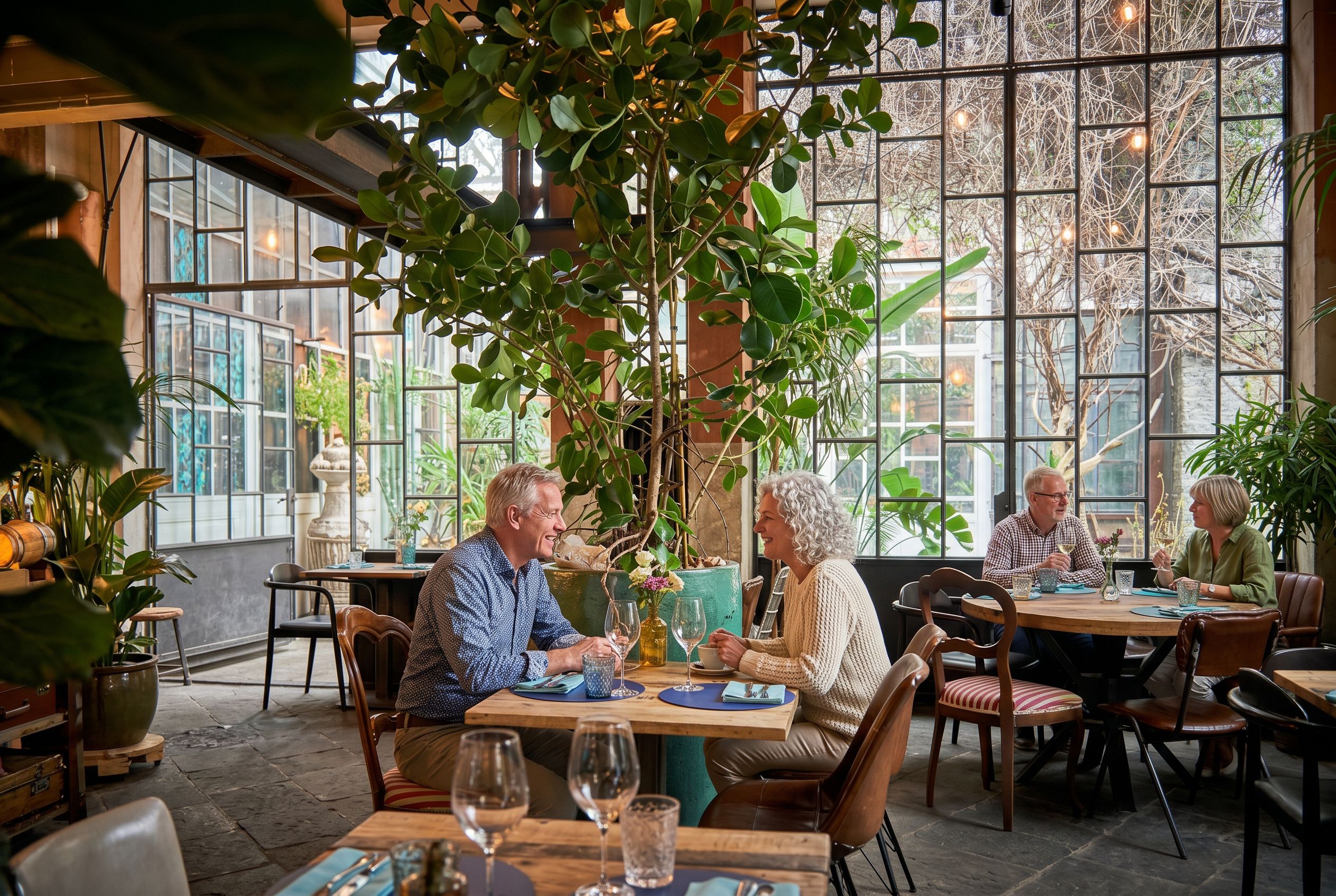
Choose the trattoria up the street, not the terrace on the water. Lakeside tables with English signs and dish photos are almost universally tourist traps—overpriced, underwhelming, and crowded. The real food happens in the narrow alleys and hillside lanes, where the clientele is local and the menu is handwritten.
The rule of thumb is simple: the best meals come from family-run trattorie in the less crowded villages. In Moltrasio, walk up the hill from the dock to Ristorante La Moltrasina in Via Francesco Raschi or Bar Al Centrale on Piazza San Martino—both require a short uphill walk, so consider your mobility, but the reward is a meal that feels like a private invitation. In Lenno, Trattoria Santo Stefano on Piazza XI Febbraio and the Locanda Il Cris in Via Armando Diaz are steady alternatives to the busiest terraces. In Menaggio, Divino 13 is another reliable choice, with a relaxed atmosphere away from the busiest stretch of the waterfront.
For the most authentic experience, head to Trattoria del Porto at the water’s edge in Careno, a hamlet of Nesso on the SP583. The village’s own guide says Careno can be reached by car, by the C130 bus and by the scheduled boat that calls there—but the houses step down to the water, so there are stairs either way. The kitchen serves a fixed menu built around lake fish and opens from March to November, which makes booking sensible. Crotto Isidoro sits above Dongo in the hill village of Stazzona, in Via Vanzonico: a crotto is a cellar cut into the rock, and this one now has a roofed terrace over the lake and a kitchen turning out polenta uncia, local salami and cheeses, mixed grills and pizzoccheri to order. Ittiturismo Ristorante Mella in Bellagio has been in the same fishing family since 1958, and the perch risotto is what regulars come for.
The pattern holds in Bellagio too. A Google review of Ristorante Mella from March 2025 describes it as “cozy and tucked away from the main tourist sites” — the same short walk away from the promenade that separates a tourist menu from a kitchen cooking for regulars.
What are the best food markets for self-catering or a picnic?
Three markets stand out: the Mercato Coperto (Annonario) in Como, the Bellagio monthly market, and the Dongo weekly market. Each offers local cheeses, cured meats, fresh lake fish, and seasonal produce at prices far below restaurant menus.
Two different markets are often confused here. The Mercato Coperto—the Mercato Annonario—is at Via Mentana 5 in Como and, according to the city’s own visitor pages, is open every day from Monday to Saturday, its shops keeping ordinary neighbourhood hours. The Tuesday-and-Thursday-morning, all-day-Saturday pattern belongs to the open-air Mercato Mercerie along the walls between Viale Battisti and Viale Varese. Inside the covered hall you will find cheeses such as Zincarlin—shaped, Slow Food says, like an upturned cup, made from raw cow’s milk with a little goat’s milk added in season—and Casera, fresh lake fish, salumi and bread. Arrive early for the best selection. The Bellagio market sets up in the Lungolago Europa car park on the third Wednesday of each month, 7 am to 5 pm, and includes local food, arts, and crafts. The Dongo weekly market on Via Cavour runs Thursdays from 8 am to 1 pm, with fresh and prepared foods.
For a picnic, buy bresaola (air-dried beef from the Valtellina), a wedge of local cheese, a loaf of pan de Com—the Lario bread of the early 1900s that Como millers have been reviving—and a bottle from the lake’s own appellation, IGT Terre Lariane, whose growers work the hill and mountain communes of Como and Lecco. Nebbiolo is not one of them: it belongs to the Valtellina, further north. Then find a bench along the Lungolago Europa in Bellagio, beside the car park where the monthly market sets up, and watch the ferries cross the lake. The Lake Como highlights guide for over-50s has more on the best spots for a relaxed afternoon.
| Market | Location | Schedule | Best for |
|---|---|---|---|
| Mercato Coperto (Annonario) | Como, Via Mentana 5 | Mon–Sat | Cheese, fish, salumi |
| Bellagio Market | Lungolago Europa car park | 3rd Wed/month, 7 am–5 pm | Local food, crafts |
| Dongo Weekly Market | Via Cavour | Thu, 8 am–1 pm | Fresh produce, prepared foods |
| Argegno Market | Piazza Dante Rosati, Argegno | Mon, 8 am–1 pm | Fruits, vegetables, grilled chicken |
How can I avoid tourist traps when dining?
Look for three warning signs: a menu with photographs of the dishes, a staff member standing outside trying to lure you in, and prices that seem too good for the location. If you see any of these, walk past. The best meals are found where you least expect them.
Experienced travellers offer a simple rule: eat where the Italians eat. In Como city, Figli Dei Fiori in Via Borgo Vico runs a modern kitchen on local ingredients and holds 4.5 out of 5 on Google from 1,884 reviews (August 2026). Riva Café, a couple of streets back from the water in Via Fratelli Cairoli, is known for its oval, thin-crust pizzas. In Varenna, Il Cavatappi is tiny and very good—but it sits in a quiet lane in Via XX Settembre rather than on the water, and you must book well ahead. In Bellagio, Bilacus serves a lunch menu from midday to 5 pm in Salita Serbelloni, a stepped lane a few minutes above the ferry dock.
Another reliable strategy: visit the less crowded villages. Menaggio, Lenno, and Moltrasio all have excellent trattorie without the shoulder-to-shoulder crowds of Bellagio and Varenna. Navigazione Laghi’s summer timetable runs to 4 October 2026, and its daily free-circulation ticket (biglietto di libera circolazione giornaliero) lets you plan meals around the boat rather than the other way round. The town-by-town guide for travellers 50–70 can help you choose which village to use as your base.
What about price bands?
On the 2026 menus of two houses in this guide—Bilacus in Bellagio and Trattoria Santo Stefano in Lenno—an antipasto runs €15–€25, a primo €20–€30 and a secondo €18–€28, with a cover charge of €3–€4 printed on the card. Two courses plus coperto therefore come to roughly €45–€55 a head before drinks.
Here is what the two menus quoted above actually charge, course by course:
| Course | Price on the 2026 menus | Examples from those menus |
|---|---|---|
| Antipasto | €15–€25 | Caponata siciliana €18; beef tartare €25 |
| Primo (pasta or risotto) | €20–€30 | Perch risotto €30; casoncelli di magro €22 |
| Secondo (fish or meat) | €18–€28 | Grilled lake whitefish €25; baked turbot €28 |
| Coperto (per person) | €3–€4 | Printed on both menus; up to €15 on a front-row lakeside terrace |
For the best value, order the daily special (piatto del giorno) rather than the fixed menu. It will be fresher, cheaper, and more likely to feature what the chef is excited about that day. And read the coperto (cover charge) and servizio (service) lines before you order: in Lombardy the price list has to be available to guests before they order and has to state any service component, so a cover charge is never allowed to arrive as a surprise—though at €3 to €4 a head it does mount up over a week.
What about the aperitivo culture?
Aperitivo is a cherished daily ritual around Lake Como—a pre-dinner drink with small snacks like olives, bruschetta, and chips. It is the perfect way to ease into the evening without committing to a full meal, and it is far more relaxed than the formal dining scene.
Head to Aperitivo et Al, the wine bar in Salita Serbelloni in the middle of Bellagio, or Bar Il Molo on Riva Garibaldi in Varenna for a classic spritz or a glass of Franciacorta (sparkling wine)—though Franciacorta is not a Lake Como wine at all: its consortium sits at Erbusco in the province of Brescia, so ask for a Terre Lariane bottle if you want the lake in the glass. The tradition runs from about 6 pm to 8 pm, and the snacks are often substantial enough to serve as a light dinner. Many locals make a meal of aperitivo, especially in summer when the heat suppresses appetite.
For a truly local experience, visit Pasticceria Siciliana Vittoria at Largo Leopardi 2 in Como—a Sicilian pasticceria and gelateria, and a sweet twist on the savoury norm. The villa gardens guide notes that many of the grand villas offer their own aperitivo service in the gardens during summer—a lovely option after a day of walking.
What about seasonal and festival food?
Summer brings lake fish and fresh vegetables; autumn brings polenta festivals and chestnut roasts; winter brings hearty stews like cassoeula. If you want the full range, visit in September or October, when the weather is still pleasant and the food festivals are in full swing.
The Festa del Lago in Varenna (July) celebrates local cuisine with fireworks. The Sagra della Polenta e del Pizzocchero runs at La Polenteria in Brunate, above Como, every Friday, Saturday and Sunday from 3 July to 9 August 2026: the “Giro Polenta”, an all-you-can-eat of three polenta pairings with a glass of wine and water included, is €29, and the funicular up from Como takes a few minutes. The Sagra delle Castagne in Peglio, above Gravedona, honours chestnuts every October. These are community events, not tourist spectacles—expect simple food, plastic chairs, and genuine warmth.
One caution if you buy missoltini to take home: Slow Food notes that half of what is sold today has been oven-dried and “absolutely lacks the sensory and nutritional characteristics of the original, artisanal product”, so ask whether the fish were dried in the sun. Winter dishes such as cassoeula (a hearty pork and cabbage stew) keep their season. The LakeComo International Music Festival reached its 21st edition in 2026, running from 5 June to 13 September across Como, Cernobbio, Tremezzina and Alzate Brianza, with concerts in historic villas including Villa Carlotta—a perfect pairing with a pre-concert dinner at a nearby trattoria.
“We had a memorable evening at this lakeside trattoria. We enjoyed delicious lake fish and local dishes, including thoughtful alternatives for a vegetarian. Go for the food, stay for the views and excellent service.” — a guest reviewing Trattoria del Porto in Careno on Google in June 2022
What about accessibility for seniors?
Most trattorie in the historic centres involve some steps or uneven pavement. The most reliable guide is Regione Lombardia’s accessible-tourism itinerary for Lake Como, which covers Como, Lecco, Bellagio, Varenna and Menaggio and whose access details were checked on site by accessible-tourism specialists. Do not count on the Greenway: its own operator says the route has climbs, narrow cobbled lanes and steps, and cannot be walked with a wheelchair.
If mobility is a concern, do not read Como’s rebuilt lakefront walk as the level stroll it looks: local reporting describes steps, changes of level and small bridges that make it impassable in a wheelchair, while the historic core around the cathedral stays flat. Varenna is compact and mostly flat near the water and Menaggio is less crowded and easier to navigate; both, along with Como and Bellagio, are stages of the regional accessible itinerary, so read its notes before you commit to a table. Bellagio’s upper streets are steep and stair-like. The spa day guide has more on accessible wellness options after a day of eating.
Al Prato on Piazza del Prato in Varenna is listed as wheelchair accessible on the booking portals and flags vegetarian, vegan and gluten-free options; no statement from the house itself covers the entrance, so call ahead and ask what that means for your own needs. It holds 4.7 out of 5 on Google from 1,656 reviews (August 2026). Ristorante Beccaccino in Via Boschetto in Sorico, at the northern end of the lake, is another option for traditional fare.
What about high-end dining?
High-end restaurant dining and hotel restaurants are covered in their own dedicated guides. For this article, we focus on the trattorie, osterie, and markets that define everyday Lake Como eating. If you are interested in Michelin-starred options like Materia in Cernobbio or Il Sereno al Lago in Torno, see our separate feature on fine dining around the lake.
That said, one sentence: Il Sereno Lake Como reopened for the 2026 season in March with a new intimate restaurant, Al Tramonto, for sunset dining, and The Lake Como EDITION at Cadenabbia—soft-opened at the end of summer 2025 and officially inaugurated in March 2026, with Cetino by Mauro Colagreco inside it—has already added its own high-end options. But for the authentic, unhurried meals that stay with you long after you leave, the trattorie are where the heart of Lake Como beats.


