
Lake Garda’s kitchen is a quiet conversation between the lake and the land. On one side, you have the deep, mineral flavours of freshwater fish—lavarello, pike, perch, and sardines—caught in waters that have fed local families for centuries. On the other, you have the sun-baked hillsides producing Garda DOP olive oil, lemons that grow in terraced groves, and wines like Bardolino and Lugana that have earned their place on tables across Europe. For the traveller who loves food, this is not a place for grand gastronomic theatre; it is a place for honest, seasonal cooking served in trattorie where the owner might still announce the day’s catch verbally rather than hand you a printed menu.
This guide is written for food-minded travellers aged 50 to 70 who want to eat well without the fuss. We will focus on local specialities, the best trattorie and market days, and how to avoid the tourist traps that line the busiest lakefronts. We will not cover hotel restaurants or fine dining—the latter has its own dedicated guide—but we will point you to the places where locals actually eat, where the fish is fresh, the olive oil is local, and the bill is honest.
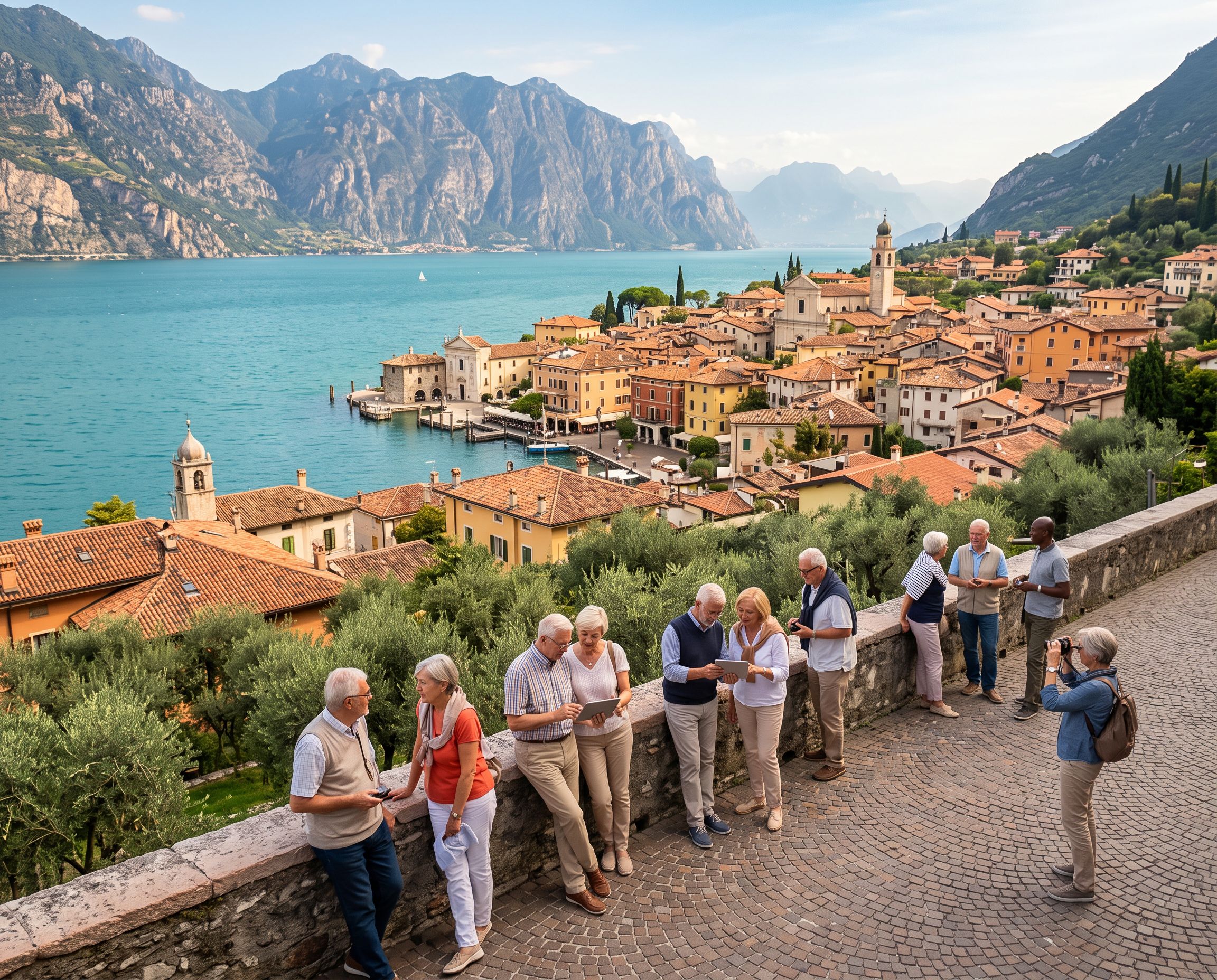 AI-edited
What are the signature dishes I should try?
Start with bigoli con le sarde—a hearty egg pasta sauteed with fresh sardines and lifted by Garda extra-virgin olive oil—then move to pike with polenta, risotto with lake fish, and carne salada, a salted beef specialty from the northern shores.
The lake’s culinary identity is firmly anchored in its waters. According to Navigazione Laghi, the state-owned lake transport operator, the typical dishes of the Garda area include bigoli con le sarde, pike in sauce, grilled whitefish and lake fish soup. On the Trentino side, you will also find carne salada—beef that is salted, marinated, and served either raw or lightly seared, often with beans or polenta. For something heartier, look for carbonèra, a polenta dish enriched with Monte Baldo cheese and a generous drizzle of Garda DOP olive oil.
Inland, the Veronese influence brings tortellini di Valeggio, usually served in a delicate broth, and the region’s prized Formaggella di Tremosine, a soft cheese that pairs beautifully with local honey. As of August 2026, the ferry operator’s own guide to Garda cooking names the tortellini among the local staples and sets the seasonal produce beside them: Monte Baldo truffle, mountain cheeses and the DOP chestnuts of San Zeno di Montagna. The pine nuts and raisins many visitors expect in a sardine dish belong to a different one—sarde in saor, whose recipe for the lake puts both in the marinade.
Where can I find authentic trattorie without the tourist crowds?
Look just off the waterfront, in side streets and town centres, where locals gather. Trattoria al Pescatore in Garda and Trattoria Da Pino 2 are consistently praised for fresh fish, generous portions, and honest prices—the first stands a couple of hundred metres from the lakefront, the second about two kilometres inland.
Travellers over 50 who have explored Lake Garda repeatedly report that the best meals are found not on the scenic promenades but inland—sometimes a block or two, sometimes a couple of kilometres. Travel forum contributors single out Osteria La Frasca on Via Giuseppe Garibaldi in Desenzano del Garda for its fresh homemade pasta with lake fish, describing it as inexpensive and a little less visited precisely because it is not right on the lake. It closes on Tuesdays. The same threads recommend Trattoria Relax in Castion Veronese, where many locals dine, and Trattoria El Brol for simple Italian food in a relaxed garden setting.
As of 18 August 2026, Trattoria al Pescatore (Via Manzoni 25, Garda) holds a 4.1/5 rating on Google from 490 reviews, with guests consistently praising the friendly staff and the quiet side-street location. It serves lunch and dinner every day of the week. Trattoria Da Pino 2, with a Google rating of 4.2/5 from 997 reviews as of 18 August 2026, is described as rustic and family-run, popular with locals, and offering a summer veranda where children can play. It sits on Via dell’Uva, inland behind the town, and closes on Mondays. Both are excellent examples of the trattoria culture that defines the lake’s dining scene.
“Super fish trattoria in a great place for people watching as it has four ways to enter the small square. Staff are very attentive and quick to take your order. Food is excellent and the grilled sea bass is fantastic!” — a guest wrote on Google in July 2026 about Trattoria al Pescatore in Garda
What are the best market days and food festivals?
Bardolino’s Thursday market is the standout for food-and-wine browsing, while the autumn sagre—village festivals dedicated to a single product—offer the most authentic taste of local culture. Expect chestnuts in San Zeno di Montagna from late October, and the Monte Baldo truffle festival in Caprino Veronese at the end of August.
Lake Garda’s food culture comes alive during its sagre, traditional village festivals centred on a single product. These are not tourist shows but genuine community gatherings with shared tables, live music, and local craft sales. The Bardolino Grape and Wine Festival, held each autumn, is among the best-known, but the smaller events often offer the most memorable experiences.
For market days and event dates, the official tourist board of the Veneto shore keeps a town-by-town calendar. Key stops include the Torri del Benaco olive festival, which the town council runs with Slow Food Veneto in spring, and the San Zeno chestnut festival, which the growers’ consortium schedules between late October and early November. The Festa dell’Uva e del Vino in Bardolino falls on 1 to 5 October in 2026—a highlight, but book your accommodation and dinner tables well in advance, because this is the busiest food period of the year.
| Festival | Town | Focus | Typical Timing |
|---|---|---|---|
| Festa dell’Uva e del Vino | Bardolino | Wine, grapes | 1–5 October 2026 |
| Festa dell’Olio | Torri del Benaco | Garda DOP olive oil | Spring (11–12 April 2026) |
| Festa delle Castagne | San Zeno di Montagna | Chestnuts, mountain produce | Late October to early November |
| Festa del Tartufo Nero del Monte Baldo | Caprino Veronese | Truffles | Late August (28–31 August 2026) |
| Mercato settimanale | Bardolino | Local produce, oil and wine | Every Thursday, 8am–1pm |
How do I choose between lakeside terraces and trattorie?
Choose lakeside terraces for a drink or a light lunch with a view, but for your main meal, opt for a trattoria a short walk inland. You will get better food, lower prices, and a more authentic atmosphere—the view premium is rarely worth it.
The lakeside promenades of Garda, Bardolino, and Malcesine are undeniably beautiful, and there is something special about dining with the water at your feet. But experienced travellers consistently warn that the most obvious lakefront spots can be expensive and underwhelming. Forum contributors put it bluntly: the best alternative to the restaurants lined up directly along the water is a place a street or two inland, where the convenience of the view is not paid for in quality.
That said, a lakeside terrace is perfect for an afternoon Aperol spritz or a gelato break. The key is to manage expectations: pay for the view, not the food. For dinner, walk two or three streets back from the water and look for places where the menu is handwritten, the clientele is local, and the fish is described by the day’s catch rather than a glossy photograph.
What should I know about Lake Garda olive oil and lemons?
Garda DOP olive oil is the region’s protected culinary treasure, with a delicate, fruity flavour that pairs beautifully with lake fish. Lemons, grown in terraced groves on the western shore, appear in everything from limoncello to desserts and are a defining taste of the area.
The olive groves of Lake Garda produce an extra-virgin olive oil that has held DOP (Denominazione di Origine Protetta) status since 1997. It is lighter and more delicate than many southern Italian oils, fruity on the nose with a typical almond finish, making it ideal for drizzling over grilled fish or dipping with fresh bread. The olives ring the whole lake: Torri del Benaco lies on the Veronese, eastern shore and Gargnano on the Brescian, western one, and both sit at the heart of production, with several farms offering tastings.
Lemons, meanwhile, are a symbol of the lake’s mild microclimate. The famous lemon houses—limonaie—of Limone sul Garda and Gargnano are a testament to centuries of cultivation. Today, you will find lemon-flavoured desserts, limoncello, and even lemon-infused olive oil in local shops. For a memorable experience, visit the Limonaia del Castel in Limone sul Garda, a restored lemon house that offers a glimpse into this unique agricultural tradition.
How can I avoid tourist traps?
Avoid eating on the main squares of Sirmione, Bardolino, and Malcesine during peak hours. Instead, book ahead at smaller trattorie, arrive early for lunch, and be willing to walk a few extra minutes for a table where locals outnumber visitors.
The most crowded areas around Lake Garda are Sirmione’s old town, the Bardolino waterfront during wine festivals, and the Malcesine castle area. These are beautiful places, but they attract the highest concentration of tourist-focused restaurants. To eat well, follow the advice of seasoned travellers: book ahead for well-known places, arrive early for lunch, and be flexible about location.
Recent guests at Trattoria Da Pino 2 advise arriving early to secure a table, as the restaurant is busy and popular with locals. Similarly, Iona Seafood Pub in Peschiera is described as “quite small,” so reservations are essential. Osteria Rivelin, on the far side of Peschiera’s old town, serves dinner every evening from 18:45 but opens for lunch only on Saturdays and Sundays. The lesson is simple: plan ahead, and you will eat better.
What are the price bands for dining?
Expect to pay €15–€25 for a main course at a good trattoria, €8–€12 for a pasta dish, and €3–€5 for a coffee or glass of house wine—high season 2026, before the cover charge. On a lakeside terrace the same meal lands roughly half as much again.
Lake Garda dining is generally reasonable by Italian standards, especially if you avoid the most tourist-facing venues. Trattoria Da Pino 2, which Google files in its cheapest price band, serves lunch from noon to two and dinner from six, Tuesday to Sunday; guests consistently call the set lunch remarkable value. For a full meal with wine at a mid-range trattoria in high season, budget €35–€50 per person. At a lakeside terrace, the same meal could easily reach €60–€80.
| Venue Type | Pasta Dish | Main Course | Full Meal with Wine |
|---|---|---|---|
| Trattoria (inland) | €8–€12 | €15–€25 | €35–€50 |
| Lakeside terrace | €12–€18 | €22–€35 | €50–€80 |
| Osteria (wine bar) | €7–€10 | €12–€18 | €25–€40 |
What about accessibility and comfort?
Most lakefront promenades are flat and easily walkable, but some historic centres and castle sites involve steps and uneven surfaces. Desenzano and Riva del Garda are the best documented for easy walking, and verify step-free access directly with restaurants before booking.
For travellers aged 50 to 70, comfort is a priority. Regione Lombardia documents level lakeside paths at Desenzano, Salò, Gardone Riviera and Gargnano, and in Garda Trentino the public transport around Riva del Garda is barrier-free throughout. For Peschiera, Bardolino and Garda no such survey exists, so judge the ground for yourself when you arrive; all three keep their dining within easy reach of the water. Sirmione’s town council is precise about its two headline sites: the Scaligero Castle is not accessible inside, while the Grotte di Catullo, museum included, are. Malcesine Castle does not appear on that town’s accessibility list, so expect steps and uneven terrain there.
Guest reviews around the lake consistently mention that some restaurants have steps or limited accessibility, so it is worth calling ahead if you have mobility concerns. The good news is that most trattorie in town centres are on level ground, and the region’s public ferry system, operated by Navigazione Laghi, offers a comfortable way to hop between towns without the stress of parking.
What are the best towns for food lovers?
Bardolino for wine and markets, Garda for classic trattorie, Desenzano for lakeside dining with a local feel, and the western shore towns of Gargnano and Gardone Riviera for a quieter, more traditional experience.
Each town around Lake Garda has its own culinary personality. Bardolino is the wine capital, with its Thursday market—clothing, food, wine and stalls of local produce, from 8am to 1pm—and autumn wine festivals drawing food lovers from across the region. Garda offers a mix of lakeside charm and excellent addresses like Trattoria al Pescatore and Ristorante Bella Venezia, both praised for their fish dishes and welcoming service. Desenzano, on the southern shore, has a lively atmosphere and the excellent Osteria La Frasca, which travellers describe as a hidden local favourite.
For a quieter experience, head to the western shore. Gargnano keeps its lemon houses and its olive groves, and Gardone Riviera is home to Trattoria Marietta, where guests praise the “spectacular service” and good wine pairing. Marietta serves dinner only, and closes on Mondays, so plan it as an evening. If you are planning your base, our town-by-town guide can help you choose the right location for your food-focused itinerary.
What should I drink with my meal?
Pair lake fish with a crisp Lugana white or a light Bardolino Chiaretto rosé. For red wine lovers, Bardolino’s classic red is soft and fruity, perfect with carne salada or polenta dishes.
The wines of Lake Garda are an integral part of the dining experience. Lugana, produced on the southern shore, is a white wine with citrus and almond notes that pairs beautifully with lavarello and other lake fish. Bardolino, on the eastern shore, produces both a light red and a rosé (Chiaretto) that are refreshing and food-friendly. For a special occasion, look for a Lugana Superiore or a Bardolino Superiore, both of which offer greater complexity.
Many trattorie offer house wine by the carafe, which is often an excellent value and perfectly drinkable. Do not be afraid to ask for the local wine list—the owners are usually proud of their regional selections and happy to recommend a pairing.
What about seasonal specialities?
Autumn is the richest season for food lovers, with the chestnut festival, new wine celebrations, and the famous Bardolino grape festival in early October. Spring brings fresh olive oil and the first lake fish of the season.
Lake Garda’s food calendar is tied to the seasons. In spring, the first pressing of olive oil is celebrated, and the lake’s fish are at their freshest. Summer is the peak tourist season, with the widest choice of restaurants but also the busiest streets. Autumn is the true food lover’s season: chestnuts from San Zeno di Montagna and the new wine festivals that mark the harvest; the Monte Baldo truffle has its own festival in Caprino Veronese at the end of August.
The season has a hard edge to it. Navigazione Laghi ran its 2026 Lake Garda timetables from 1 April to 4 October, and the full service between the towns only from 16 May—so the lake’s own calendar tells you where the shoulder months begin and end. For a calmer visit with excellent food, plan for May, June, or September, when the weather is pleasant, the crowds are thinner, and the restaurants are fully open.
How do I get around for dining?
The lake’s ferry system, run by Navigazione Laghi, is the most relaxed way to travel between towns for meals. Buses connect inland villages, but driving and parking can be challenging in peak season.
For food-minded travellers, the ferry is a revelation. You can have lunch in Bardolino, take an afternoon ferry to Malcesine for a lakeside gelato, and return to your base in time for dinner. The ferries are comfortable, with outdoor seating that offers stunning views of the lake and its surrounding mountains. Check the season before you plan around the boats: the main 2026 timetables run from 1 April to 4 October, and the full service between the towns only from 16 May. Outside that a reduced timetable covers 7 to 31 March, and from 3 November to 6 March the operator ran only the Torri–Maderno car ferry.
If you prefer to drive, be aware that parking in lakeside towns is limited and expensive during peak season. Many visitors choose to stay in one town and use ferries for day trips, which is both practical and enjoyable. For more on getting around, see our transport guide.
“Lovely food, beautiful almost hidden location - lot's of locals in. Friendly staff who know a little english.” — a Google reviewer described Trattoria da Pino 2 in Garda this way in July 2025
What are the best dishes for a light meal?
For a light lunch, try a plate of grilled lake fish with a salad, or a bowl of risotto with perch. For a snack, look for local cheeses like Formaggella di Tremosine or a slice of torta di rose, a sweet bread from the region.
Not every meal around Lake Garda needs to be a feast. The region excels at simple, fresh food that satisfies without weighing you down. A plate of grilled lavarello with a drizzle of Garda olive oil and a squeeze of local lemon is a perfect lunch. For something more substantial, risotto with lake fish is creamy and comforting without being heavy.
For a lighter option, many trattorie offer a selection of local cheeses and cured meats as antipasti. Pair these with a glass of Lugana and you have a meal that is both elegant and effortless. And do not skip dessert—the lemon-based sweets of the western shore, such as lemon cake or limoncello tiramisu, are a fitting end to any meal.
How do I make reservations?
Book ahead for popular trattorie, especially during festivals and summer weekends. A phone call the day before is usually sufficient, but for well-known places like Locanda Perbellini al Lago in Garda, reserve several days in advance.
Reservations are the key to eating well around Lake Garda. While you can often find a table at less popular places on a weekday, the best trattorie fill up quickly, especially during festivals and in peak season.
For the most popular spots, such as Iona Seafood Pub in Peschiera or Trattoria al Pescatore in Garda, book several days ahead—and check the closing day before you dial: Iona and Trattoria da Pino 2 shut on Mondays, Osteria La Frasca and Locanda Perbellini al Lago on Tuesdays. If you are visiting during the Bardolino wine festival, which runs from 1 to 5 October in 2026, make your dinner reservations at least a week in advance. As guest reviews show again and again, the best meals often require a little planning—but the payoff is worth it.
What about dietary requirements?
Vegetarians will find plenty of options, from risotto with seasonal vegetables to polenta with cheese and grilled vegetables. For gluten-free travellers, many trattorie offer gluten-free pasta, and the region’s cuisine is naturally rich in fish and vegetable dishes.
Lake Garda’s cuisine is surprisingly accommodating for dietary restrictions. Vegetarians can enjoy the region’s excellent cheeses, olive oil, and vegetable dishes, while pescatarians will be in heaven with the abundance of fresh lake fish. For gluten-free travellers, many restaurants now offer gluten-free pasta, and polenta is naturally gluten-free. As always, it is worth mentioning your requirements when booking so the kitchen can prepare accordingly.
One note: Italian kitchens are generally happy to adapt dishes, but they may not always understand the nuances of severe allergies. If you have a serious allergy, it is wise to carry a translated card explaining your needs, and to confirm with the restaurant before ordering.
What are the best experiences for food lovers?
Beyond restaurants, consider an olive oil tasting at a local farm, a visit to a lemon house on the western shore, or a cooking class focused on lake fish and regional pasta. These experiences offer a deeper connection to the food culture.
For travellers who want to go beyond the table, Lake Garda offers a range of food experiences that are both educational and enjoyable. Olive oil tastings are available at several farms around Torri del Benaco and Gargnano, where you can sample different varieties and learn about the production process. The lemon houses of Limone sul Garda and Gargnano offer guided tours that reveal the history of this unique cultivation.
Cooking classes are another excellent option, with many chefs offering hands-on sessions focused on regional dishes like bigoli con le sarde or tortellini di Valeggio. These experiences are typically small-group and can be tailored to your pace and interests. For a truly memorable afternoon, combine a cooking class with a visit to a local market to source ingredients—a wonderful way to immerse yourself in the food culture.
What should I avoid eating?
Avoid generic pizza and pasta dishes at tourist-focused restaurants, which are often pre-prepared and overpriced. Instead, choose places that specialise in lake fish and regional specialities—these are the kitchens that take pride in their local ingredients.
Not everything around Lake Garda is worth eating. The most common mistake travellers make is choosing a restaurant based on its view rather than its kitchen, resulting in mediocre food at premium prices. Another pitfall is ordering dishes that are not regional specialities—there is little point eating a generic margherita pizza when you could be enjoying fresh lake fish with local olive oil.
It is worth remembering that even in Italy, not every restaurant excels at every dish—least of all one that is not a local speciality. The best strategy is to ask locals for recommendations, look for menus that change with the seasons, and trust trattorie that have been serving the same families for generations.
What are the best lingering questions?
For a truly memorable food experience, plan your visit around a sagra, book a table at a well-reviewed trattoria, and leave room for a lakeside gelato. The combination of authentic food and beautiful scenery is what makes Lake Garda special.
Lake Garda rewards travellers who take the time to eat well. The region’s cuisine is a reflection of its landscape—fresh, honest, and deeply rooted in tradition. Whether you are savouring a plate of bigoli con le sarde at a family-run trattoria, browsing the stalls at Bardolino’s Thursday market, or watching the sunset over a glass of Lugana, the food of Lake Garda is an experience to be savoured slowly.
For more inspiration on what to see and do between meals, our highlights guide covers the region’s top attractions, while our Sirmione spa guide offers a relaxing way to round out your trip. Buon appetito!


