
Ubud eats earlier than most of Bali. The roast-pork warungs fire up before dawn, the market stalls are stripped of their best produce by mid-morning, and the kitchens that cook duck in banana leaf want your order the day before. For food-minded travellers in their fifties and sixties, that rhythm is the whole point: this is a town where the cooking is regional, seasonal and largely unsentimental about presentation, and where a lunch that costs less than a taxi ride can be the most memorable meal of a fortnight.
The dishes worth planning a day around are few and specific. Nasi campur, the mixed rice plate, is the everyday Balinese lunch. Babi guling, the spit-roast pig, is a morning and midday affair. Bebek betutu, duck packed in spice paste and slow-cooked, is a dinner dish that some kitchens ask you to reserve ahead. Around these sit the vegetarian and health cafes that have grown up with Ubud's long-staying visitor population, and a market where the produce and the warungs share the same narrow lanes.
What food is Ubud known for?
Ubud is known for Balinese home cooking served in warungs: nasi campur, babi guling, ayam betutu, sate lilit, lawar, slow-cooked duck, nasi goreng and coconut-based sweets. The town is also known for a large concentration of vegetarian and health-focused cafes, and for a central art market where food stalls sit among the handicraft sellers.
Bali's characteristic foods, as listed by the Bali food guide at Balisakuraba's guide to eating and cafe-hunting in Bali, include nasi campur, ayam betutu, sate lilit, lawar, nasi jinggo and tipat cantok. That list is a useful shopping list for a first week: it covers the rice plate, the spiced chicken, the grilled skewers, the coconut and minced-meat preparation, and two smaller snack dishes.
For a first meal in Ubud, nasi campur is the most efficient introduction, because a single plate carries several Balinese preparations at once: rice, vegetables, sambal, egg, shredded meat, and often chicken or pork. If you taste nothing else on day one, taste that.
Which Balinese dishes should I try first?
Start with nasi campur, then babi guling at lunchtime, then bebek betutu or ayam betutu in the evening. Add sate lilit and lawar as sides or shared plates. Roast-pork warungs and busy lunch stalls tend to have the freshest turnover earlier in the day, so plan pork for lunch rather than dinner.
The dishes divide neatly by time of day. Lunch suits nasi campur, babi guling, nasi goreng or sate lilit. Dinner suits ayam betutu, grilled fish or chicken, sate lilit, vegetable dishes and rice, and the practical advice is to choose a busy establishment where food is cooked to order or served hot.
- Nasi campur Bali: rice with several small portions of vegetables, sambal, egg, shredded meat and often chicken or pork.
- Babi guling: Balinese-style roast suckling pig, generally eaten earlier in the day because popular warungs can sell out.
- Ayam betutu: chicken heavily seasoned with Balinese spices and cooked slowly.
- Bebek betutu: duck coated in spice paste and slow-cooked; some Ubud restaurants reportedly require advance ordering.
- Sate lilit: minced meat or fish wrapped around a bamboo skewer and grilled.
- Lawar: a mixed vegetable, coconut and meat preparation. Ask what is in it if you have dietary or food-safety concerns.
Lawar is the dish that most rewards a question. It is commonly served alongside babi guling or nasi campur, and its composition varies from kitchen to kitchen, so the asking is part of the ordering.
 AI-edited
Where do locals eat in Ubud?
In warungs: small family-run kitchens, often inside a traditional Balinese compound, serving a short menu of home-style dishes at low prices. Tripadvisor's Ubud listings describe several as clean, cosy warungs offering good food at reasonable prices. Those are recorded visitor impressions, not official hygiene certifications.
Compound Warung is described on Tripadvisor as sitting inside a traditional Balinese family compound and presenting Indonesian food as part of local culinary heritage. Its traveller comments repeatedly praise the generous portions, low prices, quiet traditional setting and flavourful food, with one specifically mentioning curry noodles. Tripadvisor's listing for the same warung records 457 reviews and a 4.9/5 rating at the time shown in the search results.
Several named warungs recur across review and forum material. Addresses and reported price points are as follows, and the figures are indicative only.
- Adi Warung, Jalan Goutama No. 14: Tripadvisor reviews describe the nasi campur as "phenomenally good," with a reported price of about IDR 35,000 in a December 2024 listing.
- Sun Sun Warung, Jembawan No. 2: repeated praise for generous portions, fresh ingredients and attentive service; reported dishes include nasi campur, satay and spring rolls.
- Warung Balok, Jalan Suweta No. 57: reviews repeatedly mention gado-gado, nasi campur and bakwan jagung (corn fritters); a 2024 review described the food as affordable and the service as fast.
- Warung Rama, Jalan Nyuh Gading 3: home-style Balinese food, with most dishes reported at approximately IDR 40,000–50,000 in the listing.
- Warung Tradisi Ubud: a small home warung serving very spicy Balinese food, with chicken satay, nasi goreng, fried corn and chicken curry mentioned in reviews dated March 2025.
Warung Tradisi Ubud is small. One Tripadvisor account describes approximately six tables, so arriving early may be sensible. Individual warungs may also close for religious ceremonies, family events or stock shortages, which makes same-day confirmation prudent rather than fussy.
Where can I eat babi guling, and when?
At Ubud's many dedicated babi guling restaurants, at lunchtime. A Reddit discussion from April 2025 advises trying one of Ubud's babi guling restaurants at midday, without documenting a specific Ubud venue in the excerpt. Popular roast-pork warungs can sell out, so earlier is safer than later.
Babi Guling Pande Egi, outside central Ubud, is described as serving roast pork with crispy skin, lawar, sambal and soup. That is the classic construction of the plate: the meat, the crackling, the coconut-and-meat lawar, a spoon of sambal and a broth alongside.
For ayam betutu, a Reddit thread from April 2025 recommends Ibu Mangku Kedewatan. Neither venue publishes accessibility details, and no source in the material documents step-free routes, accessible toilets or vehicle drop-off arrangements for these warungs. Confirm directly before you travel if mobility is a consideration.
How do I gauge the spice?
Ask, and ask specifically. Sambal arrives as a separate condiment in most warungs, so you can control the heat at the table. Some kitchens will cook a dish mild on request: Tripadvisor reviews of Melting Wok Warung mention that dishes can be requested spicy or not spicy. Warung Tradisi Ubud is described as serving very spicy Balinese food.
What the material does support is the ordering habit: name your heat level when you order, and treat sambal as something you add rather than something you accept.
Lawar deserves the same directness. Because it combines minced meat, vegetables, coconut and spices, and because recipes vary, asking what is in it covers both heat and dietary concerns in one question.
What about the Ubud market warungs?
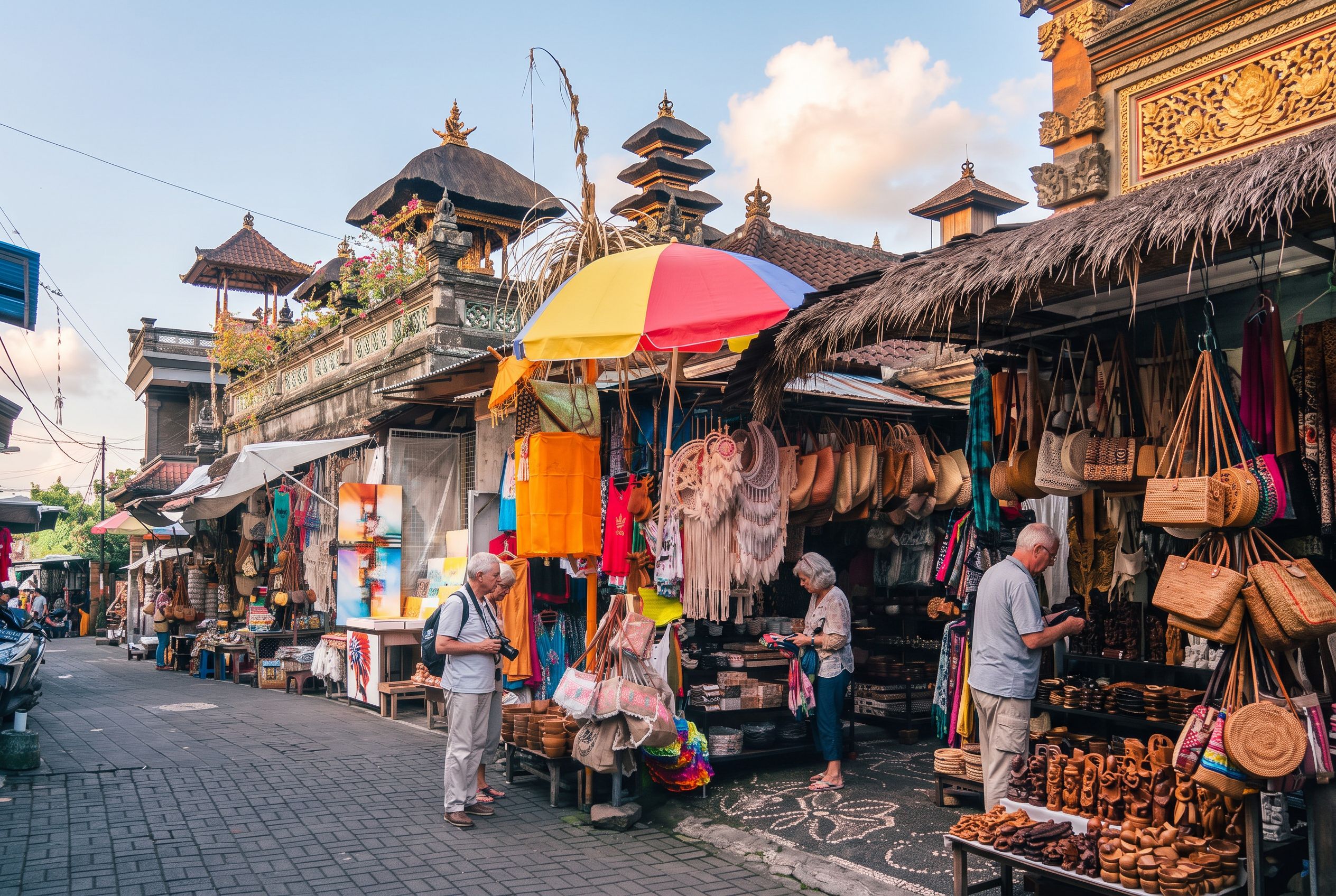
The Ubud Art Market sits in the centre of town, within walking distance of Ubud Palace and the Monkey Forest, and sells souvenirs, handicrafts, clothing, sarongs, jewellery and homewares. Reported hours are 09:00–18:00. It is busiest from 13:00 to 16:00, when tourist buses arrive; morning is described as the quietest period.
Late afternoon is reported as favourable for bargaining. The market's own sources do not document step-free routes, seating, toilets, lift access or surfaces within the market, so the detail is not documented and should be confirmed on arrival if mobility is a factor.
For a broader food-and-stall day, the Ubud Food Festival's 2026 Food Market at Taman Kuliner is reported to have more than 70 stalls and free entry, according to the festival's own vendor listing. The cited listing includes Indonesian and international vendors, among them Filipino dishes such as lechon belly sisig, adobo, mango sago and leche flan. Accessibility, seating, toilets and medical help at the festival market are not documented in the source.
Where are Ubud's vegetarian and health cafes?
Ubud has a well-established cluster of vegetarian and health-focused cafes, and several warungs appear on Tripadvisor's 2026 vegan listing with high ratings: Kemangi Ubud Resto, Dapur Usada, Kayunan Warung and Coffee, Nikuna Warung and Compound Warung. Tripadvisor users particularly praise Kayunan Warung and Coffee for its food and kombucha.
Nikuna Warung's standout dish, according to Tripadvisor, is its tuna, which is worth knowing if your party mixes vegetarians and fish-eaters. Compound Warung's gado-gado is specifically praised in Tripadvisor's Ubud listings, and its traveller comments describe "authentic local dishes" at inexpensive prices.
Wayan's Warung also has its gado-gado singled out in Tripadvisor's Ubud listings, and its listing recommends the dish. Warung Pulau Kelapa in Sanggingan is associated with beef rendang, ayam bakar bumbu rujak, sate ayam Madura, tahu gejrot and tempe mendoan; a Reddit discussion from April 2025 highlights its Indonesian food, a spacious garden and access over a bamboo bridge.
That bamboo bridge is worth noting as planning information. The reports do not say whether the approach is suitable or difficult for people with limited mobility, so ask before booking if that matters.
What does eating in Ubud cost?
Warung food is inexpensive. Tripadvisor reports consistently describe Warung Rama, Warung Balok and Adi Warung as inexpensive or good value. Reported figures include about IDR 35,000 for nasi campur at Adi Warung in a December 2024 listing, and approximately IDR 40,000–50,000 for most dishes at Warung Rama. These are indicative and vary.
Guest reviews of Sun Sun Warung describe prices as low for the quality and portion size, with several reviewers citing full meals for two at roughly IDR 200,000, or around $15–22. As of October 2026, Sun Sun Warung holds a Google rating of 4.7/5 from 6,248 reviews.
At the other end, Tripadvisor describes Tablespoon Ubud as serving fresh food with generous portions and a broad breakfast, lunch, dinner and drinks offering, and notes that some diners considered it more expensive than local warungs. No published rate exists for most of these kitchens; the figures above come from listings and reviews, not from the restaurants' own price sheets.
Rates are indicative and vary by season and booking channel. No source in the material documents senior or over-65 pricing, reduced tariffs or passes at any Ubud restaurant.
What should I know before I go?
Book nothing on assumption. reviewers report waits of roughly 10 to 40 minutes at peak dinner times, with shorter or no waits at lunch and mid-afternoon.
Guest feedback on Sun Sun Warung is unusually consistent and worth reading as practical guidance rather than praise. Reviewers describe a traditional Balinese compound with garden courtyards, marigold and lantern decoration, soft music, and a choice of standard tables or floor seating on cushions. They also describe the restaurant as open-air and multi-level, with seating upstairs and in outdoor pavilions, and they note that entry involves a steep set of tall stone steps up from the street, with shoes removed before entering the dining area. If steps are a concern, that is the detail to weigh before you set out.
"If you're going for dinner, I'd recommend arriving a little early to get your coupon, as they stop distributing them after a certain point and the queue fills up quickly. Lunch might be a little easier if you want to avoid the wait." (Google, August 2026)
Two other logistical points recur. Warung Lokal sits in an alley whose location is inaccurately mapped by Google Maps, according to an April 2025 Reddit thread, which places the alley one block north of the position the app shows. And popular warungs can be busy: several Sun Sun Warung reviews praise the food and cleanliness but note that popularity can mean waiting.
On food safety, the general precautions apply rather than any Ubud-specific rule: eat food served steaming hot and freshly cooked, favour busy warungs with high turnover, avoid raw salads and food that has been sitting lukewarm, and use sealed bottled water or properly treated water for drinking and brushing teeth unless your accommodation confirms safe treated water. Carry oral rehydration salts and seek medical advice promptly for blood in the stool, high fever, severe dehydration or persistent symptoms. The material does not identify the nearest pharmacy or hospital to Ubud, so ask your accommodation to note the closest clinic before you need one.
Central Ubud is described as walkable but with hills and narrow sidewalks, and the town centre around the palace, art market and evening dance venues is busy with people and traffic during the day. A private car with driver is described as the most flexible option for outlying sites and appointments. If you are still deciding where to sleep, our guide to choosing between central Ubud and the rice valleys sets out the trade-offs, and getting to Ubud from Denpasar covers the transfer itself.
When should I visit for the food?
Bali's drier months run from June to September, which the Bali Tourism Board describes as the driest season with low humidity, and the rainy season from October to March, when the West monsoon brings heavy showers and high humidity. Ubud and the mountainous areas can stay cloudy with drizzle throughout the year.
Daytime temperatures across Bali sit between 20 and 33 degrees Celsius, according to the Bali Tourism Board's climate page. Ubud's own weather summary gives typical daytime temperatures of about 27–30°C in the dry season and 26–29°C in the wet season, with cooler evenings around 20–23°C.
For market mornings and lunchtime pork, the practical reading is simple: go early, carry water, and treat the middle of the day as the time for a shaded table rather than a walk. If your trip coincides with the Ubud Writers and Readers Festival, DOMA News reported the 2026 edition as scheduled for 21–25 October with more than 200 programmes, and visitors staying centrally should expect increased demand for accommodation, restaurants and road space across those dates.
One more change to plan around: from 8 September 2026, Gianyar's transport department reportedly converted core Ubud streets to one-way traffic and prohibited tour buses from entering the town centre, and DOMA News reported more than four hours of gridlock on the first day. Allow slack in any lunch reservation you make across town.
For the wider picture of what to see between meals, our selection of the finest of Ubud for over-50s covers the temples, museums and performances, and a separate guide covers gentle yoga and spa days in Ubud. The high-end restaurant scene and hotel dining are covered in their own dedicated guides.


