
Located in the heart of the Salzkammergut lake district, Hallstatt is one of Austria’s most photographed villages. For travellers aged 50 to 70, the question isn’t whether to visit, but how to do so on your own terms. This guide focuses on the practical realities: where Hallstatt sits within this stunning region, how to get around, why the day-tripper crowds dictate your schedule, and where to base yourself for a comfortable, unhurried experience. We’ll cover mobility, timing, and the best alternatives nearby, so you can enjoy this UNESCO World Heritage site without the stress.
 AI-edited
Where exactly is Hallstatt in the Salzkammergut?
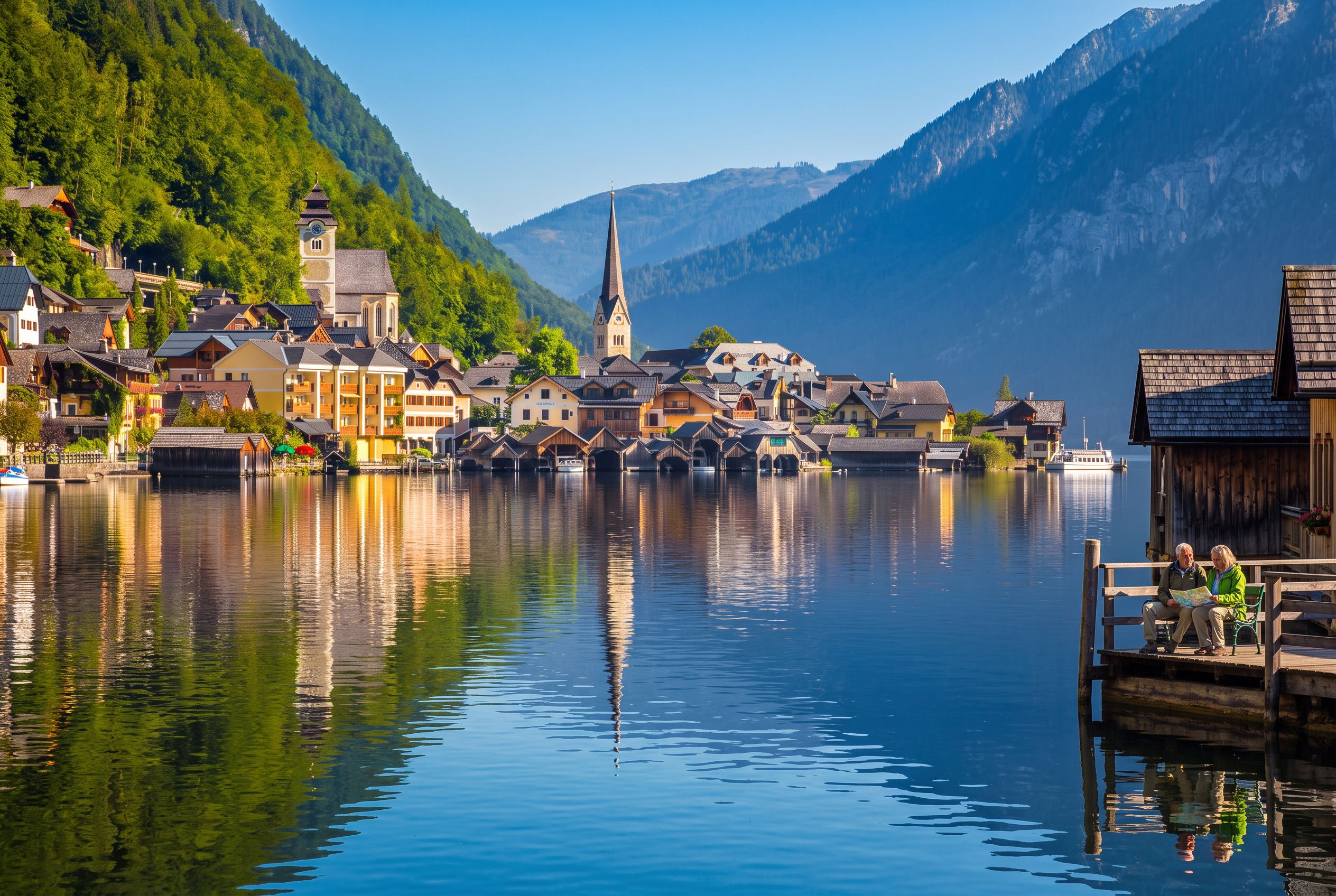
Hallstatt sits on the western shore of Lake Hallstatt, about 73 kilometres by road south-east of Salzburg, in the heart of the Salzkammergut—a region of 76 lakes, alpine peaks, and historic spa towns. The village itself is tiny, with 760 permanent residents as of April 2025, but it anchors a network of accessible towns and natural attractions that make the area ideal for a multi-day stay.
The Salzkammergut stretches from Salzburg eastward to the Dachstein massif. Hallstatt is its most famous outpost, but it is not the only option. Nearby Bad Goisern (about 25 minutes by bus from Hallstatt Lahn) and Obertraun (three minutes by train from Hallstatt station) offer quieter bases with better infrastructure. The region is compact: you can explore Hallstatt’s lakeside promenade in the morning, ride the Dachstein cable car in Obertraun by afternoon, and return to a peaceful dinner in Bad Ischl by evening. For a deeper dive into transport logistics, see our dedicated guide on Getting to Hallstatt: Airports, Trains and Transfers – A Practical Guide for Travellers Over 50.
How do you reach and move around the village?
The most common route is by train to Hallstatt station on the opposite side of the lake, followed by a ferry crossing of about 15 minutes to the village. Alternatively, buses from Bad Ischl or Bad Goisern drop you at Hallstatt Lahn, the southern edge of town, which is flat and walkable to the centre. Once inside, the village is compact—you can walk from one end to the other in about 20 minutes.
The historic Salzberg funicular was out of service for a complete rebuild until 28 August 2026. Salzwelten reopens the new funicular and the salt mine together on Saturday 29 August 2026 at 9 a.m.; the mine then runs with a last tour at 4.30 p.m. until 24 October and at 3 p.m. from 25 October to 6 January 2027, as set out by Salzwelten Hallstatt. The €25 million replacement carries up to 60 people per car, double the capacity of the old line, and its crystal-glass cabins level themselves at the platform, so the operator describes the ride itself and the Salzwelten bistro as barrier-free. The mine tour is a different matter: Salzwelten states plainly that the salt mine itself is not wheelchair-accessible. Down in the village, the asphalted lakeside road along the Seestraße is the flattest ground you will find, and the Market Square is a level walk of about ten minutes from the bus terminal. However, the historic core’s narrow, stone-paved lanes and steep steps require comfortable, grippy footwear—fashion shoes are a hazard on wet cobblestones.
Why do day-tripper crowds shape your day?
Hallstatt drew about 1.2 million day visitors in 2025, a record, and on the busiest August days the regional tourism director expects well over 10,000 people in a village of 760 residents. The result is narrow sidewalks clogged with tour groups between 10 a.m. and 4 p.m., making a leisurely stroll feel like an obstacle course. The single best strategy is to arrive before 9 a.m. or stay overnight, when the village transforms into a quiet, atmospheric lakeside retreat.
Coaches have to book a slot of at least two and a half hours — a rule the mayor told the Austrian daily Kurier is meant to make groups take their time in Hallstatt rather than run through it. That helps, but the sheer volume of independent travellers still creates bottlenecks. Guest reviews describe the same daily rhythm: one Google reviewer summed it up in August 2025 with “the vibe and atmosphere is to die for. Crowded during early to mid-afternoon, but definitely worth a visit …”. Staying overnight, or arriving early and lingering into the golden hour, buys you the village on either side of that window.
Should you stay in Hallstatt village or nearby?
Staying in Hallstatt itself offers unmatched convenience but comes with trade-offs: limited accommodation, high prices, and potential noise from early-morning deliveries. The nearby towns of Obertraun and Bad Goisern provide quieter, more affordable bases with better access to the region’s natural attractions, and are just a short bus or train ride from Hallstatt.
For travellers over 50, the choice depends on your mobility and priorities. In Hallstatt, the Heritage Hotel Hallstatt (Google 4.0/5 from 1,665 reviews as of August 2026) sits directly at the landing stage, making arrival seamless. The hotel spreads across three listed houses and says so itself: the main Kainz House has a lift, Seethaler House is roughly a five-minute walk away and also has a lift, and Stocker House is three minutes away and has none. The regional tourist board lists the hotel with a step-free, barrier-free entrance and a disabled-accessible lift, while noting that not every ÖNORM point is met. If a lift matters to you, ask for Kainz or Seethaler by name when you book. For a full breakdown of accommodation options, see our guide on Where to Stay in and Around Hallstatt When Comfort Comes First.
Alternatively, Obertraun, one stop down the line, offers the Dachstein Krippenstein cable car, which provides high-altitude views without the Hallstatt crowds. Bad Goisern (about 25 minutes by bus from Hallstatt Lahn) has two pharmacies, a supermarket, and flat walking paths along the Traun River. Both are excellent for a slower pace, with lower accommodation costs and easier parking. For wellness-focused travellers, the spa town of Bad Ischl (20 minutes by train from Hallstatt station, about 40 minutes from the village once the ferry is counted) offers thermal baths and the Kaiservilla, making it a refined base—see our guide on The Best Spa Hotels Around Hallstatt and the Salzkammergut.
What are the realistic mobility realities?
Hallstatt is a mix of flat, accessible areas and challenging terrain. The asphalted lakeside road is the flattest, easiest ground in the village, and a wheelchair user writing for rollstuhlsport.at calls it well surfaced and easy to roll along, while the historic core’s cobblestones, steps, and hills require caution and its side lanes need a companion. The key is to focus on the accessible highlights and avoid the steep back alleys.
The flat route from the bus terminal (Hallstatt Lahn) to the Market Square is straightforward and takes about 10 minutes at a leisurely pace. From there the asphalted lakeside road carries on beside the water with uninterrupted views of the lake and the mountains. The ferry is a genuine option rather than an obstacle: Hallstätter Seeschifffahrt lists the MS Stefanie, which works the railway-station route all year, as wheelchair-accessible, at €4.00 one way and €8.00 return, cash only. For toilets, the regional tourist board rates the WC at the P1 car park and bus terminal in Hallstatt Lahn as wheelchair-suitable, and the rollstuhlsport.at report describes accessible toilets in the funicular building and at the village entrance, both opened with a Euro key; the public toilet at Badergraben in the centre costs €1 and publishes nothing about access. The Bone House (Ossuary) at St. Michael’s Chapel is the one sight here that asks something of your legs: the parish describes the ascent as going up numerous steps, or up the somewhat steeper Kirchenweg. It opens daily 10 a.m. to 6 p.m. from May to September, daily 10 a.m. to 5 p.m. in October and Wednesday to Sunday 11.30 a.m. to 3.30 p.m. from November to March, and admission is €2. It holds more than 600 painted skulls; a survey between 1948 and 1950 documented 2,104 skulls in all.
For those who want elevation without hiking, the rebuilt Salzberg funicular, running again from 29 August 2026, is the easiest way out of the valley: the ride is barrier-free and a panorama lift carries you on to the Skywalk platform. The Dachstein Krippenstein cable car in Obertraun is the other option, though its summer season runs only from 1 May to 1 November and neither the operator nor the regional directory publishes a wheelchair rating for it; from the Krippenstein top station the 5fingers platform is a further 20 to 30 minutes on an easy trail. The salt mine tour is a separate undertaking: about fifteen minutes on foot from the Skywalk to the Knappenhaus, then roughly 90 minutes underground covering some two kilometres, including a 64-metre miners’ slide, at a steady 8°C — and Salzwelten states that the mine itself is not wheelchair-accessible. For a detailed look at the mine’s history, see our guide on Hallstatt’s Salt Mine and Ancient History: A Guide for Travellers Over 50.
When is the best time to visit?
The optimal months for travellers over 50 are May, June, and September. These offer mild temperatures (17–23°C), manageable crowds, and the region’s natural beauty at its peak—wildflowers in spring, autumn foliage in September. July and August bring peak crowds and sudden thunderstorms, while winter brings a quiet, snowy atmosphere, with the salt mine on shortened hours and its last tour at 3 p.m. from 25 October.
Hallstatt’s wettest months are May through August: climate-data.org records around 186 mm for May, 202 mm for June and 200 mm for July, so pack a light rain jacket and comfortable waterproof shoes even in summer. Late autumn is quieter, but it also thins what is open — the World Heritage Museum drops to Wednesday to Sunday, 11 a.m. to 4 p.m. from 1 November, and the mine ends its tours earlier in the afternoon. And Hallstatt’s Christmas market is a single day rather than a season: Tuesday 8 December 2026, 10 a.m. to 6.30 p.m. on the Marktplatz.
For a relaxed experience, plan a 3- to 4-day stay in the Salzkammergut, using Hallstatt as a day-trip from a base in Bad Ischl or Obertraun. This allows you to enjoy the village at its best without the pressure of a single-day itinerary. The BergeSeen Trail, a 350-kilometre long-distance path, offers stage-by-stage exploration for those who enjoy gentle hiking, but even a short walk along the lakefront is enough to capture the region’s essence.
What practical tips make the trip smoother?
Bring cash—the ferry takes nothing but cash, and so do many smaller shops and restaurants in Hallstatt. Book accommodation three to six months ahead for the summer season, especially if you want a lake-view room. Pack layers: even in summer, evenings can be cool, and the salt mine stays at a constant 8°C year-round. And always check the mountain weather forecast before any outdoor activity.
The Bräugasthof on the Seestraße (Google 4.0/5 from 1,799 reviews as of August 2026) is a reliable dinner option; its lake terrace sits under a 150-year-old chestnut tree right at the water’s edge, and the kitchen is traditional Austrian. The house states that it cannot take table bookings during the summer months, so come early to secure a place. For a lighter meal, the Konditorei Zauner at Pfarrgasse 7 in Bad Ischl sells the Zaunerstollen, a nougat-and-wafer speciality rather than a cake—a perfect afternoon treat.
If you need medical supplies, the nearest pharmacies are in Bad Goisern: the Edelweiss Apotheke (Obere Marktstraße 4, Mon–Fri 8 a.m.–12 p.m. and 2 p.m.–6 p.m., Sat 8 a.m.–12 p.m.) and the Apotheke im Baumhaus (Bundesstraße 112, Mon–Fri 8 a.m.–6 p.m. straight through, Sat 8 a.m.–12 p.m.). The nearest hospital is the Salzkammergut Klinikum in Bad Ischl, about 20 kilometres and 25 minutes away by road, and its acute admissions unit is open around the clock for emergencies.
“Went up with the funicular early in the morning, at 9. The view is really amazing, but it does get really crowded later when the groups start coming in so maybe go in the morning and then visit the salt mine.” — a Google reviewer wrote about the Hallstatt Skywalk viewpoint in April 2025
Frequently Asked Questions
Is Hallstatt worth visiting if the Salt Mine and Skywalk are closed?
Yes, absolutely. The village itself, its lakeside promenade, the Hallstatt Museum (€12, €11 from age 60; open daily 10 a.m.–6 p.m. from May to September and on shorter hours the rest of the year) and the Bone House are both open. Neither is step-free, and the museum says so on its own website in as many words: it is not barrier-free. The Bone House is reached up numerous steps or the somewhat steeper Kirchenweg. The museum covers 7,000 years of history and is a highlight for culture lovers. From 29 August 2026 the mountain attractions are running again, and the Dachstein Krippenstein cable car in Obertraun, one short train stop away, is the other high viewpoint. The village’s beauty is in its setting—the lake, the alpine backdrop, and the quiet streets in the early morning are worth the trip alone.
How many days should I spend in the Salzkammergut?
For a relaxed pace, plan 3 to 4 days. This allows you to spend one day exploring Hallstatt’s village and promenade, one day visiting the Dachstein Ice Cave and 5 Fingers Lookout in Obertraun, and one day enjoying the spa town of Bad Ischl. If you prefer a slower rhythm, extend to 5 days and include the lake round trip south to Obertraun and back (€18, May to September) or a gentle walk along the Traun River in Bad Goisern. Avoid trying to do everything in one day—the region rewards unhurried exploration.
What is the best way to get from Salzburg to Hallstatt for seniors?
The most comfortable option is Bus 150 from Salzburg to Bad Ischl (1 hour 12 minutes to 1.5 hours), then the train to Hallstatt station (20 minutes), followed by the ferry to the village (about 15 minutes). ÖBB shows the whole journey from Salzburg Hbf to Hallstatt Markt at roughly 2 hours 6 minutes. This avoids the stress of driving and parking. Alternatively, take the train from Salzburg to Attnang-Puchheim, then change for Hallstatt—this takes slightly longer but offers more frequent departures. For a door-to-door service, consider a private transfer from Salzburg Airport; operators publish fares from about €150 per vehicle one way for a drive of roughly an hour and a quarter.
Are there senior discounts for attractions in Hallstatt?
Yes, several attractions offer reduced rates for older visitors, though the qualifying age differs from operator to operator. The Hallstatt Museum charges €11 from age 60, against €12 full price. The Dachstein Krippenstein Panorama ticket costs €44.40 for seniors and €46.70 for adults on the summer 2026 tariff. The Salzwelten combo ticket for the salt mine including the funicular has no senior rate at all: €49 for adults, €23 for children aged 4 to 15. Always carry your passport or ID to verify age. Many hotels also offer senior rates if you book directly—ask when reserving.


