
Venice is not one city but a mosaic of six historic districts, each with its own temperament, its own relationship to the water, and its own tally of bridges. For a traveller aged 50 to 70 planning a stay of a few days or a few weeks, the choice of sestiere shapes everything: how far you carry a suitcase, how many stone steps stand between you and dinner, whether the evening brings a quiet fondamenta or a crowd spilling out of a bar. The city is made up of 121 islets linked by 435 bridges, as the city's own tourism authority notes, which is why the question of where to sleep matters more here than in almost any other European city.
The good news is that Venice rewards careful choosing. Almost 70% of the historic city centre is accessible to people with impaired mobility, according to the same municipal tourism source, and the city publishes an accessibility map of the centre and islands produced by its Città per tutti service. The practical task, then, is not to find a district that works but to match the district to the kind of holiday you want.
Which sestiere suits which kind of traveller?
San Marco suits first-time visitors who want the icons on the doorstep and accept the crowds that come with them. Dorsoduro suits those who want museums, a quieter evening and a south-side base. Cannaregio suits rail arrivals and travellers who prefer a residential feel. Castello and San Polo sit between these poles, each with its own trade-offs.
San Marco is the postcard: the basilica, the Doge's Palace, the great square. It is also the busiest ground in the city, and the area around the Rialto and San Marco edge lost a significant retail anchor when the DFS-operated store at the Fondaco dei Tedeschi closed as of 1 May 2025, following a closure announcement in late 2024. The immediate shopping pull of that zone is weaker than it was, though the sights themselves are unchanged.
Dorsoduro, across the Grand Canal to the south, holds the Peggy Guggenheim Collection and a reputation for quieter evenings that still keep the main sights within walking distance. Cannaregio, stretching north from the station, is described in traveller forums as more local and away from the crowds, with the important caveat that parts of it are busy and the quieter feel depends on the exact street rather than the district as a whole.
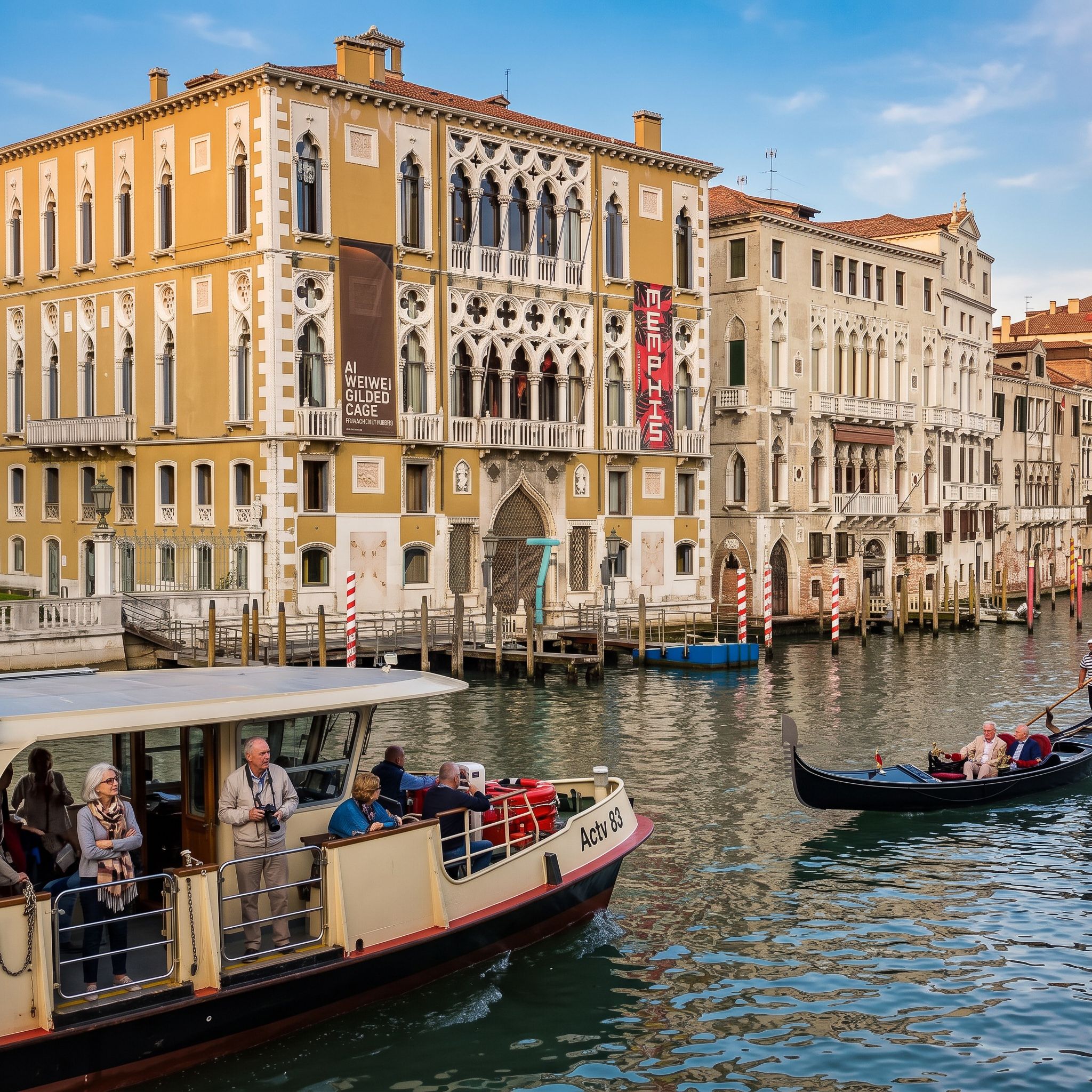 AI-edited
How many bridges lie between you and the sights?
The honest answer is that the count varies street by street, not district by district, and no official source ranks the sestieri by bridge numbers. What the city does publish is an accessibility map that colour-codes areas by whether they are reachable by vaporetto, by motoscafo or facilitated bridge, or not by public transport at all.
That map, produced by the Città per tutti service in collaboration with the department for the elimination of architectural barriers, is the single most useful planning document for anyone worried about steps. Its last update is recorded as October 2017, so it should be treated as a guide rather than a live record. The City of Venice's accessible Venice map distinguishes green areas accessible by vaporetto, light green areas accessible by motoscafo or facilitated bridge, and white areas not accessible by public transport.
The practical lesson is that the sestiere name tells you less than the address does. A Cannaregio apartment two minutes from a vaporetto stop can involve fewer crossings than a San Marco address buried behind the square. The city has installed ramps to aid crossing bridges in many places, according to municipal information, but coverage is not universal and the map is the place to check.
How good is vaporetto access in each district?
Cannaregio and Santa Croce have the strongest documented transport convenience, with Cannaregio's Tre Archi area connecting directly to Santa Lucia station, Piazzale Roma and the cruise terminal. Dorsoduro is served by Line 2 to San Basilio and Line 1 to Salute. San Marco and Castello rely on the San Zaccaria and Rialto stops.
The city states that 46 islands are accessible by public transport and that waterborne services support accessibility, with concessions available for people with limited mobility on AVM/ACTV transport. ACTV confirms that waterborne services are always permitted for wheelchair users and have specially equipped spaces. For the Rialto stop specifically, ACTV gives an operational detail: after 8:19 p.m., wheelchair users can board or disembark at alternate stops A or B instead of C or D, but this must be booked at least 20 minutes before departure by phone.
For reaching Dorsoduro from Santa Lucia station, the documented route is Vaporetto Line 2 toward Lido to San Basilio and then walking the rest of the way, described as the best way. The Line 1 from the train station to Salute gives a short, simple walk to the Ca' Zose area. Both routes reward staying near a stop. Tickets and passes are sold at Venezia Unica points of sale, vending machines at main terminals and waterbus stops, and the official app.
Arrival logistics deserve their own planning, and our guide to getting to Venice by airport, train and water covers the journey onto the lagoon in detail.
Which districts are quietest at night?
Cannaregio has the clearest documented reputation for quieter nights, particularly north of Fondamenta Ormesini. Dorsoduro is quieter than San Marco overall but livelier in the evenings near Campo Santa Margarita. San Marco and the Rialto area carry the most evening foot traffic.
Guest feedback across both Dorsoduro and Cannaregio listings shows that night-time noise is the most repeated complaint, and it rarely comes from the district itself. Palazzo Veneziano guests reported courtyard noise from about 7pm to midnight. A Dorsoduro property drew reports of canal-side noise from late-night passers-by and rolling suitcases, with guests noting that sound echoes over the water at night. In Cannaregio, one hotel drew complaints about street noise, shouting and bells.
The pattern is consistent: canal-side rooms amplify sound, courtyard-facing rooms can catch late functions, and street-facing rooms near bars carry the evening trade. For travellers who sleep lightly, the useful questions at booking are which side of the building the room faces, whether the windows are double-glazed, and whether blackout curtains are fitted. Some properties list blackout drapes and premium bedding; others do not document either. Where the detail is not published, ask the property directly.
What should mobility-conscious travellers check before booking?
Lift access, step-free routes, walk-in showers and quiet room placement are the four details that matter most, and they are documented for some properties and not others. Hotel Olimpia in Santa Croce has the strongest published accessibility record, with step-free routes, lifts to all floors, grab bars and walk-in showers.
Carnival Palace Hotel in Cannaregio documents two elevators, some mobility-suitable rooms, ground-floor rooms, walk-in showers, barrier-free common areas and an entrance elevator that overcomes the entrance stairs. It sits 20 metres from the vaporetto stop at Tre Archi. B&B HOTEL Venezia Laguna on Tronchetto documents step-free access throughout, two lifts and adapted bathrooms with grab bars, though walk-in showers are not explicitly stated. Hotel Mercurio near San Marco documents step-free routes, a lift, accessible bathrooms and two elevators. Hotel Carlton on the Grand Canal documents step-free routes, lifts and accessible bathrooms. Ca' Pisani Hotel in Dorsoduro is listed with an elevator, wheelchair-accessible travel path, accessible bathroom and in-room accessibility, but its step-free entrance and walk-in showers are not documented.
Where a detail is not documented, that is not evidence it is absent. It means the property does not publish it, and the reader should confirm when booking. None of the cited sources documents booking or cancellation terms, exact step counts, or pharmacy locations for these properties.
What about breakfast and daily routines?
Breakfast timing and logistics vary more than the districts do. Some properties open breakfast at 7:30am, which some guests found late, and at least one Cannaregio hotel required booking a time slot at another property, adding friction to the morning.
For travellers who like an early start, the opening hour matters as much as the menu. Palazzo Veneziano guests called the breakfast excellent with a large variety and good coffee, but some found the 7:30am opening a bit late and the room too small, producing lineups. Eurostars Cannaregio drew descriptions of a solid spread with excellent service. Hotel Florida guests reported that breakfast required booking a time slot at another hotel.
Dining in Venice is a subject in its own right, and our guide to Venice's highlights chosen for the over-50s covers the broader eating and sightseeing picture. Within the sestieri, the practical advice is to ask at booking whether breakfast is served on site, what time it opens, and whether a reservation is needed.
Which districts put culture within easy reach?
Dorsoduro holds the Peggy Guggenheim Collection, open daily 10am to 6pm, closed Tuesdays and 25 December, with last entry and ticket office closing at 5pm. San Marco holds the Museo Correr and the National Archaeological Museum. Both districts publish accessibility information.
The Peggy Guggenheim Collection offers senior fares for visitors over 70 at €14, against €17 for adults, with students under 26 at €9 and children under 10 free. The museum states that it ensures accessible spaces and information, that wheelchairs are available free of charge, that staff assist visitors, and that guided tours of the permanent and temporary collections can be booked. A personalised tour is sold at the ticket office for €7, and guided tours are bookable in various languages.
At the Museo Correr, the regular visit is fully accessible and the ground-floor toilets are fully accessible, though the Secret Itineraries, Prisons and Armoury are not. The museum notes that it occupies a listed historic building where flooring may have slight slopes, raised thresholds or steps of uneven height. Bulky luggage is not permitted, and the cloakroom is free. The museum and the St Mark's area are included in the accessible routes reported by the City of Venice.
For a slower approach to the city's art and architecture, see our guide to the palaces, basilicas and museums of Venice at an unrushed pace.
When should you go, and does the season change the choice?
Venice operates year-round, but the crowds and the climate shift sharply by month. The city recorded 5,664,611 arrivals and 12,628,079 overnight stays in 2023, with July the busiest month for arrivals. For milder weather and calmer streets, April to June and September to October are the documented sweet spots.
Published monthly climate normals for Venice show averages of 13.6°C in April, 17.8°C in May, 22.9°C in June, 25.2°C in July, 24.8°C in August, 20.4°C in September, 15.6°C in October and 10.1°C in November. January averages about 4.2°C and December about 5.0°C. The city's official 2023 tourism yearbook records arrivals ranging from 175,070 in January to 423,252 in July, a difference of more than twofold.
For travellers who prefer calmer streets, the winter-to-early-spring lull supports choosing a quieter base and planning around shoulder-season travel, as the City of Venice's 2024 tourism yearbook data indicates. The province-level pattern is even more summer-heavy, with one published analysis reporting 8.5 million overnight stays in August against 687,000 in January 2024, though that figure covers the province rather than the historic centre alone.
What about medical help and everyday services?
The official material gathered here does not name a specific hospital or pharmacy for the historic centre of Venice, and no Venice-wide emergency numbers are documented available. Travellers with medical needs should confirm these details locally or through their accommodation before arrival.
What is documented is proximity to hospitals for some specific properties. Hotel Olimpia is recorded as 8 minutes from the nearest hospital, Hotel Carlton on the Grand Canal and Hotel Mercurio at 12 minutes each, and B&B HOTEL Venezia Laguna at 22 minutes. These figures come from SilverTourist ratings and apply to those properties, not to the districts as a whole.
The only safety-adjacent official detail is operational: ACTV's guidance on safe boarding at BUS FACILE stops and the use of ramps, lifts and staffed assistance for mobility needs. The absence of car traffic, noted by the city's tourism authority, makes Venice a friendly city for walking, though the bridges remain the main physical consideration.
How do you actually pick your base?
Start with the vaporetto stop, not the sestiere. Then check the bridge count on the city's accessibility map, confirm lift access and room placement with the property, and match the district's evening character to your own. Cannaregio for rail arrivals and quiet nights, Dorsoduro for museums and a south-side base, San Marco for the icons and the crowds.
Cannaregio is the practical compromise for travellers who want a calmer, more residential feel with easier everyday movement, and it has the clearest documented senior-friendly option in Carnival Palace. Dorsoduro is the strongest choice where museum access matters and a quieter atmosphere is preferred, with the Peggy Guggenheim Collection publishing both accessibility and senior pricing details. San Marco is best for iconic sightseeing, with official accessibility programming at the Museo Correr and the Archaeological Museum, but the area is usually busier.
Castello and San Polo sit between these poles. check the specific address, the nearest stop and the bridge count before committing.
One district to set aside is Giudecca, which requires boats to go anywhere. For everything else, the deciding factor is not the name on the map but the walk from the water to the door.


