
Salzburg is a city of two halves, split by the swift green Salzach River. For the traveller aged 50 to 70, the decision of where to base yourself comes down to a single, practical question: do you want to be inside the postcard, or just next to it? The Old Town (Altstadt) offers immediate access to Mozart’s birthplace and the fortress, but it is crowded, expensive, and built on centuries of cobbles and hills. The New Town (Neustadt), particularly around Mirabellplatz, gives you wider pavements, quieter streets, and a flatter walk to the station. This guide compares the four key areas—Altstadt, Neustadt, the riverside, and the quieter outskirts—so you can choose the base that matches your pace, your knees, and your appetite for atmosphere.
 AI-edited
Is the Old Town (Altstadt) Worth the Crowds?
Yes, if atmosphere is your priority and you are comfortable with crowds, cobblestones, and higher prices. The Altstadt puts you steps from the Dom, Getreidegasse, and the Festung, but expect tourist traffic from morning until late evening.
The Altstadt is Salzburg’s UNESCO-listed historic core, and it is undeniably beautiful. Winding lanes, baroque facades, and the constant clatter of horse-drawn carriages create a sense of stepping into the 18th century. For first-time visitors, the convenience is unmatched: you can walk from your hotel to Mozart’s birthplace in under five minutes. However, this comes at a cost. The crowding is at its heaviest during the Salzburger Festspiele, which run from 17 July to 30 August in 2026. As of July 2026, large parts of the left and right Old Town are a pedestrian zone, in force since 1983, and the city grants only residents, taxis and delivery services limited access to it — so a taxi to the door is something to arrange rather than assume, and luggage still crosses uneven stone. If you value quiet evenings and easy logistics, the Old Town may feel like too much of a good thing.
Is Neustadt Near Mirabell a Better Choice for Comfort?
For most travellers aged 50–70, Neustadt—especially the area around Mirabellplatz and Linzergasse—offers the best balance of convenience, calm, and value. It is flatter, quieter, and closer to the Hauptbahnhof than the Old Town.
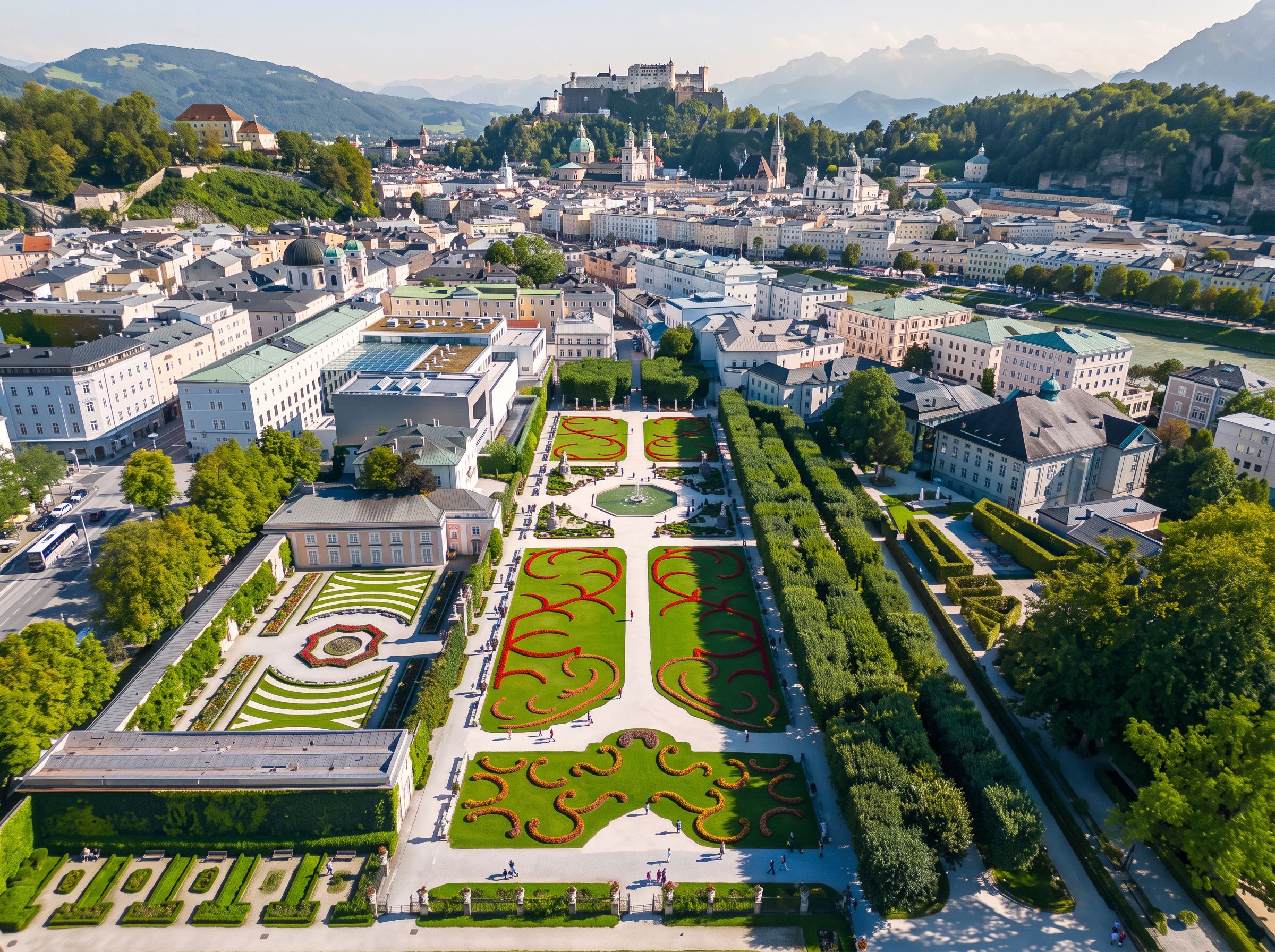
Neustadt is the right bank of the Salzach. It feels more like a lived-in city than a museum piece. The streets are wider, the pavements smoother, and the pace noticeably slower. According to Fodor’s neighbourhood guide, this district contains Mirabell Palace, the Landestheater, and the Mozart Residence, making it a practical hub for sightseeing without the intensity of the Altstadt. The walk from Mirabellplatz across the Staatsbrücke into the Old Town takes about ten minutes at a gentle pace. For those who want to explore Salzburg’s finest sights, chosen for the over-50s, Neustadt is the smartest launchpad.
What About Staying Right on the River?
The riverside—along the Salzach on either bank—offers lovely views and a central position, but it is a narrow strip with limited hotel options and can be noisy from traffic on the main bridges.
Staying directly on the river sounds idyllic, and on a sunny morning, the walk along the Salzach is genuinely lovely. The paths are flat and well-maintained, making them ideal for a gentle stroll after breakfast. However, the riverside is not a distinct neighbourhood in itself; it is the edge of either Altstadt or Neustadt. Hotels with river views tend to face the main road that runs along both banks, which means traffic noise can be an issue, especially with windows open in warmer months. The practical advantage is that you are equidistant from both the Old Town and the Mirabell area, but you will still need to cross one of the bridges to reach most restaurants and sights. For a traveller who values quiet above all, a room facing an internal courtyard in Neustadt will likely serve you better than a river-facing room on a busy thoroughfare.
Are the Quieter Outskirts Worth Considering?
Yes, if you prioritise peace, value, and easy parking over immediate sightseeing. Areas like Nonntal and Elisabeth-Vorstadt offer lower prices and a more local feel, but require a bus or a longer walk to reach the historic core.
Nonntal, south of the Old Town, is a quiet residential area with a few small hotels and guesthouses. It is a fifteen-minute walk to the Festung or a short bus ride into the centre. Elisabeth-Vorstadt, around the Hauptbahnhof, is the most practical choice for train travellers. As of July 2026, the area has a mix of mid-range and budget hotels, and the walk to the Old Town is a straightforward twenty minutes along the flat right bank. Guest reviews of the station-side hotels frequently mention how convenient the location is for arrival and departure. The trade-off is atmosphere: these areas lack the charm of the Altstadt, but they offer better value and quieter nights. If you plan day trips by rail, Elisabeth-Vorstadt is your best bet. For a slower, more residential pace, Nonntal suits those who want to feel like a local, not a tourist.
“An excellent palace and garden. The grounds are well kept and the building is impressive. There is ample shade and seating. It is close to the main station and old town so easy to get to. I would recommend visiting early in the morning or later in the evening to avoid crowds.” — one Google reviewer wrote of the Mirabell Gardens in July 2026
How Do the Areas Compare for Walkability, Steps, and Hills?
The Altstadt has the most steps and hills, with cobblestone streets and the steep climb to the Festung. Neustadt is flatter and has wider pavements. The riverside paths are flat. The outskirts are generally level but require longer distances.
Salzburg’s topography is defined by the Mönchsberg and Festungsberg hills on the left bank. The Old Town sits at their base, meaning many streets slope upward, and some hotels require navigating a flight of stairs even if they have a lift. In a protected historic building a retro-fitted lift does not always serve every landing, so the useful question to a property is how many steps remain between the lift and the room, not whether there is a lift at all. Neustadt, by contrast, is built on the flat floodplain of the Salzach. The walk from Mirabellplatz to the river is level, and the main shopping street, Linzergasse, is pedestrianised and smooth. For those using a cane or walker, Neustadt is the clear winner. The riverside paths are also flat and well-paved, ideal for a morning walk. For the Festung, the operator states that barrier-free access is possible via the FestungsBahn, whose valley station is at Festungsgasse 4, that the footpath up is not barrier-free because of its steepness, and that the interior of the fortress is not barrier-free either.
| Area | Walkability | Hills & Steps | Transit Access | Distance to Old Town |
|---|---|---|---|---|
| Altstadt (Old Town) | Excellent for sights | Moderate to high | Bus on edges only | 0–5 min walk |
| Neustadt (Mirabell) | Very good | Low | Excellent (trolleybus lines) | 10–15 min walk |
| Riverside | Good (flat paths) | Low | Moderate | 5–10 min walk |
| Elisabeth-Vorstadt | Moderate | Low | Excellent (Hbf nearby) | 20 min walk / 10 min bus |
| Nonntal | Moderate | Low to moderate | Good (bus) | 15 min walk / 5 min bus |
Which Area Has the Best Transport Links for Day Trips?
Elisabeth-Vorstadt, around the Hauptbahnhof, has the best transport links for day trips by rail. Neustadt is second-best, with excellent trolleybus connections. In the Altstadt, bus stops sit on the edges of the pedestrian zone, which taxis may enter only on restricted terms.
If you plan to use Salzburg as a base for day trips to Hallstatt, Berchtesgaden, or the Salzkammergut, staying near the Hauptbahnhof is the most practical choice. Elisabeth-Vorstadt puts you within a five-minute walk of the platforms, and the area has a good selection of mid-range hotels. Neustadt is also well-served: the main trolleybus lines run along Franz-Josef-Strasse and Rainerstrasse, connecting you to the station in under ten minutes. In the Altstadt, bus stops sit on the edges of the pedestrian zone; taxis may drive into it, but on the city’s restricted-access terms rather than on demand. As of July 2026, the city tourist board states that the vast majority of public transport vehicles have low-entry doors and are equipped with a ramp for wheelchairs that can be folded out as needed; Salzburg AG, the operator, counts 108 barrier-free low-floor articulated trolleybuses with a kneeling function, a fold-out ramp at the second door and at least one wheelchair space. Additionally, since 1 May 2025, overnight guests in the state of Salzburg receive the Guest Mobility Ticket, valid for unlimited use of public transport across the Salzburg region for the duration of their stay. This is a significant benefit for anyone planning to explore beyond the city centre. One date to plan around: the city has announced that the Neutor tunnel will be fully closed to motorised traffic, public transport included, from mid-September 2026 until roughly the end of March 2027, with the pedestrian passage staying open.
How Close Is Each Area to the Main Sights?
The Altstadt is steps from the Dom, Getreidegasse, and the Festung. Neustadt is a ten-minute walk from the Old Town and adjacent to Mirabell Gardens. The riverside and outskirts require a longer walk or a short bus ride.
Proximity is the Altstadt’s greatest strength. From a hotel on Mozartplatz, you can reach the Dom in two minutes, Getreidegasse in three, and the Festung funicular in five. For a short stay where every minute counts, this is unbeatable. Neustadt offers a different kind of proximity: you are right next to the Mirabell Gardens (a sight in themselves) and a short walk from the Mozart Residence. The walk across the Staatsbrücke into the Altstadt takes about ten minutes and is one of the most pleasant in the city, with views of the fortress and the river. The riverside areas put you close to the water but slightly farther from the main sights. Nonntal is a fifteen-minute walk from the Festung, while Elisabeth-Vorstadt is a twenty-minute walk from the Old Town. If you would rather follow Mozart’s Salzburg: a practical guide to his houses, museums and music, Neustadt offers the best balance of proximity and comfort.
Who Should Stay in Each Area?
Choose Altstadt if you want to minimise walking to sights and don’t mind tourist crowds. Choose Neustadt if you want a calmer, flatter base with good transit. Choose Elisabeth-Vorstadt if train access is your priority. Choose Nonntal if you want a quiet, residential feel.
This decision comes down to your personal priorities. If you are a first-time visitor who wants to be in the heart of the action, the Altstadt is the obvious choice. Just be prepared for noise, crowds, and higher prices. If you value comfort, quiet, and ease of movement, Neustadt is the better option. For train travellers and day-trippers, Elisabeth-Vorstadt is the most practical. For those who want a slower pace and a more local experience, Nonntal offers a charming alternative. The riverside is a compromise that works best for those who want views and flat walking paths but are willing to trade some convenience for scenery.
How Noisy Is Each Area?
The Altstadt is the noisiest, with tourist traffic, street musicians, and restaurant bustle until late. Neustadt is quieter, especially away from the main streets. The outskirts are the quietest, but also the least lively.
Noise is a recurring theme in guest reviews of the Altstadt. Street musicians, horse-drawn carriages, and groups of tourists create a constant hum that runs late into the evening — and it starts early, because the city lets delivery traffic into the Old Town pedestrian zone on working days from 6 to 11 a.m. Neustadt, by contrast, is noticeably quieter. The area around Mirabellplatz has some traffic noise, but the Linzer Gasse — which the city tourist board describes as the main pedestrian artery of the historical district on the right side of the river — carries no through traffic and quietens once the shops close. The outskirts—Nonntal and Elisabeth-Vorstadt—are the quietest, with residential streets and little nightlife. If a good night’s sleep is your top priority, choose Neustadt or the outskirts, and request a courtyard-facing room if available.
Which Area Offers the Best Value?
Elisabeth-Vorstadt and Nonntal offer the best value, with lower prices and more space. Neustadt is mid-range. The Altstadt is the most expensive, with smaller rooms and higher rates for the same category.
Salzburg is not a cheap city, but prices vary significantly by neighbourhood. In the Altstadt, you pay a premium for the address. Rooms are often smaller, and the historic buildings mean fewer modern amenities. Neustadt offers better value for the same star rating, with larger rooms and more modern facilities. Elisabeth-Vorstadt and Nonntal are the most affordable, with a range of guesthouses and budget hotels. For travellers on a fixed budget, staying in these areas and using the Guest Mobility Ticket to reach the centre is a smart strategy. You save on accommodation without sacrificing access.
How Accessible Are the Different Areas for Reduced Mobility?
Neustadt is the most accessible area, with wider pavements, fewer hills, and better transit connections. The Altstadt has cobblestones, steps, and narrow streets. The outskirts are level but require longer distances or bus rides.
For travellers using a cane, walker, or wheelchair, Neustadt is the clear choice. The pavements are wider and smoother, the streets are flatter, and the main trolleybus lines have low-entry vehicles with fold-out ramps. The Altstadt, while charming, presents multiple challenges: cobblestones, uneven surfaces, and steps into many buildings and restaurants. As of July 2026, Salzburg’s official tourism site notes that many attractions, churches, and restaurants have barrier-free access, but the historic core itself remains difficult. The Salzburg barrier-free guide provides detailed information on accessible routes and facilities, but it is worth checking individual venues before you go. If you have significant mobility concerns, consider staying in Neustadt and using the Guest Mobility Ticket to access the Old Town by bus, avoiding the cobblestones entirely.
So, Where Should You Stay?
If you want atmosphere and immediate sightseeing, choose the Altstadt. If you want comfort, quiet, and practicality, choose Neustadt. If you want value and train access, choose Elisabeth-Vorstadt. If you want a residential feel, choose Nonntal.
There is no single right answer, but for the majority of travellers aged 50–70, Neustadt offers the best balance. It gives you the charm of Salzburg without the intensity, the convenience of the Old Town without the crowds, and the peace of a residential area without the distance. The Mirabell Gardens are your morning walk, the river is your evening stroll, and the Old Town is just over the bridge when you want it. It is the neighbourhood that lets you enjoy Salzburg on your own terms, at your own pace. For those who want to unwind after a day of sightseeing, consider a restful afternoon in Salzburg: spa and quiet retreats, many of which are located in the quieter Neustadt area. And if you are arriving by train, our guide to getting to Salzburg: airport, trains and transfers will help you plan a smooth arrival.


