
Charleston rewards travellers who plan their spending before they arrive. The historic peninsula packs accommodation, restaurants, paid attractions and parking into a few walkable square miles, so costs cluster rather than spread out. The good news for visitors aged 50 to 70 is that the city's most memorable experiences, from the Battery to the Pineapple Fountain, cost nothing at all. The variable is comfort: how central you sleep, how often you dine out, and how many guided experiences you book.
CharlestonVisitor's trip-planning guide puts a comfortable three-day visit for two at roughly $1,500 to $2,500, excluding travel to the city. That works out at about $250 to $420 per person per day, with the hotel, restaurant choices, parking and paid attractions as the largest variables. This guide breaks those ranges down by style, so you can build a budget that matches how you actually like to travel.
Why is Charleston so expensive?
Charleston feels expensive because accommodation, restaurant dining, parking and organised tours concentrate in the historic centre, where demand is high and space is limited. The city drew 7.89 million visitors in 2024, according to the City of Charleston's tourism appendix, and that volume keeps central hotel rates and dinner bills firm.
The wider regional picture is documented too. Charleston County's FY2024 Annual Comprehensive Financial Report, citing the College of Charleston Office of Tourism Analysis, recorded more than 7.79 million regional visitors, $13 billion in tourism impact, over 70% hotel occupancy and 4.9 million room nights sold in 2023. High occupancy is the mechanism behind peak-season rates.
None of that means the city is uniformly dear. Charleston's official tourism material identifies a long list of free or low-cost options: the Battery and White Point Garden, Waterfront Park and the Pineapple Fountain, Rainbow Row, the historic churchyards, Charleston City Market, walking the historic peninsula, and the fare-free DASH shuttle. A day built around those costs little beyond lunch.
What does a comfortable day in Charleston cost?
For a couple aged 50 to 70 seeking comfort without luxury, a practical daily allowance is $500 to $750 for the room, meals, local transport, admissions and tips combined. That figure is derived from CharlestonVisitor's published three-day total and its individual cost ranges.
CharlestonVisitor quotes a downtown mid-range room at $200 to $350 per night, or $600 to $1,050 for three nights. A separate 2026 guide places mid-range hotels at approximately $180 to $250 per night and luxury properties at $400 to $650 or more during peak periods. Rates are indicative and vary by season and booking channel.
On food, CharlestonVisitor suggests allowing approximately $50 to $100 per person for dinner at the city's nicer restaurants, with lunch usually less. The 2026 guide puts a comfortable day of breakfast, lunch, dinner and drinks at $75 to $100 per person. Guided tours and harbour excursions commonly cost $30 to $50 per person, according to CharlestonVisitor.
Two further lines matter for planning. Restaurants commonly add or expect 18 to 20% in tips, while tour guides are often tipped $5 to $10 per person, according to CharlestonVisitor. If you drive, budget approximately $25 to $40 per day for parking, the same source advises. Visitors with a disability placard or plate can park free at city-owned garages, lots and meters, according to Charleston's official city visitor page.
 AI-edited
What do three-day budgets look like by travel style?
CharlestonVisitor models three days as a sensible minimum for the historic centre, a major attraction and some dining. For two people aged 50 to 70, careful comfortable spending comes to about $1,500 to $2,000 for three days, a central hotel with several dinners and two or three paid experiences about $2,000 to $2,500, and a luxury hotel with premium dining and private tours likely above $2,500.
The table below sets out the documented components. Every figure comes from CharlestonVisitor's planning guide or the 2026 guide cited; none is estimated here.
| Item | Documented range | Source |
|---|---|---|
| Downtown mid-range room, per night | $200–$350 | CharlestonVisitor |
| Mid-range hotel, per night (2026 guide) | approx. $180–$250 | 2026 guide |
| Luxury hotel, per night, peak periods | $400–$650 or more | 2026 guide |
| Dinner at a nicer restaurant, per person | $50–$100 | CharlestonVisitor |
| Full day of meals and drinks, per person | $75–$100 | 2026 guide |
| Guided tours and harbour excursions, per person | $30–$50 | CharlestonVisitor |
| Parking, per day if driving | $25–$40 | CharlestonVisitor |
| Comfortable three days for two, all in | $1,500–$2,500 | CharlestonVisitor |
For a frugal frame, the same sources support a different shape of trip: a room away from the historic core, one paid attraction, lunches rather than dinners out, and days built on the free waterfront and the DASH shuttle.
What do Charleston's attractions and tours cost?
Charleston's paid attractions sit in a modest band: Fort Sumter Tours charges $43 for an adult daytime fare and $39 for seniors and active military, Charles Towne Landing charges $12 for adults and $7.50 for South Carolina seniors, and the South Carolina Historical Society Museum is reported at $1 admission.
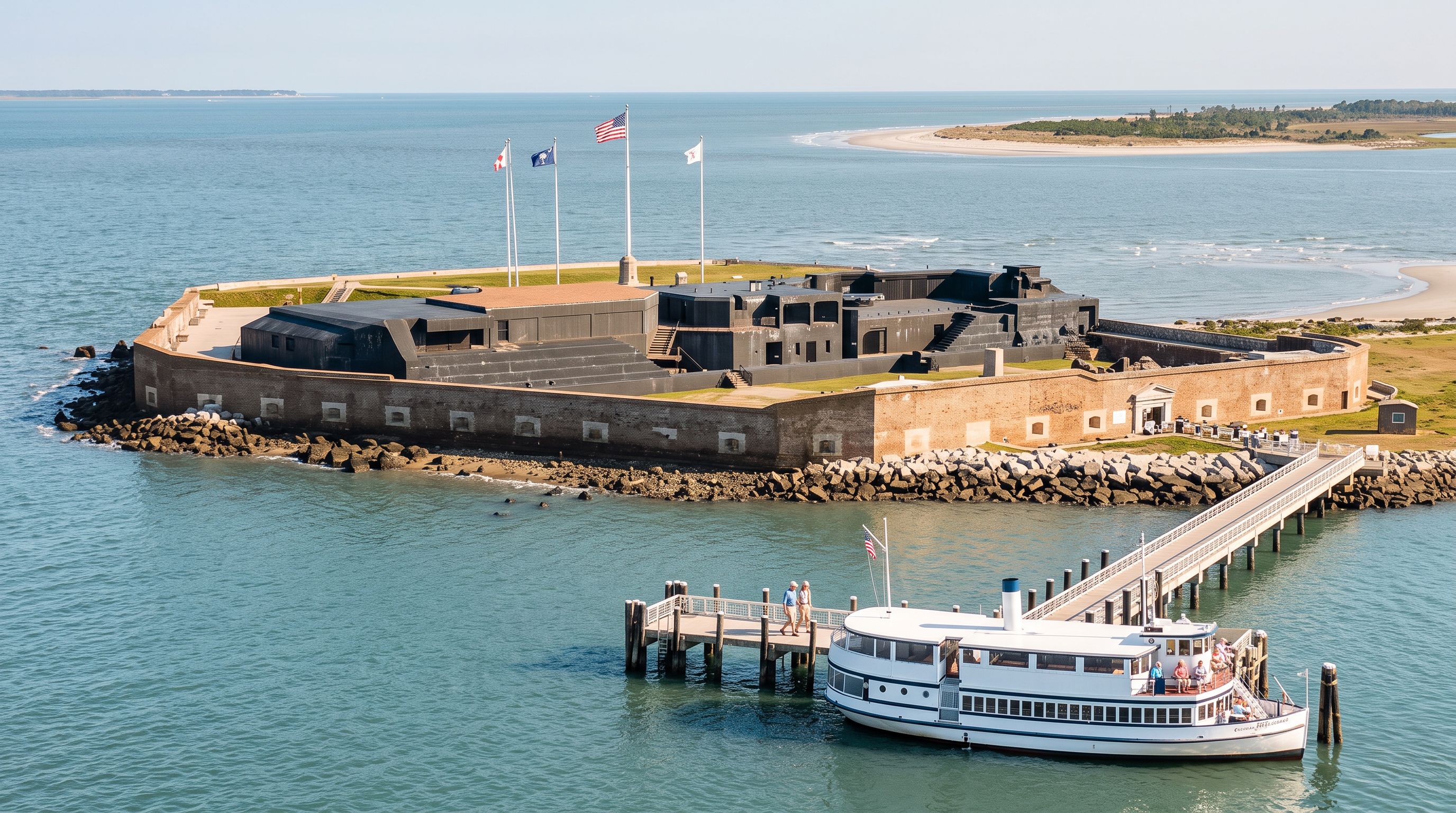
Fort Sumter Tours publishes the full ladder: $43 adult daytime, $39 senior or active-military, $26 for children aged 4 to 11, and free for children aged 3 and under. The National Parks Senior Pass does not cover the ferry fare, because it covers federal-site entrance fees rather than the boat ticket, according to Fort Sumter Tours. Sources differ on the adult ferry fare, with CharlestonVisitor listing $46 and Fort Sumter Tours reporting $43; confirm the current price when booking.
Charles Towne Landing's state-park admission is $12 for adults, $7.50 for South Carolina seniors, $7 for youth aged 6 to 15, and free for children aged 5 and under, per the South Carolina State Park Service. The reduced senior rate is residency-specific, so out-of-state visitors should not assume it applies. The Adventure area closes on Tuesdays and is removed for annual maintenance from 1 January through 1 April.
Walking tours are the other main paid category. Walks of Charleston publishes meeting points (City Hall at 80 Broad Street for the Historic Charleston Walk, the Old Exchange Building at 122 E Bay Street for the Alleys & Hidden Passages Tour), but the operator does not state prices, booking channels or cancellation terms in the material available. Ask directly when reserving. Charleston law limits walking-tour groups to 20 participants, so larger parties must be split.
Where is Charleston reasonable, and where is it dear?
Charleston is dear on accommodation, dinner dining, parking and organised excursions, all concentrated on the historic peninsula. It is reasonable on public transport, on museum admission and on the free sights that fill a day: the Battery, Waterfront Park, Rainbow Row and the churchyards.
Transport is the clearest bargain. CARTA fixed-route buses cost $2 per ride with free transfers within two hours, and a one-day pass costs $7. Riders aged 55 and over pay $1 at all service times, with proof of age such as a Medicare card or identification showing date of birth accepted, according to CARTA. CARTA also provides one day per quarter when riders aged 55 and over use all routes free of charge.
Museum admission is modest. The South Carolina Historical Society Museum is reported at $1, self-guided, open Tuesday to Saturday, 10 a.m. to 4 p.m., closing Sundays, Mondays and listed public holidays. The Charleston Museum lends manual and electric wheelchairs free of charge on a first-come, first-served basis, according to the cited Charleston guide.
Accommodation is where budgets stretch. A Fodor's forum discussion warned that Charleston hotel rates "will skyrocket during the festival," making budget travel difficult if dates overlap. Spring is peak season, particularly around garden visits and the Spoleto Festival, while winter normally brings the lowest prices and fewest visitors, according to CharlestonVisitor. Holiday events can create short busy periods in winter.
How do you get around, and what does it cost?
Charleston has no metro or tram system. Visitors combine walking, CARTA buses, the free DASH shuttle, taxis and ride-hailing, according to the supplied guide. CARTA buses cost $2 per ride, $1 for riders aged 55 and over, and a one-day pass is $7.
The DASH shuttle is fare-free and serves major downtown and visitor attractions, according to the City of Charleston's visitor page. For a couple, two senior single rides cost $2 in total, which makes the bus cheaper than parking for a single downtown errand.
CARTA states that all fixed-route buses are wheelchair accessible and ADA-compliant, with priority seating. Eligible passengers unable to use regular buses can apply for Tel-A-Ride paratransit. CARTA OnDemand is described as serving seniors aged 60 and over and Tel-A-Ride customers in designated areas. A telephone service can pair passengers with a CARTA Ambassador on 843-724-7420.
The airport connection needs care. The supplied Frommer's information describes CARTA Route 11 between Charleston International Airport and downtown, taking about 50 minutes, but its quoted fare and timetable differ from current CARTA fare information and should not be treated as current. Confirm with CARTA before relying on it. No source supplied documents accessibility facilities, lifts, senior fares or assistance at Charleston's Amtrak station; ask the operator directly.
What should you pack, and how are the paths?
Pack supportive closed-toe shoes with good grip, light rain protection, breathable clothing, a refillable water bottle and sun protection. Charleston's streets are described as uneven and narrow, with some routes difficult even for strollers, and tours cross cobblestone, slate and partly unpaved surfaces.
The documented hazards are paving, not hills. No source supplied establishes that Charleston has steep hills, so do not assume gradient is the main issue. A Charleston tour listing describes approximately 300-year-old cobblestone and slate streets, with some streets and venues involving stairs.
Walking tours cover ground. Walks of Charleston states that its tours generally last two hours, sometimes 2.5 hours, and cover about 1.5 to 2 miles, with opportunities to stop for photographs. Tours operate rain or shine but may be cancelled in potentially dangerous weather. The Alleys & Hidden Passages route is not recommended for wheelchair users because of cobblestones and very uneven or unpaved surfaces. One tour listing identifies its Ghost and Graveyard Tour as its most accessible option for wheelchairs and strollers.
For the full picture of terrain and access across the city, see our guide to Charleston's finest experiences, chosen for the over-50s.
When should you go to keep costs down?
March to May and September to November bring the most comfortable conditions, with typical highs in the 60s to 80s Fahrenheit and lower humidity, according to CharlestonVisitor. Winter normally brings the lowest prices and fewest visitors, while spring is peak season around garden visits and the Spoleto Festival.
October is a strong month for walking: NOAA's 1991 to 2020 climate normals for the Charleston City station give an average high of 75.6°F and a low of 63.2°F for the month, and the cited Charleston guide identifies October and April as especially good for sightseeing. July is the hottest month, with a mean of 82.3°F, and August is the wettest in the cited guide.
Weather carries a cost dimension. The Atlantic hurricane season runs from 1 June through 30 November, with the greatest risk generally in August to October, according to CharlestonVisitor. Travel insurance and flexible booking terms are worth their price in those months. The same source documents sporadic summer showers, which is why light rain protection earns its place in the bag.
Closures affect value too. Charles Towne Landing's visitor centre, Animal Forest and grounds close on Christmas Day, and its Adventure area closes on Tuesdays and is removed for annual maintenance from 1 January through 1 April. Check arrangements before travelling. A complete citywide list of attraction closing days is not documented.
How should you plan the booking and the practical details?
Book accommodation early for spring and festival dates, confirm cancellation terms in writing, and check accessibility directly with each operator.
Where you sleep shapes the budget more than anything else. Our neighbourhood guide to choosing your base in Charleston sets out the trade-offs between the Historic Peninsula and quieter alternatives. Fodor's contributors noted that visitors staying on the Historic Peninsula without a car have access to historic houses, restaurants, the Fort Sumter ferry and the free bus service, which reduces transport spending.
Parking deserves a line of its own. A Fodor's forum response noted that parking is difficult in historic Charleston and that hotels are likely to charge a separate parking fee. If you drive, add the documented $25 to $40 per day to your sums and ask the hotel what it charges before booking.
CARTA states that its network reaches most hospitals, libraries, grocery stores, shopping centres and service agencies in the Charleston area. Check these against your hotel's address before you travel. For a slower day between sightseeing, our guide to a spa day in Charleston explains what to expect.
What is worth paying for in Charleston?
Pay for the experiences that cannot be replicated on foot: the Fort Sumter ferry, a guided walk with a published route and meeting point, and one good dinner. Save on transport with the $1 senior bus fare and build days around the free waterfront, gardens and streets.
Fort Sumter Tours is the only practical way to reach Fort Sumter, according to the operator, so the $43 adult or $39 senior fare is not avoidable if the fort is on your list. Only Liberty Square is identified as a boarding point for wheelchairs and scooters, and the Patriots Point departure point cannot accommodate wheelchairs or scooters. The boats have lifts and accessible restrooms, and Fort Sumter itself has a lift serving the museum, restrooms, bookstore and upper level. Because weather and tides can affect boarding, the operator recommends checking accessibility on the day of travel.
For history beyond the peninsula, our guide to Charleston's plantations and the Lowcountry's history covers the wider story. Closer in, the free sights repay a slow morning: the Battery and White Point Garden, the Pineapple Fountain at Waterfront Park, Rainbow Row and the churchyards.
The final word is arithmetic. CharlestonVisitor's $1,500 to $2,500 band for a comfortable three days holds when the hotel sits mid-range, two or three experiences are booked and dinners are chosen rather than defaulted to. Move any one of those levers and the total moves with it.


