
The Ashley River corridor holds a sequence of historic sites that, taken together, explain how the Lowcountry was built: by enslaved people whose labour created the rice and cotton economies, and by families whose wealth depended on them. Middleton Place, Drayton Hall, Boone Hall and McLeod Plantation each approach that history from a different angle. Some are formal landscapes, some are preserved ruins, some are working farms, and one is devoted almost entirely to the lives of enslaved people. For travellers aged 50 to 70, the practical question is not only which site to choose but how to move through it comfortably and how to read what it presents.
The four sites differ sharply in terrain, tour format and interpretive emphasis. Middleton Place is largely outdoors with dirt, gravel and sand paths. Drayton Hall's house tour requires climbing portico steps. Boone Hall offers a seated tractor tour across its acreage. McLeod provides an elevator lift to its main house. Each publishes its own hours, prices and tour schedules, and each rewards a different kind of attention. What follows is a guide to what each offers, how to prepare, and how to visit in a way that honours the full history on display.
Which Charleston plantation should you choose?
The choice depends on what you want to see. Middleton Place suits visitors who want gardens, house interpretation and dedicated slavery programming in one visit. Drayton Hall suits those interested in architecture and preservation. Boone Hall offers a seated tractor tour and a self-guided Black history exhibit. McLeod focuses on slavery and emancipation.
Middleton Place, at 4300 Ashley River Road, combines 65 acres of formal landscaped gardens, the House Museum, Stableyards and daily guided tours on one admission. The South Carolina Department of Archives and History describes Middleton as offering the most balanced day for gardens plus historical depth, combining landscaped grounds, house museum, working stableyards and dedicated African American interpretation.
Drayton Hall, at 3380 Ashley River Road, is preserved rather than restored. The house is unfurnished, but its architectural details and original interior finishes remain visible, according to Fodor's contributors. Forum contributors consistently warn that Drayton Hall is not a decorated mansion; it suits visitors interested in architecture and historical evidence but may disappoint anyone expecting period rooms.
Boone Hall, in Mount Pleasant, is known for its oak avenue, working farm and seated tractor tour. McLeod Plantation Historic Site, on James Island, is described by the Post and Courier as exclusively devoted to the history of slavery on the site.
What does Middleton Place offer?
One Middleton Place ticket includes the gardens, Stableyards, a guided garden tour, a heritage-breeds tour, the 45-minute Beyond the Fields tour and the House Museum. Guided tours run on a fixed daily schedule posted at the Visitor Center. The site is open daily from 9 a.m. to 5 p.m., closed Christmas Day and open until noon on Christmas Eve.
The interpretation at Middleton addresses the Middleton family, enslaved Africans and African Americans, and the enslaved people and freedmen who lived and worked there. The 30-minute Guided Garden Tour examines how Europeans, enslaved Africans and African Americans shaped and maintained the landscape. The House Museum presents the Revolutionary period through Arthur Middleton, his family and the people they enslaved, rather than treating freedom solely as a patriot story.
"Beyond the Fields: Enslavement at Middleton Place" is described in published material as a 45-minute, partly walking tour about the generations of enslaved people who lived and laboured there, including brutality, resistance, skill and survival. Tour times are not fixed in the published material; visitors are instructed to check the daily schedule at the Visitor Center.
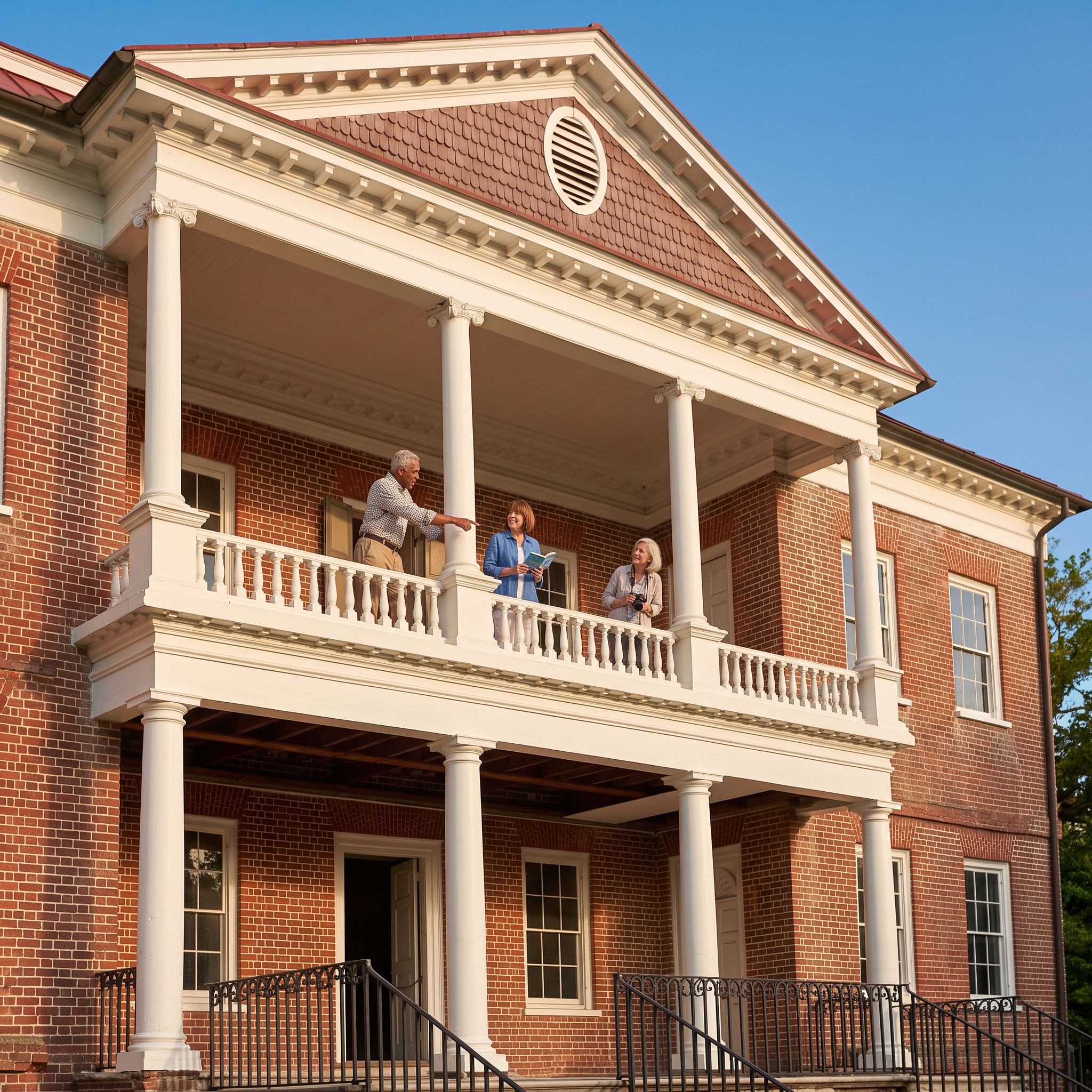 AI-edited
Eliza's House, formerly associated with enslaved people and later Freedmen, forms part of Middleton's interpretation. Contributors differ on whether its strongest appeal is social history, gardens or farm demonstrations. The terraced landscape and former rice fields help explain the labour and engineering behind Carolina Gold rice production.
What does Drayton Hall offer?
Drayton Hall offers interpreter-led house tours of about one hour, beginning on the hour from 10 a.m. through 3 p.m., plus an orientation video and a complimentary 45-minute audio tour covering the plantation's history including the role of enslaved people. It is open Wednesday through Monday, 9 a.m. to 4:30 p.m., with the entrance gate closing at 3 p.m., and closed Tuesdays.
The standard visit begins with the orientation film and an interpreter-led tour through the cellar, first floor and second floor. Visitors can then explore the landscape and exhibits at their own pace, including the Stephen and Laura Gates Gallery, the Caretaker's House, the Lenhardt Garden, the Stephen J. Wood Conservation Laboratory, the African American Cemetery and the self-guided landscape walk.
The site says the earliest surviving record of its burial ground dates from about 1790, though the sacred ground may be older. Following the wishes of Richmond Bowens, a descendant of people enslaved at Drayton Hall, the cemetery has been left natural rather than manicured. The Caretaker's House exhibit describes the African American community formed through the phosphate-mining industry and the people who kept the property alive for a century after the Civil War.
Drayton Hall describes itself as founded in 1738 and as the oldest preserved plantation house in America still open to the public; its main house is presented as the nation's earliest fully executed example of Palladian architecture. A Fodor's contributor who had visited three times called its guides exceptionally informative and said each visit added something new.
How do Boone Hall and McLeod tell the story?
Boone Hall's admission includes a guided first-floor house tour, the Black History in America exhibit in nine original brick cabins, and outdoor history talks in front of the cabins. McLeod's surviving cabins, praise house and main house allow visitors to examine slavery, emancipation and the lives of people who remained connected to the plantation after slavery.
Boone Hall's nine preserved cabins, built about 1790 to 1810, once housed enslaved people and form the Black History in America exhibit. The operator says the exhibit addresses enslaved life, African American work, struggles and historical change, and is intended to present slavery accurately and respectfully. The separate Black History in America presentation is self-guided, beginning in the former praise house nearest the mansion.
Boone Hall publishes a Historical Dwelling History Talk about enslaved life and the architecture of the dwellings. The listed talk times are 9:30 a.m., 10:45 a.m., 11:45 a.m., 12:45 p.m., 1:45 p.m., 2:45 p.m., 3:45 p.m. and 4:15 p.m., and the talk lasts 15 minutes. In season, Boone Hall offers a live Exploring the Gullah Culture presentation; the operator's education material describes a 30-minute Gullah Theater presentation. The South Carolina Department of Archives and History records that Boone Hall's guides interpret the landscape and the enslaved experience, while the property's Black-history exhibition adds wider context.
McLeod's location on James Island matters historically: the property grew sea-island cotton rather than rice because it lacked the freshwater conditions associated with rice cultivation. Charleston County describes McLeod as a site focused on slavery and the lives of enslaved people; the grounds retain slave cabins, a praise house and other plantation buildings. Guided tours are included, generally about 45 minutes, with schedules changing by month, so its schedule should be checked before setting out.
How much does a plantation visit cost?
Prices vary by site and by age. Middleton Place charges $35 for adults aged 14 and over and $32 for seniors aged 62 and over. Drayton Hall charges about $30 online and $35 at the gate. Boone Hall charges $30 for adults and $27 for seniors, military and AAA. McLeod charges $20 for visitors aged 13 and over and $15 for ages 60 and over.
These figures come from a 2026 comparison listing and from the operators' published rates. Rates are indicative and vary by season and booking channel.
| Site | Adult | Senior | Notes |
|---|---|---|---|
| Middleton Place | $35 (14+) | $32 (62+) | Includes gardens, House Museum, Stableyards, daily tours |
| Drayton Hall | $30 online / $35 gate | Not documented | Gate accepts no cash |
| Boone Hall | $30 | $27 (senior, military, AAA) | Includes all tours presented that day |
| McLeod | $20 (13+) | $15 (60+) | Guided tour included |
A combined adult ticket to Middleton Place and Drayton Hall of $50 is listed in the 2026 comparison. A Fodor's report warns that some Charleston-area plantations charge separately for the main entrance and additional house tours or activities. The Charleston County Parks Gold Pass covers four guests per visit at McLeod, according to the McLeod listing.
What is the terrain like, and how accessible are the sites?
Accessibility varies sharply between the four sites. Middleton Place maps a wheelchair-accessible route at the Visitor Center but has dirt, gravel and sand paths. Drayton Hall's house tour requires climbing portico steps and excludes wheelchairs, walkers and motorised scooters. Boone Hall's tractor tour is seated. McLeod provides an elevator lift to its main house.
At Middleton Place, access is not uniform across the grounds. The House Museum renovation reportedly made the building wheelchair accessible, though the historic House Museum requires steps according to other supplied material; the sources conflict on this point and it should be confirmed with the property. Handicapped parking and restrooms are near visitor parking. Walking on grass is permitted and may help visitors who have difficulty with steps.
At Drayton Hall, the visitor centre, exhibit gallery, museum shop and courtyard garden are reported accessible. Grounds paths are unpaved and difficult for wheeled mobility. Service dogs are welcome throughout the property.
At Boone Hall, the tractor-drawn farm tour is seated and covers the 738-acre property, making it useful for visitors who cannot manage extensive walking.
At McLeod, the route from parking to the welcome centre and the surrounding paths are unpaved. Accessible parking, restrooms, fountains and picnic tables are provided, and an elevator lift reaches the main house. All visitors must check in at the Welcome Center.
For a broader picture of downtown museum options with published mobility provisions, including free manual and electric wheelchairs at the Charleston Museum, see Charleston's finest experiences, chosen for the over-50s.
How long should you allow at each site?
Several forum contributors would choose only Drayton Hall and Middleton if time were limited, rather than fitting three plantations into one day.
A Fodor's report says seeing the major sites properly can mean considerable walking, and describes Middleton as a place where a visitor could easily spend another hour after a two-hour visit. Visitors joining scheduled tours or group excursions at Middleton Place sometimes report feeling rushed between the house tour, lunch and the grounds, according to Tripadvisor reviews updated 2026. One Tripadvisor review said the itinerary left too little time to explore, although it did not feel overtly hurried during the tour itself.
One report says adding Magnolia would require another half-day to do it properly, while another cautions that three properties can mean expensive admissions and too much walking. Magnolia Plantation and Gardens, with its gardens, nature train and boat experience, has its own dedicated guide and is not covered in depth here.
How should you plan around heat and health?
Outdoor walking is likely to be more comfortable in the cooler months than in the humid summer, though that seasonal recommendation is not a published site-specific operating fact. The only documented local emergency instruction is to dial 911 for all emergencies in Charleston County.
No source supplied documents a nearest pharmacy or medical facility for Middleton Place, Drayton Hall, Boone Hall or McLeod. Formal safety policies, emergency evacuation procedures, first-aid provisions and medical staffing are not documented for these sites. Visitors with health concerns should raise them with each property before arrival.
Guest reviews of Middleton Place note that summer heat and humidity can cut a visit short, and that good walking shoes are essential given the distances involved. Many visitors report spending three to six hours or more walking the property.
For practical arrival logistics, including airport and rail options, see getting to Charleston: airport, trains and transfers. For where to stay relative to the Ashley River corridor, see choosing your base in Charleston.
How do you visit meaningfully?
Meaningful visits come from choosing sites that interpret slavery directly, allowing time for the specific tours devoted to it, and preparing for the emotional weight of the material. Middleton's Beyond the Fields, Drayton Hall's audio tour and cemetery, Boone Hall's cabin exhibit and McLeod's entire site all address enslaved life explicitly.
At Middleton Place, the Beyond the Fields tour and the African American Focus Tours address the generations of enslaved people directly. At Drayton Hall, the orientation video and complimentary 45-minute audio tour explain the plantation's history including the role of enslaved people, and travel coverage recommends walking to the African American Cemetery. At Boone Hall, the Black History in America exhibit occupies nine original cabins built about 1790 to 1810. At McLeod, the Post and Courier describes the site as exclusively devoted to the history of slavery there.
"As a wedding photographer and super 8 filmmaker, I loved every second at Middleton Place. The grounds are well taken care of and gorgeous. I captured a couple's elopement here and their ceremony took place beneath gorgeous trees with moss swaying in the wind." (Google, July 2026)
As of November 2026, Middleton Place holds a Google rating of 4.7 out of 5 from 3,150 reviews. Guest feedback consistently describes the gardens and grounds as meticulously maintained, with formal landscaped terraces, ancient live oaks draped in Spanish moss and river-front walking paths. Guided tours are repeatedly praised as informative and well run, including garden overviews, the Beyond the Fields tour and golf cart tours covering the rice cultivation and river areas. Staff and volunteers are described as friendly, knowledgeable and helpful, with several reviewers noting assistance with transportation around the property for those with mobility challenges.
Some visitors report that the gardens are far less colourful outside the spring bloom of azaleas and camellias. A Fodor's forum post reported camellias in full bloom at Middleton Place, and a February visit was especially praised for camellias in bloom. Another forum contributor says Middleton's gardens are especially impressive in spring but worthwhile throughout the year.
What should you know before you go?
Each site publishes its own hours, closures and rules, and several details are not documented. Confirming tour times, accessibility provisions and ticket terms directly with each property before travel is the most reliable approach.
Middleton Place is open daily from 9 a.m. to 5 p.m., closed Christmas Day and open until noon on Christmas Eve. Drayton Hall is open Wednesday through Monday, 9 a.m. to 4:30 p.m., with the front gate closing at 3 p.m., and closed Tuesdays. Additional reported Drayton closures include Thanksgiving, Christmas Eve, Christmas Day, New Year's Eve and New Year's Day. Boone Hall is open Monday to Saturday, 9 a.m. to 5 p.m., and Sunday, noon to 5 p.m. McLeod is open Tuesday to Sunday, 9 a.m. to 4 p.m., closed Mondays, and reported open on Memorial Day and Labor Day, with listed closures for Thanksgiving, Christmas Eve, Christmas Day and New Year's Day.
Boone Hall prohibits food, smoking, pets and photography inside the house. At McLeod, pets other than service animals are prohibited, smoking, vaping and tobacco use are prohibited, visitors must park only in designated areas, and access can be restricted for events, land-management work or maintenance.
Combination-tour listings state that tickets are non-refundable and non-transferable. The reported Drayton Hall entrance closing time differs between sources and should be confirmed directly before travel; the consistent operational point is that the gate closes earlier than the property.
For a slower counterpoint to a day of walking, see a spa day in Charleston: what to expect.


