
Santa Fe rewards the traveller who plans the money before the suitcase. The city's own tourism office points visitors to its site for hotel planning and events, and the City of Santa Fe publishes fares for its buses and senior ride services. What neither publishes is a single all-in daily figure covering room, meals, museums and transport. The honest answer, therefore, is built from the benchmarks that do exist: the U.S. government's FY2025 per-diem allowances for Santa Fe, the city's published transit fares, and the museum and tour prices that New Mexico's state museums and local operators quote.
Those benchmarks point to a comfortable trip for two adults costing roughly $300 to $450 per person per day, or $600 to $900 per day for the couple, before flights and rental cars. Solo travellers should budget more, in the region of $400 to $600 per day, because the room is not shared. Rates are indicative and vary by season, weekend and booking channel.
What does a comfortable day in Santa Fe cost?
A comfortable day for two adults runs about $600 to $900, covering a good hotel room, meals eaten well without the priciest restaurants every night, local transport or occasional taxis, and a few paid cultural attractions. That figure combines the federal per-diem benchmarks with a comfort allowance for transport and activities.
The U.S. government's FY2025 per-diem schedule for Santa Fe sets a lodging allowance of $122 per night in January and February and $167 in most other months, before tax. Its meals-and-incidentals allowance is $80 per person per day, broken down as $20 for breakfast, $22 for lunch, $33 for dinner and $5 for incidentals. Those federal figures work as a floor rather than a luxury budget: the lodging allowance is expressly before taxes, and historic-district hotels, festival dates and weekends can cost more.
Building upward from that floor, a comfortable hotel room shared by two falls in a working range of about $170 to $350 per room. Food and drink for a comfortable day sits around $80 to $140 per person. Local transport runs about $15 to $40 per person, and museums, tours and other activities about $25 to $75 per person. No reliable exact Santa Fe daily transport or attraction average is documented by the city or the tourism office, so treat those two lines as allowances rather than published prices.
What do three sample daily budgets look like?
Three styles are documented well enough to plan around. A frugal day leans on the $1 bus fare, free state attractions and a modest room; a mid-range day adds paid museums and one good dinner; a comfortable day uses the federal benchmarks plus a paid tour and a better room.
The transport line is the most solidly documented part of any Santa Fe budget. Santa Fe Trails, the city's public bus system, charges $1 one way for adults. Riders aged 60 or over pay a half fare of $0.50 one way with valid identification or a Medicare card, and passes are available at $1 for a day, $10 for a month, $55 for six months and $100 for a year. Passes can be bought on the bus with exact change or at the Santa Fe Trails main office, and the city states that fares are non-refundable.
| Ticket | Adult | Age 60+ (with ID or Medicare card) |
|---|---|---|
| Single ride | $1.00 | $0.50 |
| Day pass | Not published as an adult rate | $1.00 |
| Monthly pass | Not published as an adult rate | $10.00 |
| Semi-annual pass | Not published as an adult rate | $55.00 |
| Annual pass | Not published as an adult rate | $100.00 |
On attractions, New Mexico's state museums generally charge $10 adult admission, with guided tours at $15 and children aged 16 or younger at $5, according to New Mexico Culture. The state museum source does not establish a separate senior rate for every Santa Fe museum, so ask at each desk. A Clarice tram tour was reported at $20 in April 2018, and a New Mexico History Museum historical walking tour at $15, in a Fodor's discussion. Reported historical walking or tram tours have run at approximately $15 to $20.
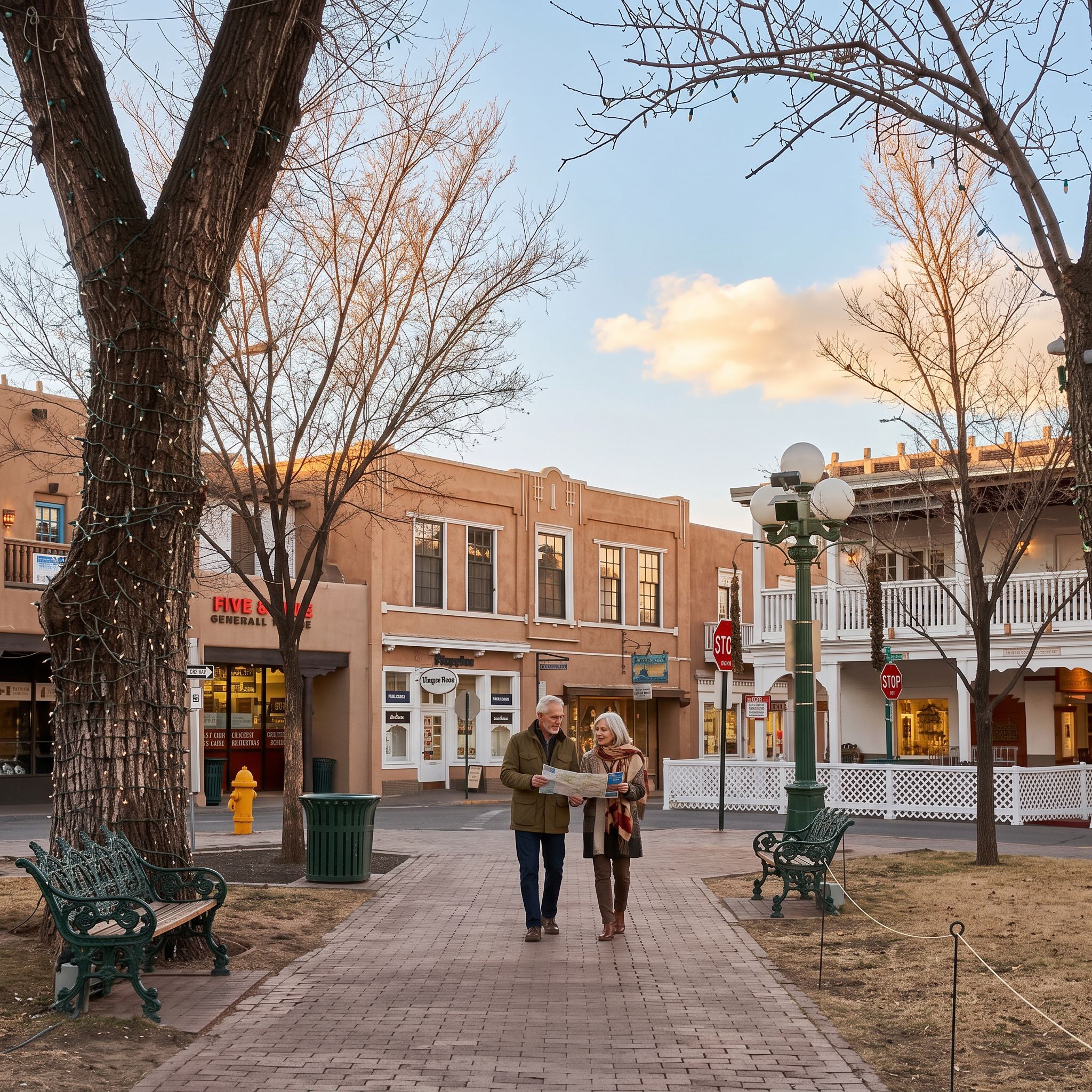
Free options stretch a frugal day considerably. Fodor's travellers recommended the free public tour of La Fonda's historic building and art collection, and described the New Mexico State Capitol as free to visit and rich in New Mexican art. The City of Santa Fe's Division of Senior Services runs programmes at five senior centres where most services and activities are free, with some requesting a suggested donation; registration is free at the Mary Esther Gonzales Senior Center, Monday to Friday, 8:30 a.m. to 4:30 p.m.
 AI-edited
Where is Santa Fe dear, and where is it reasonable?
Santa Fe is relatively costly for New Mexico, chiefly because accommodation in the historic centre is limited and demand rises around major arts and cultural events. Transport, by contrast, is inexpensive: a $1 bus fare and a $10 monthly senior pass are among the most reasonable line items in any Santa Fe budget.
Accommodation carries the weight. Tourism Santa Fe states that weekends in summer are usually booked near capacity, and that rooms during the city's Indian Market, held on the third weekend in August, are booked up to a year in advance. Parking can be tight in June, July and August, though most attractions are within walking distance of downtown hotels. March to May is described by U.S. News Travel as an off-peak period with lower prices, and September to November as the best overall visiting period for cooler weather and lighter crowds.
First-hand reports give a sense of the spread without amounting to published rates. A Fodor's report covering a March 10 to 19 trip recalled roughly $150 or slightly less for Hotel Santa Fe, described by the writer as a remembered rate rather than a current standard price. A December 2024 report put Rosewood Inn of the Anasazi at more than $900 per night. Neither is the property's own published rate; no published rate exists in the material behind this guide, so confirm directly when booking.
Dining reports are similarly anecdotal. About $110 for two, including tax and tip, was reported at Ristra in a Fodor's trip report, and a private dinner with wine pairings at roughly $400 for two including tips in December 2024. No published prices were supplied for the named Santa Fe restaurants, so a representative restaurant budget is not documented. Tourism Santa Fe notes that some restaurants add a service charge of up to 18 percent for parties of five or more, and that the busiest dining hours run from 6:30 to 8:00 p.m.
How much should travellers over 50 budget for transport?
Very little if the bus suits, more if it does not. Santa Fe Trails costs $1 a ride, or $0.50 for riders aged 60 and over. Door-to-door senior services exist but are restricted by residency, and taxis and ride-hailing are thinly documented, so a central hotel is the real transport saving.
Santa Fe Ride is a shared-ride service for Santa Fe residents aged 60 or over and for people whose disabilities prevent them from using regular bus routes. Eligible city residents aged 60 or over pay $5 per one-way trip, veterans and city employees who are seniors ride free, and the fare is exact change only because drivers carry no change, according to the City of Santa Fe application. Reservations are accepted Monday to Friday, 7:00 a.m. to 7:00 p.m., can be made up to 14 days ahead, and should generally be called in by 7 p.m. the previous evening. Riders must call when ready to be picked up, and a pickup may take up to 90 minutes.
The City of Santa Fe's Division of Senior Services provides door-to-door rides within city limits for people aged 60 and over, Monday to Friday, 8:30 a.m. to 4 p.m., with medical appointments given priority. Rides should be reserved at least three to five days ahead by phone, and the suggested donation is $0.50 per ride, or $10 for a 25-ride ticket. Santa Fe County runs a separate door-to-door service for eligible seniors living outside city limits but within the county, with reservations at least three days ahead and a suggested donation of $1 per ride.
For everything else, the documented picture is thin. A December 2024 Reddit report found few Ubers or Lyfts and no taxis during that stay, and quoted about $65 for a 25-minute private car ride from the mountain area near Ten Thousand Waves to downtown, with the poster noting that waiting for an Uber would have cost less than half as much, availability permitting. Transfers to and from the Rail Runner Express are free with a qualifying transfer or ticket. The Santa Fe Trails and RideFinders call centre, 505-955-2001, handles local transit questions.
What do museums, tours and free options cost?
State museum admission is generally $10 for adults, guided tours $15, and children 16 or under $5, according to New Mexico Culture. Reported walking and tram tours have run at approximately $15 to $20. The free options are genuine: a state Capitol full of art, a historic hotel tour, and senior centre programmes.
- New Mexico state museums: $10 adult admission, $15 guided tours, $5 for children aged 16 or younger.
- Clarice tram tour: reported at $20 in April 2018.
- New Mexico History Museum historical walking tour: reported at $15.
- La Fonda historic building and art collection tour: free, per Fodor's travellers.
- New Mexico State Capitol: free to visit, per a Fodor's discussion.
- Senior centre programmes: most free, some with a suggested donation.
Two state museums discussed in the material are open 10 a.m. to 5 p.m. daily from May through October, with adult non-resident admission of $12 and New Mexico resident admission of $7. The source does not identify them clearly enough to name them here, so check the specific museum's own page before you go. The Santa Fe Opera Festival Season runs June to August, according to U.S. News Travel; the exact annual opening and closing dates and any rehearsal closures are not published in the material behind this guide.
For a wider menu of what the city does well, see Santa Fe's finest experiences, chosen for the over-50s. If a spa afternoon is on the list, the transport line matters: a spa day at Ten Thousand Waves sits outside the centre, and the documented private-car fare from that area to downtown was about $65 for 25 minutes in December 2024.
How much do meals add to the daily total?
The federal meals-and-incidentals allowance for Santa Fe is $80 per person per day, split as $20 breakfast, $22 lunch, $33 dinner and $5 incidentals. A comfortable eating day sits at about $80 to $140 per person. Restaurant prices themselves are not published in the material behind this guide.
Breakfast is where a hotel choice changes the arithmetic. Guests at Inn on the Alameda repeatedly praise included breakfasts, including made-to-order dishes, according to Tripadvisor reviews read in 2026. At Hotel Santa Fe, The Hacienda & Spa, an April 2026 Tripadvisor review praised the dessert and complimentary coffee and tea but skipped the continental breakfast at a reported $15, judging it poor value before an early departure. Included breakfast improves value only when the property states whether it is hot, made-to-order, buffet or merely continental.
For what the city actually cooks, what to eat in Santa Fe: New Mexican cooking covers the dishes worth budgeting for. The one published surcharge to plan around is the service charge of up to 18 percent that some restaurants add for parties of five or more, per Tourism Santa Fe.
What should solo travellers and frugal visitors know?
A solo comfortable trip runs roughly $400 to $600 per day, because the room is not shared. A frugal visitor can cut the transport line to $0.50 a ride at 60 and over, use free attractions, and choose a hotel with included breakfast and a shuttle.
Hotel choice does more for a frugal budget than any other decision. A 2014 Fodor's report described the Hyatt Place on South Cerrillos as about 15 minutes from the Plaza by car, with breakfast, Wi-Fi and parking included and a kitchenette in the room. Guests at Hotel Santa Fe, The Hacienda & Spa value a complimentary shuttle to the Plaza and downtown sites within roughly a mile, according to Tripadvisor reviews read in 2026. The main hotel building there has been undergoing fire-related renovations, with the pool, hot tub, restaurant and bar reported closed at times; confirm which amenities are operating before booking.
Where you sleep changes what you spend on getting around. Hotels around the Plaza are generally well placed because, as one Fodor's discussion put it, everything is pretty much within walking distance. For a visitor with reduced stamina, a hotel near the Plaza is more practical than one on South Cerrillos or in the hills. Choosing your base in Santa Fe sets out the trade-offs by area.
What else should travellers over 50 budget for?
Altitude, health cover and a little slack. Santa Fe sits about 7,000 feet above sea level, where the air is rarefied and thinner, according to Tourism Santa Fe. Build a slower first day into the plan, carry identification for reduced fares, and keep the emergency numbers to hand.
For medical matters, call 911 for police, fire or medical emergencies in Santa Fe and Santa Fe County. The Santa Fe Crisis Response Hotline is listed at 505-820-6333 or 1-888-920-6333. The county directory names Aspen Medical Center at 505-466-5885, Christus St. Vincent DeVargas Health Center at 505-913-4660, and Christus St. Vincent Entrada Contenta Health Center Urgent Care at 505-913-3233. Opening hours, walk-in rules and accessibility features for those facilities are not documented in the material behind this guide; call ahead.
Pharmacies are the gap. City senior transportation includes pharmacy prescription pickup, but no source identifies the nearest pharmacy to a hotel, attraction or neighbourhood. Ask the hotel to name the closest one before you need it. On the ground, Tourism Santa Fe notes that summer days can reach 90°F and above while nights fall to the low 60s, that the city expects six to eight major snowfalls from November to April, and that the sun shines 300 days a year. Pack for both ends of that, plus identification or a Medicare card for the half fare and exact change if paying on board.
Path quality is the detail the city does not publish. There is no documented citywide inventory of cobblestones, no average hill gradients, no bench count and no verified walking-distance standard between major sites. Visitors who cannot manage steps can use the accessible Santa Fe Trails buses or investigate Santa Fe Ride eligibility. Confirm walking conditions directly with each hotel or attraction.
When should you go to keep costs down?
March to May is described by U.S. News Travel as an off-peak period with lower prices. September to November is its pick for the best overall visiting period. Avoid the third weekend in August, when Indian Market rooms are booked up to a year ahead.
Tourism Santa Fe publishes monthly averages for the city: January 42°F high and 19°F low with 0.7 inches of precipitation; April 64°F and 33°F with 0.8 inches; July 86°F and 56°F with 2.9 inches; October 67°F and 37°F with 1.1 inches. The wettest months are July and August, and the coldest average daily temperatures fall in December and January. For a walking-focused visit, May, June, September and October offer the best compromise between temperature and rainfall in the published figures.
One caution about the name. Santa Fe, New Mexico, and Santa Fe in Argentina are different cities with different costs, and the two are sometimes confused in budgeting advice. This guide covers Santa Fe, New Mexico, throughout.


