
Cape Town sits at the end of one of the longest journeys most travellers will ever make. From Western Europe the flight runs roughly eleven hours nonstop; from North America it stretches past fifteen hours nonstop, and routings through the Gulf or Istanbul can put twenty-two hours of flying on the log. For travellers in their fifties, sixties and seventies, the question is not whether the flight is long but how to arrive in a state to enjoy the city. The good news is that Cape Town's own clock is kind: South African Standard Time runs at UTC+2 with no daylight saving, so the adjustment from Europe is modest.
What follows is a comfort plan built around the documented realities of that journey: which seat to book, how to keep blood moving, how to handle medication across time zones, and how to pace the first day. It draws on guidance from Thrombosis Canada, the American Heart Association and the CDC, and on the reported experience of travellers who have made the trip. Two subjects sit outside this guide: the airport's own transport arrangements and onward transfers, which have their own dedicated guide, and the choice of where to stay in the city, covered in our neighbourhood guide to choosing your base.
Which seat should you book for a flight this long?
Book an aisle seat, and book it early. Thrombosis Canada advises an aisle seat, frequent walking, calf exercises, hydration, loose clothing and avoiding under-seat baggage that restricts leg movement on journeys longer than four hours. The same guidance applies whether the flight is eleven hours from Europe or fifteen nonstop from Washington.
Seat choice matters more than cabin class for most of the journey. An aisle seat lets you stand without disturbing two neighbours, and it makes the walk to the galley a decision rather than a negotiation. Keep the space under the seat in front of you clear so your legs can move; a bag wedged there removes the one bit of legroom you control.
There is a documented trade-off in premium economy. A 2025 trip report described a Seattle–Istanbul–Cape Town routing of roughly 22 hours of flying, in which the extra-legroom economy seat on that aircraft effectively provided a premium-economy seat but no additional premium benefits. In other words, extra legroom is worth paying for; the label attached to it is not always.
Cabin density varies by airline and aircraft. A traveller on a Bellingham–Seattle–Washington–Johannesburg–Cape Town routing reported that South African Airways had removed some seats, making the economy cabin more spacious than expected, and advised selecting seats in advance. The lesson is general: check the seat map for your specific aircraft rather than assuming a cabin layout.
How do you protect against DVT on a flight of this length?
Move, hydrate and consider compression stockings if your risk is elevated. Thrombosis Canada recommends bilateral below-knee graduated compression stockings of 20–30 mmHg for long-distance travellers at increased risk, including people with previous unprovoked or travel-related thrombosis, active cancer, recent surgery or trauma, or at least two risk factors.
Older age is one recognised risk factor, but Thrombosis Canada is clear that risk becomes substantially more relevant when combined with factors such as previous venous thrombosis, active cancer, recent surgery or trauma, obesity, hormone therapy or limited mobility. Thrombosis Canada does not recommend routine aspirin, anticoagulants or compression stockings for travellers without additional risk factors. If you carry any of those factors, a conversation with your own doctor before booking is the sensible first step.
The American Heart Association's medical explainer reports that evidence supports compression stockings for reducing symptomless DVT on flights longer than four hours, while also quoting vascular-medicine advice to get up and walk regularly. The association notes that the strongest evidence concerns reduction of symptomless DVT, not proof that stockings prevent every serious clotting outcome. Do not treat a stocking as a substitute for movement: the American Heart Association's guidance on compression socks and long flights keeps walking and ankle exercises in the plan alongside them.
Seated exercise is simple and needs no equipment. Flexing and extending the ankles, lifting the heels and tightening the calf muscles while seated is consistent with Thrombosis Canada's recommendation for calf exercises during long-distance travel. Set a reminder on your phone for every hour or so, and use the aisle seat you booked.
Watch for symptoms after arrival. Seek urgent medical care in Cape Town for new one-sided leg swelling or pain, unexplained breathlessness, chest pain or coughing blood, per the American Heart Association's medical guidance on suspected DVT or pulmonary embolism.
How should you handle food, drink and hydration on board?
Drink water steadily, go easy on alcohol, and shift your meal and sleep timing toward Cape Town time while still airborne. The CDC Yellow Book says dehydration can worsen jet-lag symptoms and advises staying hydrated while limiting excess alcohol, and it recommends timing meals, sleep and light exposure according to the destination time zone.
Cabin air is dry and the journey is long, so a refillable bottle filled after security is the practical habit. Cape Town's climate gives you a reason to keep it up on the ground too: Cape Town Tourism describes warm, dry summers and cooler, wetter winters, and a refillable water bottle appears on any sensible packing list for the city.
The CDC's advice on timing is worth acting on deliberately rather than leaving to the cabin crew's schedule. If you are flying overnight from Europe, the destination clock is only one or two hours ahead, so the shift is small; eat lightly, sleep when the cabin dims, and treat the arrival morning as a normal morning. From North America the shift is larger, and the in-flight timing matters more.
Sedatives deserve caution. The CDC warns against sedative medicines with long half-lives during travel and notes that some sleep medicines can increase cognitive impairment and fall risk. The CDC Yellow Book adds that long-acting antihistamines and benzodiazepine-type medicines can worsen cognitive impairment, falls and physical performance. A doctor quoted in a traveller discussion prescribed zopiclone but advised starting with half a tablet and warned against sleeping continuously for more than six hours because of DVT concerns. Any decision about sleep medication belongs with your own prescriber.
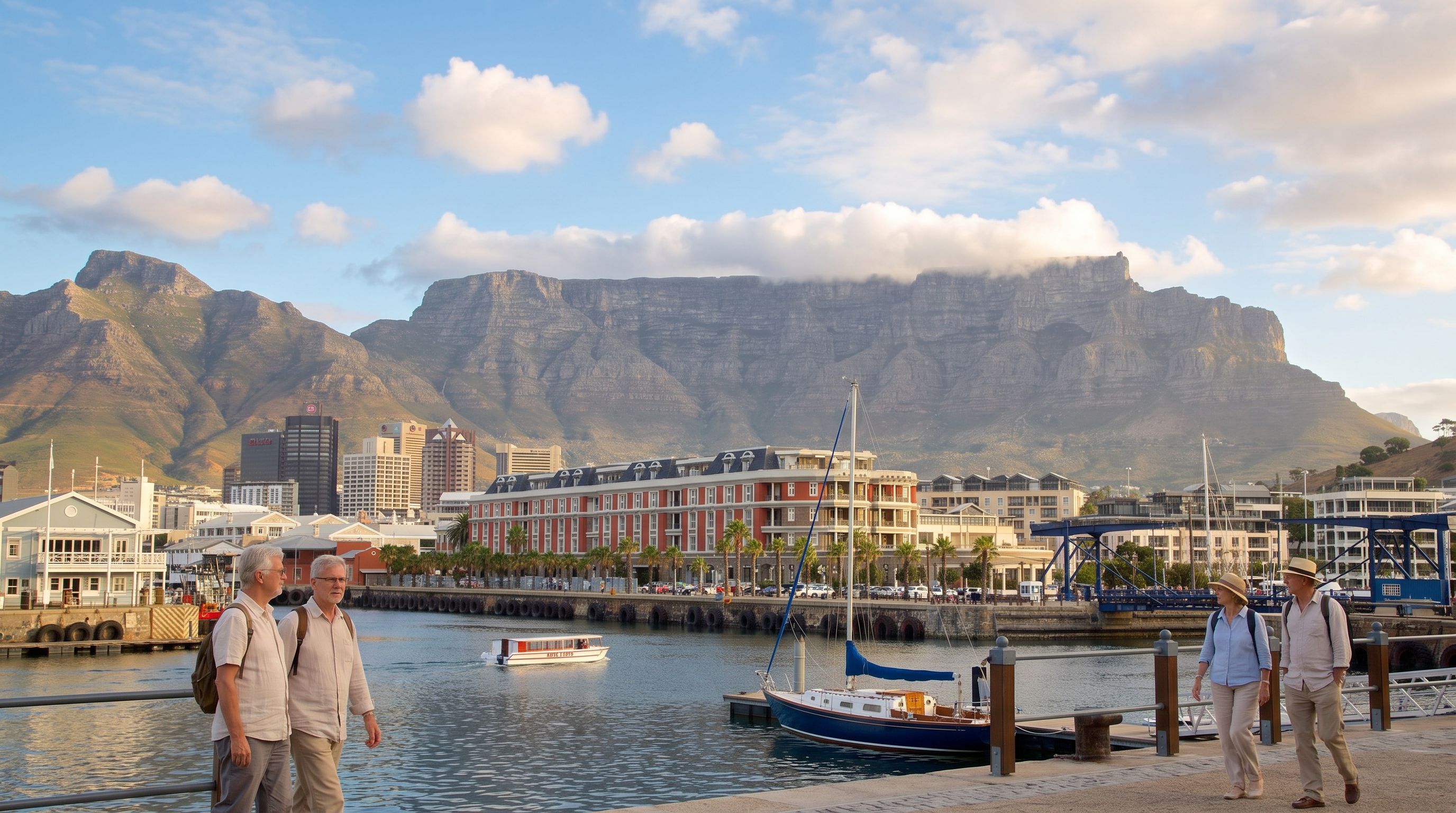 AI-edited
How do you manage medication across time zones?
Carry enough for the whole trip plus extra, keep it in cabin baggage in original labelled containers, and take regular medicines according to the time since the previous dose rather than the local clock. That is the CDC's specific advice for travellers crossing time zones.
The CDC advises checking storage requirements and discussing any time-zone adjustment with the prescribing clinician before departure. For medicines tied to meals, sleep, blood pressure, diabetes or seizure control, the CDC says time-zone changes may require an individual dosing plan from a healthcare provider. Build that conversation into your pre-trip appointments rather than leaving it to the departure lounge.
Two practical points from the same guidance. The CDC notes that extreme temperatures can reduce the effectiveness of some medicines, so keep medication out of checked luggage and out of a hot car on arrival. And a written medication list, kept with the medicines, is the document that speaks for you if you need care abroad.
Cape Town's own health infrastructure is documented at the emergency end. Cape Town Tourism's safety material lists 112 from a mobile, 107 from a landline, ambulance 10177, and medical and fire emergencies on 021 535 1100. The tourism body also describes MediCase, run by Advanced Global Medical Solutions, as round-the-clock medical support for travellers in the Cape Town tourism area, including access to doctors, emergency care and hospital coordination. Cape Town Tourism's visitor support line after an incident is 021 487 6552, listed as 24/7 in its 2026 fact sheet.
"Nearest" depends on your exact hotel, suburb or attraction, and no individual pharmacy, clinic, opening hours or distance is documented in the available material. Ask your accommodation to identify the closest pharmacy for your address when you check in.
How do you ease into the time difference on arrival?
Adopt Cape Town's routine as soon as you land, especially if the difference from home is more than three hours. The CDC advises adopting the destination routine on arrival where the time difference from home is more than three hours, and identifies timed light exposure and scheduled sleep as standard approaches to jet-lag management.
Cape Town is generous here. The city runs on South African Standard Time, UTC+2, with no daylight saving, according to Cape Town Tourism, and the destination's clock itself does not change seasonally. From the UK or central Europe that is one or two hours, a shift most travellers barely notice. From the US east coast it is six or seven hours depending on the season at home; from the west coast, nine or ten.
Melatonin comes with a documented dose. The CDC Yellow Book says that 0.5–1 mg of melatonin is often sufficient for a circadian shift and does not recommend doses above 5 mg because excess melatonin may remain at the wrong time. It also notes that melatonin may interact with other medicines, so check before you pack it.
Daylight is free and effective. Cape Town's summer days are long and its winter days short but often clear between fronts; either way, a walk outside in the morning light does the work that a darkened hotel room cannot. If you arrive in the evening, sleep at a normal local hour and set an alarm for a normal local morning.
What should the first day in Cape Town look like?
Keep it nearly empty. A 2025 trip report describes flying for about 22 hours in total, arriving in Cape Town and deliberately resting for the first afternoon and evening. A separate trip report describes arriving after 26 hours of flying at about 10 p.m., where a prearranged pickup meant the travellers reached their accommodation without having to organise transport while exhausted.
The pattern across first-hand reports is consistent: book the first night in well-organised accommodation, arrange a pickup in advance, and leave the first afternoon or evening free. The available reports do not document a dependable walking time from Cape Town International Airport to any particular hotel, so treat the pickup as the plan rather than a stroll.
Two physical complaints recur in traveller discussions. Both point to the same planning response: fewer, longer legs where possible, an aisle seat, and a hotel night rather than an airport-floor stopover. A Fodor's forum contributor describing themselves as "well over 60" said they would avoid an exhausting airport-floor stopover after an earlier bad experience, and the same discussion recommends a hotel night on the way, ideally after reaching a major European or US gateway.
What should go in the cabin bag for this flight?
Pack medication in original labelled containers with a written list, a refillable water bottle, loose layers, and compression stockings if a clinician has recommended them. Cape Town's own climate adds a light waterproof layer and high-SPF sunscreen to the suitcase, because mountain weather can change rapidly.
Cape Town Tourism describes warm, dry summers and cooler, wetter winters, with mountain weather that can change rapidly and winter bringing strong winds and heavy rain. The tourism body's guidance supports layers rather than only warm-weather clothing, a lightweight waterproof jacket and trousers for winter or mountain outings, comfortable closed walking shoes with good grip, a sun hat, sunglasses and high-SPF sunscreen, a refillable water bottle and a small daypack for layers, medication and water. A compact umbrella is a supplement to a waterproof jacket, not a substitute, in windy conditions.
For the flight itself, the cabin bag should hold:
- All medication, in original labelled containers, with a written medication list (CDC guidance).
- A refillable water bottle, filled after security.
- Loose clothing and a warm layer for the cabin.
- Compression stockings, if recommended, put on before boarding.
- Nothing under the seat in front of you that blocks leg movement (Thrombosis Canada).
- An iPad or e-reader if you rely on your own entertainment; one traveller on a South African Airways routing wished they had brought one because the in-flight films were disappointing.
The cited Cape Town sources do not publish an official packing checklist, and they do not specify walking distances or terrain requirements for individual attractions. Treat the list above as following the documented climate and mountain conditions, and check the specifics of any particular outing before you commit to it.
What should you know about getting around once you have arrived?
Cape Town has an accessible bus rapid-transit option in MyCiTi, but accessibility varies considerably by neighbourhood and attraction. Cape Town Tourism advises visitors to confirm accessibility, step-free access and adapted transport before booking, and it does not establish a universal step-free standard for every attraction or hotel.
The City of Cape Town describes MyCiTi as the city's only universally accessible public-transport service, designed for wheelchair users, seniors, visually impaired passengers and people travelling with luggage. Documented features include tactile paving, induction loops at ticket kiosks, CCTV, wide station gates, priority seats and level boarding on buses serving residential and central-city routes. Each passenger needs a myconnect card, and passengers tap in and out. A current senior or over-65 fare is not documented in the cited official fare material, so do not assume a senior discount.
Metrorail's suburban services, including routes toward Fish Hoek, Kalk Bay and Simon's Town, are not documented in the cited tourism material for step-free access, lifts, platform conditions or senior fares. Reporting has described the network as recovering from years of infrastructure damage while still experiencing signal failures, overcrowding, bottlenecks and delays, particularly on the Central Line. For a relaxed visit, combine MyCiTi with pre-booked e-hailing or transfers and short, planned outings rather than relying on trains or long walks.
For e-hailing, Cape Town Tourism advises using registered services, checking the driver and vehicle, and verifying the fare in South African rand. It also advises avoiding isolated streets after dark. The airport's own transport arrangements, including authorised taxi desks and shuttle meeting points, are covered in our separate airport and transfers guide.
On the ground, the city rewards a slower pace. Our selection of Cape Town experiences chosen for the over-50s is built around exactly that, and a quiet afternoon at a spa is a reasonable way to recover from the flight, as set out in what to expect from a spa day in Cape Town.
What numbers should you have saved before you land?
Save Cape Town Tourism's published emergency numbers in your phone before departure: 112 from a mobile, 107 from a landline, 10177 for an ambulance, 10111 for the South African Police Service, 021 480 7700 for city emergency services, and 021 535 1100 for medical and fire emergencies.
Two more are worth adding. Cape Town Tourism's visitor support line after an incident is 021 487 6552, listed as 24/7 in the 2026 tourism fact sheet, and Table Mountain National Park emergencies are on 086 110 6417. The airport's general enquiries number is 021 937 1200, and passengers needing assistance should notify the airport at least 48 hours before travel by calling 021 935 3737, according to Cape Town Tourism's airport guide.
Cape Town International Airport operates 24/7, according to the airport's published information, which matters if your flight lands late. The airport publishes passenger elevators serving all levels, gentle-slope ramps, moving walkways and wheelchair-friendly access to shops, restaurants and viewing decks, according to Cape Town Tourism's airport guide.
How should you put the plan together?
Book the aisle seat and the hotel night first, then build the medical conversation, the stocking decision and the arrival-day rest around them. The flight is the fixed cost of a Cape Town trip; the planning is what decides whether you spend the first two days recovering or exploring.
The shape of a comfortable journey, drawn from the guidance above, looks like this. Choose a routing with a hotel night at a major gateway if you are coming from North America, or fly nonstop from Europe if you can. Book an aisle seat on every leg. Speak to your doctor about DVT risk and compression stockings if you carry any of the risk factors Thrombosis Canada lists, and about a time-zone dosing plan for any regular medicine. Pack medication in the cabin in original containers with a written list. Set an hourly reminder to move your ankles and walk the aisle. Drink water, go easy on alcohol, and time your sleep toward Cape Town. On arrival, take the prearranged pickup, keep the first afternoon free, and get outside in the morning light.
Rates for accommodation and flights are indicative and vary by season and booking channel; Cape Town Tourism identifies November to February as the city's busiest period, so book ahead for those months. The rest is temperament. Cape Town is a city that rewards unhurried mornings and short, well-planned outings, and the traveller who arrives rested has the better holiday. For the food that awaits once you have found your feet, see what to eat in Cape Town, from Cape Malay cooking to local flavours.


