
Ubud rewards the careful eater. The town's warungs, night markets and hotel kitchens serve some of the most rewarding cooking on Bali, and a traveller who understands a handful of simple rules can eat extremely well here for a week or a month. The water is a different matter. Bali's tap supply is not treated as drinking water, and the local guidance is consistent on that point. Everything else, from ice in a lime soda to a plate of gado-gado at a roadside stall, comes down to a few decisions made before you order rather than after.
For visitors in their fifties and sixties, the practical concern is not the occasional upset stomach. It is dehydration. Older bodies hold less reserve, and some common medicines interact badly with fluid loss. The good news is that Ubud is well supplied with clinics, pharmacies and bottled water, and a modest amount of planning removes most of the risk. This guide covers water, ice, warungs, street food, fruit, salads, spice and what to pack. Vaccinations and general health cover are handled in a separate guide.
 AI-edited
Is Ubud's tap water safe to drink?
No. No source confirms that untreated tap water in Ubud District is potable, and BIMC Hospital Bali states plainly that Bali tap water should not be swallowed. Use sealed bottled water for drinking, for brushing your teeth and for taking medicines. Filtered or boiled water is an alternative where the treatment is reliable.
The practical routine is simple. Buy sealed bottles and check that the cap seal is intact before you open one. A Reddit discussion warns that some bottles are refilled and resold, which is one more reason to look at the seal rather than the label. Hotels and villas around Ubud commonly provide filtered-water refill stations or glass bottles in the room, but the material does not document maintenance standards for individual properties. If you intend to rely on a refill station, ask at reception how the water is filtered.
Boiling is effective where you can do it yourself. Many guesthouses supply a kettle; a travel kettle is light and settles the question. For outings, carry a filled bottle rather than assuming you will find a shop when you are tired, hot or halfway along a rice-terrace path. Dehydration is the principal concern when older visitors develop diarrhoea, and the cheapest defence is water you already have with you.
What about ice in drinks?
Ice is the least consistent piece of advice in Bali. BIMC advises avoiding untreated ice cubes and says ice is best avoided outside reputable hotels, resorts and restaurants where the water source is known. Established restaurants and cafés are generally reported to use commercially produced or filtered ice; ice from unidentified roadside vendors is less dependable.
That is a workable rule rather than a prohibition. In a hotel restaurant or a busy café with a proper kitchen, an iced drink is a reasonable order. From a cool box on a pavement, or a stall where the ice sits in a bucket of meltwater, it is not. If you are unsure, ask. "Is the ice filtered?" is an easy question and the answer is usually forthcoming.
Forum accounts disagree, and it is worth saying so. Some contributors report that reputable Ubud restaurants use purchased or filtered ice; others describe illness after an iced drink made with tap water at a villa. One contributor reported being ill for about two days after consuming ice made with tap water at an Ubud villa. The lesson is not to avoid ice everywhere. It is to know the source.
Which warungs and street food are safe?
There is no register of safe warungs, and no inspection list a visitor can consult. The shared practical guidance is to choose premises with visible turnover, clean handling and food cooked to order. Busy local warungs are recommended by some contributors because the food moves quickly; others advise avoiding street stalls and inexpensive warungs altogether.
Both views appear in the same forum threads, and neither is a guarantee. Is the food being cooked now, in front of you? Is the serving area clean? Are the staff handling money and food with the same hands? Is there a queue of local customers? A warung that answers yes to the first three and has a steady stream of regulars is a better bet than an empty one with a laminated menu.
Prefer meals freshly cooked and served hot. Avoid raw or partly cooked seafood, undercooked meat, eggs with runny yolks, unwashed produce, buffet food that has been standing out, table sauces of uncertain freshness, and street food where hygiene or refrigeration cannot be assessed. BIMC's Ubud guidance lists untreated water and ice, street food, raw or partly cooked fish and shellfish, and food that is not served hot as the categories to watch.
For a sense of what is worth ordering when you do sit down, our guide to Balinese specialities and where to try them covers the dishes themselves.
Can I eat fruit, salads and spicy food?
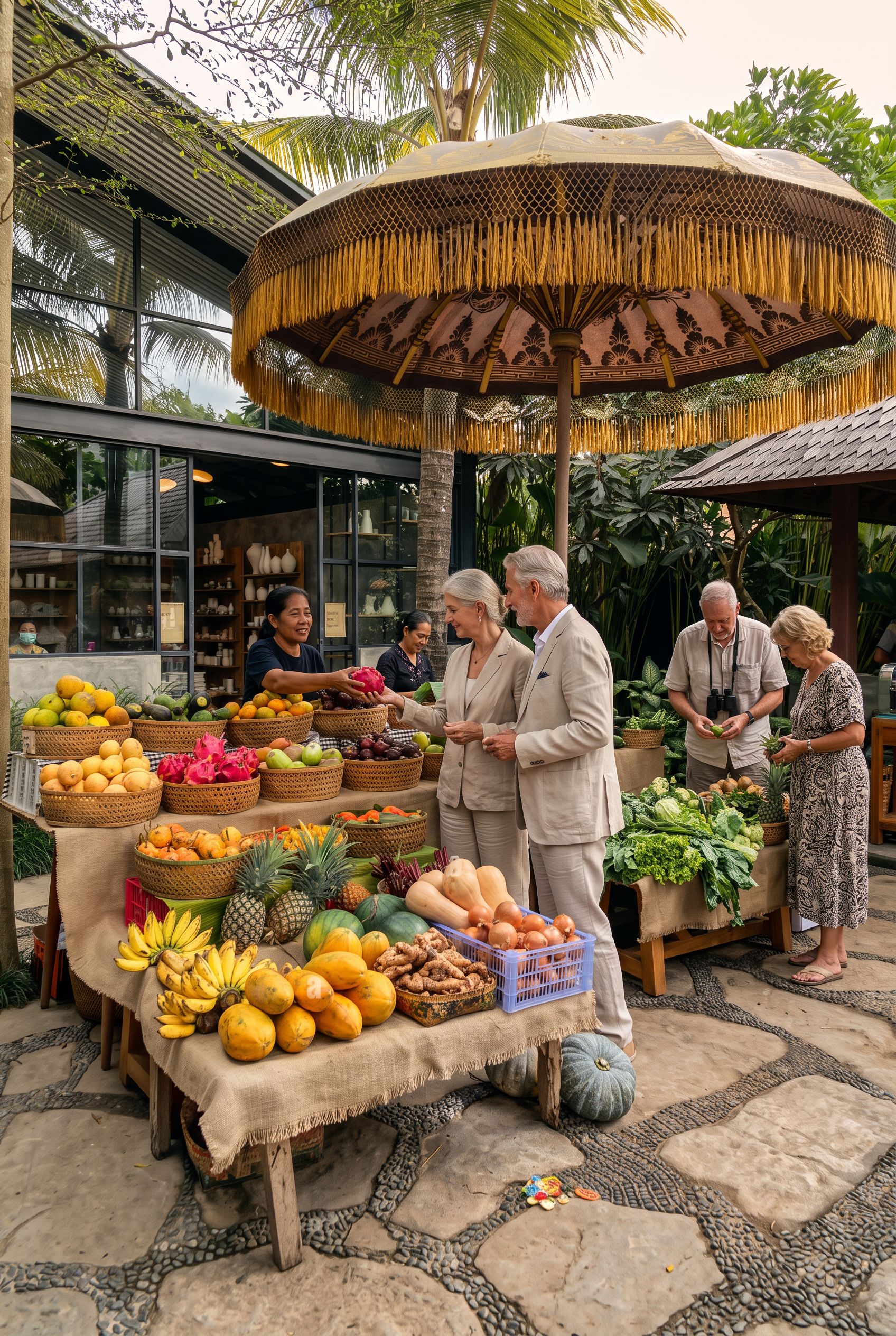
Whole fruit you peel yourself is the safest produce in Ubud. Pre-cut fruit, ready-made smoothies, raw salads and uncooked garnishes are the items most often flagged, because they may have been washed in untreated water. a sensitive stomach does better with mild dishes, and nothing in the evidence suggests chili itself causes illness.
BIMC's Ubud guidance recommends fruit and vegetables that can be peeled personally. That means buying a mango, a banana or a pineapple whole and preparing it yourself, rather than a plastic tub of mixed fruit from a convenience store. Hotel breakfast buffets usually handle fruit hygienically, but the same question applies: has it been washed in bottled or filtered water?
Salads are the item most consistently flagged across forum threads, along with pre-cut fruit, ready-made smoothies and uncooked garnishes. A July 2025 Ubud discussion came from someone with a sensitive stomach looking for mild eateries and avoiding very spicy or raw dishes. That is useful for comfort, but it does not establish that any particular restaurant is medically safer.
On spice, the practical approach for older travellers is to start mild. Eat smaller portions in the first days, favouring hot rice, soups, noodles and other thoroughly cooked dishes before experimenting with salads, seafood or elaborate raw plates. Balinese cooking can be fiery, and a stomach unused to it will complain regardless of hygiene.
How do I avoid Bali belly?
Bali belly is traveller's diarrhoea, commonly associated with contaminated food or water, including bacteria such as E. coli. BIMC describes it as commonly mild and says approximately 90% of cases resolve within one week. The prevention routine is unglamorous: sealed water, hot freshly cooked food, peeled fruit, clean hands and a plan for medical help.
Several contributors make a point worth repeating: the risk is not simply dirty water but unfamiliar bacteria. A visitor may become ill even where local residents tolerate the same supply. A February 2024 Reddit account is a useful warning against assuming that standard precautions eliminate the risk entirely; bottled water and cooked food were followed, yet illness still occurred. In that same discussion, the poster said they would be more rigorous about rinsing cutlery, cut fruit and cucumber garnishes with bottled water.
Hand hygiene matters more than most people expect. Wash with soap or use hand sanitiser before eating and after using the toilet, and clean your hands after handling cash. Infectious diarrhoea can spread through contaminated hands and surfaces, so it is prudent not to prepare food for others while ill.
Probiotics and Yakult are suggested in forum threads, but the discussions contain direct disagreement about whether they work. They should not replace hydration, food precautions or medical advice. Where to sleep matters too: a room with easy bathroom access and a restaurant or shop nearby is worth more than a nominally central address if you do fall ill. Our guide to the quietest retreats around Ubud covers properties where guests report sleeping well.
What are the symptoms, and how is it treated?
Symptoms generally include diarrhoea, abdominal cramps, nausea and vomiting. Fever or blood in the stool are warning signs requiring medical advice. The priority is replacing fluids and salts; BIMC recommends oral rehydration solution mixed with bottled or boiled water, and broth or suitable diluted drinks may also help.
BIMC advises medical attention for severe dehydration, fever, severe abdominal pain, bloody diarrhoea, inability to eat or drink, or illness lasting several days. Its newer guidance uses more than 48 hours for concerning persistent symptoms and more than five days as a clear reason to call for advice. For an over-50 traveller, severe dehydration, inability to drink, high fever, bloody diarrhoea or severe abdominal pain should be treated as urgent concerns.
Age alone does not make Bali belly inevitable, but dehydration can become more serious when a person has limited physiological reserve or takes medicines affected by fluid loss. Ask a clinician or pharmacist about your own medicines before you travel, particularly diuretics and blood-pressure medication. Carry oral rehydration sachets in your bag rather than buying them in a panic.
Is Bali belly contagious?
Infectious diarrhoea can spread through contaminated hands and surfaces, so yes, it can pass between people in close quarters. Careful handwashing and not preparing food for others while ill are the prudent measures.
This matters most in a shared villa or a hotel room with one bathroom. Wash hands thoroughly after using the toilet, keep a separate towel, and avoid sharing cutlery or glasses. If a travelling companion becomes ill, the same precautions apply in reverse. No source provides a verified Ubud-specific infection rate or a quantified risk for people over 50.
Where do I find medical help and pharmacies in Ubud?
Two documented 24-hour facilities with pharmacy services serve Ubud: UbudCare Clinic on Jl. Raya Teges No. 8 in Peliatan, telephone 0811 3977 911, and BIMC Ubud Medical Centre on Jl. Raya Sanggingan No. 21 in Kedewatan, telephone +62 361 2091 030. Both state that they operate around the clock.
UbudCare Clinic states that it provides 24-hour service, emergency medical care, doctors, laboratory services, an on-site pharmacy for patients and a 24/7 ambulance service. Its pharmacy is described as a service for patients receiving treatment and prescriptions; it is not documented as a general walk-in retail pharmacy. BIMC Ubud Medical Centre is described as offering 24-hour medical and emergency services and a pharmacy.
Other documented facilities include Ari Canti Hospital in Mas and Kenak Medika Hospital in Mas, both reported as providing 24-hour emergency services. RSUD Gianyar is identified by one source as Ubud's closest 24-hour hospital, approximately 13 km east of Ubud; that distance applies to Ubud generally, not to a particular hotel. Apotek pharmacies are reported throughout central Ubud, including around Ubud Market and the Monkey Forest area. The nearest pharmacy to a particular accommodation is not documented without its exact address.
Published Bali emergency numbers include 112 for general emergencies, 110 for police, 113 for fire, and 118 or 119 for ambulance or medical emergency. Keep your accommodation's exact location written down, particularly if you are staying outside the centre.
For a fuller picture of getting around with limited mobility, see how accessible Ubud is for older travellers.
What should I pack for Bali belly?
Pack oral rehydration sachets, your usual stomach medicine, hand sanitiser, a reusable water bottle and any regular medicines in their original packaging with extra supplies for delays. Add travel-insurance documents including confirmation of medical-evacuation cover. These items weigh almost nothing and remove most of the anxiety.
The climate supports the list. Ubud is hot and humid throughout the year, and the wetter season runs roughly November through March. Lightweight breathable clothing, a sun hat, high-factor sunscreen and a light waterproof jacket all belong in the bag. Sturdy closed-toe shoes with good grip matter for uneven stone, dirt and steps, and a compact umbrella earns its place in the wet season.
Insect repellent and long, loose clothing help in the evenings. A travel kettle, if you have room, lets you boil water in the room. And a small torch is useful on lanes without street lighting.
Where can I eat with confidence?
Established restaurants and hotel kitchens carry the least uncertainty, because their water and ice sources are known and their turnover is high. That is not a verdict on warungs, many of which cook excellent fresh food. It is a question of how much you can see before you order.
A March 2025 Reddit discussion names Alchemy Bali, Zest Ubud, Moska Plant Based, Ubud Sayuri Healing Food and The Elephant as places suggested for comparatively safe eating. These are forum recommendations, not inspections or guarantees, and should be read as such. Zest Ubud sits 2.2 km from central Ubud by road, about 5 minutes with clear roads; The Elephant is 2.8 km away, also about 5 minutes with clear roads.
For a wider choice of tables, including the town's more ambitious kitchens, our guide to Ubud's finest restaurants and jungle-view dining is a useful companion. Wherever you book, the same three questions apply: is the ice filtered, is the salad washed in bottled water, and is the food cooked to order.
Putting it together
Ubud is a generous place to eat, and the precautions above are modest. Drink sealed water, ask about ice, peel your own fruit, choose premises where you can see the cooking, wash your hands, and carry rehydration sachets. Eat mild for the first day or two and let your stomach adjust. None of this requires a spreadsheet or a pharmacy in your luggage beyond a few sachets.
The town's pavements are uneven and often obstructed, so a pre-booked car with a driver is generally the workable way to reach a restaurant outside the centre, as recorded transport guidance notes (airport and Ubud transfer guidance). For the medical side, BIMC Hospital Bali publishes its own Ubud facility information and Bali belly guidance (BIMC Ubud), which is the most authoritative local source for symptoms and treatment thresholds. Eat well, drink carefully, and Ubud will look after the rest.


