
The Dolomites hold UNESCO World Heritage status, and the same geology that produced those pale rock towers also produced the springs, the sulphur water and the radon baths that underpin the region's wellness tradition. For travellers aged 50 to 70 planning rest rather than summit days, the appeal is straightforward: thermal water with documented therapeutic uses, saunas built for long sitting, and mountain views from the pool. What follows is a considered roundup of Alpine spa hotels and day spas, assessed on comfort, documented accessibility, quiet, views and treatments that range from gentle to invigorating.
Two things shape the planning. The Dolomites are not a budget destination, and prices run higher in marquee areas such as Alta Badia or Cortina d'Ampezzo than in less frequented valleys, according to editorial travel guides. And the region has no single airport or railway station, so the final stage is by bus, hotel transfer or car. Rates quoted below are indicative and vary by season and booking channel.
Which spa hotels in the Dolomites stand out for older travellers?
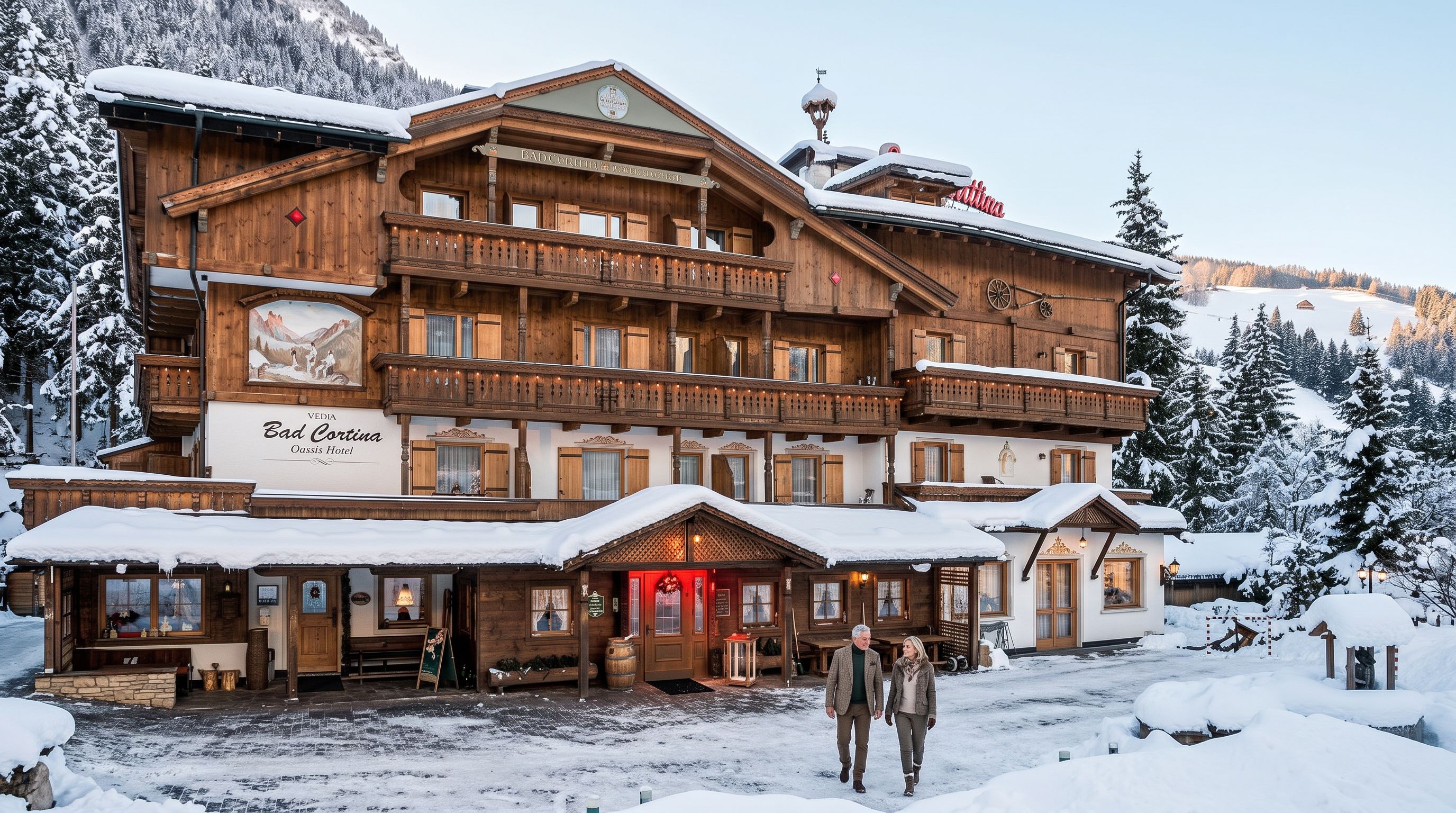
The strongest documented options for this age group are Aqua Bad Cortina in San Vigilio, Bad Moos in Sesto, Bad Salomonsbrunn in Antholz, Hotel Terme Antico Bagno in Pozza di Fassa, Jochgrimm, Santre, and the public thermal complexes Terme Merano and QC Terme Dolomiti. Each has a different emphasis: some are therapeutic, some are resort-style.
The distinction matters. Aqua Bad Cortina, Bad Moos and Bad Salomonsbrunn are the most explicitly therapeutic of the group, because their sources describe recognised springs and specific healing uses. Jochgrimm, Santre and Hotel Terme Antico Bagno sit closer to the luxury-spa framing. QC Terme Dolomiti is the best documented for public thermal-bath access and basic pricing, though senior pricing and accessibility are not documented.
The official Dolomites tourism listing for wellness hotels returns eight accommodations, among them Hotel Villa Stefania, Aktiv- & Vitalhotel Erica, Hotel Winkler, Berghotel Sexten, Hotel Hubertus, Preidlhof Luxury DolceVita Resort, Bad Moos Dolomites Spa Resort and Cyprianerhof Dolomit Resort. That page is a directory only: it does not document accessibility or health provisions for each listed property, so treat it as a starting point rather than a shortlist.
What does the thermal water in the Dolomites actually do?
The documented claims are specific rather than general. Aqua Bad Cortina's spring rises at 1,240 metres at 6.5 °C, is officially recognised as mineral water in South Tyrol, and the water is recommended for rheumatic diseases, skin care and relaxation. Bad Moos uses sulphur spring water for health treatments, mineral fango and hydro-balneo cosmetics.
At Aqua Bad Cortina in San Vigilio di Marebbe, the spring dates to the first official documents in 1741. The water is sulphate-lime-magnesium, is recognised by the Ministry of Health for balneo-fangotherapy, and is used for drinking cures, mineral baths and fango therapies. That combination, a documented composition plus a stated therapeutic indication, is what separates a thermal property from a hotel with a nice pool.
Bad Salomonsbrunn in Antholz takes a different route: its wellness programme uses radon-containing thermal water, with a healing-water whirlpool and balneo-fango therapy. Hotel Terme Antico Bagno in Pozza di Fassa states that it is affiliated with the Italian National Health System and offers pools, sauna, gym, a thermal cave, aromatherapy and the Dolomia thermal baths. The material does not specify the exact medical indications for that affiliation.
 AI-edited
Which Dolomites spa hotels have documented accessibility?
Documented accessibility detail is thin across the region. The clearest positive note concerns Dolomites Hotel La Fradora, where covered parking connects directly to the hotel without walking outside. In Val di Fassa, Olympic SPA Hotel in Vigo di Fassa is listed with an airport shuttle, private transfer service, an elevator to upper floors and hearing-accessible features.
That is a gap in the published material, not a statement about the buildings. Aqua Bad Cortina, Bad Moos, Bad Salomonsbrunn, Terme Merano, QC Terme Dolomiti, Hotel Terme Antico Bagno, Jochgrimm and Santre all fall into that category: the detail is not documented and should be confirmed with the property before booking.
Two practical points help. A Dolomiti barrier-free guide states that accessible itineraries and barrier-free hotel deals exist across Trentino, South Tyrol, Belluno and Friuli, so the region does publish this information somewhere. And the Seiser Alm Cable Car summer 2026 page states that people in wheelchairs, people with 100% disability and blind people travel free, while accompanying persons pay the regular price. That fare applies to the cable car, not to any spa.
How do the spa facilities compare?
Facility ranges differ sharply. Jochgrimm lists a pool, an AlmSauna, relaxation rooms, massage and beauty applications, therapeutic baths, a sauna zone, an infinity pool, a Kneipp course, a herbal steam bath, a sanarium, immersion basins and an infrared chamber. Santre offers bookable beauty and wellness treatments plus a 1,750-square-metre garden with sun loungers.
QC Terme Dolomiti in Pozza di Fassa is a thermal complex with outdoor thermal pools, saunas, steam rooms and relaxation areas. Its indicative opening window is generally 10:00 to 20:00 daily, and prices sit at around €30 to €45, with reduced rates for children and locals. The source does not document exact wheelchair access, handrails, cancellation terms or senior fares for this facility.
Hotel Terme Antico Bagno, also in Pozza di Fassa, groups its offer around the Dolomia thermal baths alongside a pool, sauna, gym, thermal cave and aromatherapy. Santre states that beauty and wellness treatments can be booked, and that guests can use the garden with sun loungers.
| Place | Documented water or therapy | Accessibility detail |
|---|---|---|
| Aqua Bad Cortina, San Vigilio | Spring at 1,240 m, 6.5 °C, mineral water recognised in South Tyrol; recommended for rheumatic diseases and skin care | Not documented |
| Bad Moos, Sesto | Sulphur spring water for health treatments, mineral fango, hydro-balneo cosmetics | Not documented |
| Bad Salomonsbrunn, Antholz | Radon-containing thermal water; healing-water whirlpool, balneo-fango therapy | Not documented |
| Terme Merano | Public thermal spa; source states a healthy effect from its water | Not documented |
| QC Terme Dolomiti, Pozza di Fassa | Outdoor thermal pools, saunas, steam rooms, relaxation areas | Not documented |
| Hotel Terme Antico Bagno, Pozza di Fassa | Affiliated with the Italian National Health System; pools, sauna, thermal cave, Dolomia thermal baths | Not documented |
What do guests say about quiet and comfort?
Guest feedback consistently rewards quiet properties and flags noise where it exists. ARTNATUR Dolomites Hotel & Spa in Siusi allo Sciliar holds a Google rating of 4.2 out of 5 from 523 reviews as of September 2026, and My Arbor in Bressanone holds 4.8 out of 5 from 1,848 reviews over the same period.
At ARTNATUR, guests repeatedly describe the rooms as large and spacious, with comfortable beds, warm bathroom floors and a professional hairdryer. The spa and pool area, including indoor and outdoor pools, saunas and a relaxation room, is consistently praised, and massages are described as excellent. The food draws frequent praise: a changing menu, an extensive salad buffet, a breakfast buffet and a four-course evening meal under half board.
Two caveats recur in that feedback and belong in your planning. Rooms lack air conditioning, and several guests report rooms being very warm at night in summer, with street-facing rooms affected by noise from the square. Half board does not include drinks, including tap water, which is charged per jug or bottle. Ask for a room away from the square if you sleep with windows open.
"Amazing hotel, with very kind staff, amazing spa and pool area. Excellent food, skibus from outside the hotel straight to the lifts and very good underground garages. We hope to return next year." (Google, January 2026)
My Arbor is adults-only for guests aged 16 and over, and guests describe the atmosphere as quiet and uncrowded. Rooms are described as spacious, quiet at night and well designed, with balconies or terraces and mountain views. The spa includes indoor and outdoor pools, multiple saunas, a steam room, a cold plunge and relaxation areas; the lower spa level is textile-free. The half-board food is a frequent highlight, with a breakfast buffet including made-to-order eggs and a multi-course dinner menu with daily changes.
The same feedback notes that rooms do not have air conditioning as standard, and that the property is reached by a winding mountain road, with a car described as necessary for venturing out. The Plose cable car is a short walk from the hotel.
When should you go, and when should you avoid the Dolomites?
The quietest months are April and November, and they are also the months to avoid if you want reliable services. April brings rapid lift closures and inconsistent valley conditions, May sees many lifts, hotels and rifugi closed, and November is near-total calm with limited hospitality and mountain infrastructure.
For the Bolzano side, tourism data cited by travel guides puts August at around 6 million overnight stays and February at around 3.5 million, with April and November the low points. The busiest months in Bolzano province are August and February. If you want a spa stay with everything open and fewer people, the shoulder periods of June, September and October are the usual answer, depending on altitude and valley.
One property detail is worth knowing: the official ADLER Spa Resort Dolomiti site shows open stay periods across spring, autumn and winter in 2026, including April, May to June, October to November and December, which indicates it is not a strict summer-only seasonal property. Some luxury hotels close briefly in the shoulder seasons, so exact opening calendars matter even at the top end. One guide specifically flagged mid-October to early December closures for some five-star properties. Confirm your dates with the property before booking travel.
If you are building a wider trip around the spa stay, the complete Dolomites guide for travellers over 50 covers the region's transport and seasonality in more depth.
How do you get to a Dolomites spa hotel?
There is no single Dolomites airport or railway station. Rail works best with a bus, hotel transfer or car for the final stage. Bolzano is geographically convenient for South Tyrol and some western valleys, but route availability is more limited than at the major airports.
Common rail gateways include Bolzano and Bressanone for South Tyrol, Brunico for parts of Alta Badia, Fortezza for Puster Valley connections, Belluno or Calalzo for eastern itineraries, and Trento or Ora for parts of Trentino. Public transport is regionally organised: South Tyrol uses SAD buses, Trentino uses Trentino Trasporti, and Belluno province uses Dolomitibus.
Measured road distances give a sense of the final stage. Bolzano railway station to Bressanone railway station is 41 km by road, about 35 minutes with clear roads (free-flowing traffic, no stops). Bolzano railway station to Brunico railway station is 74 km by road, about 60 minutes with clear roads. The Dolomites travel guide gives last-mile transfer times of 30 to 45 minutes by bus or hotel transfer on some routes, and 40 to 60 minutes or 45 to 75 minutes on others, depending on the valley. Winter tyres are mandatory from 15 November to 15 April.
In Val Gardena, ADLER DOLOMITI in Ortisei is reported as reachable by bus from the Ortisei bus stop or by a short transfer from Bolzano train station, and the hotel sits a short walk from the main street and the Seceda and Alpe di Siusi cable cars. The bus stop Purger is 150 metres from that hotel, and the centre of Ortisei is a five-minute walk. Check-in there runs from 15:00 to 23:00.
What does a spa stay in the Dolomites cost?
Published rates are scarce. QC Terme Dolomiti gives an indicative price of around €30 to €45 for day access, with reduced rates for children and locals. The Dolomites are not a budget destination.
That €530 figure comes from a forum post about Forestis Dolomites, not from the property's published rate card, and no published rate exists for that treatment. Treat it as one traveller's experience rather than a price list. The same applies to the QC Terme range: it is indicative, and the source does not document senior or over-65 fares, passes, maintenance closures or emergency numbers.
Hotel-by-hotel senior tariffs, opening seasons and reduced-mobility assistance for the individual spa hotels named in the tourism listings are not documented either. Where a figure matters to your budget, ask the property directly and get it in writing with the cancellation terms.
One transport figure is documented and useful: the Seiser Alm Cable Car summer 2026 page gives a senior fare (born in 1960 or earlier) of €18 one-way and €26 for ascent and descent, valid in the operating season from 22 May 2026 to 2 November 2026, with a higher-frequency period from 7 June to 6 September 2026. Opening hours are 8:00 to 18:00 in the season, extended to 19:00 in the peak period.
How should you book treatments and what should you confirm?
Book major treatments about a month ahead. Forum threads on Dolomites wellness travel consistently advise reserving massages and facials roughly four weeks in advance, and they note that many wellness hotels keep saunas, steam rooms and relaxation areas open daily without a treatment booking.
That second point suits travellers who want rest rather than a rigid schedule. If you want more than saunas and basic heat facilities, check in advance whether personalised spa services are included or require an upgrade. One forum thread on a Dolomites spa resort noted that the spa was good for basic sauna options, but that the poster did not upgrade to personalised services.
Expect textile-free saunas as the norm in the region, mixed and often silent, with towels required and swimsuits excluded from the hot rooms. If that is not your preference, ask whether the property has a textile sauna or a private spa option. Hotel Natale in Cortina is recommended in traveller threads for a private spa reservable for 80-minute sessions with a jacuzzi, sauna, steam room and showers, which suits guests who prefer controlled, quiet use over a busy public thermal area.
For a wider view of how the region's spa hotels sit alongside its other accommodation, the official Dolomites wellness hotel listing is the tourism board's own directory. The UNESCO World Heritage material for the Dolomites explains the property's status and how visitor flows are managed across it.
What should you check before booking?
Confirm four things in writing: step-in access to the pool, sauna bench height and handrails, whether the spa sits on the same level as your room, and the cancellation terms. For most properties named here, these details are not published, so the hotel's own answer is the only reliable source.
Health planning is organised by municipality and health area rather than as one region-wide service. For Belluno province, the ULSS1 Dolomiti system coordinates 76 affiliated pharmacies with 24-hour pharmaceutical assistance and directs users to the on-duty pharmacy list on its website. It does not document a single nearest pharmacy for the whole Dolomites area. For Val Gardena, the local healthcare page documents doctors and pharmacies in Ortisei, Santa Cristina and Selva di Val Gardena.
The ULSS1 Dolomiti guide is explicit that to access the Medical Guard Service, people should call 118. No single Dolomites safety rating is documented; safety is documented by municipality and health-area services rather than as one regional metric. The locally applicable emergency number in Italy is 112, and this should be confirmed from an official local source before you travel.
If your trip extends beyond the mountains, our guides to Venice's flattest strolls and loveliest corners and to Venice with grandchildren cover the city at a gentler pace. Note that general hotel picks for the Dolomites and the practical how-to for a spa day each have their own dedicated guides.


