
Venice rewards those who slow down. The city is made up of 121 islets linked by 435 bridges, as the city's own tourism authority notes, which makes it difficult to move about for anyone with reduced mobility, for elderly people carrying shopping, for parents with prams and for visitors with luggage. Yet the same authority states that almost 70% of the historic city centre is accessible to people with impaired mobility, and that the absence of car traffic makes it a friendly and enjoyable city for all.
This guide covers four level routes chosen for pleasure rather than exertion: the Zattere waterfront in Dorsoduro, the broad Riva degli Schiavoni, the quiet campi of Castello, and the Giardini gardens. Each is a stroll, not a march. Where a bridge cannot be avoided, it is named. Where shade, benches and cafes are documented, they are mapped. That silence is stated plainly.
Why is Venice flatter than it looks?
Venice is described as dead flat between its bridges, and the bridges are what define the walking experience. Most have only about six to ten steps, but they come frequently enough that they add up over a day. Choosing a route by bridge avoidance, not by shortest map distance, is the single most useful rule for older walkers.
The city's tourism authority frames the problem precisely: 121 islets, 435 bridges, and a historic centre where almost 70% is accessible to people with impaired mobility. The Comune di Venezia maintains an accessible Venice map that classifies each insula by the absence or presence of public transport, colour-coding areas that are completely accessible by vaporetto in green, areas accessible by motoscafo or a facilitated bridge in light green, and areas not accessible by public transport in white. The back of that map lists bridges with facilities such as platform lifts, lifts or low steps, along with public toilets and waterborne transport stops.
For a stroller rather than a strider, this matters less as a technical document than as a mental map. The flat walking is on the paved canal-side paths known as fondamente, and the waterfronts. The difficult terrain is the back streets of any district, the Rialto Bridge, the Jewish Ghetto bridges and other stepped crossings.
What makes the Zattere the best flat walk in Venice?
The Fondamenta delle Zattere in Dorsoduro is a continuous waterfront promenade of about 1.7 km running from San Basilio to Punta della Dogana, with no bridges along its length. It is public, open at all hours, free to walk, and served by vaporetto stops at San Basilio, Spirito Santo and Zattere.
One recorded guide describes the Zattere as a straight walk for almost 2 km, explicitly noting that it avoids the usual Venice zigzagging of calli and bridges. A Tripadvisor review from April 2017 describes it as running from Punta della Dogana to San Basilio, just over 1 km long, with views across the Giudecca Canal toward the Giudecca itself.
The benches built into the embankment wall are the detail that makes this route genuinely restful. They are documented as a good place to sit, particularly near the Spirito Santo vaporetto stop.
 AI-edited
Shade is the Zattere's one real limitation, and it is worth stating clearly. Summer afternoons can be warm to hot, with little shade beyond cafe awnings. The April 2017 review notes very little shade and describes the promenade as becoming very hot in the afternoon. Morning is the sensible window in warm months; the route faces south across the water.
Three vaporetto stops along a 1.7 km walk means the route can be shortened at either end without retracing steps. That is the practical advantage of a waterfront over a canal-side path: you are never more than a short walk from a boat.
Is the Riva degli Schiavoni an easy walk?
The Riva degli Schiavoni is named as one of Venice's accessible waterfront walks, with relatively straightforward movement compared with the bridge-heavy back streets. It lies in the historic centre where the city's accessible pedestrian routes are mapped. Exact bridge counts, shade and bench locations for this specific promenade are not documented in the official sources.
It is a broad waterfront, it is named specifically as accessible, and it sits within the accessible core that includes Piazza San Marco. The city tourism authority states that some of the richest in monuments and most enchanted sites in the city can be reached by public transport.
The Riva runs along the bacino toward the Giardini and Sant'Elena. The route from the airport-linked stops to San Marco Giardinetta is described in forum material as easy and about seven to nine minutes, flat except for any bridges, with crowds being the main hazard rather than terrain.
That crowd warning deserves weight. Forum threads consistently identify crowding and getting lost as more tiring than the ground itself. The only real hazard reported on a San Marco area walk was crowds in the square, and it is easy to take a wrong turn. For a stroller aged 50 to 70, the practical advice is to walk the Riva early, before the vaporetto loads arriving from Piazzale Roma and the station have dispersed.
An official first-aid point is documented in St. Mark's Square near Caffè Florian, open 8:00 to 20:00 every day including holidays. One source describes the tourist medical service in the Piazza San Marco area as seasonal rather than year-round.
Where are the quiet campi of Castello?
Castello is identified in the official Venice sources as one of the areas covered by accessible city maps and routes. The exact quiet campi strolls, their distances and their pause points are not documented in the retrieved official sources. What is documented is that the district sits within the accessible pedestrian network and that ramps exist on several major bridges near the San Zaccaria stop.
The campi of Castello, the small open squares that give the district its unhurried character, are real and they are quiet. But no official source retrieved for this guide gives route lengths, bench counts, shade conditions or bridge-by-bridge detail for them. Rather than invent figures, the practical approach is to treat Castello as a district to wander rather than a route to follow.
What can be said with confidence is that the San Zaccaria vaporetto stop, at the western edge of Castello, is one of the stops where ramps are documented on several major bridges. That makes it a sensible entry point. From there, the district's campi lie inland, and the walking between them is level except where a canal intervenes.
For travellers who prefer a documented route over an exploratory one, the boat-first approach to seeing Venice with minimal walking pairs well with a short Castello wander: arrive by vaporetto, walk one campo, return by boat.
Are the Giardini gardens worth a visit?
The Giardini della Biennale public gardens are free to enter and open year-round, Wednesday through Sunday. Seasonal hours are 9:30 to 19:00 from 15 April to 15 October, and 9:00 to 17:00 from 16 October to 14 April. They are closed on 1 January, the last Saturday and Sunday of Carnival, Easter Sunday, Redentore Saturday, and 25 and 31 December.
For a flat, shaded stroll with somewhere to sit, the Giardini are the strongest option in Venice. One guide reports dozens of benches, many beneath trees and other foliage. That combination of level ground, tree cover and seating is rare in a city where the Zattere has benches but little shade, and the Riva has space but crowds.
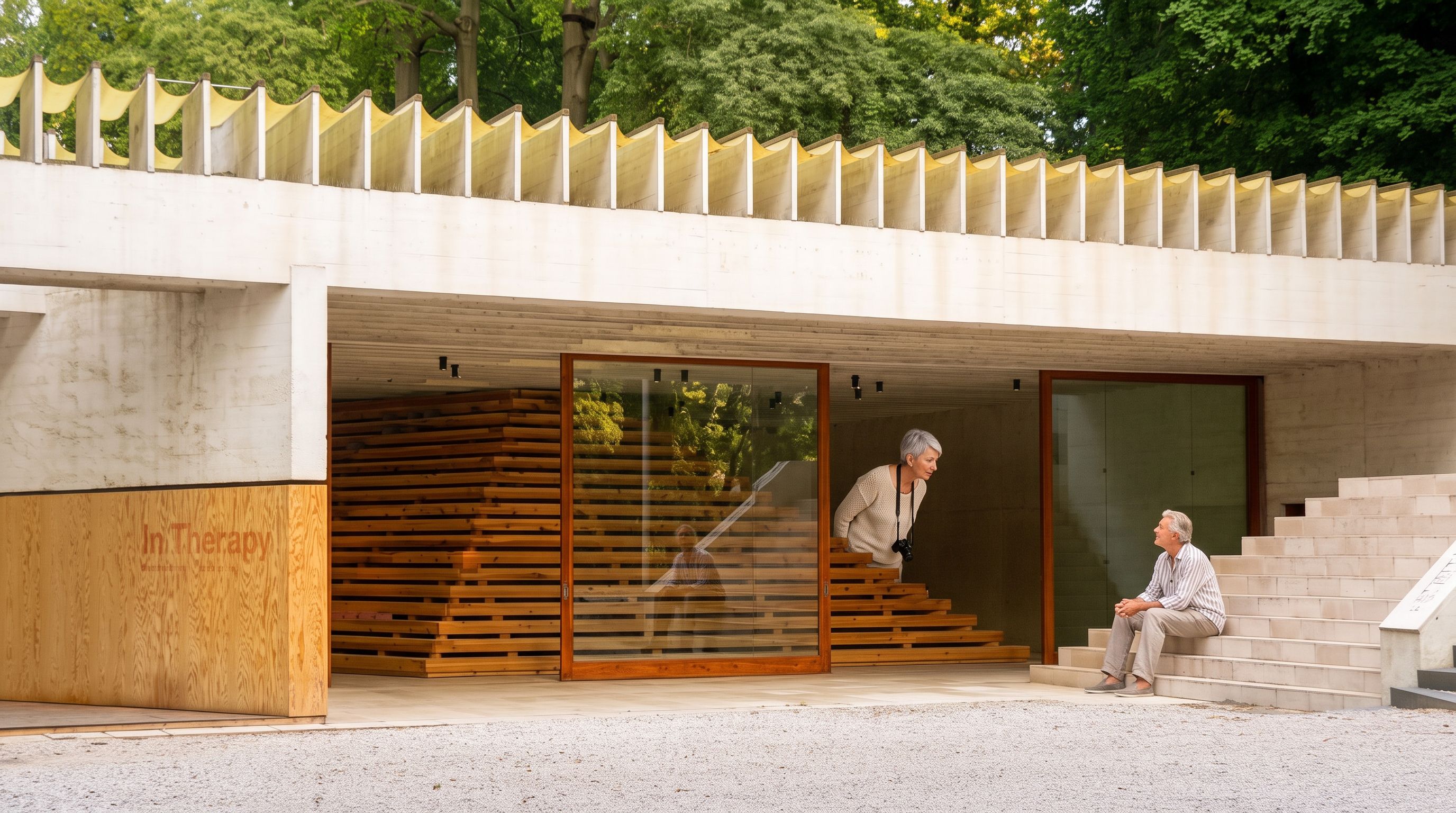
The gardens sit at the eastern end of the Riva degli Schiavoni, which means they can be reached on foot from San Marco along the waterfront, or by vaporetto to the Giardini stop. The Biennale's official 2026 accessibility sheet states that the Giardini site has two entrances, at Viale Trieste and Sant'Elena (Viale IV Novembre), and that the Giardini and Arsenale areas have special entrances and signage, with all pavilions accessible by specified means.
| Period | Hours | Days |
|---|---|---|
| 15 April to 15 October | 9:30 to 19:00 | Wednesday to Sunday |
| 16 October to 14 April | 9:00 to 17:00 | Wednesday to Sunday |
During Biennale exhibition years the site follows a separate schedule. The official 2026 sheet gives 11:00 to 19:00 from 9 May to 27 September, and 10:00 to 18:00 from 29 September to 22 November, with only the Arsenale opening until 20:00 on Fridays and Saturdays. The Giardini and Arsenale exhibition area is closed on Mondays, with listed exceptions. If your visit coincides with a Biennale year, check the current sheet before travelling.
Which bridges can you not avoid?
Bridge avoidance, not shortest distance, is the rule that matters. The Rialto Bridge is one of the larger, higher crossings. The Jewish Ghetto bridges and the back streets of any district are the most difficult terrain. A few bridges, including the Ponte delle Guglie, have half-steps on one side for wheelchair users with companions.
The city tourism authority documents that lines 1, 2 and 5.2 operate wheelchair-friendly boats with boarding ramps at 22 key stops including Piazzale Roma, San Zaccaria and Ferrovia. Another city tourism page states that lines 1 and 2 have wheelchair-accessible boats with priority boarding at 12 major stops including Ferrovia and San Marco. The two figures come from different pages of the same authority; confirm the current arrangement at the stop.
One caution is documented and worth carrying into any plan. A source warns that the Ponte della Costituzione's lift installation has had maintenance issues and should not be relied on without checking in advance. Venice authorities have also announced barrier-reduction work on key bridges leading toward St. Mark's Square, so conditions on individual crossings can change.
The municipality said in April 2025 that a new sustainable urban mobility plan includes more intermodal transport, additional shuttle services, strengthened public transport at commuter times, and the gradual introduction of booking for some historic-centre services via an app. Expect transport changes and possible service reshaping around airports, lagoon ferries and the historic centre as the municipality continues mobility upgrades.
Where can you pause for a bench or a coffee?
Documented pause points are concentrated on the Zattere, where benches are built into the embankment wall and are described as a good place to sit, especially near the Spirito Santo stop. The Giardini have dozens of benches, many beneath trees. Cafe awnings provide the only shade on the Zattere in summer. Bench and cafe locations for the Riva degli Schiavoni and the Castello campi are not documented.
Forum material offers one reassurance that applies across the city: there are plenty of places to sit and rest, and Venice is not far from a vaporetto stop if you get tired. That is the practical safety net. A route that keeps a vaporetto stop within a few minutes' walk at all times is a route that cannot strand you.
Health provision is documented in two locations. First-aid points are documented in St. Mark's Square and at Piazzale Roma. The St. Mark's Square point is open 8:00 to 20:00 daily including holidays. Emergency numbers stated for Venice are 112 for general emergencies and 118 for medical or ambulance emergencies. The historic-centre on-call doctor number is +39 041 2385648 for nights, Sundays, holidays and pre-holidays.
How do you use the vaporetto to shorten a stroll?
Vaporetto use is the practical way to save legs, because you can hop on and off to shorten walks and avoid repeated bridge climbs. Lines 1 and 2 cover the full 3.5 km Grand Canal with minimal walking. The published tourist fare is standard price; no senior discount for tourists is documented.
Reduced fares are documented for wheelchair users and EU Disability Card holders at €1.50 for 75 minutes, with an accompanying person free under stated conditions. VeneziaUnica states that concessions exist on AVM/Actv public transport for people with limited mobility. No general Venice tourist senior fare for the vaporetto network is documented on the cited official pages, and no over-65 city walking pass for these routes is documented either.
Museum admission is a different matter. MUVE explicitly lists visitors over 65 in the reduced-ticket category and offers a Seniors plus Junior offer. VeneziaUnica's FAQ states that admission to civic museums of Venice is free for people with disabilities and their companion, and that state museums and archaeological sites offer free admission to disabled visitors and one accompanying person if eligibility is documented. VIVE states free admission for people with disabilities and reduced-price tickets for EU citizens aged 18 to 25; no over-65 tariff is documented on the cited VIVE pages.
For the mechanics of boats, routes and water taxis, the magazine's guide to getting around Venice by vaporetto and water taxi covers the practical detail. For island days, the lagoon islands of Murano, Burano and Torcello have their own dedicated guide.
When is the best time to take these walks?
What is documented is that summer afternoons on the Zattere can be warm to hot with little shade, that crowds are the main hazard on the San Marco waterfront, and that the Giardini close on Mondays during Biennale exhibition years and on listed public holidays year-round.
Working from those documented conditions rather than from general advice, the pattern that emerges is straightforward. The Zattere is best walked in the morning during warm months, when the embankment benches are in demand but the sun is lower. The Riva degli Schiavoni is best walked early, before the vaporetto arrivals build. The Giardini are best walked on a weekday, since weekends and Mondays carry documented restrictions during exhibition years.
In low-lying areas around St. Mark's Square, raised walkways are used during acqua alta so people can walk flat, though the sidewalks themselves are uneven. The city tourism authority notes that the absence of car traffic makes Venice friendly and enjoyable, but uneven paving is a separate matter from bridges, and it is worth watching your footing on any route.
No maintenance closures for the Zattere, the Riva degli Schiavoni or the Castello campi are documented in the retrieved official sources. The Ponte della Costituzione lift is the one documented exception, and it should be checked in advance.
What should you know before you set out?
Venice is walkable in parts rather than uniformly easy, and the city's own accessibility materials emphasise bridges and barriers. The historic centre has a network of accessible pedestrian routes stretching about 14 kilometres, according to the city's tourism authority, and more than half of the 66 islands are now accessible for tourists with limited mobility.
The Comune di Venezia's accessible map was produced by the Città per tutti Service in collaboration with the EBA Department for the Elimination of Architectural Barriers, and it exists online. Venezia Unica says people with mobility impairments can use those accessible routes, and it provides city accessibility contacts and information pages for planning, available through the city's accessible Venice pages.
For anyone combining a flat walk with a monument, the Doge's Palace publishes detailed access information. The regular visit is fully accessible, toilets on the ground floor are fully accessible, and the Secret Itineraries, Prisons and Armoury are not accessible. Suitcases, trolleys and any bulky luggage whose three sides exceed one linear metre including handles, wheels and external pockets are not permitted in the museum areas, and visitors are required to leave bulky luggage elsewhere before arriving at the entrance. The cloakroom service is free of charge.
One final planning note on the wider city. Italy's rail infrastructure agency reported in October 2025 that work is underway on a new rail link to Venice Marco Polo Airport, including a new station and a first-phase shuttle connection to the main Venice-Trieste line. Day trips beyond the city, including Padua, Verona, the Brenta Canal and the Lido, have their own dedicated guide.


