
Santa Fe sits at roughly 7,000 feet above sea level, which makes it the highest state capital in the United States. For a visitor arriving from a coastal city or a lowland European capital, that is a real physiological change, not a footnote. The air is thinner, the sun is stronger, and the body needs time. The good news is that the adjustment is well understood, the local tourism authority publishes clear guidance, and a sensible first 48 hours removes most of the difficulty.
The city itself rewards a slower approach. The Plaza is compact, the museums are close together, and the historic streets invite short walks rather than long marches. Tourism Santa Fe's own visitor guidance is unusually direct about the altitude, and it is worth reading before you book rather than after you land. This guide sets out what the elevation does to an older body, how to pace the first days, and when a conversation with your own doctor belongs before departure rather than after arrival.
How high is Santa Fe, and why does it matter?
Santa Fe stands at approximately 7,000 feet (about 2,133 metres), according to the National Park Service, which also notes it is the highest state capital in the country. At that height the air is rarefied and thinner, as Tourism Santa Fe states, so each breath delivers less oxygen than at sea level.
The National Park Service place record for Santa Fe gives the elevation as 7,000 feet and describes the city as the oldest capital in the United States, founded in 1610. Tourism Santa Fe's fast-facts page uses the same figure and adds the practical consequence: the air is rarefied, and it usually takes about 48 hours to adjust.
Some published sources give the elevation as roughly 7,200 feet rather than 7,000. The two readings are close enough that the planning advice does not change, but travellers who like precision should treat 7,000 feet as the working figure and not worry about the difference.
What matters for a visitor aged 50 to 70 is not the number itself but the gradient. Someone flying in from Houston, London or Sydney goes from near sea level to 7,000 feet in a single afternoon. That is a bigger jump than many alpine ski resorts ask of a first-day arrival, and it happens without any climbing at all.
What mild altitude symptoms should I expect, and what is normal?
Breathlessness on stairs or gentle slopes, unusual tiredness, headache, dizziness, poorer sleep and a dry mouth are the common early effects of arriving at 7,000 feet. They usually ease within about 48 hours. Symptoms that are severe, worsening, or come with confusion, fainting, chest pain or breathlessness at rest need medical advice, not endurance.
Tourism Santa Fe's guidance is deliberately low-key: take it easy, drink water, and give the body roughly two days. Visitors arriving from near sea level commonly notice that a flight of steps outside a gallery leaves them puffing, and that an ordinary afternoon walk feels like a brisk one at home.
Older travellers report a range of experiences. In travel-forum discussions, some visitors describe headaches and feeling unwell for about three days after arrival, while others in their late fifties and early sixties who hike regularly report no difficulty at all. A 67-year-old contributor to a Santa Fe hiking thread made the useful point that physical condition matters far more than age on its own, and that even young, healthy visitors can be affected.
The distinction that matters is between discomfort and danger. Headache, fatigue and breathlessness on exertion are the ordinary currency of acclimatisation. Breathlessness while sitting still, confusion, an inability to walk in a straight line, blue lips or a persistent cough are a different category and warrant urgent medical help. In the United States, 911 is the standard number for police, fire and medical emergencies.
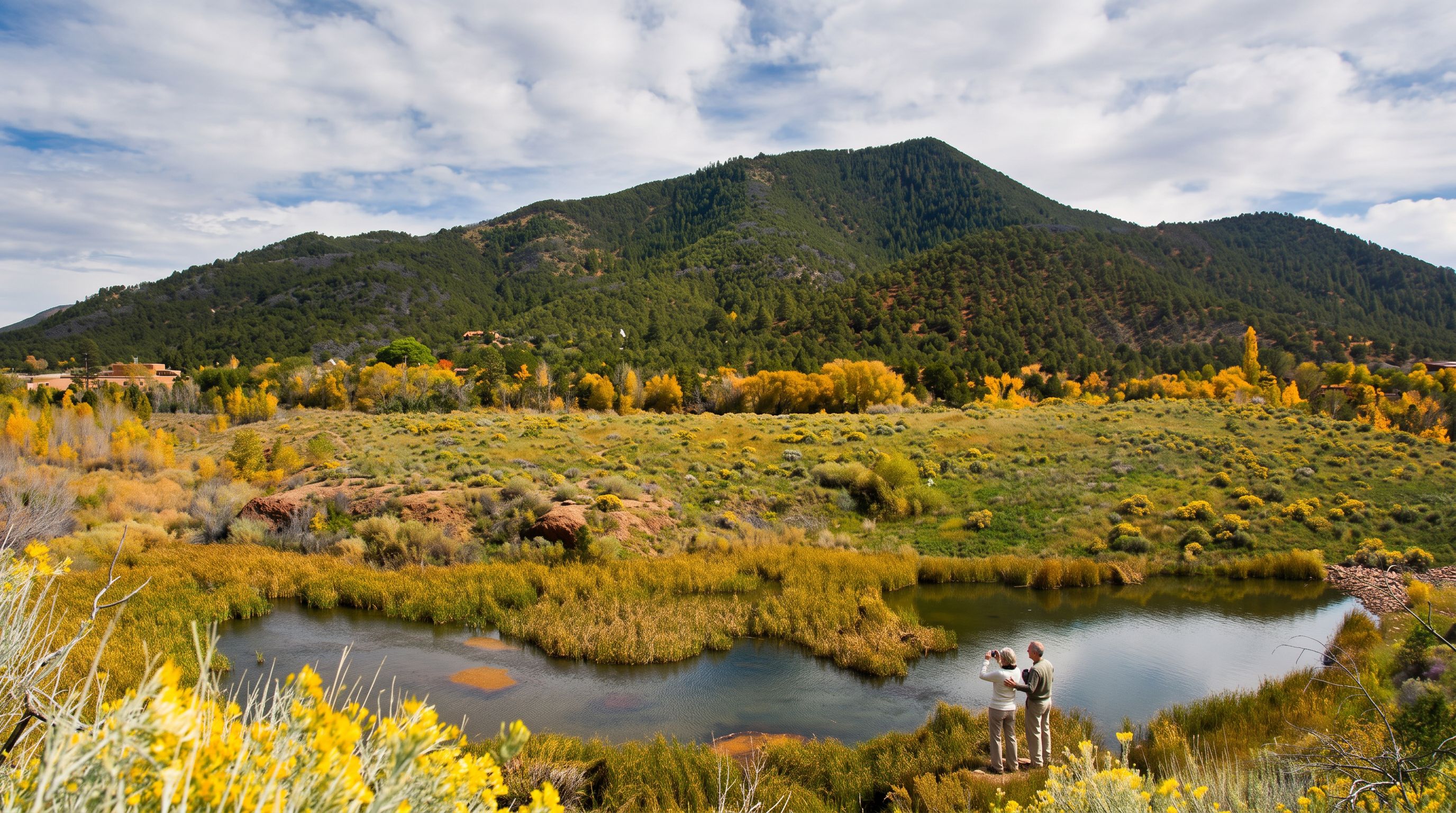 AI-edited
How should I pace my first 48 hours?
Schedule less than you think you need, drink water steadily through the day, and postpone demanding sightseeing until the second day. Tourism Santa Fe advises taking it easy and allowing about 48 hours to adjust. A light stroll around the Plaza, a long lunch and an early night is a better first day than a trail.
The most repeated advice across official guidance and visitor discussions is to build in sitting breaks. Santa Fe's historic centre is compact and the Plaza area concentrates dining, shopping, galleries and benches within a short radius, which makes it easy to divide the day into short segments rather than one long walk.
Canyon Road, the gallery street, is described in visitor discussions as a gentle uphill half-mile. Anyone concerned about breathlessness may prefer to be dropped at the upper end and walk down rather than up. The city's own guidance adds a related point: wear sturdy walking shoes and be aware of uneven floors when entering historic buildings.
Several experienced visitors recommend a staged arrival. A Santa Fe discussion suggested spending a night in Albuquerque, at roughly 5,000 feet, before driving up to Santa Fe, then limiting walking for the first day or two. That is not essential, but it is a sensible option for anyone who has struggled at altitude before.
Why does hydration matter so much here?
Santa Fe's climate is dry, with humidity sometimes below 20 percent, according to Tourism Santa Fe. That dry air pulls moisture from the body faster than most visitors expect, and combined with the thinner air it makes dehydration a common cause of headache and fatigue in the first days.
The official guidance is straightforward: staying hydrated helps the adjustment. In practice that means carrying water rather than assuming you will find a fountain, drinking before you feel thirsty, and treating the dry air as the main culprit when a headache arrives on day one.
Visitors repeatedly describe the low humidity as an adjustment in its own right, separate from the altitude. Skin, eyes, lips and throat notice it first. A refillable bottle, lip balm and eye drops are unglamorous but genuinely useful packing.
Alcohol and caffeine deserve a word of their own, and the next section deals with them. The short version, from Tourism Santa Fe, is that one drink at 7,000 feet is the equivalent of three at sea level. That is a striking ratio, and it explains why a glass of wine that would barely register at home can leave an older visitor light-headed and poorly rested.
How should I handle alcohol, caffeine and the sun?
Ease off alcohol and caffeine during the first days, drink extra water, and treat the sun seriously. Tourism Santa Fe states that one drink at this altitude equals three at sea level, that the city is closer to the sun, and that the sun shines 300 days a year. Sunscreen, a hat and eye protection are basic equipment.
The alcohol ratio is the single most useful number in the official guidance. It is not a moral instruction; it is arithmetic. A single glass of wine at 7,000 feet has roughly the physiological effect of three at sea level, and the effect on sleep and hydration the following morning follows from that.
Caffeine is a milder matter. Published advice for older visitors recommends easing off both alcohol and caffeine during acclimatisation, largely because both affect hydration and sleep. If you rely on morning coffee, keep it, but add water alongside.
The sun is the other half of the equation. Santa Fe's high-altitude air is thin and dry with strong sun, and the city's own guidance recommends sunscreen, a hat and eye protection. The same thin air that makes the light so clear also means less atmospheric filtering. A wide-brimmed hat and sunglasses with proper UV protection are not optional accessories here.
When should heart or lung conditions prompt a doctor's advice before travelling?
Tourism Santa Fe advises seniors to check with their doctor about any physical condition that could be affected by the altitude. Anyone with significant heart or lung disease, asthma, sleep apnoea, uncontrolled high blood pressure, kidney disease or prescribed oxygen should seek individual advice before booking, and should not alter prescribed medication because of the trip.
This is the section to read twice. The official guidance is brief but unambiguous, and it is aimed precisely at the 50-to-70 age group. Altitude places extra demand on the heart and lungs, and a clinician who knows your history can say whether Santa Fe is sensible, whether any medication needs adjusting, and what warning signs should send you back down or to a doctor.
Asthma and heart conditions are specifically flagged in published altitude discussions as reasons to consult a doctor before travelling. So are significant mobility problems and the use of prescribed oxygen. None of these is a prohibition; they are reasons to have the conversation in advance rather than in a hotel room at midnight.
Diamox (acetazolamide) comes up often in altitude discussions. It is a prescription medicine in the United States and should be discussed with a clinician before travel. It is not appropriate for everyone, including some people with serious kidney disease or certain drug allergies. Whether it is right for you is a medical question, not a travel one.
One practical point: do not change prescribed treatment solely because of the altitude. If your doctor wants an adjustment, that is their call. Travellers who take multiple medicines should bring a current list, ideally in writing.
How much harder does gentle exertion feel at 7,000 feet?
Noticeably harder, especially on slopes and stairs. Visitors describe breathlessness on gentle inclines and warn that 75°F feels hotter at 7,000 feet than at sea level. The practical response is to walk shorter distances, take sitting breaks, and treat the first two days as a warm-up rather than a test.
A local-style account in visitor discussions suggested that 5-to-10-mile walking days are feasible for some older visitors, but should not be assumed for someone newly arrived or with limited mobility. That is a fair summary of the range. The same discussion recommended coffee stops, benches, meals and short gallery visits over ambitious itineraries.
Trail choice matters more than pride. The older-hikers thread recommends Santa Fe Canyon Preserve, La Tierra Trails, Galisteo Basin and the relatively mild Arroyo Hondo, and describes the Dale Ball and Sun Mountain trails as steep and less suitable for newcomers. The trail near the Big Tesuque parking area is described as mellow, with the option to turn around and bathrooms at the trailhead.
One caution worth carrying: the Northski trail is described as flat and shaded but sits around 9,000 feet, higher than Santa Fe itself. Easy terrain can still mean greater altitude exposure. For a fuller picture of terrain, pavements and getting around with limited mobility, see our guide to how accessible Santa Fe is for older travellers.
Do Santa Fe's spa pools help with acclimatisation?
Soaking helps relaxation, not acclimatisation. Ojo Santa Fe offers spring-fed thermal pools with day soaking listed daily from 10 a.m. to 10 p.m., and Ten Thousand Waves offers Japanese-style indoor and outdoor hot tubs. Neither operator documents clinical altitude benefits, and heat adds its own load on the body.
Ojo Santa Fe Spa Resort is the clearest spring-based option in the Santa Fe area, with spring-fed thermal pools, spa treatments, farm-fresh cuisine, guide-led activities, private hiking trails and morning yoga for lodging guests. Day-soaking reservations are not required.
Ten Thousand Waves offers Japanese-style indoor and outdoor hot tubs, private bath suites, the Grand Bath, massages and the Izanami restaurant. Reservations are required for baths, the Grand Bath, massages, treatments and the restaurant, and one source states specifically that there are no day passes.
For anyone with heart or blood-pressure concerns, hot water is worth discussing with a doctor alongside the altitude itself. Neither operator publishes a property-specific water-temperature policy. Ask when booking.
Accessibility varies and is worth checking before you commit. Ojo Santa Fe has multiple levels, gravel paths and stairs; the operator states that wheelchair-accessible paths reach various areas, that alternative routes avoiding stairs are marked, and that many tubs have transfer walls. A Tripadvisor review dated March 4, 2025 reported more than 100 stairs and steep access to the hot springs, and the owner's response acknowledged that the terrain can be challenging. That is one review, not an accessibility audit. Ten Thousand Waves publishes more detail, including a lift serving the spa's three levels, accessible changing rooms and bathrooms, accessible massage rooms and accessible hot tubs, though the property is on a hillside and a travel publication reports stairs between areas with an on-site shuttle for guests who cannot manage the climb.
How do I get around without overdoing it?
Use the car more and your feet less, at least at first. Tourism Santa Fe notes that if you are staying outside the downtown area, your best bet is a car. Santa Fe Trails buses are wheelchair accessible, and the city states that operators are trained to deploy ramps and secure wheelchairs, with portable oxygen equipment permitted on board.
Travellers advising families with older relatives repeatedly recommend renting a car, because Santa Fe's attractions are dispersed and ride-sharing can be unreliable. Parking downtown is tight in June, July and August, according to Tourism Santa Fe, though most attractions are within walking distance of downtown hotels. City-owned lots exist, and many meters run for one or two hours at $2 per hour.
For those who prefer not to drive, the city's accessible transport is documented in some detail. Santa Fe Trails is the municipal fixed-route network, and the city's published accessibility information says operators are trained to assist with ramps and wheelchair securement, and that riders may travel with portable oxygen equipment, as set out on the city's Americans with Disabilities Act transit page. The Santa Fe Ride paratransit service publishes a premium senior fare of $5 per trip, with trips required to begin and end at accessible locations.
Santa Fe County Senior Services also publishes transportation information for older residents, including rides to medical appointments, on its senior services page. Eligibility rules apply, so check before relying on it. Where you base yourself shapes how much walking you do each day; our neighbourhood guide to choosing your Santa Fe base sets out the trade-offs.
What should go on a practical pre-trip checklist?
Book a doctor's conversation if you have heart, lung, kidney or blood-pressure conditions; pack water, sunscreen, a hat and sturdy shoes; plan a light first day; and keep the emergency number to hand. Beyond that, the checklist is mostly about lowering ambition for 48 hours and raising it afterwards.
The medical conversation comes first. Tourism Santa Fe's senior guidance is to check with your doctor about any condition that could be affected by altitude, and published discussions flag asthma, heart conditions, sleep apnoea and prescribed oxygen as reasons to do so. Bring a medication list.
Packing is simple. Water bottle, sunscreen, hat, sunglasses, lip balm, walking shoes with grip. Tourism Santa Fe specifically advises sturdy walking shoes and awareness of uneven floors in historic buildings. Winter adds ice on streets and pavements, which is worth planning around if you travel between November and May.
Then the itinerary. Put the museums and the Plaza on day one, the galleries and the longer walks on day two, and any trail after that. Santa Fe's compact centre makes this easy, and the city's benches, cafes and galleries give you natural places to stop. For what a comfortable trip costs once you are there, see our guide to what a Santa Fe trip costs day by day.
See also: What Does a Comfortable Santa Fe Trip Cost?.
What should I do if symptoms get worse rather than better?
Stop ascending, rest, drink normally, avoid alcohol and strenuous exercise, and seek medical advice if symptoms worsen. Severe breathlessness at rest, confusion, an inability to walk normally, blue lips or a persistent cough require emergency help. In the United States, 911 covers police, fire and medical emergencies.
The fastest response to altitude symptoms, as set out in published guidance, is to stop going higher, rest, drink normally, and avoid alcohol and strenuous exercise. Most mild symptoms settle with that approach. The key is not to push through a worsening headache with a long walk and a glass of wine.
Certain signs change the category. Severe breathlessness at rest, confusion, an inability to walk normally, blue lips or a persistent cough require emergency help rather than a rest in the hotel room. The same applies to chest pain or persistent vomiting. The City of Santa Fe directory lists 911 for police, fire and emergency services, and also lists 988 for the Behavioral Health Crisis line and the New Mexico Crisis & Access Line at 1-855-662-7474.
the available sources do not identify the nearest hospital or pharmacy to Santa Fe's spa properties, and the operators do not publish on-site medical provision. Ask your hotel at check-in where the nearest clinic is, and note it before you need it. Pharmacy and insurance logistics are a separate subject with their own dedicated guide.
The closing thought is the one the city itself offers. Santa Fe is a high, dry, bright place, and it asks for a gentler first two days than most American destinations. Give it those days, drink the water, wear the hat, and the rest of the trip opens up. The altitude is not an obstacle to be beaten; it is part of the place, and it rewards the traveller who arrives curious rather than hurried.


