
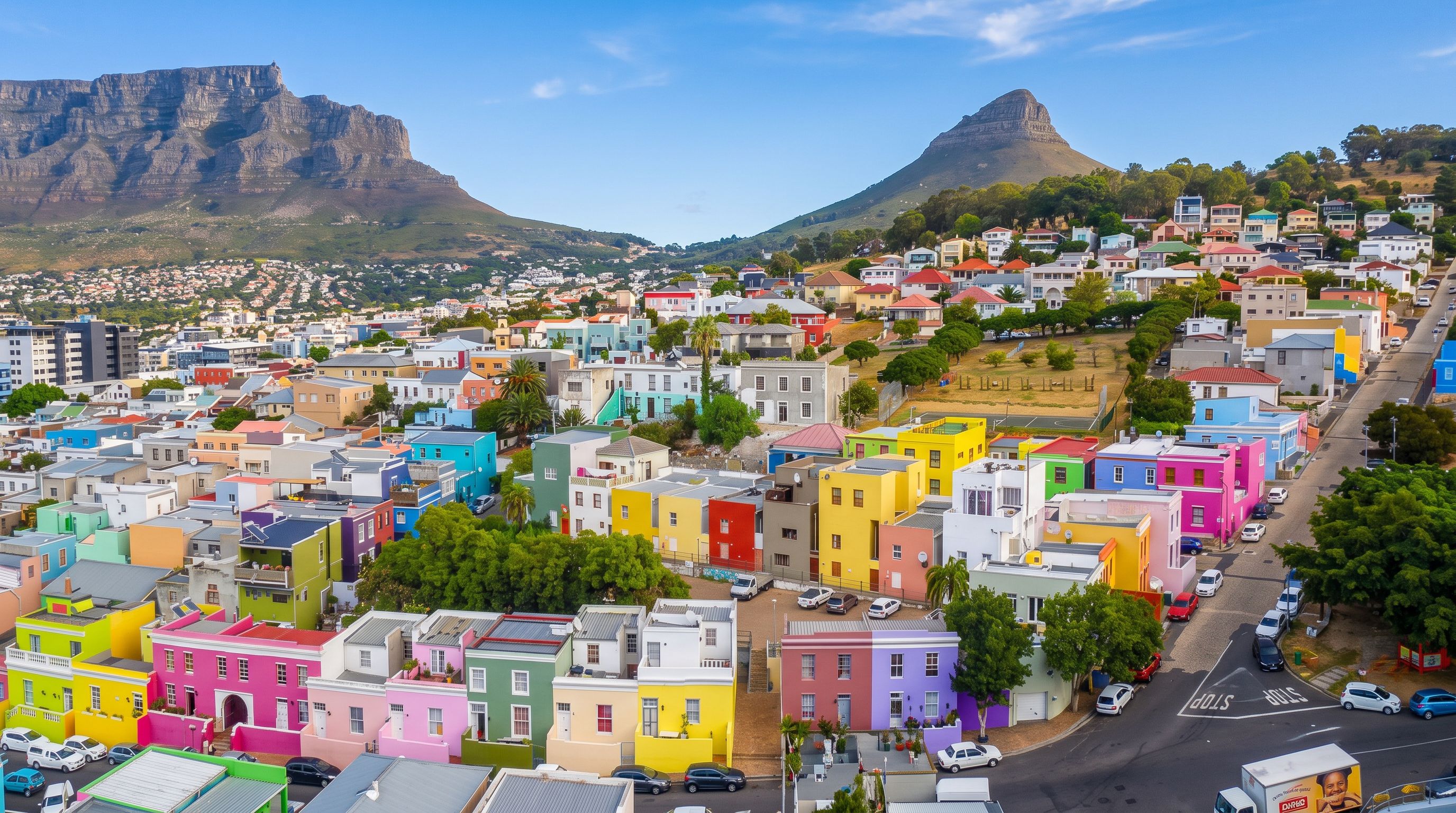
Cape Town eats in layers. The city's table runs from the spice-scented kitchens of Bo-Kaap, where Cape Malay cooking has been refined over generations, to the open fires of a braai, the cold counters of biltong sellers and the weekend stalls of the Oranjezicht City Farm Market. For food-minded travellers aged 50 to 70, the pleasure is in the range: a bobotie baked under its egg custard, a slow lamb denningvleis sharpened with tamarind, a plate of snoek straight off the coals. The city's tourism board frames Cape Malay cuisine around Eastern spices, local South African ingredients and the history of Bo-Kaap, and that framing is a good map for a first visit.
What makes this an unusually rewarding place to eat is that the signature dishes are not confined to restaurants. They turn up at markets, in cafés, at butchers and bakeries, and in the home kitchens that now teach visitors to fold a samoosa. The practical work is knowing which dishes to seek out, which neighbourhoods to head for, and where a menu is aimed at visitors rather than at Capetonians. Prices are indicative and vary by season and by venue.
What exactly is Cape Malay cuisine?
Cape Malay cooking blends Southeast Asian, African and Dutch influences, built on aromatic spices and slow cooking. Its signature dishes include bobotie, bredie, denningvleis, samoosas, daltjies and the Cape Malay koesister. Cape Town Tourism ties the cuisine directly to the history of Bo-Kaap and its Muslim Cape Malay community, and it is not the same thing as generic Indian curry.
The distinction matters when you read a menu. Cape Malay curries commonly use lamb, chicken or seafood with turmeric, cumin and chilli, but the flavour profile leans aromatic rather than fiery. A restaurant's Cape Malay and Cape Indian dishes can sit side by side on the same card, as they do at Biesmiellah, and they are separate traditions worth ordering across.
Bobotie is the dish most visitors meet first: spiced minced meat baked beneath an egg-based topping, commonly served with yellow rice, chutney and sambals. According to Cape Tourism's Bo-Kaap neighbourhood guide, it is a signature dish of the neighbourhood. Denningvleis is the slower, more surprising one: lamb cooked with tamarind paste and local spices, sweet-sour and deep. Tomato bredie is the homely third, a tomato-and-meat stew that Cape Town Tourism names among the favourites at Biesmiellah.
Which dishes should I actually order?
Start with bobotie and denningvleis, add a curry, and leave room for a koesister. Snack on daltjies, samoosas and half-moons, try a salomie if you see one, and finish with potato pudding. The sweet side has a trap: the Cape Malay koesister and the Afrikaner koeksister are different confections with confusingly similar names.
- Bobotie – spiced minced meat under an egg topping, with yellow rice, chutney and sambals.
- Denningvleis – slow-cooked lamb with tamarind and local spices.
- Tomato bredie – a Cape Malay-style tomato-and-meat stew.
- Daltjies – deep-fried chilli bites with spinach, herbs, onion and spices.
- Samoosas and half-moons – crisp filled pastries, characteristic Cape Malay snacks.
- Salomie – a flaky, buttery roti wrapped around a curry filling, which Cape Town Tourism calls a Cape Town-rooted Cape Malay favourite.
- Koesisters – spiced, syrupy doughnuts flavoured with spices and naartjie peel.
- Koeksisters – the plaited, fried, syrup-soaked Afrikaner pastry. Same shelf, different thing.
Cape Town Tourism also lists masala-spiced frikkadels, potato pudding, smoortjie and bredies among Cape Malay specialities, and artappel porring, a Cape Malay potato pudding, appears among the desserts at Bo-Kaap Kombuis. If your palate is sensitive to chilli, say so when you order. Forum contributors have noted that spicy food here can be consequential for those unused to it, and asking for guidance or a milder version is entirely normal.
Where should I go for Cape Malay food?
Bo-Kaap is the address. Biesmiellah and Bo-Kaap Kombuis are the two established names, both halaal, both family-run, both serving the traditional repertoire. Biesmiellah sits at 2 Wale Street and Pentz Street in Schotsche Kloof; Bo-Kaap Kombuis is at 7 August Street. Both are worth booking around, and both have practical quirks to plan for.
Biesmiellah has operated for more than four decades and describes itself as strictly halaal and family-owned. Cape Town Tourism records a menu that runs from tomato bredie, bobotie and crayfish curry to butter chicken and lamb breyani, with a build-your-own starter platter of daltjie, samoosa, mini pies and half-moons. The tourism board's own article on the restaurant, published in 2023 and updated in 2025, lists starters from R35 and main meals from R110. Those are guide-published figures rather than a verified current menu, so check the card when you sit down.
Bo-Kaap Kombuis, known locally as "The Kombuis", has served guests for nearly two decades. Its menu covers curries, vegetarian dishes, potato waras, samosas, denningvleis, frikkadels and a tasting platter of fish curry, butter chicken and lamb curry. The city dining guide publishes R150 to R300 for a meal there. Guest feedback gathered on Google, where the restaurant stands at 4.3 out of 5 from 1,119 reviews as of November 2026, repeatedly singles out the views of Table Mountain and the city, the balcony and window tables, and warm personal hospitality from the owning family.
"We ate here as part of a work meeting and had a buffet. Everything was delicious! Service was great and meeting the chef/owner and hearing a little of the history of the area, priceless!" (Google, October 2026)
Two planning notes from that same body of guest feedback. On some evenings the only option is a buffet rather than the à la carte menu, and guests have reported not being told this, or the buffet price, until seated or billed, so ask which menu is running when you book. The restaurant also sits at the top of a steep hill, and reviewers recommend arriving by car or taxi rather than on foot.
 AI-edited
What about cafés and more casual spots?
Bo-Kaap rewards grazing as much as sitting down. Rose Corner Café is recommended by Cape Town Tourism for its hot worsies and traditional koesisters, and Bo Kaap Deli serves koesisters, curry, burgers and breakfast from 114 Church Street. Both suit a daytime wander rather than a set dinner.
According to Cape Town Tourism's Bo-Kaap neighbourhood guide, Rose Corner Café's warm worsies and koesisters are the things to order. Bo Kaap Deli, an award-winning café, has an outdoor seating area that Cape Town Tourism describes as having some spectacular views, and a menu running from koesisters and curry to burgers and breakfast.
Beyond the neighbourhood, the tourism board's curry guide includes the Eastern Food Bazaar in the city centre. In Wynberg, Sabria's is a family-owned, fully halaal restaurant at 119 Ottery Road serving grills, curries, seafood, pasta, salads and desserts, including Cape Malay and Indian-inspired curries. Tashreeqa's has offered Cape Malay cuisine blended with local and international flavours for more than 20 years.
One daytime option worth knowing: forum contributors describe Zorina's Café on Loop Street as a very local stop for samoosas and roti, and consistently note that it opens for lunch and daytime rather than dinner. Pair it with a daytime city-centre itinerary rather than saving it for an evening.
Where do braai, seafood and street food fit in?
Braai is the South African open-fire tradition, and boerewors is its sausage. Cape Town adds seafood to the fire: snoek braai, fish cooked over coals, is a local speciality. Street food runs from the gatsby and the boerewors roll to the kota and the bunny chow, and fish and chips is a strong coastal choice.
The city's seafood identity comes from its coastal setting, with fresh fish supplied from two coastlines. Snoek braai, snoek cooked over an open fire, is identified as a Cape Town seafood speciality. Cape Town Tourism describes braai bak as grilled meat and seafood served with sides such as potato salad, corn and biltong butter. Biesmiellah serves seafood alongside its Cape Malay dishes.
For a market version, Bay Harbour Market in Hout Bay is a weekend market known for fresh seafood, local produce, artisanal foods, baked bread, music and crafts. It does not allow pets except certified guide or support dogs. For braai proper, Pitso's Kitchen at Maker's Landing is documented as serving traditional braai, kota and mogodu.
On the street-food side, the gatsby is a large filled roll with meat, chips, spices and sauces; a boerewors roll is braaied sausage in a roll with onions and sauce; a kota is a township-style quarter-loaf filled with chips, polony, viennas, cheese, atchar and sauces; and a bunny chow is a hollowed loaf filled with curry, which Cape Town Tourism notes originated in Durban but is popular here. A Cape Town medical guide offers sensible street-food advice: choose busy, well-reviewed vendors, and avoid seafood or meat from unknown street sellers.
Can I buy biltong and koeksisters to take away?
Biltong, cured and dried meat usually of beef, is widely encountered across Cape Town, and koesisters and koeksisters turn up in cafés and bakeries. Treat any specific price you are quoted as the shop's own.
Cape Town Tourism mentions biltong butter as part of a braai-bak presentation, but no specific Cape Town shop specialising in biltong is documented. the available sources give no current, operator-published price for koeksisters or koesisters. The practical approach is to buy where you see turnover, ask what is made on site, and treat the purchase as a tasting rather than a bulk shop until you know what you like.
Remember the naming distinction when you buy. A koeksister is a plaited, fried pastry soaked in syrup. A Cape Malay koesister is softer, spiced and typically flavoured with citrus or similar aromatics. Guest feedback on Bo-Kaap Kombuis has described the Cape Town-style version as sweet and coconut-filled, which is a useful marker of the local style.
Is the Oranjezicht City Farm Market worth a morning?
Yes, for a produce-led, low-commitment meal. The market has moved to the corner of Granger Bay Boulevard and Dock Road at the V&A Waterfront, entry is free, and it runs weekend hours plus a Wednesday night market. It suits travellers who want to graze, compare stalls and eat seasonally rather than commit to a restaurant sitting.
The operator publishes Saturday hours of 08:00 to 14:30 and Sunday hours of 08:30 to 14:30, with a Wednesday Night Market from 16:00 to 21:30 that is closed during June and July. Cape Town Tourism's own listing records different times (Saturday from 8:15am to 2pm, Sunday from 9am to 3pm, Wednesday from 4pm to 8pm). The two readings do not agree, so confirm the day's hours with the market before you travel across town.
The focus is fresh produce, baked goods, prepared food and local artisanal products, with vegan, vegetarian, gluten-free, dairy-free and sugar-free options listed. A Cape Town guide describes prepared offerings including Cape Malay curries, oysters, pastries, coffee and fresh juices, though that is a guide's description rather than a guaranteed daily menu. Prices are displayed at the stalls, and the operator does not publish a market-wide meal price because individual traders set their own.
MyCiTi routes 104 and T01 stop close to the market according to Cape Town Tourism, though the source does not confirm a step-free route from the stops. For wider context on getting around the city, see the long-haul flight and airport transfers guide.
How do I tell a welcoming spot from a tourist trap?
The useful distinction is not local versus touristy but specific versus generic. The V&A Waterfront is a tourist hub with more than 450 shops and 80 restaurants, and Cape Town Tourism's guidance is to compare menus and prices there rather than assume every outlet represents traditional Cape Town cooking. Bo-Kaap, by contrast, is where the cuisine actually lives.
That does not make the Waterfront a bad choice. It is convenient, it has the V&A Food Market with dishes published at R50 to R200, and it has private security, CCTV and a police precinct within the complex. What it rewards is a little reading of the menu before you sit: if a card leads with international staples and mentions bobotie as an afterthought, you are not in a Cape Malay kitchen.
Two further practical points. The Waterfront is busy, and safety guidance specifically advises keeping phones concealed in crowded areas near the Ferris wheel and craft market. More broadly, visitors are advised to avoid deserted or dark areas and to use well-lit, busy routes, as set out in Cape Town's published safety tips. For where to base yourself relative to these eating neighbourhoods, see the guide to choosing your base in Cape Town.
Can I learn to cook Cape Malay food myself?
Yes. Cape Town Tourism describes Bo-Kaap cooking classes that cover spice blending, folding samoosas, making rotis and preparing a traditional Cape Malay curry. The published Bo-Kaap Cooking Tour includes shopping for spices and learning about garam masala, coriander and cumin. Faeeza's Home Kitchen and Cape Fusion Tours are listed as alternatives.
The Bo-Kaap Cooking Tour experience includes preparing dishes such as curry, daltjies, samoosas and rotis. Cape Fusion Tours combines cooking with visits to Truth Coffee, the District Six Museum and a walk through Bo-Kaap, which suits travellers who want context alongside the kitchen work.
For background before or after a class, the Bo-Kaap Museum recreates aspects of a Malay family home and provides context for the community's history and food traditions. Cape Town Tourism's 2026 guide lists admission for international adults, children aged 5 to 17 and pensioners at R80.
If you would rather build a broader day around the city's cultural sights, the selection of Cape Town experiences chosen for the over-50s sets food alongside museums and walks. Note that the city's fine-dining scene and the Winelands restaurants are covered in their own dedicated guides.
What should I know before I book?
Book the two Bo-Kaap restaurants ahead, ask which menu is running, and confirm access details directly. Neither restaurant publishes step-free access, accessible toilet provision or seating specifics, so a phone call is the reliable route. Prices are indicative and vary by season and venue, and no senior or over-65 tariff is documented at any of the named food venues.
On mobility, the material is thin and should be treated as such. Specific details such as step-free entrances, accessible toilets, lifts, reserved seating, assistance staff or wheelchair routes are not documented for Oranjezicht, Biesmiellah, Bo-Kaap Kombuis, Sabria's, Bay Harbour Market or Neighbourgoods Market. The Cape Town Tourism website publishes an accessibility statement, but that concerns the website rather than physical access. Ask each venue directly, especially if you need a short walk from the car, comfortable seating or a low-spice meal.
On health, pharmacies are common in Cape Town shopping districts, and many operate approximately 08:00 to 20:00, with some Clicks and Dis-Chem branches open later. Emergency numbers consistently stated are 112 from a mobile phone, 10111 for police and 10177 for ambulance and medical emergencies. The food and market sources do not publish their own emergency numbers.
Bo-Kaap Kombuis is halaal and serves no alcohol. A 10% service charge is added automatically at Biesmiellah, and guests have reported service charges of 10% to 15% at Bo-Kaap Kombuis. Neither venue publishes cancellation terms.
One last piece of guest feedback worth carrying: reviews of Biesmiellah, which stands at 4.1 out of 5 from 2,158 Google reviews as of November 2026, praise the recently renovated interior as modern, clean and welcoming with generous spacing between tables, and describe staff accommodating dietary needs and large family groups. Some guests also report long waits for food, including waits of over an hour and a half, so allow time rather than scheduling tightly around a meal.


