
Located in the heart of Tyrol, the Zillertal valley moves to a rhythm set by its farming calendar, its brass bands, and its centuries-old traditions. For travellers aged 50 to 70, this means a year of distinct cultural moments, from the clamour of spring's Gauder Fest to the candlelit calm of Advent markets. The key to a comfortable visit is knowing which season matches your taste for crowds, walking, and local colour.
 AI-edited
What is Gauder Fest and is it worth the crowds?
Gauder Fest, held on the first weekend of May in Zell am Ziller, is Austria's largest spring and traditional costume festival, drawing around 30,000 visitors. It is a vivid, noisy immersion in Tyrolean culture, with parades, brass bands, and Ranggeln wrestling, but the crowds are intense and the festival grounds become congested. For seniors who enjoy spectacle and can manage standing on cobbles, it is unforgettable; for those who prefer calm, it is best avoided.
First recorded in 1428, when Venetian merchants noted a church fair and market at Zell, the Gauder Fest is the valley's defining cultural event. The organiser has set the next edition for 29 April to 2 May 2027, running Thursday to Sunday; the dates move with the calendar each year, so check the current ones before you book. The great costume parade on Gauder Sunday is the fixed highlight of every edition. Visitors come from across Austria and Germany, and the atmosphere is genuinely festive rather than touristy: the Austrian Commission for UNESCO lists the festival in the national inventory of intangible cultural heritage, calling it one of the largest spring festivals to survive in the Alpine region.
The festival packs a long weekend with local costume, music and food, and participants are generally happy to pose for photographs. The key caveat for older visitors is logistics: shuttle buses run between the Zillertal Arena car park and the festival ground on the Saturday and Sunday — in 2025 from 11 a.m. to 6 p.m. on the Saturday and from 9.30 a.m. to 5 p.m. on the Sunday — and the whole festival area, beer tent and open ground alike, takes cash only. Accommodation books out months ahead, and table reservations for the 2027 festival open at the Zell am Ziller tourist office in January 2027.
What summer events bring the valley to life?
Summer in the Zillertal is a season of outdoor concerts, farmers' markets, and village festivals. The Zillertal Farmers' Market runs from June to September in Zell am Ziller, and the Ursprung Buam Festival in Mayrhofen draws crowds in July. The atmosphere is lively but spread across the valley, so you can choose your level of engagement.
The valley's events calendar is dense from June through August. The Street Food Market takes over the Musikpavillon in Zell am Ziller in early July (10 to 12 July in 2026), the Kulturfestival Stummer Schrei fills a long run of summer evenings in Stumm from early August, and the STEUDLTENN theatre festival plays in a converted barn at Kirchweg 22 in Uderns, three minutes on foot from the Uderns bus stop and on a site its organisers describe as barrier-free. For seniors, the best approach is to pick one or two events and base the rest of your day around a valley-floor walk or a museum visit. The Zillerpromenade, the riverside path that starts at the Ziller bridge in Zell am Ziller, provides a calm counterpoint to festival energy: the tourist board calls it a gentle, easy walk that also suits families with prams, and a bridge after about 1.5 kilometres lets you cross and return along the other bank.
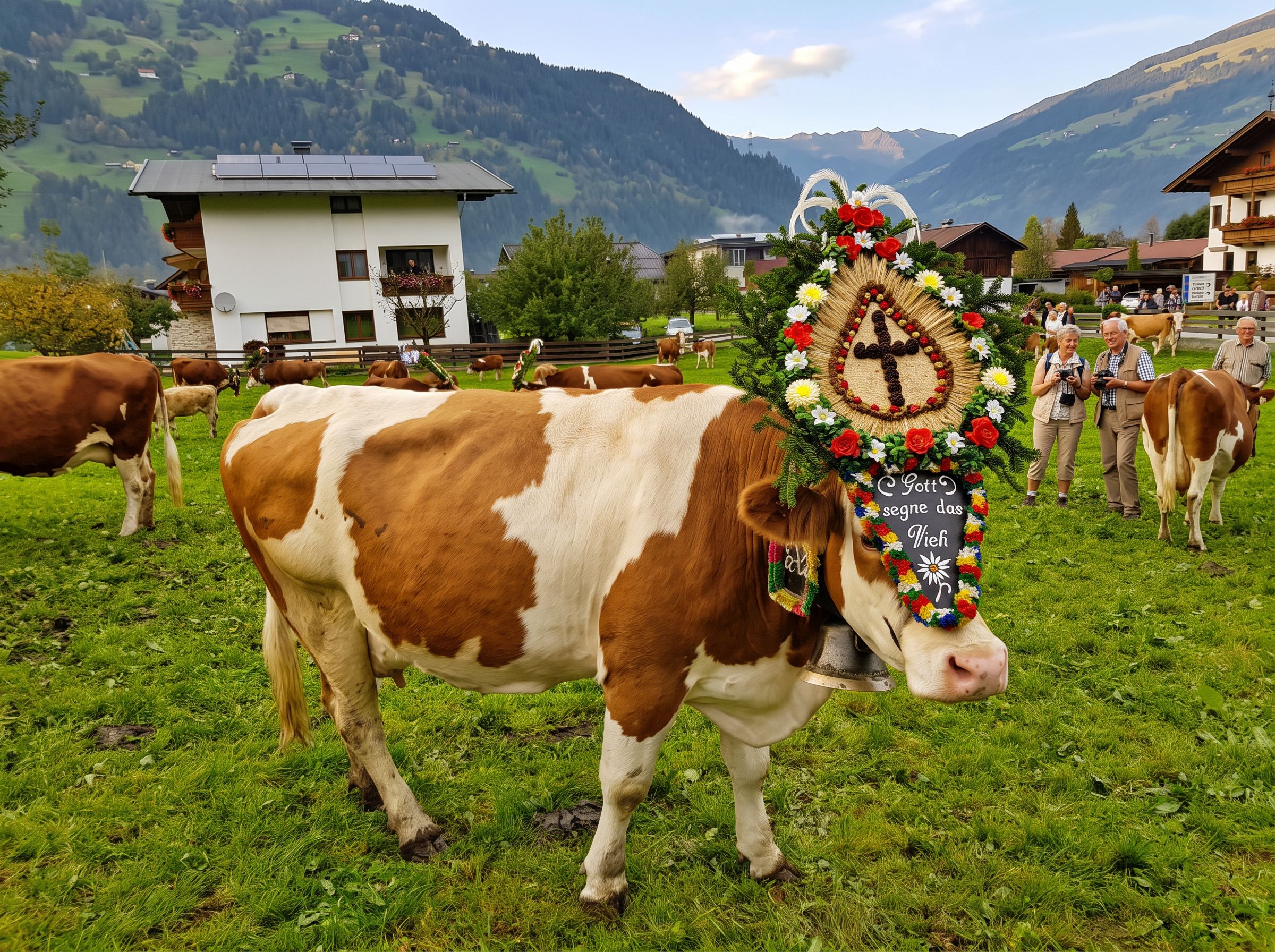
Summer is also the season for Almabtrieb celebrations, though the main cattle descents fall in September. Zillertal Tourismus calls the Almabtrieb one of the valley's most tradition-rich and colourful festivals, and it offers a genuine connection to Alpine farming life.
How accessible are the museums and cultural sites?
The Zillertaler Regionalmuseum in Zell am Ziller is the best low-effort cultural stop for older travellers. Housed in a historic farmhouse, it offers a compact, heritage-focused visit rather than a long walking circuit. It is open Monday to Friday from June to early October, and group tours can be arranged on request, with winter visits possible by prior arrangement.
The museum's strength is its focus on rural valley life: traditional costumes, farming tools, and the history of the Zillertal's distinctive brass-band culture. The building is a farmhouse taken from Schwendau and rebuilt at Zell, with rooms on more than one level — one parlour sits in the cellar — so expect stairs, and no lift is documented. The visit is short, admission is €6, and the 2026 season runs from 22 June to 2 October, Monday to Friday, 10 a.m. to 4 p.m., closed at weekends. The FeuerWerk HolzErlebnisWelt in Fügen is the indoor alternative, open 9 a.m. to 4 p.m. Monday to Saturday from May to October and Monday to Friday from November to April, never on a Sunday — but the valley's official accessible-excursions leaflet lists it as only partly accessible, not step-free.
The ErlebnisSennerei Zillertal at Hollenzen 116 in Mayrhofen is another strong choice for a culinary-cultural stop. It combines a working dairy with a tasting room, and the operator states outright that the show dairy and show farm are barrier-free and can be visited with a pram or a wheelchair. The valley's official Barrierefreie Ausflugsziele leaflet, last updated in July 2023, lists fourteen excursion destinations across the Zillertal and includes this dairy without qualification; the FeuerWerk in Fügen appears in the same leaflet with the note that access is only partly possible.
| Site | Location | Accessibility | Best for |
|---|---|---|---|
| Zillertaler Regionalmuseum | Zell am Ziller | Compact but has stairs; no lift documented | Heritage enthusiasts |
| SchauSennerei & SchauBauernhof | Mayrhofen (Hollenzen) | Barrier-free per operator; daily 9 a.m.–5 p.m. | Food culture |
| FeuerWerk HolzErlebnisWelt | Fügen | Indoor; officially only partly accessible | Rainy-day culture |
| Zillerpromenade | Zell am Ziller to Mayrhofen (8 km) | Level riverside path, pram-suitable; no wheelchair claim | Walking and views |
What about autumn traditions like the Almabtrieb?
Autumn in the Zillertal is dominated by the Almabtrieb, the ceremonial descent of cattle from high pastures to valley farms. These celebrations happen from mid-September to early October, with decorated cows, ringing bells, and village festivities. The atmosphere is joyful but far less crowded than summer events, making it an ideal time for seniors who want culture without the crush.
The Almabtrieb is a deeply local tradition. Cows are adorned with floral headdresses and large bells, and they parade through villages accompanied by farmers in Tracht. The events are spread across the valley and dated afresh every year: in 2026 the Fügen-Kaltenbach region has them on 12, 19 and 26 September and on 3 and 4 October, while Zell am Ziller stages its own on 26 September from about 10 a.m. to 5 p.m. The Zillertaler Bauernmarkt in Zell am Ziller runs every Wednesday from 3 p.m. to 6 p.m. until late September — 23 September in 2026 — at the Musikpavillon on the Dorfplatz.
For seniors, autumn also brings cooler temperatures and fewer tourists. The valley's walking paths are quieter, and the light is softer for photography. The Zillertal Bier brewery in Zell am Ziller runs its BrauKunstHaus tour with a tasting in the Bräustüberl, Monday to Saturday from 10 a.m. to 6 p.m. and closed on Sundays and public holidays; small farm distilleries at Hart, Schwendau and Hippach open for tastings too, and all four sites appear in the valley's accessible-excursions leaflet. One planning point: the BrauKunstHaus closes from early November until mid-December. If you want a calm, culturally rich visit, late September is one of the best windows.
When are the Christmas markets and how busy do they get?
The Zeller Weihnachtsmarkt runs for just two days in mid-December — 12 and 13 December in 2026 — with Christmas music and traditional delicacies at the Musikpavillon. The Mayrhofner Advent is held on the Advent weekends at the Waldfestplatz outside Mayrhofen. Both are far less crowded than the Gauder Fest or major summer events, but they do get busy on weekend evenings.
Arriving early is the whole trick, because both markets open in the afternoon and fill up after dark, and neither runs on a weekday. Zell opens at 3 p.m. on both of its days, at the Musikpavillon on the Dorfplatz in the middle of the village. The Mayrhofner Advent runs from 5 p.m. to 9 p.m. on Fridays and Saturdays and from 4 p.m. to 8 p.m. on Sundays, and it is the harder of the two to reach: a 300-metre walk leads from Mayrhofen's Hauptstrasse through the Scheulingwald to the Waldfestplatz. The atmosphere at both is warm and local, with mulled wine, roasted chestnuts, and handmade crafts.
That December date is set anew every year — in 2026 it lands on the second weekend of the month — so it will not always fall there. If you want the quieter end of the season, the Mayrhofner Advent opens on the first Advent weekend — 28 and 29 November in 2026 — and then runs on the three weekends that follow. Its programme is deliberately unamplified: brass ensembles, choirs and traditional Klöpfl singers instead of piped music, which makes it a calmer proposition than a market square.
The valley's indoor cultural stops stay on the same modest scale through the quiet weeks, which is what makes them workable on a short winter afternoon rather than a full day out.
"A little treasure of items describing earlier times in the Ziller valley." — a Google reviewer on the Regionalmuseum Zillertal in Zell am Ziller, July 2018
What are the quietest times to visit for a calm cultural trip?
The quietest windows are late May to early June, and mid-September to mid-October. These shoulder seasons offer mild weather, fewer tourists, and a full calendar of local events without the peak-season crowds. The valley's museums, farms, and walking paths are open, and accommodation prices are lower.
Late May is particularly appealing because the Gauder Fest has passed, the summer crowds have not yet arrived, and the valley is green and blooming. The Zillertaler Bauernmarkt in Zell begins in mid-June — 17 June in 2026 — and the Bauern- und Genussmarkt in Fügen is held on the Schlossplatz every second Friday of the month, both in a less intense atmosphere than the major festival zones. For a calm cultural itinerary, prioritise weekday museum visits, afternoon markets, and valley-floor walks over weekend festival peaks.
For a deeper look at timing your visit, see our dedicated guide: When to Visit the Zillertal: Ski Season, Summer and the Quiet Between. That guide covers weather, pricing, and seasonal activities in more detail, while this article focuses on the cultural calendar.
If you are a light sleeper concerned about festival noise, our guide to The Quietest Hotels in the Zillertal: A Calm-Seeker's Guide for Light Sleepers offers practical recommendations for properties away from event zones.
What local foods should I try during my visit?
Zillertal's food culture is rooted in farm products, dairy, and hearty Tyrolean dishes. One traditional local dish is Melchermuas, eaten straight from the pan, dusted with sugar or topped with lingonberries. The best places to sample local food are the farmers' markets in Zell am Ziller and Fügen, and the ErlebnisSennerei Zillertal in Mayrhofen for dairy tastings.
The valley's culinary heritage includes Zillertal Bier and local distilling traditions. For a full exploration of what to eat and drink, see our dedicated guide: What to Eat and Drink in the Zillertal: A Senior's Guide to Tyrolean Flavours. That guide covers specific dishes, restaurant recommendations, and food-market schedules in more depth.
For budget planning, our What Does a Comfortable Zillertal Trip Cost? A Senior's Honest Budget Guide breaks down accommodation, dining, and activity costs across the seasons.
How do I choose the right season for my interests?
Choose spring (early May) for Gauder Fest if you want the valley's biggest cultural event and don't mind crowds. Choose summer (June–August) for outdoor concerts and markets, but expect busy weekends. Choose autumn (September–October) for Almabtrieb traditions and calm sightseeing. Choose winter (late November–December) for Advent markets and a peaceful, festive atmosphere.
The table below summarizes the key factors for each season:
| Season | Key Event | Crowd Level | Best for |
|---|---|---|---|
| Spring (May) | Gauder Fest | Very high | Spectacle, tradition |
| Summer (Jun–Aug) | Farmers' markets, concerts | Moderate to high | Outdoor culture, walking |
| Autumn (Sep–Oct) | Almabtrieb | Low to moderate | Calm traditions, photography |
| Winter (Nov–Dec) | Christmas markets | Low to moderate | Festive atmosphere, food |
According to climate data from Klimaatinfo, the Zillertal has a moderate continental mountain climate with cooler winters and wetter, warmer summers. The same table puts July at an average high of 25°C and an average low of 11°C, and January at 0°C by day and -9°C by night. For walking and sightseeing, June to September is the most comfortable period, while December to March is best for winter conditions.
Rainfall is higher in the warmer months: the same climate table counts sixteen days of precipitation in July and seventeen in August against eight or nine in midwinter, and summer afternoon thunderstorms are common. For seniors, this means packing layers and a rain jacket regardless of season, and planning indoor alternatives for afternoon storms.


