
Located in the heart of the Austrian Alps, the Zillertal is a valley where food and drink are woven into the fabric of daily life. For travellers aged 50 to 70 who appreciate hearty, authentic cuisine without the après-ski frenzy, this guide cuts straight to the point: where to find Tyrolean classics, local beer, and fruit schnapps in welcoming, relaxed settings.
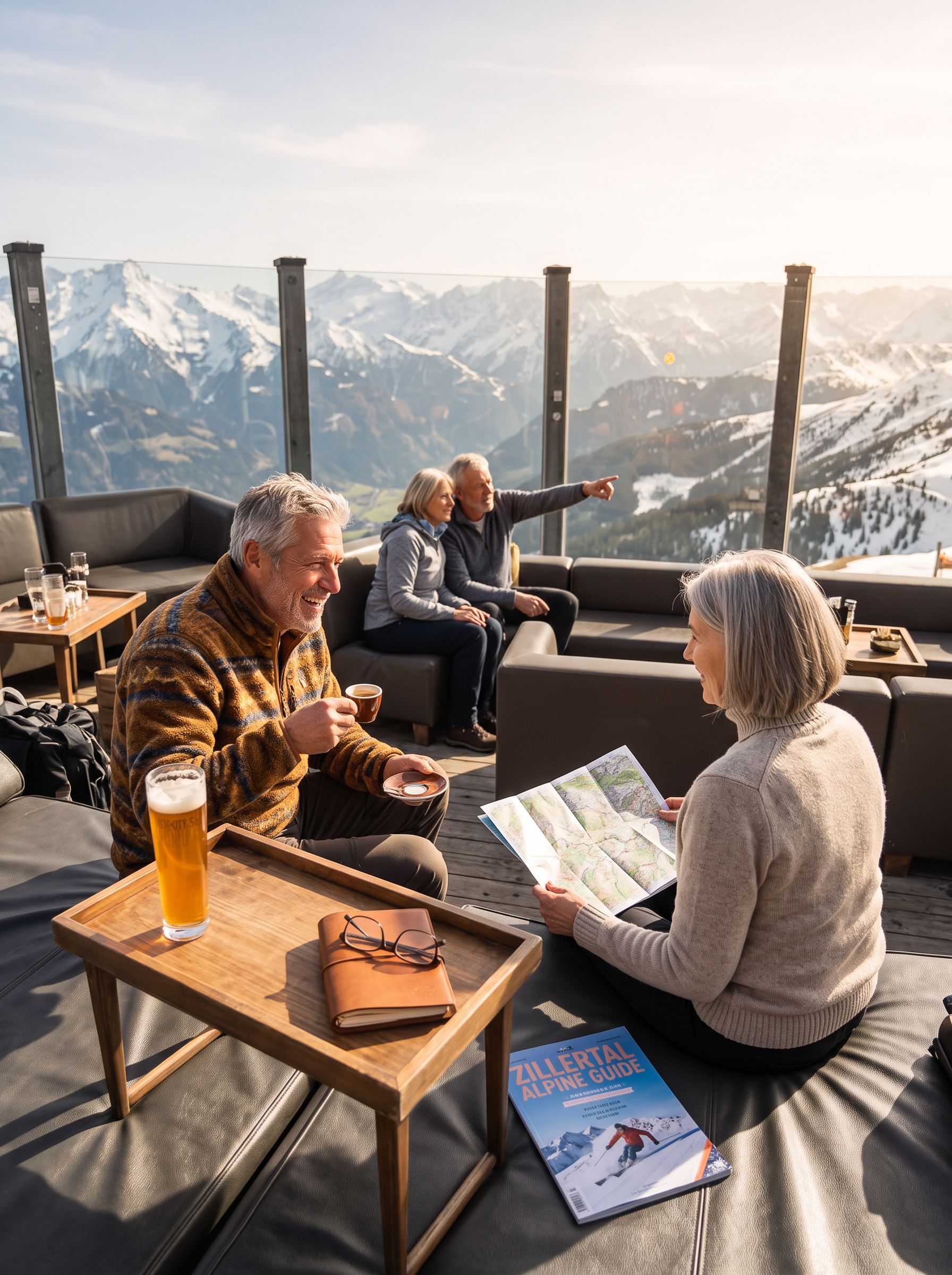 AI-edited
What are the must-try local dishes?
You cannot leave the Zillertal without tasting Zillertaler Krapfen, a savoury pastry filled with potato and cheese, and Tiroler Gröstl, a pan-fried mix of potatoes, bacon, and onion topped with a fried egg. Both are hearty, satisfying, and widely available in valley inns.
The Zillertal’s signature dish is the Zillertaler Krapfen, a half-moon-shaped pastry that locals have perfected over generations. It’s not a dessert—the filling is a savoury blend of potatoes, cheese, and sometimes herbs, fried until golden. You’ll find it on almost every traditional menu, from mountain huts to village Gasthäuser. Another essential is Kaspressknödel, a pressed dumpling of bread, cheese, and herbs, often served in a clear broth or alongside a salad. For a main course, Tiroler Gröstl is the ultimate comfort food: leftover potatoes and bacon pan-fried with onions, crowned with a fried egg. It’s the kind of dish that fuels a day of gentle walking or simply warms you after a cool afternoon.
Other local specialities worth seeking out include Melchermuas, a sweet or savoury dairy dish from the cowherds’ tradition, and Schliachta-Nudeln, a type of filled pasta. For cheese lovers, Graukäse—a sour milk cheese with a distinct tang—is a regional staple often served with bread and pickles. These dishes are not about culinary fireworks; they are about honest, well-executed mountain cooking that respects its ingredients.
Where can I try Tyrolean Gröstl and Kaspressknödel?
Head to a classic Gasthof in one of the smaller villages like Stumm, Ried im Zillertal, or Uderns. These family-run establishments serve these dishes daily, often using ingredients from local farms. Avoid the main resort centres during peak hours for a quieter meal.
The best places to sample these dishes are the valley’s Gasthäuser—traditional inns that have been feeding locals and travellers for decades. In Stumm, the Landgasthof Linde at Dorf 2 is a reliable choice; it carries a GaultMillau listing for 2026 and rates 4.8/5 on Google from 633 reviews (as of August 2026). In Mayrhofen, the Zillertaler Bauernmarkt on Josef-Riedl-Platz is a good spot to pick up bread, cheese, eggs and bacon — it runs every Friday from 09:00 to 13:00 in the summer months — but for a sit-down meal, try the Wirtshaus zum Griena at Dorf Haus 768 in Mayrhofen, which rates 4.5/5 on Google from 803 reviews. For a mountain-hut lunch, the Dominikushütte sits directly above the car park at the Schlegeis dam and serves Tiroler Gröstl, Käsespätzle and Kaiserschmarrn; it is open from 23 May to 11 October 2026.
If you prefer a quieter setting, consider visiting during weekday lunches rather than weekend evenings. The smaller villages—Strass im Zillertal, Hart im Zillertal, and Hippach—have fewer tourists and more intimate dining rooms. Many of these inns also offer a Brettljause (a cold platter of cured meats, cheese, and bread) which is perfect for a light meal or afternoon snack.
What about Zillertal Bier and fruit schnapps?
The Zillertal has its own brewery, Zillertal Bier, and a strong tradition of fruit schnapps and herbal spirits. The BrauKunstHaus in Zell am Ziller offers a self-guided tour and tasting, while distilleries like Genuss Brennerei Fankhauser in Tux provide intimate, family-led tastings.
Beer lovers should make a beeline for the BrauKunstHaus in Zell am Ziller, the visitor centre of Tirol’s oldest private brewery. The brewery publishes two seasons: from mid-May to early November it opens Monday to Saturday, from mid-December to mid-May Monday to Friday, in both cases 10:00 to 18:00, with the last recommended entry at 16:30 and no opening on Sundays or public holidays. Plan around 1.5 hours, which is what the brewery itself suggests for the multimedia route through an exhibition of more than 5,000 square metres. It rates 4.6/5 on Google from 142 reviews (as of August 2026). Getting there is easier than it looks: the brewery describes itself as about a 15-minute walk from the village centre, and parking for cars and coaches is free.
For schnapps, the Genuss.Brennerei.Fankhauser at Vorderlanersbach 56 in Tux is a must-visit. Armin Fankhauser takes visitors round the distillery himself, and the guided tasting that follows covers six fruit brandies and two liqueurs. Its Google rating stood at 5/5 from 238 reviews when this guide was checked in August 2026. Arrange the visit in advance, by phone on +43 676 6010200 or through the enquiry form on the distillery’s website, rather than turning up unannounced. It’s an ideal activity for a rainy afternoon or a quiet day away from the slopes.
“The owner is very knowledgable and a good man who is passionate about his distillery. We loved the liquors including the Holunderbluten, Walnuss and the Gins.” — a guest wrote on Google in August 2025
Another notable stop is the Kölblhof in Helfenstein, a quiet part of Hart im Zillertal, whose farm distillery calls its Zirbenschnaps “the bestseller from the Zillertal” — a stone pine spirit, lightly sweetened with rock candy, resinous and sweet in the nose. The farm sells direct from the door or ships to your home; a half-litre bottle is €9 and a litre €14 (as of August 2026). It is a farm shop rather than a tasting room, so treat it as a place to buy, not a place to spend an afternoon.
What are mountain-hut Jause platters?
A Jause platter is a cold spread of cured meats, local cheeses, pickles, and dark bread, served on a wooden board. It’s the quintessential mountain snack, designed to be shared and enjoyed with a glass of wine or beer. You’ll find them in huts accessible by cable car or short walks.
The term Brettljause (or simply Jause) refers to a traditional Tyrolean snack platter. It typically includes several types of Speck (cured bacon), Graukäse, Bergkäse (mountain cheese), pickled vegetables, and a generous portion of dark rye bread. Some versions add a boiled egg or a dollop of horseradish. It’s not a meal for the faint of heart—it’s designed to be substantial enough to fuel a day outdoors.
For a memorable Jause with a view, take the Gerlossteinbahn in Hainzenberg, which climbs from 900 to 1,650 metres and runs from 4 June to 18 October 2026, 08:30 to 17:00, with a break from 12:15 to 13:00. Eat at the Gerlossteinalm or the Berghotel near the top station: the Almtribüne is not a terrace but the viewpoint at the end of the Almpromenade theme trail, which the operator describes as a walk of about an hour. At the Schlegeis Stausee, the hut you can reach without climbing is the Dominikushütte, directly above the car park at the dam. The Olpererhütte is a different proposition: it stands at 2,387 metres, and the shortest approach from the Schlegeisspeicher car park is 2.8 kilometres with 590 metres of ascent, about an hour and a half uphill. Guest reviews of the Olpererhütte on Google praise exactly that combination of altitude and hut cooking: “Amazing food! The gröstl, the Kaiserschmarrn was tasty. Never expected such a taste at such a remote place” (August 2025). If you want the alpine experience without a strenuous hike, take the cable car to Gerlosstein or drive the Schlegeis Alpenstrasse to the Dominikushütte instead.
In the valley itself, many Gasthäuser offer Jause platters as a lunch option. Rosi’s Schnitzelhütte at 1,780 metres on Gerlosberg — the house that English-language listings render as “Rosi’s escalope hut” — is a favourite, but it is a winter address: the owners open only during the ski season, 08:30 to 16:30 in line with the Zillertal Arena lifts, and the hut stands beside piste no. 18, reached by the Karspitzbahn from Zell am Ziller. Its speciality is an outsized Schnitzel rather than a cold board. For a quieter alternative in summer, the Regionalmuseum Zillertal at Talstraße 50b in Zell am Ziller opens from 22 June to 2 October 2026, Monday to Friday, 10:00 to 16:00 — but it has no café, so plan the meal separately.
Which Gasthäuser are welcoming and relaxed?
For a relaxed meal away from the crowds, choose a Gasthof in a smaller village like Stumm, Ried, or Uderns. These inns prioritise local regulars over tourists, meaning the food is authentic and the pace is unhurried. Avoid Zell am Ziller and Mayrhofen during festival weekends.
The Zillertal is dotted with Gasthäuser that have been serving the same families for generations. The key to a relaxed experience is to avoid the main resort hubs during peak times. Zell am Ziller during the Gauder Fest — Austria’s largest spring and traditional-costume festival, held on the first weekend in May and drawing around 30,000 visitors — and Mayrhofen during winter weekends are best avoided if you want a quiet meal. Instead, head to Stumm, where the Landgasthof Linde serves from Wednesday to Sunday and keeps Monday and Tuesday as rest days. The Gasthof Hotel Post at Oberdorf 6 in Strass im Zillertal, at the mouth of the valley, is another good choice: it belongs to the Tiroler Wirtshauskultur association and cooks with produce from the neighbouring Rainer farm and from the AMA Genussregion. The festival beer is not brewed by any inn but by Zillertal Bier in Zell am Ziller — the Gauder Bock, a pale bock matured for eight months and sold only around the Gauder Fest, from the end of April while stocks last.
For a truly off-the-beaten-path experience, try Restaurant Zum Tuxer at Rohr 20A in Rohrberg, directly opposite the valley station of the Rosenalmbahn. It is an evening house: the restaurant opens daily from 16:00 to 22:00 with the kitchen running 16:30 to 21:30, the summer season starts on 22 May 2026, and the rest day is posted rather than fixed. Two things are worth knowing before you set off — the dining room is on the first floor, and guests’ parking is free behind the building at the Aktivhotel Tuxerhof.
If you’re looking for a base that combines good food with easy access to the valley’s attractions, consider staying in Uderns or Ried im Zillertal. Both villages have excellent public transport connections and a handful of excellent Gasthäuser. For more on choosing the right village, see our guide Choosing Your Base in the Zillertal: A Village-by-Village Guide.
How accessible are these food experiences?
Very few Zillertal Gasthäuser publish anything about step-free access, so ask when you book rather than assuming. Mountain huts vary widely, and a cable car to the top station is no guarantee of a step-free hut. The BrauKunstHaus is the clearest case: the brewery describes it as barrier-free and offers free parking for cars and coaches.
For seniors with mobility concerns, a handful of Zillertal food stops are documented rather than merely assumed. The BrauKunstHaus lists itself as barrier-free, and its visitor information makes no mention of a lift. The Regionalmuseum Zillertal in Zell am Ziller is the “Ental” farmhouse of 1713, rebuilt on a new site, and it publishes no accessibility information at all — group tours can be arranged by telephone. The flat riverside path between Zell am Ziller and Mayrhofen is called the Zillerpromenade, not the Zilleruferweg; the Zillertal Arena describes it as an easy walk “also suitable for families with prams” over about 8 kilometres, but no official source promises wheelchair access.
For mountain huts, be precise about how you actually get there. There is no cable car to the Schlegeis Stausee at all: the reservoir is reached by the tolled Schlegeis Alpenstrasse or by bus, and Verbund, which runs the dam, states that a visit to the dam wall is not possible barrier-free. For the Gerlossteinbahn neither the Austrian cable-car association’s accessibility data sheet for the Zeller Bergbahnen nor the Zillertal’s own barrier-free directory records a step-free entry, so a step-free entry there is simply not confirmed. Rosi’s Schnitzelhütte is not a valley-floor stop at all — it sits beside a ski piste and opens only in winter. For a comprehensive overview of mobility-friendly options, read our guide How Accessible Is the Zillertal for Older Travellers? A Practical Valley-Wide Reading.
The Zillertal’s public transport network runs regular buses between the villages, but the Verkehrsverbund Tirol states plainly that its timetable information cannot show which services use low-floor vehicles, so a blanket promise of step-free buses would be wrong; only Mayrhofen-Hippach documents a fold-out ramp and kneeling suspension. For getting to the valley, see our guide Getting to the Zillertal: Airports, Trains and Transfers.
What about beer and schnapps tastings?
Visit the BrauKunstHaus in Zell am Ziller for a self-guided beer experience, or Genuss.Brennerei.Fankhauser in Tux for a personal schnapps tour. Arrange the distillery visit in advance by telephone. Allow around 1.5 hours for the brewery and about two hours for the distillery tour and tasting.
Beer and schnapps tastings are two of the Zillertal’s most enjoyable food-related activities. At the BrauKunstHaus, the self-guided route runs through a multimedia exhibition of more than 5,000 square metres. The standard adult ticket, the “Genusserlebnis”, costs €19.90 and includes three 0.2-litre glasses of the house beer specialities and a pretzel; a smaller version with one glass and a pretzel is €14.90, and the alcohol-free ticket with apple juice and a pretzel is also €14.90 (prices valid from 1 May 2026). Groups of ten or more get 10 per cent off. One thing to know before planning lunch around it: the Bräustüberl can only be reached as part of the tour, and apart from the beer pretzel it serves no food. The last recommended entry is 16:30, and the house is closed on Sundays and public holidays.
For a more intimate experience, the Genuss.Brennerei.Fankhauser offers a tour and tasting led by the owner. The distillery charges €20 per person for the tour with tasting and €30 with a plate of Tyrolean Schmankerl alongside; both run to about two hours (prices as of August 2026). One review left on Google in January 2020 sums the visit up as a “fabulous range of hand-made Schnapps and much more,” with thanks to the family for their hospitality. The distillery is at Vorderlanersbach 56 in Tux, up the Tuxertal from Mayrhofen. Book by phone, and be prepared for a rustic, family-like atmosphere.
If you’re interested in the valley’s broader drink culture, the Gauder Fest in Zell am Ziller — 29 April to 2 May in 2027 — is the best time to sample local beers and schnapps in a festival setting. However, be prepared for large crowds: the organisers put attendance at around 30,000. For a quieter alternative, visit the Zillertaler Bauernmarkt at Josef-Riedl-Platz in Mayrhofen, where producers sell direct on summer Fridays.
| Venue | Location | Duration | Cost (per person) | Accessibility |
|---|---|---|---|---|
| BrauKunstHaus | Zell am Ziller | about 1.5 hours | €19.90 (ticket incl. 3 × 0.2 l and a pretzel) | Described as barrier-free by the brewery |
| Genuss.Brennerei.Fankhauser | Vorderlanersbach (Tux) | about 2 hours | €20, or €30 with a Schmankerl plate | Not documented by the distillery |
| Kölblhof | Helfenstein, Hart im Zillertal | farm shop, no set tour | Zirbenschnaps €9 (0.5 l) / €14 (1 l) | Not documented |
What are the price bands for dining?
Zillertal inns do not publish a common price list, so plan in bands rather than in figures: a soup or a single Krapfen sits at the € end, a Gröstl, Kaspressknödel or a Jause board at €€, and fish or game at a GaultMillau-listed house at €€€. The prices that are actually published belong to the producers.
The Zillertal offers excellent value for money, especially compared to more famous Alpine destinations like Zermatt or St. Moritz. Here’s a rough breakdown:
- € (Budget): Soup, a small salad, or a single Krapfen at a market stall or bakery.
- €€ (Moderate): Main courses like Tiroler Gröstl, Kaspressknödel, or a Jause platter at a Gasthof.
- €€€ (Splurge): Fish or game dishes, or a three-course meal at a GaultMillau-listed house such as the Landgasthof Linde in Stumm.
Where drink prices are published, they are worth noting: the BrauKunstHaus ticket at €19.90 includes three 0.2-litre glasses and a pretzel, a guided tasting of six brandies and two liqueurs at Genuss.Brennerei.Fankhauser costs €20, and a half-litre bottle of Kölblhof Zirbenschnaps is €9 (all as of August 2026). Tipping is customary but not mandatory — rounding up to the nearest euro is appreciated.
For the best value, ask for the Mittagstisch (lunch menu), which is usually a shorter and cheaper card than the evening one. Many Gasthäuser also serve a Jause in the afternoon, which is lighter and cheaper than the dinner menu.
What about the finest restaurants and hotel dining?
This guide focuses on casual, traditional dining. In the MICHELIN Guide awarded on 18 March 2026, three restaurants in the Tux-Zillertal area hold one star each: Guat’z Essen in Stumm, the Genießerstube im Alpenhof in Tux, and the newcomer Bergfried – Chef’s Table, also in Tux.
While this article concentrates on relaxed Gasthäuser and mountain huts, it’s worth noting that the Zillertal also has a growing fine-dining scene. Austria returned to the MICHELIN Guide in January 2025, and at the 2026 awards on 18 March three houses in the Tux-Zillertal area were listed with one star each: Guat’z Essen at Obere März 36 in Stumm, which again took the green MICHELIN star for sustainability, the Genießerstube im Alpenhof at Hintertux 750 in Tux, and Bergfried – Chef’s Table at Lanersbach 483 in Tux, whose head chef Sebastian Stock received the MICHELIN Young Chef Award. All three are excellent for a special occasion, but they represent a different dining experience from the hearty, traditional food covered here.
What should I order for dessert or coffee?
End your meal with Apfelstrudel, Kaiserschmarrn or a slice of Sachertorte. For coffee and cake, the long-established Kostner bakery and café on Hauptstraße in Mayrhofen is the dependable choice, open Tuesday to Sunday from 07:30 with Monday as its rest day.
No Tyrolean meal is complete without dessert. Apfelstrudel (apple strudel) is the classic choice, served warm with vanilla sauce or whipped cream. Kaiserschmarrn is a shredded pancake with raisins, dusted with powdered sugar and served with apple compote. For chocolate lovers, Sachertorte (a dense chocolate cake with apricot jam) is widely available. They appear on almost every dessert card in the valley.
For a proper coffee break, head to Kostner at Hauptstraße 414 in Mayrhofen, a family bakery and café whose own description of its trade is “breads, cakes and sweet things, baked to tried and tested tradition and handed-down recipes”. Order a Melange (a cappuccino-like drink with steamed milk and foam) alongside a slice of cake. It opens 07:30 to 18:00 from Tuesday to Sunday with Monday as the rest day; in the quieter shoulder seasons it runs Wednesday to Sunday until 17:00, and the bakery counter opens at 07:00. It is a short walk from Josef-Riedl-Platz, where the Friday farmers’ market is held.
If your visit falls on the right August day, the local brass band’s Musik- und Krapfenfest is worth building a morning around: in 2026 it runs on Sunday 23 August from 11:00 at the pavilion in Hippach, with the youth orchestra and Zillertal Tanzlmusig, and admission is by voluntary donation.
How do I avoid the crowds?
Avoid Zell am Ziller during Gauder Fest (early May) and Mayrhofen during winter weekends. For a quiet meal, dine at 11:30 am for lunch or 6:00 pm for dinner, and choose smaller villages like Stumm, Ried, or Uderns.
The Zillertal can get busy, especially during festivals and school holidays. The Gauder Fest in Zell am Ziller (early May) draws around 30,000 visitors over its four days, making it nearly impossible to find a quiet table. Similarly, the Almabtrieb cattle drives bring crowds to whichever village is hosting: in 2026 they run from 12 September to 4 October across the valley, with Zell am Ziller and Gerlos both on 26 September. If you want a peaceful meal, avoid these dates.
For day-to-day dining, the key is timing, and published hours vary more than you might expect. The Landgasthof Linde in Stumm serves 11:00 to 14:00 and 17:00 to 23:00 from Wednesday to Sunday, with the kitchen open 11:30 to 13:30 and 17:30 to 20:30; Restaurant Zum Tuxer in Rohrberg does not open until 16:00 at all, and its kitchen closes at 21:30. Arriving in the first half hour of a service is the reliable way to find a quiet room.
For a truly serene experience, consider visiting in late spring (May–June) or early autumn (September–October). The weather is pleasant, the crowds are thin, and the seasonal menus feature fresh ingredients like wild garlic, mushrooms, and game.
What are the best food festivals?
The Gauder Fest on the first weekend in May is the valley’s biggest food and beer festival, but it’s crowded. For a more relaxed experience, try the Schmankerlfest in the centre of Hippach in July, or the brass band’s Musik- und Krapfenfest, also in Hippach, on 23 August 2026.
Food festivals are a highlight of the Zillertal calendar. The Gauder Fest in Zell am Ziller is the most famous, and its roots really do reach into the 15th century: Venetian merchants recorded a church fair and market in Zell as early as 1428, and UNESCO added the festival to its intangible cultural heritage list in 2014. It features traditional music, costumes and, of course, plenty of food and beer. With around 30,000 visitors, though, it is not for everyone. If you prefer a quieter festival, the Schmankerlfest in the centre of Hippach focuses on regional delicacies in a smaller setting — note that it is a July date, not an August one; in 2026 it fell in mid-July. The Musik- und Krapfenfest of the Hippach brass band, on 23 August 2026, is the one built around the valley’s signature pastry.
For a more spontaneous food experience, visit the Zillertaler Bauernmarkt at Josef-Riedl-Platz in the centre of Mayrhofen, held every Friday from 09:00 to 13:00 during the summer months. Here you can buy seasonal fruit and vegetables, bread, cheese, eggs and bacon directly from local farmers, along with homemade Zillertal specialities.
If you’re interested in the cultural context of these festivals, the Regionalmuseum Zillertal at Talstraße 50b in Zell am Ziller offers exhibits on local traditions. It is built around the “Ental” farmhouse of 1713, moved here from the Burgstall hamlet in Schwendau, and it opens only in summer: from 22 June to 2 October 2026, Monday to Friday, 10:00 to 16:00. For more on the valley’s cultural highlights, see our guide A Spa Day at the Zillertal Thermal Baths: What to Expect—a perfect complement to a food-focused trip.
“Nice museum, not large … Gives a nice picture of life in the Zillertal in the past. Quite worth a visit.” — from a Google review of the Regionalmuseum Zillertal, July 2024
What should I bring home?
Pack a bottle of Zillertal Bier, a flask of Zirbenschnaps from the Kölblhof, and a wedge of Graukäse or Bergkäse. These make excellent gifts and are easy to transport. The Kölblhof also ships its bottles to your home address, which saves carrying them.
The Zillertal is a paradise for food souvenirs. Zillertal Bier is available in most supermarkets and at the BrauKunstHaus shop. For spirits, Zirbenschnaps (stone pine schnapps) from Kölblhof is a unique gift, with its distinctive resinous flavour. Graukäse and Bergkäse are both available at farmers’ markets and specialty shops—ask for vacuum-sealed packaging for easy transport. Speck (cured bacon) is another popular souvenir, often sold in whole pieces or pre-sliced.
For a non-perishable option, the Kölblhof in Hart im Zillertal bottles an Alpenkräuter herbal spirit — lemon balm, juniper and other regional herbs — alongside its Zirbenschnaps, and sells both direct from the farm or by post, which solves the hand-luggage problem.
If you’re flying home, check customs regulations for dairy and meat products. Most EU countries allow these items without restriction, but non-EU travellers should verify before purchasing.


