
The Zillertal valley moves to a rhythm that rewards those who know its seasons. For travellers aged 50 to 70, the question is not simply “when to go,” but which version of the valley suits your energy, your knees, and your appetite for company. The ski months bring crisp mornings and reliable snow; the summer season opens high trails and cable-car views; and the quiet weeks between offer a slower, more intimate encounter with Tyrolean life—provided you plan around the closures that define them.
When does ski season actually run in the Zillertal?
The main ski season in the Zillertal runs from early December to mid-April: the Zillertal Arena has published 4 December 2026 to 11 April 2027 for the coming winter. The Hintertux Glacier reaches 3,250 metres and skis well beyond the valley season, but since 2026 it takes a summer break rather than running all year.
If you are planning a winter trip, the core window is December through March. The Zillertal Arena, one of the valley’s largest linked ski areas, lists its 2026/27 season as 4 December 2026 to 11 April 2027 on its own operating-hours page. Mayrhofen’s Penken and Ahorn lifts follow a similar schedule. For the best snow conditions, January and February are the most dependable months, though February can draw crowds. The lift timetable is the simplest answer to that: the Zillertal Arena’s main lifts start at 08:30 in early December and from 08:00 once the Christmas holidays begin, so an early breakfast buys you the first hour before the queues build.
For those who prefer skiing without the peak-season intensity, late November and late March offer shorter lift queues and softer light. The Hintertux Glacier still skis long after the valley resorts have closed — Tirol Werbung dates the last season from 27 September 2025 to 19 July 2026. If your priority is snow outside the valley season, Hintertux remains the safest bet in the valley, but check its published dates first, because the summer break is new.
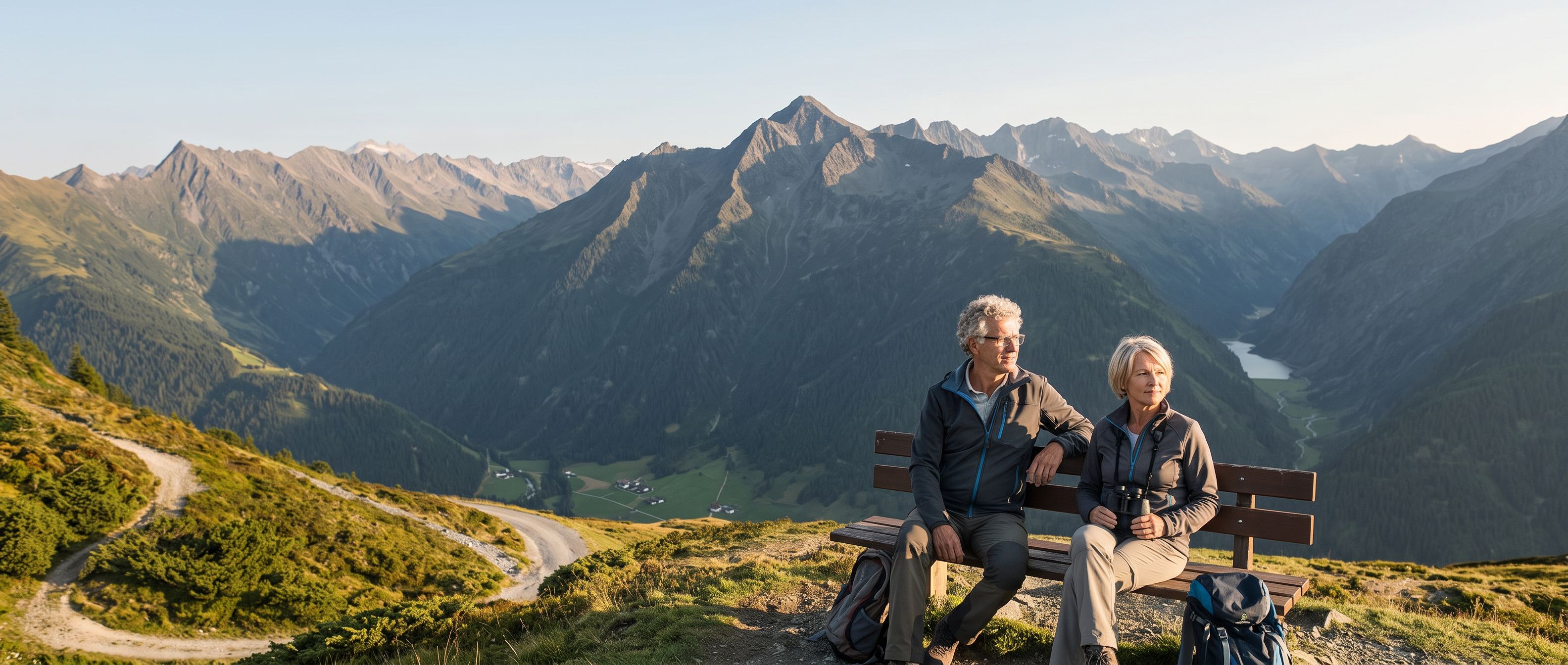 AI-edited
What is the best time for hiking and cable-car access?
The strongest hiking window is June to September, and September is the driest of those months at valley level, with open huts and thinner crowds. Cable cars generally run from late May to mid-October, though exact dates vary by lift: in 2026 the Zillertal Arena’s ran from 23 May to 18 October.
Summer in the Zillertal is about high trails, alpine pastures, and the satisfying hum of cable cars lifting you above the valley floor. The Tyrolean tourist board puts the best time to visit the Zillertal Alps High Mountain Nature Park at June to September for hikes and high alpine tours; the park’s own guided programme — more than 200 walks led by trained nature park guides — runs from May to October. July and August are the warmest months, but they also bring the most rain and the thickest crowds. One Tripadvisor contributor notes that June or September are preferable because they are “not so hot” and have “not so many people around.”
For travellers aged 50 to 70, the valley’s cable-car network is a practical ally. The Penkenbahn in Mayrhofen and the Ahornbahn give you access to panoramic viewpoints without the strain of a long ascent. The Neuhaus Zillertal Resort is a practical base here: the Mayrhofen tourist board lists it as “right on the train station, central location” and records a lift among its facilities, and its BADEHAUS spa opened in December 2024 with a 25-metre infinity pool. Mind the distances, though — the Penkenbahn base station is about 900 metres away on foot, the Ahornbahn about 1.6 kilometres. If you prefer gentler exploration, the valley-floor paths between Zell am Ziller and Mayrhofen are flat, well-marked, and ideal for a morning stroll.
September stands out for a reason: the snow has retreated from higher trails, the temperatures are comfortable for walking, and the summer families have gone home. Many forum posters recommend late August to September as the best compromise between open trails, lower crowds, and better weather odds. The official climate normals of GeoSphere Austria for the Mayrhofen station (1991–2020) bear that out: September averages 14.4 °C and 100 millimetres of rain across 11.2 wet days, against 154 millimetres over 15.4 wet days in July.
When is the quiet between seasons—and what closes?
The quietest travel windows are May and October, when visitor numbers drop sharply but many lifts, huts, and mountain restaurants close for maintenance. This is the time for valley-floor walks, village life, and low prices—not for high-alpine ambitions.
The “Zwischenzeit,” as locals call it, is the valley’s breathing space. In May, the ski lifts have stopped running, and the summer cable cars have not yet started their full schedules. Higher trails can still be snowbound or slushy, and some mountain huts remain shuttered until early June. The same applies in October: the colours are beautiful, but snowfall can close passes, and many lifts end their summer season by mid-October.
This does not mean the valley is empty of appeal. The Zillertalbahn, the narrow-gauge railway that runs from Jenbach through the valley, operates year-round and offers a nostalgic ride through the landscape. The villages—Zell am Ziller, Mayrhofen, Ginzling—are quieter, and you will find better deals on accommodation. That is the trade-off of the shoulder season—fewer people, but also fewer things open—which is exactly the point if you value solitude over convenience.
For a comfortable shoulder-season visit, stick to the valley floor, where paths are more likely to be clear: the Zillerpromenade runs from the Zillerbrücke in Zell am Ziller, 4 kilometres to Hippach and 8 kilometres on to Mayrhofen, and the Zillertal Arena describes it as gentle enough for families with a pram. Check lift operating dates before you book; the Zillertal Arena, for example, publishes its exact summer and winter schedules online. And if you want a spa day to fill a rainy afternoon, the Therme Zillertal in Fügen opens daily from 10am to 10pm all year, apart from its annual maintenance break — next from 7 to 20 June 2027 — a warm, quiet refuge when the weather turns.
How reliable is the Hintertux Glacier for year-round snow?
Less reliable than it used to be. The glacier long advertised 365 days of skiing, but Tirol Werbung lists the last ski season as 27 September 2025 to 19 July 2026, and the operator has introduced a summer break. Its cable cars and high-alpine attractions still run through the year.
At 3,250 metres, the glacier holds snow long after valley resorts have turned to grass, which makes it a practical choice in November or May when other slopes are closed. High summer is now the exception: the specialist press reported in August 2026 that the lifts had stopped carrying skiers for the season, with ski operations expected back by around the end of September. The cable cars and the mountain restaurants keep running in the meantime.
On Google the glacier holds 4.7 out of 5 from 13,551 reviews as of August 2026. For anyone with limited mobility, the more useful document is the accessibility datasheet the Austrian cable-car association publishes for the Zillertaler Gletscherbahn (November 2024). It records 3,250 metres as the highest point that can be reached barrier-free, with a lift-served route from the Hintertux base station up to the panorama terrace. It also lists three barrier-free restaurants at 2,100 and 2,660 metres, five barrier-free toilets and more than a hundred barrier-free parking spaces at the base station.
The glacier itself is reached by cable car rather than on foot, which spares the legs, and the high altitude keeps temperatures cool even in summer, so pack layers. If your goal is snow in the shoulder months, check the glacier’s published ski dates before you book: July is no longer a safe bet.
What about the mud season—when lifts and huts close?
The mud season falls in late April to early May and again in late October to early November, when snow melts or arrives, trails turn to slush, and most mountain infrastructure shuts down. This is the least practical time for hiking or skiing, but fine for valley exploration.
The term “mud season” is not official, but every Alpine traveller knows it. In late April, the ski season has ended, and the snowpack begins to soften. Trails become wet and slippery, and higher paths may be impassable. The same happens in late October, when autumn rains and early snowfalls combine to create messy conditions. By November the days are short as well, and much of the higher-altitude hospitality has closed for the season.
If you find yourself in the Zillertal during these weeks, focus on the valley floor. The Zillertalbahn railway offers a comfortable ride through the villages, and the towns themselves have museums, churches, and cafes worth exploring. The What to Eat and Drink in the Zillertal: A Senior’s Guide to Tyrolean Flavours article covers the local cuisine, from hay-milk cheese to schnapps, which you can sample in village inns regardless of the season. The mud season is not a time for grand adventures, but it can be a time for quiet discovery.
Which season suits which type of traveller?
Active skiers should visit December to March; hikers and cable-car enthusiasts will prefer June to September; and those seeking peace, lower costs, and village life will enjoy May or October, provided they accept limited mountain access.
The Zillertal is not a one-size-fits-all destination. Here is a quick guide to match your travel style with the right season:
| Travel style | Best season | Why it works |
|---|---|---|
| Avid skier | January–February | Deepest snow, longest runs, Hintertux glacier backup |
| Occasional skier | Late November or March | Fewer crowds, lower prices, still good snow |
| Hiker (easy to moderate) | June or September | Mild weather, open huts, fewer people on trails |
| Hiker (challenging routes) | July–August | All high trails open, but busier and hotter |
| Culture and village explorer | May or October | Quiet, affordable, valley-floor walks and local life |
| Photographer | Late September–early October | Autumn colours, soft light, dramatic skies |
For a deeper look at where to stay, the Choosing Your Base in the Zillertal: A Village-by-Village Guide article breaks down the character of each town, from bustling Mayrhofen to quiet Ginzling. If you are planning a ski trip, the What Does a Comfortable Zillertal Trip Cost? A Senior’s Honest Budget Guide article will help you estimate expenses for lift passes, accommodation, and meals.
What practical things should I check before booking?
Before you book, confirm lift operating dates, trail conditions at your chosen elevation, and whether your hotel’s restaurant is open during shoulder seasons. The Zillertal tourism office and individual lift websites are the most reliable sources.
A few concrete checks will save you disappointment:
- Lift schedules: The Zillertal Arena publishes its exact operating hours online. For the 2026/27 winter season, it runs from 4 December to 11 April. In summer 2026 its lifts opened in stages from 23 May, and the last of them, the Gerlossteinbahn, ran to 18 October.
- Trail conditions: In May and October, higher trails may be snow-covered or closed. Valley-floor routes such as the Zillerpromenade between Zell am Ziller and Mayrhofen are the most reliable walking.
- Hotel amenities: Some hotels reduce their restaurant hours or close their spas during the quietest weeks. Call ahead to confirm.
- Transport: The Zillertalbahn runs year-round, but bus services to remote valleys may be less frequent in shoulder seasons. Check the local transport schedule.
The Zillertal’s climate is typical of the Austrian Alps. In the GeoSphere Austria normals for the Mayrhofen station (1991–2020), January is the coldest month at −1.4 °C on average, while July is both the warmest at 18.9 °C and the wettest at 154 millimetres. For a detailed month-by-month breakdown, the GeoSphere Austria climate normals for 1991–2020 give averages for temperature and rainfall at every Austrian station.
“Beautiful place and good point to rest during more days tours or as a place to stay and hike from here to the sourounding places. Great views, building, service and food.” — a guest wrote about the Berliner Hütte on Google in September 2025
Frequently asked questions
Can I visit the Zillertal in November? Yes, but expect limited options. November is the deepest part of the shoulder season: most summer lifts have closed, and the ski season has not yet started. The Hintertux Glacier is usually skiing again by November — its 2025/26 season opened on 27 September — and on the valley floor the Zillertalbahn and the village museums keep running. Weather is often grey, with rain or early snow. This is a good month for a quiet, low-cost stay focused on spa visits and local culture, but not for hiking or extensive mountain exploration.
Is the Zillertal suitable for travellers with limited mobility? The valley is generally manageable because cable cars and valley-floor routes reduce strain. Mayrhofen is the clearest case: the tourist board states that all four of its feeder lifts — Ahornbahn, Penkenbahn, Horbergbahn and Möslbahn — offer barrier-free boarding. For Zell am Ziller the Zillertal Arena publishes no comparable statement about its lifts, so ask before you rely on it. However, high-alpine trails can be steep, long, and snow-sensitive. The easiest options are lower-elevation walks and scenic lift-accessed viewpoints. Check each lift and hotel directly for step-free access before booking, as comprehensive accessibility information is not always published online.
What is the cheapest time to visit the Zillertal? The shoulder seasons of May and October offer the lowest accommodation prices and fewer crowds. However, you may find that some mountain restaurants and lifts are closed, which can limit your activities. For the best value combined with open infrastructure, consider late June or early September, when prices are moderate and most facilities are operating. Ski season is the most expensive, especially during Christmas, New Year, and February school holidays.
How do I get to the Zillertal without a car? The standard public-transport route is train to Jenbach, then transfer to the Zillertalbahn, a narrow-gauge railway that runs through the valley to Mayrhofen. The journey takes a little under an hour — about 50 minutes on the timetable valid from 14 June 2026 — and offers scenic views of the valley. From major cities like Innsbruck or Salzburg, trains connect to Jenbach regularly. Once in the valley, local buses and the railway link the villages, making a car unnecessary for most travellers.
A final note on timing
The Zillertal rewards those who match their visit to their own pace. If you want the buzz of ski slopes and après-ski, come in January. If you want long, golden hikes and the hum of cable cars, come in September. And if you want to sit in a village square with a coffee, watching the clouds drift over the peaks, come in May or October—and bring a good book. The valley will meet you where you are.


