
Chiang Mai rewards a certain kind of traveller: the one who has stopped counting temples and started noticing them. Thailand's northern capital is compact enough to know in a week, layered enough to hold attention for a month, and gentle enough in its rhythms that age is rarely the barrier. The city's central districts are mostly flat, its food is inexpensive and abundant, and its temple culture is dense: one guide counts more than 300 temples, most of them free to enter. What follows is an orientation for readers aged 50 to 70, from those who will walk every lane of the Old City to those who would rather see it from the back of an air-conditioned car.
The practical shape of a Chiang Mai trip comes down to three decisions: where to base yourself, how much walking the heat will realistically allow, and which months to avoid. Get those right and the rest, from temple circuits to night markets, tends to arrange itself. Get them wrong and the city can feel hotter, noisier and harder on the knees than it needs to.
Where is Chiang Mai, and how do you get there?
Chiang Mai sits in northern Thailand, roughly 700 kilometres north of Bangkok, and is served by its own international airport with licensed taxis and rideshare pickups from the arrivals hall. Most visitors fly in; the airport is close to the city centre, and transfers are described as easy and inexpensive.
The airport itself is the simplest arrival point. Lonely Planet notes a licensed airport taxi service at Exit 9 from the arrivals hall, with rideshare and shuttle options also available. One airport-transfer operator advertises pickup outside Exit 11 and says it is open 24 hours; that same operator states it is stroller accessible and allows service animals, but is not strictly wheelchair accessible unless the wheelchair folds and fits in the luggage compartment. Travellers with mobility equipment should confirm arrangements directly with their chosen transfer provider before booking.
For onward travel within the region, the road distances are worth knowing before you commit to a day trip. Chiang Mai International Airport to Doi Suthep is 29 km by road, about 50 minutes with clear roads. The airport to Mae Rim is 23 km, about 35 minutes with clear roads. The airport to Chiang Dao is 83 km, about 110 minutes with clear roads. Each of those times assumes free-flowing traffic with no stops, which is not what the city delivers at rush hour.
How do the Old City, Nimman and the riverside connect?
The Old City is the flat, compact, walkable core. Nimmanhaemin, usually called Nimman, sits northwest of it and suits longer stays with cafes and services. The riverside, along the Ping, is quieter and a short ride from both. Distances between them are small; traffic, not geography, is the constraint.
The Old City is a square moat-and-wall district, and it is repeatedly described as the easiest area in Chiang Mai for walking-based sightseeing. It is flat and compact, though sidewalks can be uneven and sometimes obstructed. That combination, easy on the gradient but rough underfoot, is the single most useful thing to understand about getting around on foot here.
Nimman is a different proposition: a grid of cafes, students, older residents and easy access to services. Several forum posters recommend staying in or near Nimman for exactly that mix. The riverside, along the Ping, is where you find restaurants on the water and a slower evening pace. All three districts sit within a few kilometres of each other, so the choice is less about distance than about which texture you want outside your door.
 AI-edited
Which area should I base myself in?
Base in or near the Old City if your priority is walking to temples. Choose Nimman for cafes, services and a longer stay. Choose the riverside for quiet evenings. Wherever you book, ask for a room away from the street: night-time noise surfaces in some Old City stays.
The Old City suits temple-hoppers who want to step out and start walking. It also suits anyone who values being able to return to the room mid-afternoon when the heat peaks. The trade-off is that some Old City properties pick up street noise, music, vehicles, barking dogs and morning birds. One Expedia review noted that a room facing the main street could hear some music even with the windows shut. That is planning information, not a warning: request a room set back from the road, and ask specifically about the outlook.
Nimman suits travellers staying longer, or those who want a concentration of cafes, clinics and shops within a small radius. The riverside suits readers who want their evenings calm and their dinners on the water. Hotel selection is a subject in its own right; our dedicated Chiang Mai hotel guide covers individual properties in detail.
How walkable is Chiang Mai for older travellers?
Chiang Mai is described as moderately accessible overall, with the best walking conditions in the flat Old City. Sidewalks are often narrow, uneven or obstructed, and pavement ramps are not always usable. Sturdy shoes and a steady pace matter more here than in most Asian cities.
The honest picture is mixed. The Old City's terrain is level, which makes it the most comfortable district for walking-based sightseeing. But the surfaces are not: sidewalks near the moat have high curbs and few wheelchair cutouts, according to a Reddit thread, and one Reddit post describes the city as quite challenging for limited mobility because many sidewalks are rough, uneven or absent.
For active travellers in their 50s and 60s who are comfortable with uneven pavement and the occasional step, this is manageable. For anyone with stronger mobility needs, the realistic expectation is partial accessibility rather than full step-free coverage. The reliably comfortable places named by forum users are the large shopping malls, including Maya and Airport Plaza, along with Queen Sirikit Botanical Garden and Huay Tung Tao as gentler half-day options.
One practical habit transforms the experience: use Bolt or Grab between sights rather than walking the connections. That single change removes most of the city's uneven pavements and level changes from your day. Within the city, shared songthaew fares are commonly 20 to 30 baht per person, according to a local travel source.
What should I know about the temples?
Chiang Mai's temples are the reason most people come, and most are free or charge a modest foreigner fee, commonly around 30 to 50 baht. Dress code applies: shoulders and knees covered, shoes removed before entering the main hall. Many temples open around 6:00 am and close around 5:00 to 6:00 pm.
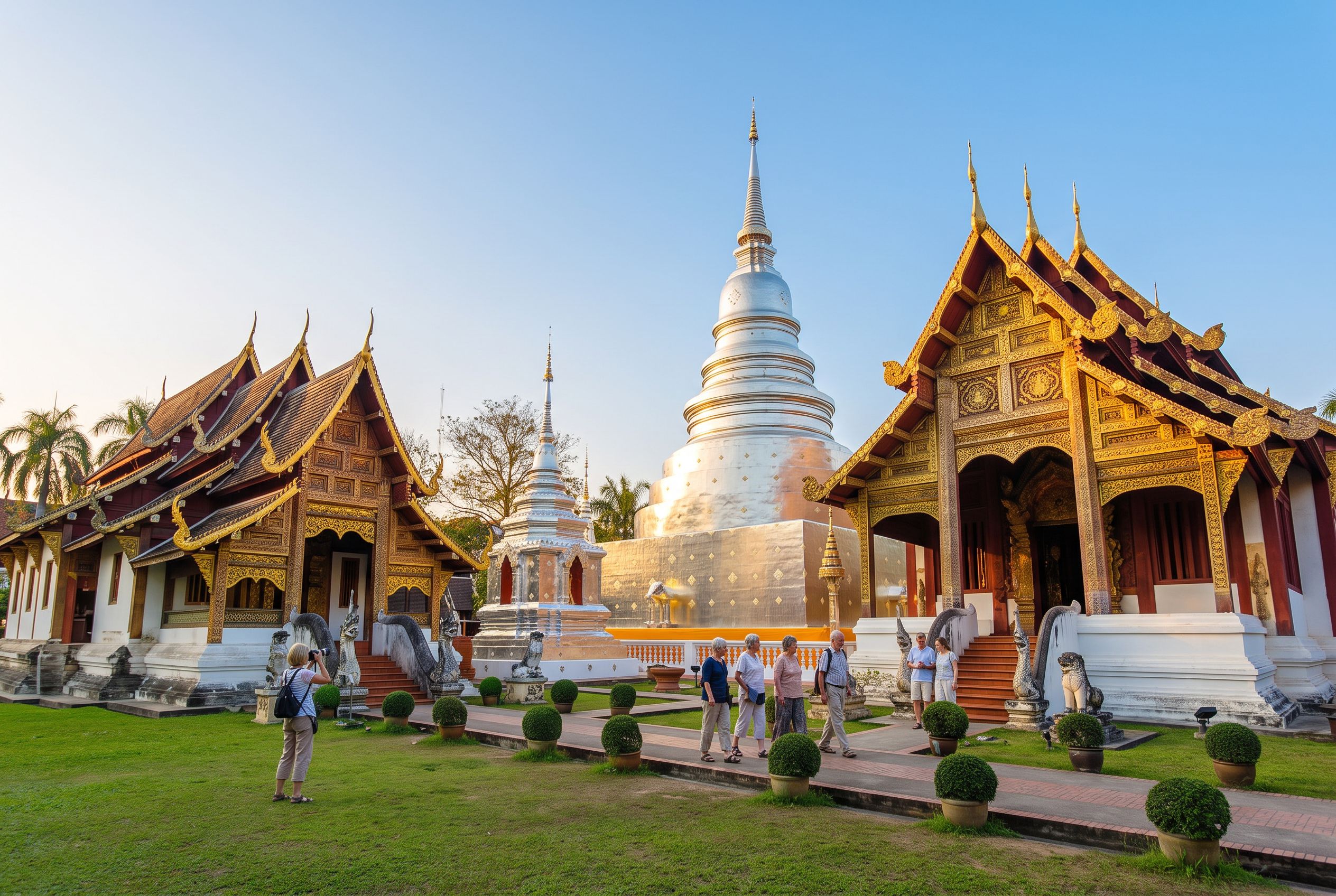
The Old City holds the classic circuit. Wat Phra Singh is a major temple within a simple walking route; sources say entry is free or donation-based, while one reports a small fee, so the exact charge is not consistently documented. Wat Chedi Luang, built in 1391 according to one temple guide, is a major ruined chedi complex and several sources report an entrance fee for foreigners. Wat Phan Tao, Wat Suan Dok and Wat Umong all appear in supported temple loops, though detailed accessibility or booking terms for those specific sites are not documented.
Wat Chiang Man is cited as Chiang Mai's oldest temple, founded in 1296 CE, though that fact comes from a general temple guide rather than a site-specific official source. Cash is required in many temple settings, and card payments are rarely accepted. Some temples may close to non-Buddhists during major religious holidays, but exact closures by site are not documented.
Is Doi Suthep accessible without the stairs?
Yes. Wat Phra That Doi Suthep sits on a hill and the approach involves a staircase of roughly 306 to 309 steps, but a cable car or funicular bypasses the climb for those who want to avoid stairs or have limited mobility. Entry and the funicular are purchased on site.
Doi Suthep is one of Chiang Mai's signature temple visits and the main terrain challenge in the area. The funicular reduces the climb for most visitors, and it is repeatedly flagged as making the site easier than expected. Sources describe on-site purchase of entry and cable-car use rather than advance booking; formal guided tours, shuttles or cancellation terms for the temple are not documented.
Arriving before 9:00 am is recommended by one guide to beat tour groups. A cable-car proposal up Doi Suthep was reported back on the table in June 2025, following meetings between provincial officials and a cable-car company, with a proposed route from near Chiang Mai Zoo to the temple. That remains a proposal rather than a built facility, so plan around the existing funicular.
| Destination | Distance by road | Driving time (clear roads) |
|---|---|---|
| Doi Suthep | 29 km | About 50 minutes |
| Mae Rim | 23 km | About 35 minutes |
| Chiang Dao | 83 km | About 110 minutes |
What pace is realistic given the heat and humidity?
Chiang Mai is generally hot, which makes walking less appealing for many visitors. The workable rhythm is an early start, a long midday break, and a late-afternoon return. One forum report described the best pace as lazy mornings with long breakfasts and swims, followed by sightseeing.
Heat is the constraint that shapes every itinerary here, more than distance. The city is described as generally hot in transport discussions, and that single fact should govern how you plan. Temple circuits in the morning, a pool or air-conditioned room through the middle of the day, and markets or riverside dinners in the evening is a structure that works for most fitness levels.
For readers who prefer a slower pace, the city accommodates it well. One Reddit discussion describes Chiang Mai as great for older, relaxed travellers, citing temples, restaurants on the mountain and river, the Nimman neighbourhood, spas and limited nightlife. Another thread about retired women notes lots of retired women in the city, with social lives centred on poetry readings, dances, hiking, yoga, language lessons, book clubs and meetups. A separate discussion aimed at an older solo traveller says age itself is not a barrier in Chiang Mai.
What are the best low-effort visits?
Chiang Mai National Museum, Chiang Mai Night Safari and Royal Park Rajapruek are the best-documented low-effort options, each with structured hours and some accessibility or comfort features. For readers 65 and over, Brokenships Chiang Mai offers the clearest documented senior concession.
The Chiang Mai National Museum's exhibition zone is open Wednesday to Sunday, 09:00 to 16:00, and the office is open Monday to Friday, 08:30 to 16:30, according to the official Fine Arts Department museum page. The same page states the admission fee is 20 baht for Thai visitors and 200 baht for foreign visitors, with no senior concession shown. A separate tourism listing says seniors are free and the site is closed Mondays, Tuesdays and public holidays, but that is not the museum's own page and should be treated as secondary support only.
Chiang Mai Night Safari runs a Day Safari from 13:00 to 16:00 and a Night Safari from 18:00 to 23:00, according to a secondary guide, which also says discounts are available for children, seniors and Thai residents, that the site is wheelchair accessible with ramps and designated viewing areas, and that wheelchair and stroller rental is offered. Royal Park Rajapruek is described as open daily 08:00 to 18:00 with last admission at 17:00, foreign adult entry of 200 to 250 THB, and discounts for visitors aged 60 and over. Both sets of details remain secondary-source claims until the operators' own pages are captured.
Brokenships Chiang Mai states adults pay 200 baht, while people with disabilities and seniors aged 65 and over pay 150 baht. It is open every day from 10:00 to 22:00, with last entry at 21:30, and closed on New Year's Day and during Songkran and its substitution holiday. Groups of 15 or more must book at least seven days in advance.
When should I go to Chiang Mai?
The cool season runs November to February, the hot season March to May, and the rainy season June to October. For older visitors, the safest planning window is usually late November to early February. March and April are consistently flagged as the most difficult months because of burning-season smoke and high heat.
December and January are typically the coolest and driest months. April is the hottest; September is the wettest. Air quality is best roughly June through January but most concerning from mid-February through April, peaking in March. The Tourism Authority of Thailand recommends November to February as the best season for Northern Thailand.
From roughly February to April, agricultural burning can push air quality to hazardous levels. One Reddit thread explicitly warns to avoid mid-February because of burning season and significantly poor air quality. If your travel dates are fixed and fall in that window, plan indoor activities and check air quality readings daily.
How do I get around without walking far?
Chiang Mai has RTC City Bus services, including the blue bus network, described as affordable and convenient for central Chiang Mai. Rideshare apps, tuk-tuks and private drivers fill the gaps. Hiring a tuk-tuk driver for the day works well for travellers who want comfort and flexibility.
Route B2 runs between Chiang Mai Bus Terminal 2 (Arcade) and Chiang Mai International Airport with published day service and fixed fares. Route B1 includes Chiang Mai Railway Station on its route through the city. The public city-bus route map explicitly serves Maharaj Nakorn Chiang Mai Hospital, also known as Suan Dok Hospital.
For day trips, hiring a driver gives you control over pace and air conditioning. One forum post notes that day tours are easy to arrange once you are in the city, and that a tuk-tuk driver for the day can work well for travellers who want comfort and flexibility. No Chiang Mai-wide senior or over-65 fare programme is documented, and no reduced tariffs or special passes for older visitors appeared. Ask at the ticket office or with your driver.
Is Chiang Mai safe, and what about health?
Chiang Mai is commonly described as workable for daytime city travel, with the main cautions being traffic, crowded tourist areas and after-dark movement. One travel-risk page rates night safety as higher risk and advises well-lit, busy routes and verified transport after dark.
Emergency numbers are documented and worth saving before you arrive: 1669 for medical emergency or ambulance, 191 for police, 199 for fire and rescue, and 1155 for the Tourist Police, which has English-language support. A U.S. consular source lists several Chiang Mai hospitals and says the ambulance will take the patient to the nearest facility with emergency services.
Chiang Mai City Municipality's public-health office lists a hospital unit with contact details, showing municipal health services are available within the municipality itself. The airport pharmacy stocks basic medications, sunscreen and travel essentials. A single named nearest pharmacy to the city centre was not identified available.
Traffic and crowded tourist areas are the daytime cautions. The city is described as an overall gentle place by one forum discussion, with several older travellers visible and enjoying themselves. Use verified transport after dark and stay on busy, well-lit routes.
What does a day in Chiang Mai cost?
Temple entry is modest, commonly around 30 to 50 baht for foreigners, and many temples are free. Shared songthaew fares within the city are commonly 20 to 30 baht per person. Cash is required in many temple settings, and card payments are rarely accepted.
Museum entry is higher: the Chiang Mai National Museum charges foreign visitors 200 baht, according to its official page. Brokenships Chiang Mai charges adults 200 baht and seniors aged 65 and over 150 baht. Royal Park Rajapruek is listed at 200 to 250 THB for foreign adults, with discounts for visitors aged 60 and over, though that figure comes from a secondary guide.
Rates are indicative and vary by season and booking channel. Carry small notes, and do not assume a card will work at temple entrances or market stalls.
What is changing in Chiang Mai?
Several infrastructure projects are in motion. A 15.8-km LRT with 16 stations is planned, with construction targeted for 2028 and opening in 2031. A cable-car proposal for Doi Suthep returned to discussion in 2025. The Night Bazaar area is being redeveloped.
Thai press reported in September 2024 that the Transport Ministry ordered a feasibility study for an underground section in the city area, because the project could affect historic sites in the old city. The line is planned with two park-and-ride sites and a maintenance centre at Nong Hor Junction. The government wants to study tunnelling in the city centre while keeping the above-ground alignment outside the city, which signals possible future construction disruption around the old city.
The Den Chai to Chiang Mai railway upgrade was approved in June 2024, and Airports of Thailand launched a 10-year development project for Chiang Mai International Airport in 2023, aiming to lift capacity to 20 million passengers a year by 2033. A second airport, Lanna International, is being planned on land in San Kamphaeng and Ban Thi. After the big flood of 2024, the government has been dredging the river near the city centre, and the Mae Kha Canal is being renovated with house clearances and walkways. The most likely day-to-day effects for visitors are construction, traffic and access changes around the old city, the Night Bazaar area, the river and canal corridors, and airport approaches.
What should I know before booking?
Confirm step-free access, lifts and walk-in showers property by property, because the review record for Chiang Mai is stronger on helpful staff and convenient layouts than on verified accessibility features. Request a room away from the street. Check your travel dates against the burning season.
Reviews across Chiang Mai properties consistently praise attentive service, with staff described as exceptionally helpful and quick to arrange luggage, directions, transport and early check-in. Quiet nights and good sleep quality were repeatedly reported at higher-rated hotels, with comments such as quiet at night time and sound proofing good. Returning-guest intent appears often, in language such as would stay here again and a hotel worth returning to.
Some properties are described as dated or in need of modernising, which matters for travellers prioritising easy comfort. Blackout and privacy can be inconsistent: one stay noted ground-floor windows were effectively useless for privacy, and another flagged transparent washroom curtains when the room light was off. For the best sleep, reviews suggest choosing newer or better-insulated hotels away from main-street or entertainment-facing rooms.
For a deeper look at individual properties, our dedicated Chiang Mai hotel guide covers the detail. If you are weighing this trip against other destinations, our guide to two weeks across the South Tyrol and the Dolomites offers a useful contrast in pace and terrain.
What are the most common questions?
When to avoid Chiang Mai, whether Thailand suits senior travellers, and how the city compares with Chiang Rai are the questions readers ask most.
On timing: avoid the burning season, roughly late February through April, when air quality can reach unhealthy or hazardous levels. On senior-friendliness: Chiang Mai has standard emergency numbers, taxi and rideshare options, and major tourism infrastructure, though no city-wide senior fare programme is documented. the gathered sources did not document a direct comparison.
For readers planning a longer trip through the region, our self-guided Sound of Music route in Salzburg shows how a city can be explored at a gentle pace with a clear structure. Closer to home for many readers, our Salzburg family guide and Dolomites family guide cover multigenerational travel if you are considering bringing grandchildren along on a future trip.
One final planning note: the city's tourism volume is substantial. Chiang Mai province received 12,091,992 visitors in 2025, including 8,689,797 Thai visitors and 3,402,195 foreign visitors, generating THB 112.7 billion in tourism revenue, according to a 2026 statistical summary. Book accommodation and key experiences ahead in the cool season.
The bottom line for travellers over 50
Chiang Mai works well for active travellers in their 50s and 60s who are comfortable with uneven pavements and occasional steps, and who plan around the heat. It is especially easy if you stay near the Old City and use rideshares, taxis or the city bus network rather than walking everywhere.
The city's strengths are real: a flat, compact core, a dense temple culture with mostly free or inexpensive entry, excellent and inexpensive food, and a social fabric that includes plenty of older residents and visitors. The constraints are equally real, and all of them are manageable with planning: uneven sidewalks, heat and humidity, the burning season from roughly late February through April, and partial rather than complete accessibility for those with stronger mobility needs.
Choose your base by the texture you want outside your door. Choose your months by the air quality and the temperature. Choose your daily pace by the heat, with early mornings for temples and long midday breaks. Do those three things and Chiang Mai delivers what it promises: a gentle, cultured, affordable city that rewards slow attention.


