
Charleston rewards travellers who choose their weeks carefully. The city's climate swings from mild winter days to punishing summer heat, and its visitor numbers follow the gardens and the festivals rather than the thermometer. For travellers aged 50 to 70 who want to walk the historic streets without wilting, the answer is narrower than the brochures suggest: mid-April to late May, or late September to late October. Those two windows are identified by WeatherSpark as the most suitable periods for outdoor sightseeing, with milder temperatures than summer.
The city itself is compact and generous to pedestrians. The City of Charleston notes parks, museums and seven miles of waterfront, and the historic grid puts most of the famous sights within a comfortable morning's walk. What changes month by month is not the geography but the heat, the rain and the queue at the next doorway. This guide works through the calendar so you can pick your window with confidence.
When is the best time to visit Charleston?
Mid-April to late May and late September to late October are the best windows for travellers aged 50-70. Both periods offer milder temperatures than summer, and both sit outside the worst of the spring garden crush. If you want maximum quiet and lower lodging rates, December through early February is the lowest-crowd period.
Charleston Visitor's own seasonal guidance describes October as one of the city's most comfortable months, with warm days, cooler evenings and humidity that has finally eased. Visitor numbers and hotel rates in October sit below the spring peak. Late September works as a transition: humidity begins to break and daytime temperatures ease into the 70s and low 80s Fahrenheit.
Spring has its own logic. April is recommended for walking-led visits, and November offers cooler conditions without midsummer heat. The trade-off is crowds. Spring is identified as Charleston's busiest tourist season, so garden visits and downtown restaurant reservations should be planned ahead.
 AI-edited
How hot does Charleston get in summer?
July and August are consistently the least comfortable months. Average highs reach about 89 to 91°F in July, with frequent thunderstorms, and August is typically the wettest month at roughly 7.2 inches of rain. The heat and humidity discourage some visitors but make extended walking genuinely uncomfortable for many.
The numbers tell the story plainly. At the National Weather Service's North Charleston climate station, the 1991–2020 normal average high for June is 88.5°F and the normal average low is 70.4°F, and the station averages 13.5 days in June with highs of at least 90°F. July runs warmer still. The National Weather Service Charleston climate data and plots set out the monthly normals in full.
Fodor's advises sightseeing early in the morning and moving to a pool or beach in the afternoon during July and August. A Fodor's forum account reported that the week before Memorial Day was already too hot, while an earlier June visit was described as being in the 80s and humid. Afternoon thunderstorms are common enough in June to affect sightseeing plans.
One point of disagreement is worth flagging. The Avoid Crowds analysis described July as busier than about 65% of the year, while other travel summaries identify July and August as low-crowd months because the heat discourages visitors. Sources differ on how quiet high summer really is; treat the crowd figures for those months as indicative rather than settled.
Should hurricane season affect my plans?
Charleston's hurricane season runs officially from June 1 through November 30, with the highest risk generally concentrated in August through October. September is the statistical peak of Atlantic hurricane activity. Travellers booking in that stretch should build in a weather fallback and check forecasts close to departure.
September divides opinion. Some Charleston Reddit contributors call it uncrowded and less humid than August, while others report that it can remain extremely hot and that hurricane and tropical-storm risk is at its peak. The Avoid Crowds analysis ranked September among the quieter months, busier than about 40% of the year. That quiet comes with a caveat.
Charleston Reddit discussions repeatedly warn that tropical storms or hurricanes can disrupt plans in September and early October, even though October itself is often highly regarded. Build in a fallback for those weeks. No Charleston-specific evacuation rule or senior-traveller procedure was documented; the City of Charleston lists its general municipal number as 843-724-7311, but this is not an emergency line. For an actual emergency in Charleston, use the standard U.S. number, 911.
What is each month actually like?
The table below sets out the published monthly climate averages for Charleston, South Carolina. July is the warmest month and January the coldest. Rainfall is spread through the year, with wetter conditions generally from June through September. Use it to match your own tolerance for heat and rain to a month.
| Month | Average low | Average high | Rainfall | Rain days |
|---|---|---|---|---|
| January | 44°F | 59°F | 2.6 in | 8 |
| February | 46°F | 61°F | 2.6 in | 8 |
| March | 52°F | 66°F | 3.0 in | 8 |
| April | 60°F | 73°F | 3.0 in | 7 |
| May | 68°F | 79°F | 2.6 in | 7 |
| June | 74°F | 85°F | 4.8 in | 11 |
| July | 77°F | 88°F | 5.1 in | 12 |
| August | 77°F | 87°F | 6.1 in | 12 |
| September | 73°F | 83°F | 5.3 in | 9 |
| October | 63°F | 76°F | 4.1 in | 7 |
| November | 53°F | 67°F | 2.3 in | 6 |
| December | 47°F | 61°F | 2.9 in | 9 |
Winter is milder than most northern visitors expect. January average highs sit around 59 to 60°F, with lower accommodation prices. February is still a low-season month, gradually warming, with typical daytime temperatures around 63°F. Charleston is not warm all year, though: January and February can be cool, particularly in the evening.
March brings average highs around 69°F and the first garden colour. April averages about 76°F with relatively low rainfall. May warms to about 83°F with rising humidity. June averages about 87°F with more rain and thunderstorms. November is cooler, dry and pleasant at about 71°F, with fewer wet days than most months. December is mild by northern standards, with highs in the upper 50s to low 60s, though holiday events can create a temporary crowd and price increase.
When do the gardens bloom, and how do crowds follow?
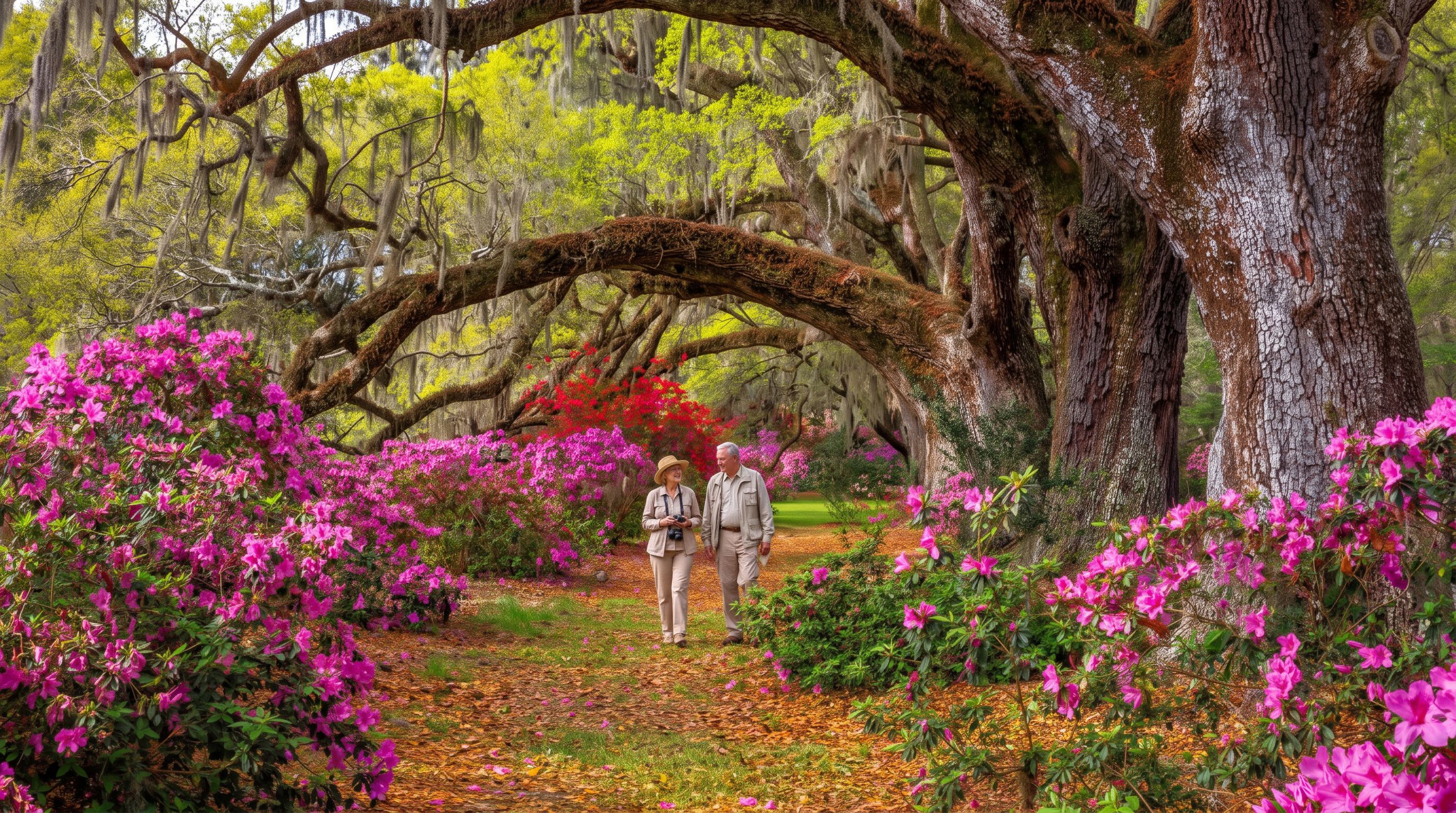
Charleston's garden season peaks in spring. Magnolia Plantation and Gardens is reported to have its main azalea display from late March through April, with the strongest azalea showing roughly mid-March to early April. That bloom pulls the year's heaviest garden crowds, so book accommodation and timed visits well ahead.
Spring is identified as Charleston's busiest tourist season, and the garden calendar explains much of it. For thinner crowds, mid-April to mid-May is preferable to the busiest late-March and early-April dates. If gardens matter more than solitude, the main spring-bloom period at Magnolia Plantation and Gardens brings the highest demand, as Charleston Visitor's trip-planning pages note.
Winter has its own quiet interest. Southern Living reports winter garden interest, including camellias, during the December to February period. That makes a January or February visit a reasonable choice for travellers who value low prices and few visitors over flowers at their peak.
When are the crowds at their worst?
Spring is the busiest season, with April and May among the busiest periods downtown. Easter, the Charleston Festival and the Cooper River Bridge Run can make April particularly heavy. Autumn brings a second busy stretch, and September through November remains a recognised high-season period in some tourism reporting.
The crowd data is patchy and sometimes contradictory, so treat single percentages with care. The Avoid Crowds analysis placed March around the middle of the annual crowd range, September busier than about 40% of the year, November busier than about 32%, and December third-quietest at about 24%. January is described as the quietest month, with the typical day busier than only 8% of the year, and February busier than about 15%.
Late August may be quieter after schools return, but heat and humidity can make extended walking uncomfortable. Crowds generally start thinning after Labor Day in September. Charleston travel guidance describes November 1 to the Tuesday before Thanksgiving as a particularly useful shoulder period, after October crowds have declined.
Festivals drive their own surges, and those are covered in our separate culture guide rather than here.
How walkable is downtown Charleston in the heat?
Charleston supports substantial walking, but a daily total of four to five miles is realistic only for travellers comfortable with uneven historic surfaces and frequent stops. Fodor's specifically warns about cobblestone streets and suggests a pedicab, horse-drawn carriage or bicycle if mobility is an issue.
A Reddit r/Charleston trip report from February 14, 2023, by travellers aged 55 and 62 described Charleston as "an excellent city for walking" and reported covering roughly 4.5 miles each morning, including waterfront routes, sometimes in rain. Cruise Critic reports from travellers in their 50s describe walking from the cruise port toward the Pineapple Fountain and the market.
In warm months, plan long walks for mornings. A Fodor's contributor recommended staying centrally in the historic district so you can return to the hotel during the hottest part of the day. For a first visit, one Fodor's contributor found four days sufficient for the historic area, Fort Sumter, a plantation and some shopping; another recommended three to five full days.
Accessibility detail varies by property and is not documented citywide. The Charleston Museum states that manual and electric wheelchairs are available free of charge on a first-come, first-served basis and are permitted throughout the museum and historic houses. The South Carolina Historical Society Museum is identified as publishing accessibility information, but the specific arrangements are not stated. Our guide to how accessible Charleston is for older travellers covers the question in more depth.
What should older travellers plan around?
Stay central so you can rest during the hottest hours, book the mild months early, and carry a rain plan whatever the season. Expect rain and changeable conditions in spring and fall, even when temperatures are ideal. Parking and street restrictions are worth checking before you drive into the historic district.
The City of Charleston publishes several practical rules for drivers. Free parking is available at city-owned garages, lots and meters for vehicles displaying a disability placard or plate. There is no street parking on King Street between Spring and John Streets from Thursday to Saturday, 6 p.m. to 3 a.m.; use Midtown or Marion Square during those hours. The lost-ticket fee in city garages is $50. Restrooms may be locked and available on request.
Some harbour cruises and plantation tours reduce departures or operating hours from December through February. Some attractions may operate shorter winter hours in December, so verify schedules before booking.
Our guide to health, pharmacies and peace of mind in Charleston sets out what to arrange before you travel.
Where should I stay, and does the season change it?
A central base in the historic district suits the mild-season visitor best, because it lets you retreat during the hottest part of the day. In winter, the same central position puts you close to the quietest downtown exploring.
Guest feedback offers some practical signals. Several downtown Charleston hotels are praised for quiet rooms and excellent service, but street-facing rooms, especially near King Street, can be unsuitable for light sleepers, according to Tripadvisor reviews read in November 2026. That is planning information rather than a verdict: ask for a room away from the street if you sleep lightly. Our guide to the quietest hotels in Charleston for light sleepers goes further.
Rates are indicative and vary by season and booking channel. Winter is described as offering lower lodging rates, and the holiday period in December can bring a temporary price increase. Book the spring bloom weeks and the October window early, because demand in both is well documented.
How many days do you need, and when should they fall?
Allow roughly four full days for a first visit, or three to five for a broader one. Place those days in mid-April to late May or late September to late October if comfortable walking weather matters most, and in January or February if low crowds and lower rates matter more.
A four-day visit in a mild month lets you spread the walking across mornings and keep afternoons light. In July or August, the same four days need to start earlier and pause at midday. In winter, the days are shorter but the streets are quieter, and Fodor's forum participants describe Charleston as less crowded in winter and comfortable for walking, though conditions can range from sweater weather to very cold spells.
Food is part of any Charleston itinerary, and the seasons shape what is on the table. Our guide to what to eat in Charleston covers the Lowcountry kitchen separately.
Is Charleston warm all year?
No. Charleston is mild rather than uniformly warm. January average highs sit around 59 to 60°F and July averages about 88°F, so the city swings nearly 30 degrees between its coldest and warmest months. Winter evenings can be cool, and summer afternoons can be oppressive.
That range is exactly why the timing question matters so much. A January visit can be pleasant for walking in a coat, and a July visit can be exhausting by mid-morning. The published monthly averages give you the full picture, and the National Weather Service station at North Charleston publishes the underlying normals for anyone who wants the detail.
The practical answer for travellers aged 50-70 is to treat Charleston as a three-season walking city. Spring and autumn are the comfortable core, winter is the quiet bargain, and summer is for early starts and indoor afternoons.


