
The Amalfi Coast has no airport and no railway of its own, so every arrival involves a gateway city and a final leg by road or sea. For travellers aged 50 to 70, the planning question is not just which route is cheapest, but which route spares your energy for the coast itself. The good news is that the choices are clear, and the right one depends almost entirely on where you are staying and how much luggage you carry.
Naples International Airport (NAP) sits about 60 kilometres from the coast and remains the usual point of arrival for most visitors. Salerno Costa d'Amalfi Airport reopened to air traffic on 1 July 2024 and now offers a faster alternative for reaching the Amalfi-area towns, with Airlink connecting the airport to Salerno station and local buses continuing to Amalfi, Vietri, Maiori and Minori. Whichever airport you choose, the pattern is the same: reach Sorrento or Salerno first, then continue by ferry, bus or private transfer to your final town.
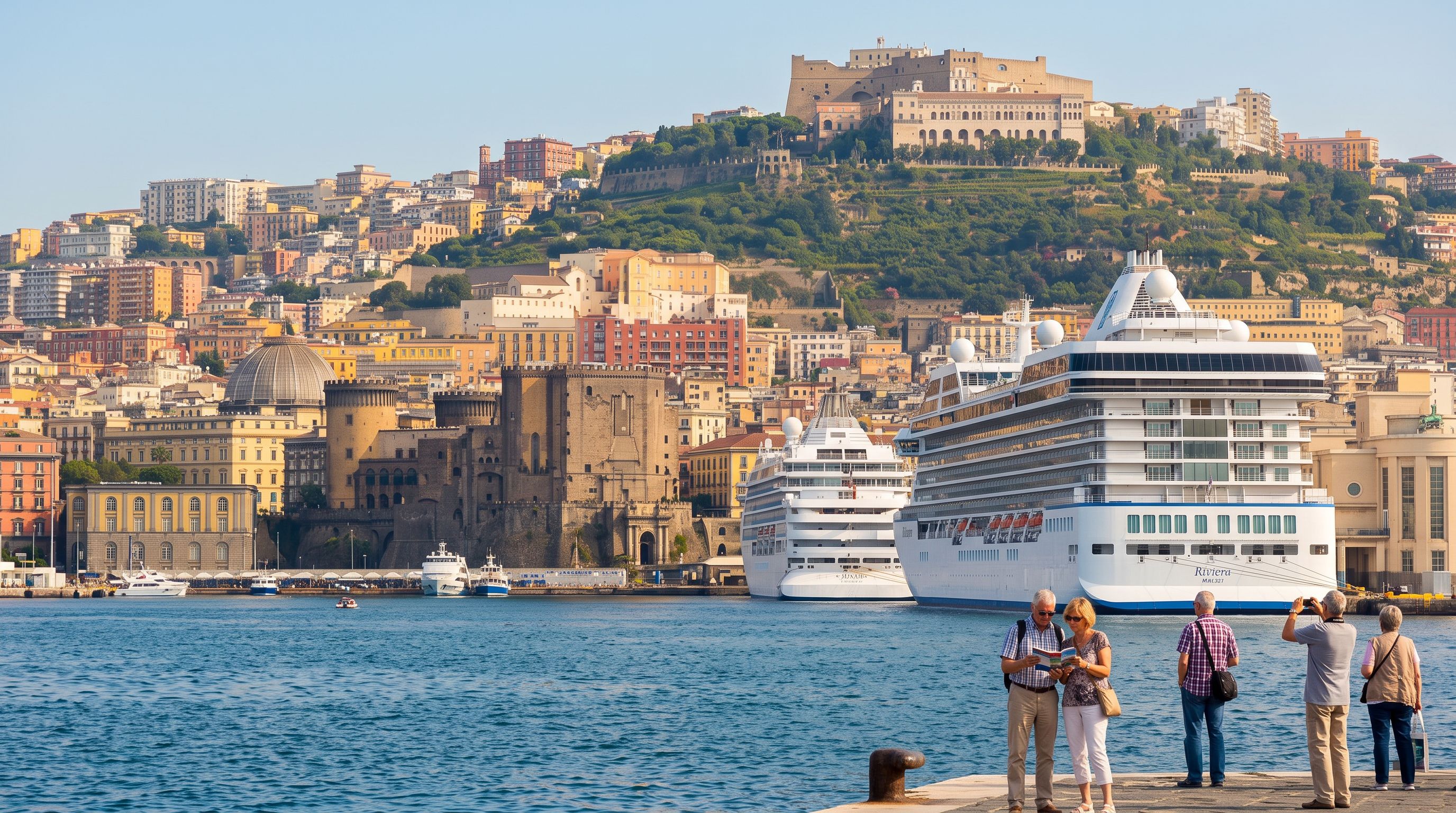 AI-edited
Which airport should I fly into?
Naples International Airport is the main gateway for the Amalfi Coast, about 60 kilometres away, while Salerno Costa d'Amalfi Airport, reopened on 1 July 2024, is closer for the eastern towns. Choose Naples for flight choice and connections; choose Salerno for a shorter final transfer if your airline serves it.
Naples International Airport (Capodichino, NAP) handles the vast majority of international flights and offers the widest range of onward connections. From the airport, you face a transfer of roughly 60 to 70 minutes by road to most coastal towns, assuming clear roads and no traffic delays. The route follows the A3 Autostrada before joining the SS163 coastal road, a winding stretch that demands attention from any driver.
Salerno Costa d'Amalfi Airport is the newer option. According to the airport's published information, Airlink connects the airport with Salerno station, and local operators and buses continue to Amalfi, Vietri, Maiori and Minori. The airport's advantage is geographical: Salerno sits at the eastern end of the coast, so the road journey to Amalfi town is shorter than from Naples. The trade-off is that flight options are more limited, and you will still need to connect onward from Salerno.
What are my train options from Naples?
Two rail gateways serve the coast: Sorrento to the west and Salerno to the east. The Circumvesuviana train from Naples reaches Sorrento in about 1 hour 10 minutes, while regional trains from Napoli Centrale reach Salerno in 40 to 60 minutes. Neither line reaches the coastal towns directly.
The Circumvesuviana service departs from Napoli Garibaldi station, located below Napoli Centrale, and arrives in Sorrento in about 1 hour and 10 minutes according to Visit Napoli's transport guide. This is the western gateway, best suited for travellers heading to Positano or the Sorrento peninsula. The train runs roughly every half hour, and the first departure is between 05:36 and 05:39 with the last around 22:14.
A seasonal alternative is the Campania Express, a tourist train on the same Naples to Sorrento route running roughly mid-March through October. It costs more than the commuter service but is less crowded, which matters when you are managing luggage. For the eastern approach, regional trains from Napoli Centrale reach Salerno in 40 to 60 minutes, with fares from about €6. Faster high-speed trains cover the same corridor in about 37 minutes with fares from about €20.
There is no direct train to any Amalfi Coast town. Whichever gateway you choose, you will transfer to a bus, ferry or private car for the final leg. The closest rail station to Amalfi itself is Vietri sul Mare on the Naples to Salerno local line, but it still leaves you with a bus connection to the coast.
Should I aim for Sorrento or Salerno?
Choose Sorrento for Positano and the western coast; choose Salerno for Amalfi town itself. Salerno is generally the faster rail gateway for Amalfi, while Sorrento suits travellers who prefer a flatter base with an elevator to the seafront before continuing by ferry or bus.
The decision between Sorrento and Salerno shapes your whole journey. Sorrento sits at the western end of the coast road and is the natural gateway for Positano, which lies about halfway along the SS163. Salerno anchors the eastern end and offers the quickest overland route to Amalfi town: a Trenitalia train to Salerno followed by the SITA bus takes about 1 hour 15 minutes for the bus leg alone, according to published route guides.
For summer travel, one published recommendation is to take the train from Naples Centrale to Salerno, then a ferry to Amalfi. This avoids the winding coast road entirely and is rated as more comfortable for luggage than the bus alternative. The Circumvesuviana to Sorrento option remains the western-end alternative, particularly if your accommodation is in Positano or you plan to explore the Sorrento peninsula first.
Sorrento is often recommended as the easiest public-transport base because it reduces complications. The town has flat areas and an elevator down to the seafront, which helps if you are staying near the water. Amalfi's flat area sits at water level, so arriving by ferry can place you closer to your hotel than arriving by road.
How does the ferry option work?
Ferries from Naples' Molo Beverello port serve Sorrento, Positano and Amalfi mainly from April to October, with travel times between 40 minutes and 1.5 hours depending on destination. Tickets range from €15 to €25 one way. The ferry avoids the winding coast road entirely.
The ferry is the route that feels most straightforward once the season allows. From Molo Beverello in Naples, ferries run to Sorrento, Positano and Amalfi, with the fullest timetables in high summer between June and September. Travel times vary by destination and operator, commonly in the 40 to 90 minute range. The service is seasonal, running mainly from April to October, and can be cancelled in rough seas.
To reach the port from the airport, take the Alibus for €5 to the port area, or use metro Line 1 to Municipio station for the quickest access to Molo Beverello, then walk about 5 minutes to the docks. Arrive at least 20 minutes before departure. The ferry allows a suitcase and a carry-on per passenger, though excessive or oversized luggage may incur additional fees.
Travellers who have used both road and sea routes consistently report that the ferry feels more relaxing. One account from July 2022 describes the ferry from Amalfi back to Naples as much more relaxing and enjoyable than the earlier land transfer. The trade-off is timing: ferries do not run year-round, and if the sea is rough, service can be suspended. For late arrivals or winter travel, the ferry is not a reliable option.
Is a private transfer worth the cost?
For travellers aged 50 to 70 arriving with luggage, a pre-arranged private transfer is repeatedly described as the least stressful option from Naples airport. Published prices range from about €70 to €190 depending on vehicle, distance and provider, with several reports clustering around €150 to €160 for the run to Positano.
Private transfers provide direct, comfortable and time-efficient travel from Naples to any Amalfi Coast destination, typically priced between €70 and €120 according to Visit Napoli's transport guide, which notes the price depends on vehicle type and passenger number. Other published sources report higher figures, with typical one-way prices for Naples airport to Positano or nearby towns clustering around €120 to €190.
The case for a private transfer strengthens with luggage. Public transport on the coast involves stairs, cobbles and crowded buses, and one published route comparison rates the train-plus-bus option as low comfort and difficult for luggage. A private car takes you door to door, and drivers who know the SS163 handle the winding road while you watch the scenery.
If you choose a taxi instead of a pre-arranged transfer, use only official drivers. The people clustered immediately outside Naples airport arrivals are not usually official taxi drivers, according to published travel guidance. Official taxis with set prices are the safest bet. For groups of two or more with luggage, a private transfer is often the best arrangement, and many travellers say they would skip the taxi hunt and pre-arrange a car after arrival.
What about the SITA bus from Sorrento or Salerno?
SITA buses connect Sorrento with Positano, Amalfi and the towns along the SS163, and also run from Salerno to Amalfi. The Salerno to Amalfi bus takes about 1 hour 15 minutes. Fares are low, around €3 to €5, but the journey can stretch to 1.5 to 2 hours in peak season traffic.
The bus is the budget option and the only public transport that reaches the coastal towns themselves. From Sorrento, SITA buses run along the coast road through Positano to Amalfi. From Salerno, the bus follows the SS163 westward to Amalfi. Both routes share the same challenge: the narrow, winding coast road, which slows travel in peak season.
For ticketing, a COSTIERASITA 24-hour pass covers coast buses at €10, or €12 including Positano's local buses. The pass pays for itself on the second leg, according to published guidance, though no senior discount is documented for it. The Unico Campania app provides real-time bus and train data and allows ticket purchase.
Luggage space on buses is limited. Buses generally allow one suitcase and a carry-on per passenger, but space can be tight, so travelling light is wise. Carry small change for bus tickets since some drivers do not accept cards. Validate your ticket before boarding where machines are provided, as conductors frequently check during the journey.
For travellers who tire easily, the bus is the most demanding option. The journey from Naples airport to the coast by public transport can take 3 to 4.5 hours in total, and published guidance notes that luggage is difficult on the train-and-bus combination. If you are staying in a town with steep approaches, factor in the walk from the bus stop to your accommodation.
How challenging is the coast road itself?
The SS163 coastal road is narrow, winding and steep in places, with hairpin bends and sheer drops. Driving times assume free-flowing traffic, which rarely exists in summer. The road demands full attention, and many travellers prefer to leave it to a professional driver or avoid it by ferry.
The coast road between Sorrento and Salerno is the only overland route connecting the coastal towns, and it is not for the faint-hearted. The route is approximately 60 to 80 kilometres depending on your destination, with steep, winding sections along the coast. In summer, tourist traffic and narrow passing points slow progress considerably.
Road distances from Naples airport give a sense of scale: Amalfi lies 61 kilometres away, about 60 minutes with clear roads; Positano is 60 kilometres, about 70 minutes with clear roads; Ravello is 58 kilometres, about 60 minutes with clear roads. These figures assume free-flowing traffic with no stops, which is rarely the reality in high season.
The road has its hazards. A landslide closed the road in both directions in early 2026 while clearance and safety checks were carried out. A new seasonal road police post in Maiori was reported for 2026 to improve safety along the SS163 in summer. For travellers who prefer not to drive, the alternatives are clear: ferry where possible, or a professional driver who knows the road.
Renting a car is possible, with prices generally starting around €30 to €40 per day depending on vehicle and company. But parking in the coastal towns is difficult, and the road demands constant attention. Many travellers over 50 conclude that renting a car on the Amalfi Coast adds stress rather than freedom.
How should I handle luggage on the coast?
Luggage is the single biggest practical challenge on the Amalfi Coast. The coastal towns are built on slopes with stairs, cobbles and narrow lanes, and no source documents step-free access from transport stops to most hotels. Pack light, use a private transfer where possible, and confirm luggage assistance with your hotel before arrival.
The terrain of the coast is steep, stepped and cobbled. Published descriptions of walks between Amalfi and Atrani mention cobblestone streets, stairs and gentle slopes. The coastal towns themselves are built into hillsides, so even a short distance from a bus stop to a hotel can involve significant climbing.
For public transport, luggage allowances exist but space is limited. Ferries allow a suitcase and a carry-on, with possible fees for oversized items. Buses allow one suitcase and a carry-on, but space can be tight. The Circumvesuviana train has no dedicated luggage areas, and you will manage your bags through station stairs and crowded carriages.
Reviews of Amalfi hotels repeatedly flag stairs, small lifts and luggage handling as practical problems. Some hotels have no one to help with luggage, and guests describe exhausting climbs with suitcases. If mobility is a concern, ask your hotel directly about luggage assistance and the number of steps from the nearest transport stop before you book.
Are there senior discounts on transport?
No senior or over-65 fare is documented for the Amalfi Coast transport operators covered in this guide. The COSTIERASITA 24-hour bus pass costs €10, or €12 including Positano's local buses, but no reduced rate for older travellers is published. Ask at ticket offices, as unpublished concessions may exist.
The published materials for SITA buses, coastal ferries and the Circumvesuviana train do not document any over-65 discount or reduced fare. The COSTIERASITA 24-hour pass for coast buses is priced at €10, or €12 including Positano's local buses, and the pass pays for itself on the second leg. No senior concession for this pass is documented.
For the Circumvesuviana and regional trains, standard fares apply. The regional train from Naples to Salerno costs from about €6, while high-speed services start at about €20. Ferry tickets range from €15 to €25 one way depending on destination and operator. None of these published fares mention an age-based reduction.
This does not mean concessions do not exist. Italian transport operators sometimes offer unpublished discounts at ticket offices, and European rail passes may apply to some services. Ask directly when buying tickets, and carry identification with your date of birth in case a discount is available.
What health facilities are along the route?
Each main coastal town has at least one pharmacy with regular hours, typically 8:30 AM to 1:00 PM and 4:00 to 8:00 PM, with many staying open continuously through the day in tourist-heavy areas. The nearest hospital is the Presidio Ospedaliero Costa d'Amalfi in Ravello, a first-response facility.
Pharmacies are the most accessible health resource along the coast. Positano, Praiano, Amalfi, Ravello, Maiori and Minori each have at least one pharmacy with regular hours, typically 8:30 AM to 1:00 PM and 4:00 to 8:00 PM. In more tourist-heavy areas, many pharmacies stay open continuously through the day. In Amalfi itself, Farmacia degli Arsenali and Farmacia del Cervo are named in the town's useful-numbers page, though exact opening hours are not documented there.
For care outside pharmacy hours and on public holidays, the guardia medica covers the entire coast. In Amalfi, the Guardia Medica can be reached at 089.871272. For emergencies, dial 118 for medical help or 112 as the general European emergency number. An Amalfi resource also lists 113 for police and 115 for fire.
The nearest hospital is the Presidio Ospedaliero Costa d'Amalfi in Ravello, described as a first-response facility. Serious cases are transferred to larger hospitals in Sorrento, Salerno or Naples. In summer, rescue teams often respond by sea or helicopter, which can be faster than road ambulance on the winding coast road.
What is the smoothest arrival plan?
For a stress-free arrival, book a private transfer from Naples airport to your hotel door. For a budget arrival, take the airport shuttle to Sorrento, then a SITA bus along the coast. For a scenic arrival in season, take the Alibus to Molo Beverello and catch a ferry. Avoid late arrivals by public transport.
The smoothest arrival depends on your budget and destination, but the principles are consistent. A pre-arranged private transfer from Naples airport takes you directly to your hotel, handles your luggage and avoids the uncertainty of connecting services. This is the option most recommended for travellers who have just flown and face a winding road ahead.
For the budget traveller, the fewest-transfer public option is the Curreri Viaggi airport shuttle from Naples airport to Sorrento, which takes about 80 minutes and costs €10 one way or €18 return. The ticket desk sits outside Terminal 1 arrivals, open 06:30 to 20:30. From Sorrento, continue by SITA bus along the coast to your destination.
For a scenic arrival between April and October, take the Alibus from the airport to the port for €5, then a ferry from Molo Beverello to your coastal town. The ferry avoids the winding road entirely and delivers you to the water level, where many hotels sit. Remember that ferry timing is limited and services can stop around 7 PM in some places.
If you arrive late, consider an overnight stop in Naples rather than forcing a same-day connection. Public transport thins out after evening hours, and the coast road is more demanding in the dark. Many travellers say they would overnight in Naples if arriving late, rather than risk a stressful late connection.
For a fuller picture of what awaits once you arrive, see our complete guide to the Amalfi Coast for travellers over 50, which covers the towns, the pace of life and how to plan your days. If you are still choosing where to base yourself, our guide to Amalfi Coast hotels when comfort comes first addresses the practical questions of stairs, noise and location that matter after a long journey.
The coast's famous gardens and villas of Ravello reward those who plan their approach carefully, and the town's hilltop position is part of its charm once you are there. For those who prefer to let someone else handle the logistics entirely, the region's spa hotels often arrange transfers as part of the experience.
Whichever route you choose, the planning principles remain the same. Book your transfer before you fly, pack light, confirm luggage assistance with your hotel, and allow more time than you think you need. The Amalfi Coast rewards patience and punishes haste, and the travellers who enjoy it most are those who arrive rested and ready for the hills.
For detailed transport planning, consult the Visit Napoli transport guide covering ferries, buses, trains and private transfers, which provides the most complete published overview of the options. For airport shuttle details to Sorrento, the Amalfi Coast boats getting-there page documents the direct shuttle service and the Circumvesuviana alternative from Naples station.


