
Located in the heart of the Tyrolean Alps, the Zillertal is a valley of quick transitions: sun to shadow, paved promenade to gravel path, warm afternoon to chilly evening. For travellers aged 50 to 70, packing well here is less about fashion and more about comfort, safety, and the freedom to enjoy every hour outdoors without a second thought. This guide cuts through the generic advice and tells you exactly what to bring for summer and winter, based on real conditions, local transport, and the experiences of guests who have walked these paths before you.
 AI-edited
Why do layers matter more in the Zillertal than in other alpine regions?
The Zillertal’s valley-floor microclimate and rapid elevation changes mean you can start a morning in T-shirt warmth and face sleet by lunch. Packing in layers—not one heavy coat—lets you adapt without carrying bulk, and it is the single most practical strategy for comfort across the valley’s varied altitudes.
The Zillertal stretches from the Inn Valley floor at around 530 metres up to the Hintertux Glacier at 3,250 metres. That is a vertical range of just over 2,700 metres, and with it comes a weather system that can shift in under an hour. A sunny morning in Zell am Ziller can turn into a windy, damp afternoon on the Penken lift. The most detailed packing list published in the valley comes from Mountain Sports Zillertal, an outfitter based in Hollenzen near Mayrhofen, and it leads with layering and moisture-wicking fabrics rather than heavy single garments. In practice that means a fleece under a rain shell rather than a winter jacket carried through a summer week.
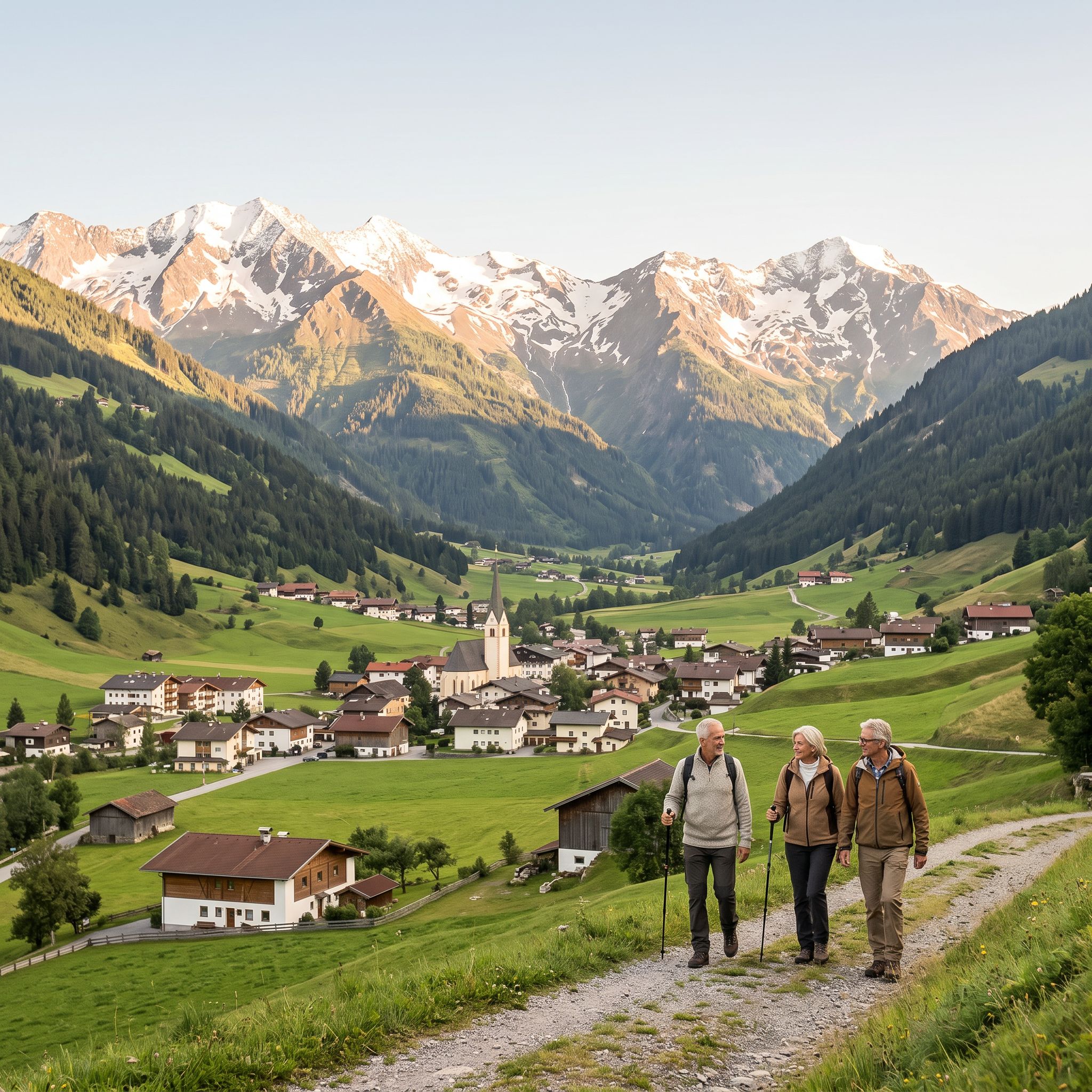
For travellers over 50, the practical benefit is clear: you can add or remove a layer without stopping to change entirely. A lightweight packable down jacket or a fleece mid-layer, paired with a windproof and waterproof outer jacket, covers morning chill, midday sun, and sudden afternoon showers. A breathable rain jacket or poncho is essential rather than optional, and summer storms in the valley tend to build in the afternoon rather than the morning. Sun protection is equally important—mountain UV is strong even when temperatures are cool, so a sun hat, sunglasses, and sunscreen are non-negotiable year-round.
What should I pack for a summer trip to the Zillertal?
For summer (June to September), pack sturdy waterproof hiking boots that cover the ankle, thin hiking trousers, a fleece or packable down jacket, a breathable rain shell, sun protection, swimwear for hotel spas, and a lightweight daypack for valley-floor walks and cable-car outings.
Summer in the Zillertal is the season of long daylight and high alpine pastures, but it is not reliably warm. At the GeoSphere Austria station in Mayrhofen, 640 metres above sea level, the mean daily maximum over the 1991–2020 reference period is 22.8°C in June, 24.2°C in July, 23.0°C in August and 18.3°C in September, with nights averaging 9°C to 13°C. Higher up the picture changes sharply: at the Patscherkofel station, 2,251 metres up in the same part of Tyrol, the July and August daily maximum averages only 12.6°C. Rain is frequent—Mayrhofen sees around 15 days a month with at least a millimetre in July and August—but thunderstorms are not daily: the same records show about five thundery days in July and four in August. The hiking packing list from Mountain Sports Zillertal in Mayrhofen recommends functional underwear, a fleece or insulated mid-layer, a wind- and waterproof jacket, gloves, and a hat or headband—even in summer.
Footwear is the most important decision. For valley-floor walks a sturdy pair of water-resistant walking shoes is sufficient. The riverside route between Zell am Ziller and Mayrhofen is signposted as the Zillerpromenade; the Zillertal Arena tourist board describes it as an easy walk along the Ziller, eight kilometres from the bridge in Zell am Ziller to Mayrhofen, and suitable for families with a pushchair. That is not the same as a certified step-free path: the Mayrhofen-Hippach tourist board lists the Schwendauer Pfad and the Kunstfluss as barrier-free hiking routes, with the Easy Trail and the Stilluptal path only partly so. For any path that leaves the valley, choose boots that support the ankle, protect from moisture, and give secure footing on scree and rough ground. Fabric or mesh trainers are the common mistake—one damp morning and they stay wet for the rest of the trip.
Swimwear is essential. Nearly every hotel in the Zillertal, from the Hotel Neuhaus in Mayrhofen to the Alpine Hideaway Zillertalerhof, features a spa with indoor or outdoor pools, saunas, and steam rooms. Guests consistently praise these wellness areas for post-walk recovery. Pack a lightweight swimsuit and a quick-dry towel if your hotel does not provide one. For the sauna, note that local tradition requires nudity in the sauna area—this is standard across the region, and most hotels post clear signage.
What do I need for a winter visit to the Zillertal?
For winter (December to April), pack waterproof insulated boots with good traction, thermal base layers, a fleece or wool mid-layer, a windproof and waterproof jacket and trousers, gloves, a warm hat, a neck gaiter, sunglasses or goggles, sunscreen, and a lightweight daypack. Ice grips for your boots are a wise addition for icy village paths.
Winter in the Zillertal is cold, snowy, and often icy underfoot. The Zillertal Arena runs its 2026/27 winter season from 4 December 2026 to 11 April 2027, while the Hintertux Glacier operates 365 days a year between 1,500 and 3,250 metres. But even if you do not ski, the village streets, promenades, and winter walking paths demand serious footwear. Mayrhofen has snow lying on the ground on about 26 days in January, 23 in February and 20 in December, averaged over 1991 to 2020, so the single most important item is a pair of waterproof, insulated boots with a grippy sole. Trainers do not cope with packed snow; a deep tread is what separates a pleasant walk from a miserable slip.
Layering is even more critical in winter. Start with a thermal base layer (merino wool or synthetic), add a fleece or wool mid-layer, and finish with a windproof and waterproof outer jacket and trousers. Functional underwear, ski socks, a warm hat, gloves, and a scarf or neck gaiter complete the set. For older travellers, packing one extra pair of socks and a spare warm layer is a practical hedge against cold and damp slowing you down.
Ice grips—simple rubber and metal devices that slip over your boots—are a small investment that transforms winter walking. The Zillertal’s village paths are regularly cleared, but patches of black ice can form overnight, especially on cobbled streets and near lift stations. A pair weighs almost nothing and fits in a jacket pocket. Walking poles help too on icy or uneven ground, and both are usually available to rent from the ski shops near the lift stations if you would rather not carry them from home.
Which boots are best for the Zillertal’s terrain?
For the Zillertal, choose a boot that is waterproof, insulated, ankle-supporting, and has a grippy sole. For summer valley walks, a sturdy water-resistant walking shoe is enough. For winter or mountain hikes, opt for a mountaineering-style boot with a deep tread and ankle protection.
The Zillertal’s terrain varies dramatically. On the valley floor, the Zillerpromenade and other riverside paths are flat, well-maintained, and suitable for comfortable walking shoes. But as soon as you leave the valley, the ground becomes steeper, rougher, and less predictable. Cobblestones, gravel, scree, and wet grass are common on village streets and mountain paths alike. The Mayrhofen outfitter Mountain Sports Zillertal puts ankle-high hiking boots with a well-profiled sole at the head of its hiking list, ahead of everything else in the pack.
For winter, the choice is simpler: insulated, waterproof boots with a deep, multi-directional tread. Gaiters are a useful addition if you plan to walk through deeper snow, as they keep snow out of your boot tops and your socks dry. Whatever you choose will stay on your feet most of the day—hotel to lift, lift to restaurant, restaurant back to hotel—so eight hours of comfort matters more than the label.
For travellers who prefer not to hike but still want to explore the valley, a pair of sturdy, waterproof walking shoes with good grip is sufficient for the flat promenades and village centres. The key is to avoid fabric or mesh shoes in any season—they absorb moisture and stay wet, which is uncomfortable and can lead to blisters.
How do I get around the valley with my luggage?
The Zillertalbahn runs every half hour from Jenbach to Mayrhofen with part-low-floor carriages, but it is not blanket barrier-free: the VVT timetable shows for each service whether a wheelchair space is on board. Free ski buses connect villages to the ski areas, and staying on the valley floor near transport hubs keeps walking on steep ground to a minimum.
The Zillertalbahn runs the length of the valley from Jenbach to Mayrhofen, with frequent stops at Zell am Ziller, Kaltenbach, and other villages. The operator describes its fleet as comfortable part-low-floor carriages with a conductor on every train, and the trains run every half hour on the 32-kilometre line; Jenbach to Mayrhofen takes about 50 minutes. The Tyrol transport authority VVT is more precise about access than any blanket promise: its timetable shows for each service whether it is a low-floor train and whether a wheelchair space and an accessible toilet are on board, and the wheelchair space has to be booked by phone on +43 5 17 17 5. If you are heading up the mountain, the Mayrhofner Bergbahnen state that all four of their valley cable cars—Ahornbahn, Penkenbahn, Horbergbahn and Möslbahn—offer step-free boarding, with gondolas slowed at the entry point. For winter trips, the Zillertal Arena operates free ski buses that connect surrounding locations directly to the ski resort, and with a valid ski pass you can use the ski bus and public transport free of charge in ski clothing or with winter sports equipment.
For older travellers, the most useful strategy is to stay on the valley floor and use transport hubs. The region’s alpine terrain becomes steep and less suitable for longer walking, and village streets can be uneven or steep. If you are staying in a hotel that is a short walk from the train station or bus stop, you will have the easiest time. The Five Days in the Zillertal itinerary recommends basing yourself in Mayrhofen or Zell am Ziller for the best balance of access and quiet.
Luggage should be lightweight and wheeled. Avoid large, heavy bags—you will likely need to carry them up a flight of stairs at your hotel or lift them onto a train rack. A small daypack for daily outings is essential, and a foldable tote bag is useful for groceries or souvenirs.
What health and safety items should I pack?
Pack a small first-aid kit with blister plasters, your regular medication, sunscreen with high SPF, lip balm, and a headlamp for shorter winter daylight. Save the local emergency numbers before arrival: 144 for rescue, 140 for mountain rescue, and 1455 for the 24-hour pharmacy hotline.
The Zillertal is a safe destination, but its alpine setting requires basic preparedness. An acute-care practice in Fügen sits at Karl-Mauracher-Weg 38 on +43 5288 64488; it is a specialist practice for general and family medicine that takes holiday guests with acute complaints without an appointment, and the St. Pankraz pharmacy is two doors away at number 36. The official Austrian list of emergency numbers gives 112 for the European emergency number, 144 for rescue or ambulance, 133 for police, 140 for mountain rescue, 141 for the out-of-hours doctor and 1455 for pharmacy services. For practical planning, save the local doctor, 144, 140, and 1455 before arrival, since the valley includes both village streets and mountain areas where response needs differ.
Sun protection is often underestimated in the mountains. The alpine sun is strong even on overcast days, and snow cover in winter reflects UV rays, increasing exposure. Pack a high-SPF sunscreen, lip balm with SPF, and a wide-brimmed hat or cap. Sunglasses or ski goggles are essential for both sun and wind protection.
For winter, a headlamp is a practical addition. Daylight is short—the sun sets shortly after 4:20 PM in mid-December, earlier still behind the valley walls—and a headlamp makes evening walks to dinner or the bus stop safer and more comfortable. A thermos for hot tea or coffee is also appreciated on cold days, and a reusable water bottle is useful year-round.
What type of luggage works best for the Zillertal?
A lightweight, wheeled suitcase with four spinner wheels is ideal for the Zillertal’s train platforms and paved village streets. A medium-sized bag (55–65 cm) is easier to handle on lifts and stairs than a large one. Pair it with a small daypack for daily outings.
The Zillertal is a valley-based destination, and you will move between train stations, bus stops, and hotels. A large, heavy suitcase becomes a burden on stairs, cobblestones, and train racks. A medium-sized suitcase with four spinner wheels rolls easily on smooth surfaces and is light enough to lift when needed. A foldable duffel bag is a useful backup for extra purchases or as a laundry bag.
Your daypack should be lightweight and comfortable, with a capacity of 15–25 litres. It needs to carry your layers, rain jacket, water, snacks, sunscreen, and camera. Look for one with padded shoulder straps and a chest strap for stability. Walking poles can be strapped to the outside if needed.
For winter trips, a separate boot bag or a large tote for ski boots and helmet is practical if you are skiing. Many hotels offer boot rooms with drying racks, so you do not need to carry wet boots to your room. If you are still deciding when to travel, the Zillertal seasons guide sets out how the ski season, the summer and the quiet months between differ.
What should I leave at home?
Leave behind heavy “just in case” clothing, multiple pairs of shoes, and bulky toiletries. The Zillertal’s shops are well-stocked, and you can buy anything you forget. Focus on versatile, lightweight items that layer well.
One recurring warning from experienced alpine travellers is not to overpack heavy “just in case” clothing. Several forum posters say clothes are less of a problem than toiletries and extras, which “often weigh more than clothes.” Wear your heaviest items on the plane—your boots and jacket—and pack light layers underneath. You do not need a separate outfit for every evening; a clean base layer and a nice scarf or shawl dress up a simple look for dinner.
Leave behind multiple pairs of shoes. One pair of sturdy walking boots or shoes, one pair of comfortable evening shoes or slippers, and one pair of swimsuit flip-flops is enough. The Zillertal’s hotels provide bathrobes and slippers in most cases, so you do not need to pack those. Check with your hotel before you go.
Toiletries can be minimised. Most hotels provide shampoo, shower gel, and a hair dryer. Pack only what you need for the first night, and buy anything else at a local supermarket or pharmacy. The valley’s villages have well-stocked shops, and the larger towns like Mayrhofen and Zell am Ziller have pharmacies and drugstores.
Seasonal checklist: summer vs. winter
The two seasons share a spine—waterproof boots, a moisture-wicking base layer, an insulating mid-layer and a weatherproof shell—and differ mainly in weight and accessories. Summer adds sun protection and swimwear; winter adds insulation, ice grips, a headlamp and a thermos. The table below sets the two side by side.
| Item | Summer | Winter |
|---|---|---|
| Waterproof boots | Sturdy hiking boots (ankle support) | Insulated, waterproof boots with deep tread |
| Base layer | Lightweight merino or synthetic | Thermal merino or synthetic |
| Mid-layer | Fleece or packable down jacket | Fleece or wool sweater |
| Outer layer | Breathable rain jacket | Windproof and waterproof jacket + trousers |
| Accessories | Sun hat, sunglasses, sunscreen | Warm hat, gloves, neck gaiter, goggles |
| Special items | Swimwear, daypack, water bottle | Ice grips, headlamp, thermos, walking poles |
| Safety | First-aid kit, blister plasters, medication | First-aid kit, blister plasters, medication, power bank |
This table covers the essentials. For a deeper dive into the valley’s cultural calendar and quieter seasons, see The Zillertal Through the Year: Festivals and Quiet Seasons. For a full itinerary tailored to travellers over 50, the Five Days in the Zillertal guide offers a relaxed, transport-linked plan.
“Choose functional clothing that transports moisture well. Apply the multilayer principle and you will be able to react optimally to temperature fluctuations.” — from the hiking packing list Mountain Sports Zillertal in Mayrhofen publishes for its guests
Packing for the Zillertal is not complicated, but it requires thought. Focus on waterproof footwear, versatile layers, and sun protection. Leave the heavy coats and multiple shoe pairs at home. With the right bag and a smart packing list, you will spend less time worrying about your gear and more time enjoying the valley’s clean air, friendly villages, and spectacular mountain views.


