
Rome rewards long days of walking with sore feet and a full head, and the city's answer to that is a growing set of hotel spas and day spas built for exactly the kind of traveller who wants to see the Pantheon in the morning and be horizontal in a warm pool by late afternoon. For visitors aged 50 to 70 planning rest and wellness rather than nightlife, the useful question is not which spa is the most luxurious but which one publishes the details that matter: opening hours, treatment range, senior rates and, above all, how you actually get in and out of the water.
A handful of Rome properties document their accessibility and pricing in detail; several of the city's most celebrated spas publish almost nothing about mobility, booking terms or medical support. Michelin's Rome spa round-up names the Bulgari Hotel Spa, Six Senses Rome Spa, Hotel de Russie and the Amorvero Spa at Hassler Roma as the city's leading luxury spa options, and describes the wider scene as an elegant, luxe form of urban wellness. What follows separates what is documented from what is not, so you can book with your eyes open.
Which Rome spas actually document accessibility?
Two central Rome properties publish detailed accessibility information: the Romanico Palace Luxury Hotel & Spa, which states it is fully accessible in wheelchair and for guests with reduced mobility, and Trilussa Palace Wellness & Spa, which lists an elevator, wheelchair-accessible washroom, registration and concierge desks, restaurant, and a wheelchair-accessible path to the elevator.
Those two are the strongest documented matches in central Rome for travellers who need to know about lifts and step-free routes before booking. The Romanico Palace fact sheet goes further than most: it lists a stair-free path to the entrance, two elevators, two accessible rooms, accessible common areas, an accessible airport shuttle, a wheelchair-accessible lounge and a bathroom emergency pull cord. Expedia's listing for the property notes that accessibility requests should be made after booking through the reservation confirmation.
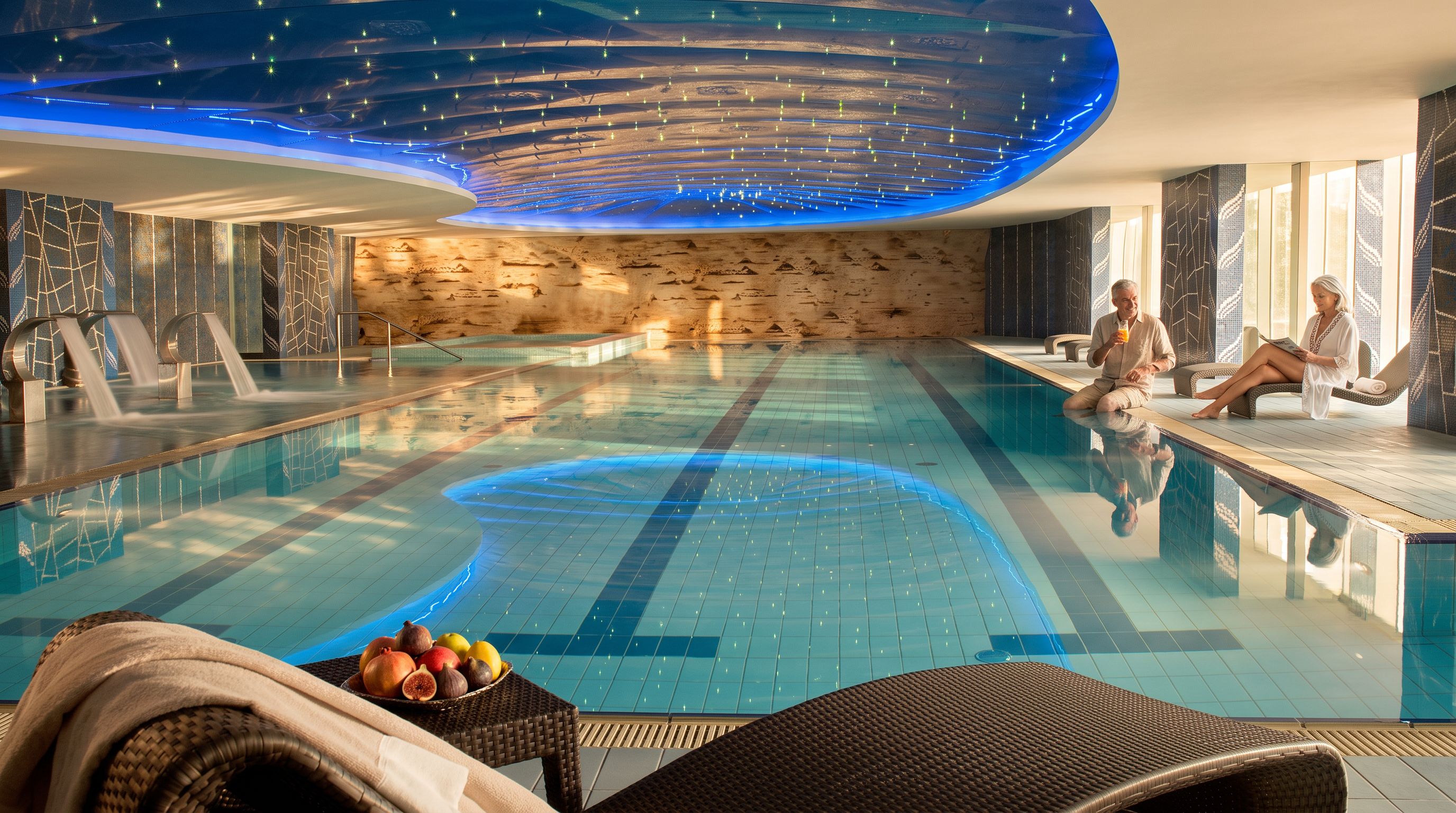
Trilussa Palace, in the Trastevere area, adds handrails in stairways and a well-lit path to the entrance to that list, and its spa is private, by reservation only, with treatment bookings accepted before arrival. For anyone who has ever stood at the edge of a hotel pool wondering how to get in, that level of published detail is worth more than any number of marble columns.
 AI-edited
What do Rome hotel spas cost, and are there senior rates?
Day access at Rome's hotel spas sits in a modest band: the Rome Times Hotel charges €30 per person per session for its wellness area, Finnish sauna and Turkish bath, and Hotel Artemide's Artemís Spa charges €30 for a 90-minute session, reduced to €24 before 2pm. Trilussa Palace publishes a 10% Over 60 discount.
Those figures come from the properties' own pages and are the clearest day-use pricing. The Rome Times wellness area is open 11:00 to 20:00, requires reservation at least 24 hours in advance, and admits guests aged 16 and over; guests who book direct on the official Tridente Collection websites receive 30 minutes of free access subject to availability. Hotel Artemide's spa runs daily 11:00 to 20:00 and stages Spa Night Celebration events from 20:30 to 23:00.
On senior pricing, Trilussa Palace is the outlier in the best sense. Its Over 60 Offer gives a 10% discount on the booked total and extras, and its Senior Offer, explicitly for guests over 60, applies the same 10% to the stay and to extras including bar, restaurant and wellness-centre use. Both are booked through the hotel's official site or directly with the hotel. Beyond that, no Rome-specific over-65 fare, reduced tariff or wellness pass appears. Rates generally are indicative and vary by season and booking channel.
Which Rome spas are best for rest and wellness rather than sightseeing?
Six Senses Rome is the strongest documented fit for a rest-focused stay: its spa opens 09:00 to 21:00, its Roman baths circuit runs 09:00 to 20:00 for guests aged 16 and over, and its fitness centre is open around the clock. Guest feedback consistently describes the baths as relaxing and well maintained.
The Roman baths circuit is the feature guests single out most often, and the hotel's own hours give a long window in which to use it. Reviews also note a herbal tea corner and treatments tailored through an arrival questionnaire, and describe the rooftop restaurant and bar as calm, with views over the city. Reservations there are recommended well in advance, and hotel guests are not guaranteed priority.
Two planning notes from guest feedback. Some rooms are small with unremarkable views, and the surrounding Via del Corso area is busy and noisy, so a room request away from the street side is worth making. As of September 2026, Nobu Hotel Roma holds a Google rating of 4.5 out of 5 from 413 reviews, and its Mizu Urban Spa offers six treatment rooms, a sauna, Turkish bath and relaxation area. Guests describe that spa as small but well equipped.
"You can feel the quality of the products and the expertise of the team, who tailor each experience in a highly personalized way. Your skin looks radiant, and above all, you leave with a deep sense of wellbeing." (Google, April 2026)
Which Rome spas have thermal or Roman bath circuits?
Several of Rome's luxury hotel spas build their offer around Roman-style bathing. Michelin notes that the Bulgari Hotel Spa captures the essence of Ancient Roman baths, and that Six Senses Rome offers Roman baths, saunas, hammams, a biohacking room, a beauty area and a yoga and meditation studio.
The same Michelin round-up describes the Hotel de Russie Spa as a 600-square-metre wellness centre with a hydrotherapy pool, sauna, Turkish bath and gym, open year-round. Following a €30 million renovation, that spa now includes five treatment rooms, two couples' suites, a saltwater pool with hydromassage jets, a sauna, a steam room and the Forte Vita Bar beauty space. The Amorvero Spa at Hassler Roma is listed with a sauna, Turkish baths, a fitness centre and a terrace overlooking the city skyline.
What none of those four entries documents is accessibility, booking method, cancellation terms or health provisions. That is not a criticism of the spas; it is simply what the material covers. If you need to know whether a pool has steps, a handrail or a hoist, the hotel does not publish it, and the only reliable route is to ask before you commit. Michelin's full Rome spa round-up is worth reading for the wider picture.
For a broader look at the city beyond its spas, see our Rome guide for travellers over 50.
What about thermal water outside the city?
Acque Albule, also known as Terme di Roma, near Tivoli, is the best-documented thermal site in the region. Its sulfur-type, hypothermal water is recommended by the site for respiratory, dermatological, rheumatological and rehabilitation conditions, with treatments delivered under an in-house medical team.
The facility offers an indoor sulfur-water pool, sauna, steam bath, relaxation areas, treatments, day spa access, thermal treatment courses and outdoor thermal pools in season. Thermal SPA admission is listed at €45 Monday to Friday and €50 on pre-holidays and public holidays. Treatment access begins with a GP prescription and an on-site medical admission appointment, and the site states that with a prescription from your GP you can take one course of treatment per year under the Italian National Health Service, paying only the standard co-payment where applicable.
Nearby, the four-star Victoria Terme Hotel sits within the Acque Albule thermal park, about 20 minutes from Rome, with 158 rooms and suites, a 3,000 m² wellness journey including an indoor sulphur-water pool, sauna, steam bath and relaxation areas, and four outdoor sulphur-water pools held at a constant 23°C. For the 2026 summer season the pool park is open daily from 09:30 to 18:00; out of season the indoor thermal pool stays open. Bagni di Tivoli railway station is a two-minute walk from the hotel, with direct trains to Roma Tiburtina. Treatment guests can book a special rate of 6 or 12 days on full board.
How do you get to Rome's spas, and how far are they?
Central Rome hotel spas are walkable from the main sightseeing districts, while the thermal sites sit outside the city. Bagni di Tivoli station is a two-minute walk from the Victoria Terme Hotel, with direct trains to Roma Tiburtina, putting central Rome roughly 20 minutes away.
Trilussa Palace offers an accessible airport shuttle and an airport shuttle on request from 07:00 to 20:00 at €70 per vehicle one-way, per its booking listing. The Victoria Terme Hotel runs no fixed-timetable shuttle but arranges private transfers with a driver to and from airports, stations and destinations in and around Rome on request.
One current caveat for anyone moving around the centre: Reuters reported 3,200 public construction projects underway in Rome in 2024, including major square, transport and station works tied to the Jubilee, which has meant closures, dust, fencing and route changes in tourist-heavy areas. A station serving the Spanish Steps was set to close for renovations, and restoration covers have appeared on fountains in Piazza Navona and outside the Pantheon. Build extra time into any cross-city transfer.
If your trip extends south afterwards, our Amalfi Coast walking guide for over-50s covers the terrain in detail.
When is the best time for a Rome wellness break?
April to June and September to October give the best conditions for a spa-and-rest trip, with mild temperatures for walking between appointments. January and February are the quietest months, while July and August are the hottest and busiest.
Rome has a Mediterranean climate, with average highs of about 18.8°C in April, 23.3°C in May, 28°C in June, 31°C in July and 31.4°C in August, according to ClimatestoTravel. Rainfall is lowest in summer and highest in autumn, at about 20 mm in July and 108 mm in November. The off-season is reported as November to February, except the Christmas and New Year holidays, per Rome's official tourism information on when to visit.
Rome's scale is worth keeping in mind when you choose your dates. Turismo Roma recorded 22.9 million arrivals and 52.92 million overnight stays in 2025, per the Lazio Bilateral Tourism Board, up from 51.4 million presences and 22.2 million arrivals in 2024. Peak season runs from Easter through late June and again through July and August. For fewer crowds and lower pressure, January and February outside the holiday peaks are the calmest window.
| Period | Average high | Rainfall | Best for |
|---|---|---|---|
| April | 18.8°C | Not documented | Walking between appointments |
| May | 23.3°C | Not documented | Best all-round comfort |
| June | 28°C | About 30 mm | Early summer, before peak heat |
| July | 31°C | About 20 mm | Indoor spa time only |
| August | 31.4°C | About 30 mm | Indoor spa time only |
| October | 22°C | Not documented | Autumn rest breaks |
| November | Not documented | About 108 mm | Quiet city, indoor wellness |
What should older travellers check before booking a Rome spa hotel?
Check three things: how you enter the water, how you reach your room, and how quiet the room is. Only Romanico Palace and Trilussa Palace publish enough detail on the first two. For noise, guest feedback across Rome's spa hotels points consistently to rooms near lifts, stairwells, reception and busy streets.
On room placement, the pattern in reviews is clear enough to act on. Guests at one Termini-area property reported that a room close to reception and beside the entrance door ruined their sleep; at another, a room next to the lift and staircase picked up bar music and stair traffic. At a third, guests described a busy and loud street, music from nearby venues and doors slamming through the night. None of this is universal, and the same review sets carry strong praise for service, breakfast and comfort. The practical response is to request a higher floor, away from lifts and staircases, and to ask the hotel to confirm a quiet room.
No source reviewed documents the nearest pharmacy or hospital by name for Rome's spa hotels, and no local emergency numbers are recorded for these properties. The hotels do not publish this information; ask your hotel directly on arrival and note the number of the nearest pharmacy yourself. On booking, Romanico Palace takes reservations through the hotel's reservations email, and Trilussa Palace accepts spa treatment bookings before arrival. Cancellation terms are not documented for most of the properties here, so confirm them at the point of booking.
What is new in Rome's wellness scene?
Several openings and renovations have reshaped the city's spa offer. Hotel de Russie completed a €30 million renovation with its De Russie Spa refreshed and reopened. Hotel d'Inghilterra reopened on 27 September 2024 after a major restyling that added an intimate spa suite.
Casa Monti opened in central Rome after three years of renovation as a new upscale address with a city spa feel, placing sleep, dining and rejuvenation close to the major sights. Nobu Hotel Roma, in the former Grand Hotel Via Veneto, has been repositioned with a city spa and fitness centre, and its Mizu Urban Spa is now operating. The Mandarin Oriental Rome was announced in May 2024 for a 2026 opening, with a large wellness offer including six treatment rooms, one VIP suite, thermal rooms, indoor and outdoor pools and a sundeck. Rome Cavalieri, A Waldorf Astoria Hotel, was reported in 2026 to be in a phased overhaul with wellness spaces part of the longer transformation, and the hotel is staying open during the works.
For a restorative city break in the near term, Hotel de Russie, Hotel d'Inghilterra and Casa Monti are the clearest options because their wellness offers are already operating or newly completed. The Mandarin Oriental and the Nobu repositioning are the ones to watch for future planning. If you are combining a Rome rest with time further north, our Tuscany e-bike guide covers a gentler way to see that region.
The practical summary
For documented accessibility, book Romanico Palace or Trilussa Palace. For the strongest medical and thermal claims, head to Acque Albule near Tivoli. For a central luxury spa with long opening hours and a Roman baths circuit, Six Senses Rome is the most clearly documented choice.
Hotel Villa Pamphili Roma is worth noting if you want a structured wellness journey: its 800-square-metre spa is paid entry, adults only from 16, and its Wellness Journey with indoor pool, saunas and steam room is by reservation. The hotel keeps the indoor pool warm in winter at about 38°C and cool in summer at between 32 and 34°C, and monitors pH and chlorine levels twice daily as standard.
Two final planning points. First, if you want a true thermal-style experience rather than a hotel pool, forum users repeatedly suggest going outside the city, to Terme dei Papi in Viterbo, Terme di Stigliano near Canale Monterano, or Acque Albule near Tivoli, with travel times given as roughly two hours north or 1.5 hours from Rome depending on the site. Second, on timing within the day, independent secondary guidance for Rome spa hotels notes that many are busiest between 18:00 and 20:00 and often quiet by 21:00, though that pattern is not documented for the specific named properties here. Book the early slot if you want the room to yourself.
If you are extending the trip south with family, our Amalfi Coast family guide covers a very different kind of holiday.


