
Rome's table is not a single cuisine but a set of neighbourhood kitchens, each with its own history. The city's food identity runs from the working-class trattorie of Testaccio to the Jewish Ghetto's spring artichokes and the market stalls of Campo de' Fiori. For food-minded travellers aged 50-70, the pleasure lies in knowing what to order, where the dishes come from, and how to eat well without spending an evening in a tourist trap.
The city's official tourism board, Turismo Roma, frames Roman cooking around what it calls the "fifth quarter": the offal and less valuable cuts of beef and lamb that never reached wealthy tables. That tradition produced tripe, coda alla vaccinara, and a pasta repertoire built on pecorino, guanciale and pepper. Understanding that history makes every menu easier to read.
What is typical Roman food?
Roman cooking is pasta-led and built on a small set of ingredients: pecorino romano, guanciale, black pepper, artichokes, offal and seasonal vegetables. The essential pasta quartet is carbonara, cacio e pepe, amatriciana and gricia. Turismo Roma calls carbonara "the most representative Roman dish," made with eggs, guanciale and pecorino romano, with "absolutely no cream."
Turismo Roma describes cacio e pepe as creamy, tasty and al dente, a simple dish built on local sheep's cheese. Amatriciana and gricia sit alongside it as standard staples. Beyond pasta, the city's signature plates include coda alla vaccinara (oxtail stew), saltimbocca alla romana, rigatoni with pajata, and Roman-style tripe.
The offal tradition is documented in detail by Turismo Roma, which lists tripe, kidneys, heart, liver, spleen, sweetbreads, brains, tongue and tail, plus coratella (liver, lungs and heart cooked together). Two age-old dishes still found in trattorie use cheap beef cuts: stewed spleen with sage, garlic, vinegar, anchovies and pepper, and kidneys cooked with tomato, onion sauce, parsley, white wine and pepper.
Seasonal vegetables matter as much as the meat. Turismo Roma names broccoli, chicory, artichokes, tomatoes, broad beans and puntarelle, the crunchy side dish that appears on Roman tables especially at festivities. In spring, broad beans star in the vignarola, a first course of fresh broad beans, peas, artichokes, lettuce, bacon and onion.
 AI-edited
What should a first-timer order?
Start with one pasta from the quartet, then a second course from the offal or vegetable tradition. Order supplì as a starter or street snack, and finish with artichokes in season. A Roman menu is usually structured as antipasti, pasta, a meat or fish second course, and dessert.
Supplì is a classic Roman street snack and a common starter. Pizza al taglio, sold by weight, is the other everyday bite. Both appear in Rome food roundups alongside the sit-down dishes, and both are useful when a full lunch is too much before an afternoon of walking.
For the second course, the old trattoria repertoire is where Rome's identity sits. Turismo Roma identifies coda alla vaccinara as a classic of Roman cooking, and lists saltimbocca among the city's delicacies. A Rick Steves forum post notes that Roman cuisine includes "the carbonara family," butcher cuts, and indigenous vegetables like puntarelle, a reminder that a Roman meal can go well beyond the famous pasta.
Where should you eat in Testaccio?
Testaccio is the strongest consensus choice for classic Roman food. Recommended trattorie include Flavio al Velavevodetto, Da Felice a Testaccio, Da Enzo al 29, Checchino dal 1887 and Trattoria Pennestri. Several book out far in advance, so reserve before you travel.
Turismo Roma notes that districts like Trastevere and Testaccio, quite central, and Garbatella, San Lorenzo and Ostiense, slightly further out, teem with trattorie. In the evening, the tourism board says, they become a popular destination for historic inns and restaurants that rarely give in to the fashion of re-inventing traditional dishes.
Checchino dal 1887, at Via di Monte Testaccio 30, is described in one source as a historic trattoria specialising in lamb and coda alla vaccinara. A forum report singles it out as a restaurant built into the side of Mount Testaccio, and another suggests asking to see its wine cellar dug into Monte dei Cocci. Flavio al Velavevodetto, at Via di Monte Testaccio 97, keeps standard lunch and dinner hours; sources advise checking ahead because Sunday or holiday opening can vary.
Da Enzo al 29, at Via dei Vascellari 29, serves lunch and dinner, and reservations are strongly recommended. One forum post says it "does the classics exceptionally well," including gricia. Several posters warn that Felice a Testaccio books out far in advance, with one explicitly noting it was "booked for weeks in advance." Trattoria Pennestri is described as a modern trattoria with classic dishes and upscale twists, reasonably priced and requiring a reservation by phone.
What about the Jewish Ghetto and its artichokes?
The Jewish Ghetto is the home of carciofi alla giudia, a spring dish documented as best from February to May. Da Giggetto is recommended there for bucatini all'amatriciana and for trying artichokes. Turismo Roma points to both artichokes "alla romana" and "alla giudia" as essential Roman dishes.
The distinction matters. Carciofi alla romana is a seasonal Roman artichoke preparation, especially associated with spring eating. Carciofi alla giudia is the Jewish-Roman version, and the Ghetto is where it belongs. If your trip falls outside February to May, the dish may not be at its best, and menus will tell you what is actually available.
The Ghetto sits close to the historic centre and combines easily with a morning at Campo de' Fiori. Roma Termini to the Jewish Ghetto is 2.9 km by road, about 5 minutes with clear roads and no traffic stops, which makes it one of the most convenient food districts to reach from the main rail hub.
Which markets are worth a morning?
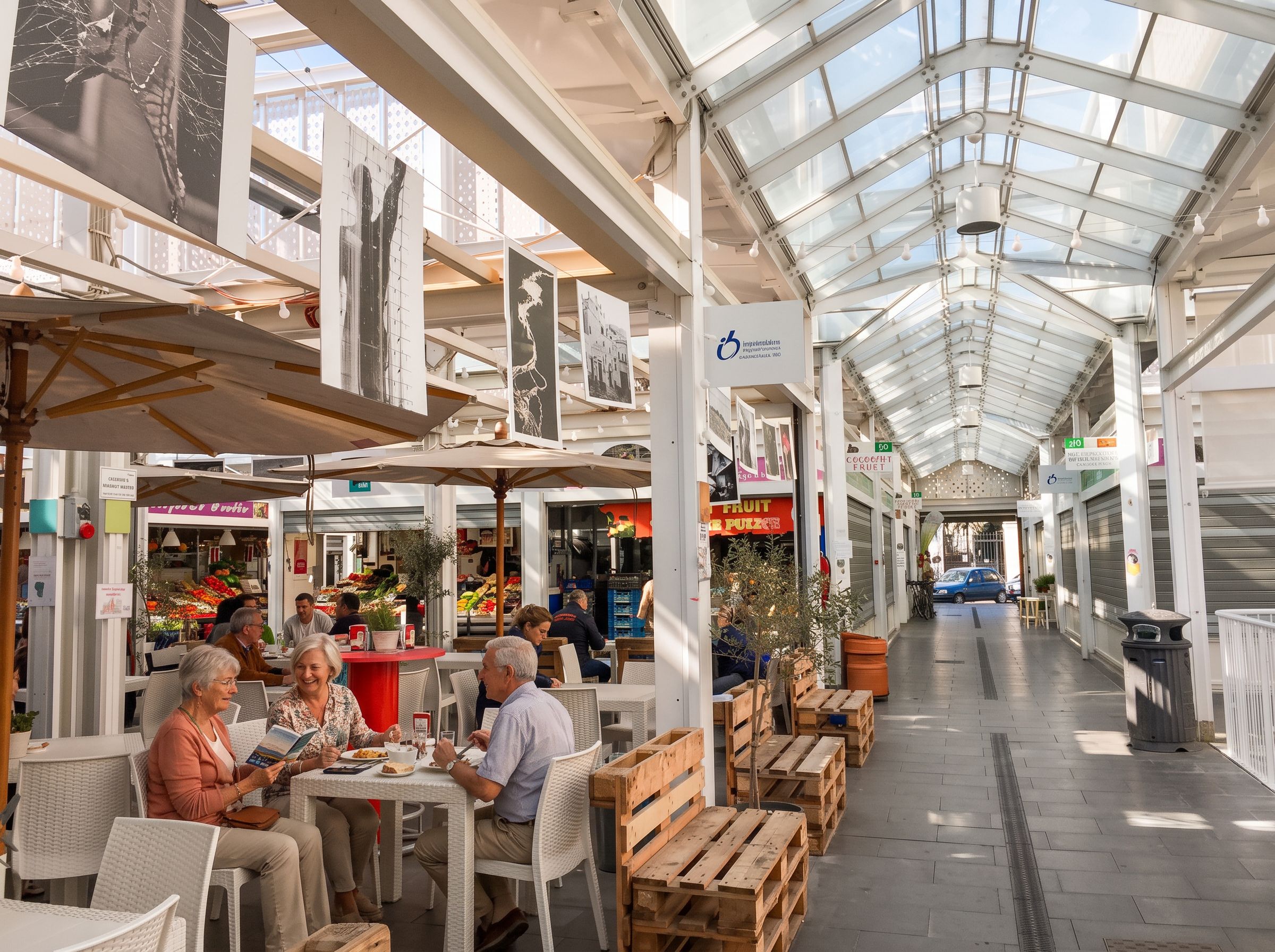
Testaccio Market is the standout, described as a covered market and a haven for food lovers, with produce, cheeses, cured meats, seafood and street food such as supplì and porchetta sandwiches. It is generally open Tuesday to Saturday, morning to early afternoon. The richest arrival is usually between 08:00 and 11:00.
One source notes that some stalls may open on Sunday, but this is not presented as guaranteed. Market visiting in Rome's food neighbourhoods is a morning custom, and Testaccio Market is commonly closed in the evening. Plan it as a breakfast-and-lunch outing rather than an afternoon one.
Campo de' Fiori market is documented as a morning market Monday to Saturday, more touristy than Testaccio but still holding produce and prepared food stalls. By evening the square becomes a bar-and-restaurant hub, so the crowd pattern changes significantly after morning hours. If you want the market, go early; if you want the piazza atmosphere, go late, and accept that they are two different experiences.
| Market | Days | Character |
|---|---|---|
| Testaccio Market | Generally Tuesday to Saturday, morning to early afternoon | Covered; produce, cheese, cured meats, seafood, street food |
| Campo de' Fiori | Monday to Saturday, morning | More touristy; produce and prepared food stalls |
How do you avoid tourist traps near the sights?
Treat central trattorie as convenient rather than destination dining, and travel deliberately for the celebrated addresses. Around Campo de' Fiori and Piazza Navona, travellers mention Cul de Sac, La Grappola d'Oro, La Pollarola, Da Costanza and Ditirambo. Near the Pantheon, Armando al Pantheon and Trattoria der Pallaro come up as dependable.
The Michelin Guide says Rome's best trattorias preserve regional cuisine and "traditional Roman recipes," and its Rome best-trattorie round-up is a useful starting point for where to eat. That is a guide to the city's serious kitchens, not a list of the closest table to your hotel.
Forum advice clusters around areas easy to combine with sightseeing: near the Pantheon, a three-minute walk from Campo de' Fiori, a short walk from the Spanish Steps, close to the city centre. Those are convenience picks. The most celebrated places in Testaccio may involve more deliberate travel and advance booking, and that trade-off is the real decision.
In Trastevere, travellers repeatedly mention da Enzo al 29, Checco Er Carrettiere, Trattoria da Lucia, Da Teo and Trattoria Trilussa. Around Monti, Ai Tre Scalini is praised as a spot where locals dine and a few tourists appear too. In Prati, Flavio al Velavevodetto's branch near Piazza dei Quiriti is noted as less crowded than the Testaccio location. One Reddit post suggests L'Oste Matto on Via dei Banchi Vecchi for solid Roman classics if you are staying centrally and do not want to move neighbourhoods.
What does a meal cost?
Published price ranges for Roman trattorie are thin. Two forum reports give figures: Trattoria da Mamma is described as "mindblowingly cheap" with three courses for €15, and La Grappola d'Oro at about €26 for a full meal with wine and coffee. These are forum reports, not published rates.
The same caution applies to both figures: no published rate exists for these establishments in the material gathered, so treat them as indicative only. Rates in Rome vary by season and booking channel, and a menu price is not the same as a final bill once wine, water and coperto are added.
Central trattorie are often recommended for convenience, while the most celebrated Testaccio addresses command a different kind of cost: they require booking weeks ahead. For a fuller picture of what a comfortable Rome trip costs overall, our guide to what a comfortable Rome trip costs covers the wider budget.
When should you eat?
Traditional Roman dining hours are lunch around 12:30 to 14:30 and dinner around 19:00 to 23:00, with many trattorie closing in the afternoon. Markets are a morning affair. Gnocchi are served on Thursdays in many restaurants.
That afternoon closure is the single most useful planning fact for older travellers. A trattoria that shut at 15:00 will not open again until the evening, so a late-afternoon hunger pang is a market or pizza al taglio problem, not a restaurant one. Build the day around lunch, and keep the evening for a booked dinner.
Season matters too. Rome's warm season runs roughly May to September, with July and August the hottest months. Average daytime highs reach 30°C in July and August, and rainfall is higher in autumn and winter, with October, November and December wetter than late spring and summer. Spring and autumn are the strongest travel windows, which aligns neatly with the February to May artichoke season.
How do you get around, and what about access?
Rome's public transport operator says all buses have boarding platforms and wheelchair space, and 70% of trams are low-floor. All metro stations are accessible except Spagna, Barberini, Repubblica and Vittorio Emanuele on Line A. For a central trattoria, the most reliable documented approach is usually an accessible bus, a low-floor tram where possible, or a taxi.
Those Line A gaps matter because several central eating districts sit near them. Rome's core sightseeing-and-dining areas can involve metro stations with known accessibility gaps, especially if planning around central stops on Line A. The municipality lists dedicated services for disability transport, access to ZTLs with a disability permit, and subsidised, accessible public transport on its disability transport and concessions page.
For Testaccio Market specifically, accessibility is described as mixed but manageable: the modern market is easier than older Roman sites, but nearby routes may include curbs, uneven paving, traffic crossings and narrow sidewalks. One source recommends arriving by Piramide or taxi, then doing a shorter route with a seated lunch and a taxi onward. The market does not document a nearest pharmacy or medical-help point, so ask at your hotel before setting out.
Booking is usually not needed for the market itself, though food tours, trattorie and nearby cultural venues may require reservations or timed entry. For the wider picture of step-free routes and transport, our guide to how accessible Rome is for older travellers covers the city in more detail.
If your trip includes the ancient sites between meals, the Colosseum, Forum and Palatine have their own dedicated guide. And if a late dinner followed by street noise is a concern, our round-up of the quietest hotels in Rome for light sleepers is worth reading before you book a room.
What else should you know?
Book ahead at the most sought-after places, expect queues, and do not assume every famous central spot is easy to walk into. If only one neighbourhood can be prioritised, Testaccio is the strongest consensus for classic Roman food. For easy central dining with less walking stress, the Pantheon, Campo de' Fiori, Navona and parts of Trastevere are the most frequently suggested.
One senior-focused guide advises avoiding Trastevere's steep alleys and midday Vatican crowds, and suggests early morning or late afternoon for quieter visits. Testaccio is presented as calmer and more local than more tourist-heavy central zones, though it still gets busy at market time.
Rome's immediate area is a UNESCO World Heritage site under the listing for the Historic Centre of Rome, the Properties of the Holy See, and San Paolo Fuori le Mura. The city's main emergency number is 112, with 113 for police, 115 for fire and 118 for medical emergencies. Roma Capitale's call centre is 060606, and tourist information is 060608.
Finally, a note on season and closures. Rome is a year-round city rather than a seasonal site, and no city-wide closing day pattern is documented. Closures apply to individual museums, markets or restaurants rather than the municipality overall. Holiday closures and openings at well-known trattorie are seasonal schedule information, so confirm directly before a special-occasion meal.


