
Venice eats standing up. The city's signature food tradition is not a restaurant at all but the bacaro, a small wine bar where cicchetti, the Venetian small plates, are sold by the piece over the counter and eaten with an ombra of wine. For food-minded travellers aged 50 to 70, the pleasure is in the ritual: two or three bites, a glass, then a short walk to the next address.
What follows is a practical guide to the food itself, the addresses that matter, the prices you can expect, and how to shape a gentle, seated where possible, bacaro crawl around the Rialto market and the quieter sestieri. The high-end restaurant tables and hotel dining rooms of Venice are covered in their own dedicated guides.
What exactly are cicchetti?
Cicchetti are small Venetian plates, sold by the piece over the counter in a bacaro and eaten with a glass of wine. Visit Venice describes them as the city's food-and-drink tradition, with pricing set bar by bar rather than by any city tariff, so the posted price list at the counter is the only binding figure.
The format is closer to Spanish tapas than to a formal Italian antipasto: small, shareable, and designed to be ordered two or three at a time. Visit Venice lists the classic examples as creamed salt cod on bread, fried sardines, half a boiled egg with anchovy, meatballs, and polenta. A bacaro is a wine bar where food and drink are usually taken standing at the counter; an osteria is the more traditional sit-down version with table service.
The distinction matters for planning. Many bacari encourage a standing snack-and-drink rhythm rather than a seated meal, which is the practical meaning of a bacaro crawl. Cicchetti work best for lunch, an aperitivo, or a light dinner rather than a large late meal.
What should you actually eat in Venice?
Beyond cicchetti, the dishes most associated with the city are sarde in saor (sweet-and-sour sardines), risotto, and the lagoon seafood that arrives daily at the Rialto market. The cicchetti counter is where these flavours appear in miniature, which makes a crawl an efficient way to taste across the repertoire.
At the counter you will find baccalà mantecato, the creamed salt cod that appears in several preparations at Cantina Do Mori according to guest feedback, alongside fried sardines, anchovy-topped egg, and small meatballs. Polenta appears as a base for richer toppings. The same flavours scale up in the osterie, where risotto and lagoon fish are the main event.
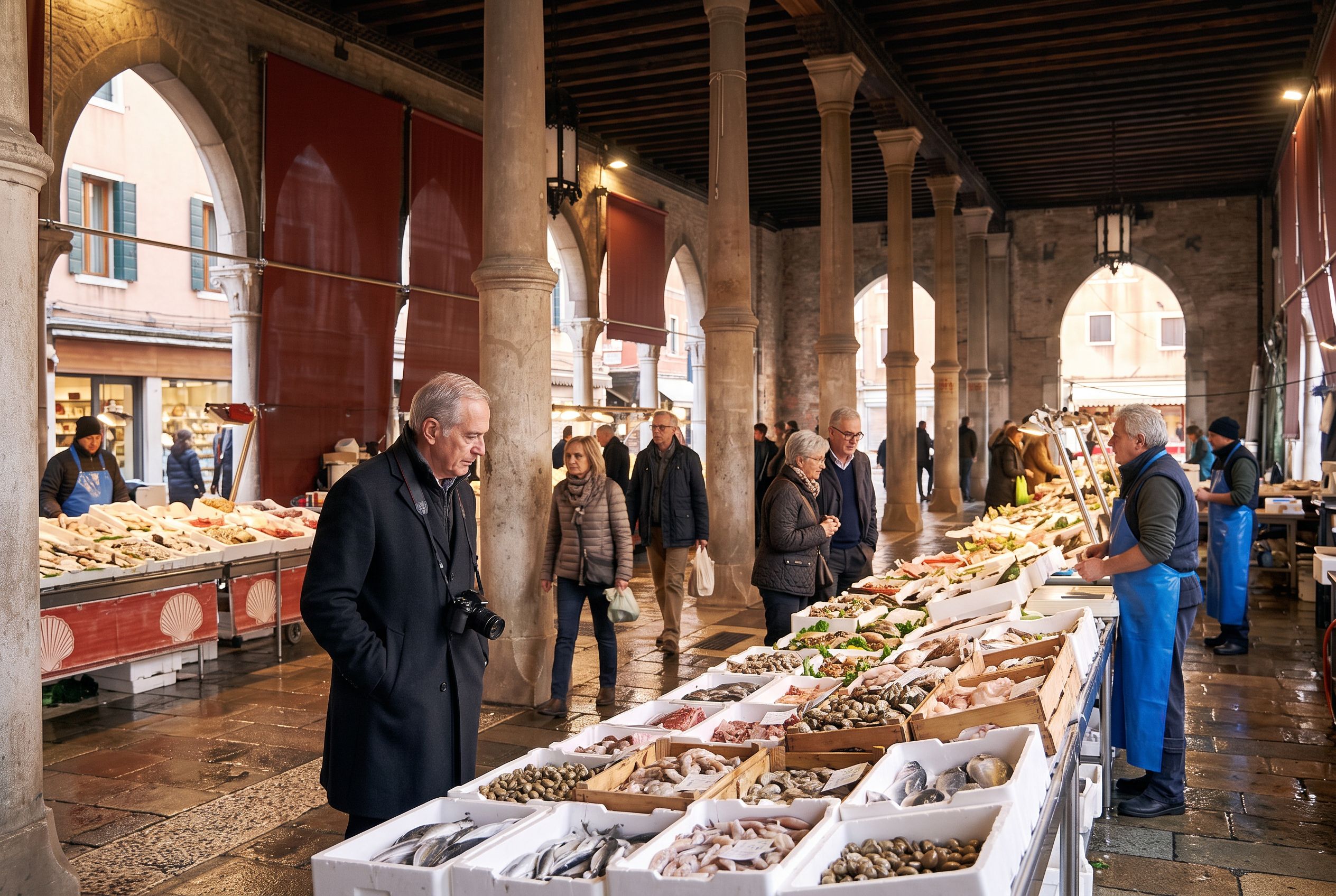
For anyone building a food-focused trip, the crawl is the entry point and the osteria is the deeper dive. Both draw on the same market. The Rialto Market in the San Polo district is the supply line behind much of this cooking, and a travel guide describes its morning activity as generally running until about 13:00.
 AI-edited
Where are the best cicchetti in Venice?
The strongest concentrations of bacari are around Rialto and San Polo, in Cannaregio, and in Dorsoduro. Forum reports consistently steer food-minded visitors to these three zones, with the Rialto cluster holding the classic addresses and the other two offering a calmer, more local feel.
Near Rialto, the names that recur across guides and traveller reports are All'Arco, Cantina Do Mori, Cantina do Spade, Al Merca', and Osteria Bancogiro. Cantina Do Mori is a historic bacaro near the Rialto Market, established in 1462, with a rustic interior of dark wood and copper pots hanging from the ceiling. It sits on a quieter side street away from the main tourist crowds, a short walk from the bridge.
All'Arco is a small cicchetti and wine bar near the market where the cicchetti are prepared fresh in front of customers and the menu changes daily based on available ingredients. Guest feedback describes the selection as varied and creative, with both traditional options and modern combinations, and staff who explain the dishes and recommend wine pairings, including in English.
In Cannaregio, posters point to Al Timon, Vecia Carbonera, and El Sbarlefo, with the Misericordia area noted for a particularly pleasant atmosphere. In Dorsoduro, the recommendations cluster near Zattere, San Trovaso, and Campo Santa Margherita, which several contributors describe as easier and more enjoyable than the busiest tourist cores.
How do you do a gentle, seated bacaro crawl?
Plan the crawl around late morning or early afternoon, when the most established places are open and the crowds are still manageable, according to Eating Europe. Choose venues with seating where possible, and treat the standing counter stops as short punctuation between longer seated pauses.
The classic format is standing, and several of the best-known addresses offer little else. Cantina Do Mori has no tables, only a few stools inside and outside, and most customers eat standing at the counter or on the ledge outside. All'Arco has only a few small tables outside and a few bar stools inside, so most customers stand in the alley. Cantine del Vino già Schiavi in Dorsoduro states plainly that there are no seats and that eating and drinking are done standing up.
Vecia Carbonera has a back room and canal-side seating, and Paradiso near the Biennale vaporetto stop has a garden lunch setup; posters call these out as better choices for anyone who wants to sit. Osteria al Squero is popular for its canal setting but is not seating-friendly, and one traveller warned to watch for seagulls, which will take food from the plate.
Two practical notes recur. A forum contributor advises taking cash for cicchetti stops, and a Rick Steves forum post describes taking food outside to eat standing with a plate in one hand and a glass in the other, which is simply how many places work.
Is eating cicchetti expensive?
No city tariff applies to food and drink in Venice, so each bar sets its own prices and the posted price list at the counter is the only binding figure, according to Visit Venice. Recent guide coverage puts cicchetti at roughly €1.50 to €4 each, with house wine often around €1.50 to €2.50.
Those figures are indicative and vary by venue and season. The more useful warning is about accumulation: multiple posts note that cicchetti seem cheap at first but become a substantial spend once several stops, drinks, and extra dishes are added. A Rick Steves forum post makes the same point, observing that the meal can add up if you keep ordering.
No senior or over-65 fares or reduced passes were documented for Venice's cicchetti and bacaro topic, so there is no discounted route through the crawl. The cost control is structural rather than discounted: fewer stops, one drink each, and a seated main meal at one address rather than grazing across five.
When should you go, and when are places closed?
Lunch and aperitivo hour are the lively windows. Several sources place the best crawl around 5pm to 8pm, while others note 10am to 1pm for the morning run. Short opening windows, mid-day closures, and Sunday shutdowns are the pattern at several of the best-known cicchetti bars.
The individual hours vary enough that checking on the day is worthwhile. Visit Venice's 2026 guide gives Cantine del Vino già Schiavi in Dorsoduro as open Monday to Saturday, 08:30 to 20:30, closed Sunday, with cicchetti made fresh daily and lunch sandwiches made to order. A Tripadvisor listing shows All'Arco open 10:00 to 14:30 on most days and closed on Wednesday, which confirms it as a short-hours place best used early in the day.
Arcicchetti Bakaro, a Santa Croce bacaro at Campo dei Tolentini, is listed on Tripadvisor with daily hours from 11:00 to 21:00, except Sunday 11:00 to 20:00. Osteria al Squero appears in recent guides as a daytime-to-evening venue, with one 2026 guide giving daily opening with seasonal variation while another lists it as closed Sundays. Cantina Do Mori is presented in recent guides as a classic early-opening bacaro, with one source giving Monday to Saturday opening and Sunday closure.
Some posts say many cicchetti bars around Rialto close on Sundays, while other travellers disagree and report that plenty are open. A Fodors forum post suggests the best bets are the ones you can confirm locally, especially away from the most tourist-dependent spots. The clearest recent change is not a wave of new bacari but the continued emphasis on short windows and Sunday shutdowns at several well-known addresses.
How do you avoid the tourist traps?
Multiple guides agree that the most authentic and affordable bars sit a few streets away from the main tourist routes, where cicchetti remain simple, fresh, and cheap. One guide explicitly warns against places with tourist-menu boards or food photographs at the entrance.
Forum posters repeatedly separate mediocre sit-down restaurants near Rialto from the very good cicchetti bars in the same area. The immediate Rialto zone can be the least rewarding for a full restaurant meal even where the bacari are excellent, which is a useful distinction: the neighbourhood is a strong cicchetti destination and a weak full-dining one.
A long-running forum tip is to look at the food in the bar first and decide whether the range looks good before committing. That single habit filters more reliably than any list. The corollary is that the addresses worth seeking out are often the ones with no pavement signage at all.
For orientation across the city's quarters before you commit to a route, our guide to choosing your sestiere in Venice sets out how the districts differ in character and pace.
How do you get between bacari without exhausting yourself?
Venice is a walk-and-boat city. The Comune di Venezia's accessible map divides the historic centre into zones that are completely accessible by vaporetto, accessible by motoscafo or a facilitated bridge, and not accessible by public transport at all, so route planning is a genuine accessibility question rather than a convenience one.
The city's accessibility map was produced by the Città per tutti Service with the Department for the Elimination of Architectural Barriers, and its last update is October 2017. The back of the map lists bridges with facilities such as platform lifts, lifts, or low steps. VeneziaUnica states that accessible pedestrian routes in the historic centre extend for about 14 kilometres.
Vaporetto tickets and passes are sold at Venezia Unica offices at Piazzale Roma, Santa Lucia station, San Marco Vallaresso, Rialto, Lido, and the airport, as well as through machines, tabacchi, and the official app. A published Venice accessibility guide says the water buses are accessible and adapted water taxis exist, while gondolas are not accessible.
For arrivals, the cheapest airport transfer cited in official visitor guidance is the ACTV Aerobus to Piazzale Roma, with a travel time of about 24 minutes. Our guide to getting to Venice by airport, train, and water covers the arrival logistics in full.
For a wheelchair user, one source notes that boarding at Rialto A/B can be arranged by calling a free number about 20 minutes before boarding; that assistance applies to the water transport stop, not to the market itself. The city's emergency number is 112.
What do guests say about the best-known bacari?
Guest feedback on the classic addresses is largely positive and consistent. As of September 2026, All'Arco holds a Google rating of 4.7 out of 5 from 1,657 reviews, and Cantina Do Mori holds 4.4 out of 5 from 1,142 reviews.
At Cantina Do Mori, staff are consistently described as friendly, knowledgeable about the wines, and willing to explain the different cicchetti and make recommendations. The recurring practical notes are that seating is very limited, that large food tour groups pass through regularly and can make the small space crowded at peak times, and that there is no toilet on the premises.
"The person helped me pick which cichetti (like tapas) were good and I also had the house wine." (Google, 5/5, May 2026)
At All'Arco, the bar is small and gets crowded quickly, with queues forming by late morning; arriving early is advised to avoid the wait and get the best selection. Wine, prosecco, and spritz are available by the glass at reasonable prices, and the bar is popular with both locals and visitors.
"I can eat here over and over again. This place not only has amazing ciccheti it has great wine and excellent service. You have to try this place." (Google, 5/5, September 2026)
Bacareto da Lele comes up as a quick, inexpensive stop near the station, a practical first or last address for anyone arriving by train, though the same posts frame it as a grab-and-go place rather than a relaxed sit-down meal.
What else should you know before you go?
April to June and September to October are repeatedly identified as the most comfortable balance of weather and crowds, which suits a food-focused walking trip. July is the peak month and January the quietest. Winter is colder and damper, with a higher chance of flooding.
The month-by-month climate figures for Venice show January averaging around 4.2°C and July around 25.2°C, with sunshine highest in late spring and summer. For a crawl built on walking between addresses, the shoulder seasons are the obvious window.
On health provisions, a Venice accessibility guide lists Farmacia Morelli at San Marco 5310 as a pharmacy in the city. The same source lists Sanitaria ai Miracoli at Cannaregio 6049 and other health and mobility suppliers, but does not identify them as the nearest pharmacy to any particular quarter. No exact hospital name for the city centre appears in the gathered official sources, so the nearest hospital is not documented here. No Venice-specific safety advisory was documented in the gathered official sources.
On access, the official accessibility map implies that the main planning risk for older travellers is uneven access rather than anything else: some insulae are fully reachable by vaporetto, others only partly, and some not by public transport at all. Checking the map against your intended route before you set out is the single most useful preparation.
For a wider view of what else the city offers at a comfortable pace, our selection of Venice highlights chosen for the over-50s covers the cultural anchors, and a slower day between food stops is set out in our guide to a spa day in Venice.
The ombra, and how to drink alongside the food
An ombra is the small glass of wine that accompanies cicchetti, and it is the unit around which the whole tradition is built. House wine is often the default order, with prosecco and spritz also available by the glass at the bacari.
At Cantina Do Mori, wines by the glass, house wine, and prosecco are all listed, and guest feedback notes a very good selection of wines at prices described as more than reasonable. At All'Arco, wine, prosecco, and spritz are available by the glass, and staff are described as helpful with wine pairings.
The rhythm is what distinguishes the experience from a restaurant meal. Ordering one glass per stop keeps the crawl gentle and the spend predictable, and it matches the standing format that most bacari are built around. Where a venue has seating, the same order simply takes longer, which is the point of choosing those addresses for the later part of a route.
the sources gathered here do not document specific classes, guided tastings, seasonal events, or booking rules for named bacari in Venice. The tradition is a walk-in one, and the practical preparation is checking opening hours on the day rather than reserving ahead.


