
Lake Garda rewards you best from the water. For travellers aged 50 to 70 who prefer not to walk far, the smart strategy is simple: base yourself in a flat, ferry-connected town on the southern shore, then let the public boats do the heavy lifting. You will see the dramatic northern mountains, medieval castles, and elegant lakeside promenades without ever breaking a sweat on a steep incline.
The lake stretches over 50 kilometres from the flat, olive-dotted south to the towering cliffs of the north, and that geography is your friend. The southern towns—Desenzano, Peschiera, Bardolino, Garda, and Lazise—sit along broad lakeside promenades where you can stroll a few hundred metres to a café or ferry pier without leaving the waterfront. The northern towns, like Malcesine and Riva del Garda, are best admired from the deck of a boat or from a cable car that does the climbing for you.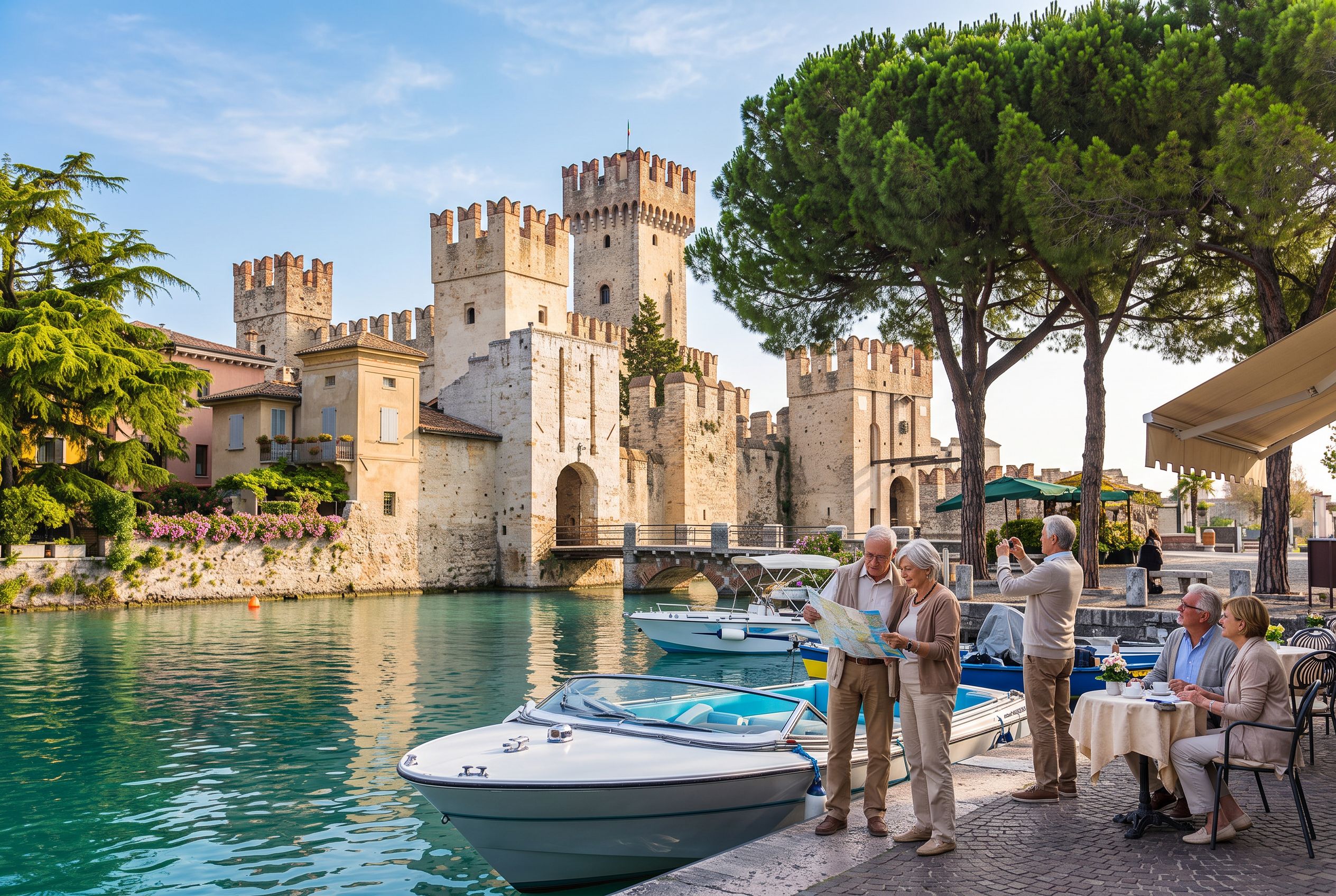 AI-edited
Which towns are best for minimal walking?
Desenzano, Salò and the Lazise–Bardolino–Garda lakefront are the best documented: Regione Lombardia calls Desenzano's lungolago wide, level and well paved, with the old-town streets beside it the same, and a protected lakeside path of about ten kilometres links Lazise, Bardolino and Garda. Peschiera adds a station with a staffed assistance service.
Desenzano is the largest of the southern towns and a major transport hub. The ferry pier sits right on the lakefront, and the main street runs parallel to the water, so you can move between boat, café, and hotel with minimal effort. Peschiera del Garda is similarly practical: RFI lists the station as one with a staffed assistance service for disabled and reduced-mobility passengers, and with accessible toilets. The harbour is a short taxi ride from the platforms if the walk looks too long. Both towns have excellent ferry connections, making them ideal springboards for day trips. Bardolino, Garda, and Lazise are smaller and quieter, linked by a protected lakeside path: the regional tourist board puts Bardolino about six kilometres from Lazise and Garda about ten. You do not need to walk it all—just a few hundred metres in either direction gives you the full effect of cypress trees, lapping water, and mountain views. Salò, on the western shore, offers a long, elegant promenade that is almost entirely flat.Which cruises and boat routes suit seniors best?
The public ferry network run by Navigazione Laghi is your best friend, but it is a seasonal one. The Desenzano–Peschiera–Riva line runs the length of the lake, Torri del Benaco–Toscolano Maderno is the single car ferry, and Limone–Malcesine crossings are frequent in high summer. Over-65 fares are reduced Monday to Friday on ordinary services.
The most scenic route is the Desenzano–Peschiera–Riva line, which runs the full length of the lake. It is a seasonal service: the 2026 timetables cover 1 April to 15 May and then 16 May to 4 October, and through the preceding winter, from 3 November to 6 March, the only boat working the lake was the Torri–Maderno car ferry. Sit on the upper deck, feel the breeze, and watch the shoreline transform from gentle hills to sheer cliffs as you approach the north. Only the fast "servizio rapido" boats run the whole way through, and in the summer 2026 timetable they take between two and a quarter and three hours one way, so plan it as a morning or afternoon outing rather than a rushed round trip. For a shorter, sweeter taste, take the mid-lake crossing from Sirmione to Garda or Salò. On the fast boats Sirmione to Garda takes a little over twenty minutes and Sirmione to Salò around forty; the ordinary boats call at Lazise and Bardolino on the way and take an hour or more. Either way you get the sense of the lake without committing to a long day. The fast "servizio rapido" boats cut the time noticeably if you want to visit several towns in one outing, but they carry a fixed supplement on top of the ordinary fare, and the over-65 reduction does not apply to that supplement."A very good way to travel from towns anywhere in Lake Garda," one Google reviewer wrote of the Sirmione landing stage in August 2022. "I only went to and from Garda and Sirmione but the ferry was lovely and clean. Would recommend leaving Garda at 9am as it's the fastest 'slow' ferry as it goes direct… Views are stunning!"For a more curated experience, consider a private boat tour. Operators in Sirmione, Bardolino, Salò, and Riva del Garda offer half-day and full-day excursions, often with hotel or port pickup. The Isola del Garda tour, which in 2026 ran from 29 March to the end of October, includes a boat transfer and a guided visit to the neo-Gothic villa and its gardens—a lovely way to experience the lake's aristocratic heritage, though not a step-free one.
How do I see Malcesine without climbing?
Malcesine's old town is steep and cobbled, but you do not need to walk it. The commune holds the Bandiera Lilla for accessible tourism, and its lakeside cycle-and-footpath runs the full length of the municipality without architectural barriers. Take the cable car up to Monte Baldo, then keep to the waterfront.
The Malcesine–Monte Baldo cable car is the single best low-effort attraction on the lake. The lower station is at Via Navene Vecchia 12, north of the old town — the operator puts Malcesine's castle five minutes' walk away, so allow a short walk from the ferry pier. The ride reaches 1,760 metres and takes about 20 minutes, with departures at least every half hour from 8.30. Wheelchair users reach the ticket hall from street level by lift from the underground car park, and a second lift leads to the boarding platform. At the top station you are rewarded with sweeping views of the lake, the surrounding mountains, and—on clear days—the distant Alps, and there is a lounge bar inside the station, so you can sip a coffee while soaking in the panorama. Back at lake level, the Scaligero Castle is worth a look from the outside. The castle's interior involves stairs, but the harbourfront promenade offers excellent photo opportunities without any climbing. If you want to explore the old town, keep to the main street near the water and avoid the steep lanes that climb the hillside. Plan your visit around the cable car and the waterfront rather than the old town.What about the northern towns?
Riva del Garda and Limone sul Garda are the scenic highlights of the north and work well as boat excursions. The slopes behind them are steep, but Garda Trentino reports entirely barrier-free public transport including the scenic lift up to the Bastione, and Limone's lakeside ciclopedonale runs level from the old town northwards.
Riva del Garda sits at the very top of the lake, where the mountains crowd in dramatically. The town itself has a pleasant lakeside promenade and a compact historic centre, but the surrounding terrain is decidedly hilly. Arrive by ferry, enjoy a leisurely coffee or lunch at a waterfront café, and perhaps stroll a few hundred metres along the promenade before catching the boat back. Limone sul Garda, famous for its lemon groves and pastel-coloured houses, climbs steeply behind its harbour. Its tourist office is firm that the name has nothing to do with the fruit — it is traced instead to the Latin limen, meaning border — even though Limone became, in the eighteenth century, the northernmost place in the world to grow lemons commercially. The terraced groves climb the hillside, and you can admire them from the water or from the ciclopedonale, the level lakeside path that starts on Lungolago Marconi and runs north towards Capo Reamol. The seasonal Limone–Malcesine ferry route connects these two northern gems directly.Coach-and-boat day trips from the southern towns are built around exactly this combination: a short transfer to the boat, a run up to Riva and Limone, and very little walking in between.
Is Sirmione worth a visit?
Yes, absolutely. Sirmione is compact enough to see in about two hours, and the commune states that all its pedestrian routes are suitable for wheelchairs. The Scaligero Castle is not accessible inside, but the Grotte di Catullo and their museum are. It is one of the lake's most rewarding low-effort stops.
Sirmione sits on a narrow peninsula jutting into the lake, and its historic centre is delightfully compact. The ferry arrives right at the castle, so you can step off the boat and immediately begin exploring. The castle itself is best admired from the outside—the interior involves climbing, but the moat and ramparts offer excellent views from ground level. The main street, Via Vittorio Emanuele, runs straight through the old town and is mostly flat. Lined with shops, gelaterias, and cafés, it is a pleasant stroll even for those who prefer not to walk far. At the tip of the peninsula lie the Grotte di Catullo, the ruins of a Roman villa. It is a longer walk from the pier, but the site itself is not the obstacle: the commune lists the Grotte, museum included, as accessible, and it is the castle that cannot be visited inside. If the walk is too much, a boat tour passes the ruins from the water.How do I plan a boat-based itinerary?
Plan around the ferry timetable, not the other way around. Choose one flat base town, then use the boats to visit two or three other towns per day. Allow extra time for boarding and disembarking, especially at busy piers in summer.
A three-day itinerary might look like this: Day one, base yourself in Desenzano and take the short ferry to Sirmione for a morning visit, returning for a lakeside lunch. Day two, take the fast ferry north to Malcesine, ride the cable car, and return in the afternoon. Day three, cross the lake to Bardolino or Garda for a gentle promenade stroll and a long lunch at a waterfront restaurant. For a full-lake experience without the long ferry ride, consider a coach-and-boat tour. These combine a comfortable bus journey along the shore with short boat legs between towns, minimising both walking and time on the water. Several operators offer these tours from the southern towns, and they are particularly popular with senior travellers."A beautiful palace that is absolutely worth visiting," a Google reviewer wrote of the Isola del Garda tour in June 2026. "It's a half day activity — tickets are bought in advance online which includes the boat ride and a 2-3 hour tour. The tour guide was delightful and the architecture is stunning."
What should I book in advance?
Book private tours and the Isola del Garda excursion in advance, especially for July and August, which are peak months. Public ferries do not require reservations, but check the timetable for seasonal routes and plan your return well before the last boat.
The public ferry network is itself seasonal. In 2026 the Lake Garda timetables ran from 1 April to 15 May and then from 16 May to 4 October; through the preceding winter, from 3 November to 6 March, the only service on the lake was the Torri–Maderno car ferry. Crossings between Limone and Malcesine are frequent in high summer and much thinner in spring. If you are travelling outside the summer months, check the current timetable on the Navigazione Laghi website before planning your day trips. For private boat tours, advance booking is essential in high season. Many operators require minimum numbers and have limited departures, and summer dates can sell out weeks ahead. Visits to Isola del Garda stop on Mondays and Saturdays, which concentrates demand on the remaining days, so book that one early.What about accessibility on the boats?
Ships and the main ports have had stepless ramps since 2016, and boarding is always assisted by staff over a gangway at least 80 centimetres wide, whose slope changes with the level of the lake. The operator says plainly that not every landing stage is easy to reach: six Lake Garda piers and nine boats hold the Bandiera Lilla Approved certificate.
As of August 2026 the operator's press office sets out an industrial plan for 2025 to 2029 with more than €110 million for renewing infrastructure and fleet — including new vessels, refits of existing ones and more maintenance capacity at its own shipyards — and more than €7 million for technological innovation. A hybrid vessel has already been inaugurated for the Lake Garda fleet, and contactless card payment on board, where you tap a bank card at the onboard validator, has been running as a trial across the three lakes since December 2023. When choosing a boat tour, check the accessibility details carefully. Some private tours are not wheelchair accessible, even if they are near public transport. If mobility is a concern, ask about step-free boarding and the availability of assistance before booking.Where should I stay?
Choose a hotel near the ferry pier or lakefront promenade. Peschiera, Desenzano, Bardolino, and Salò all have excellent options within easy walking distance of the water. Look for hotels with lifts, walk-in showers, and level access from the street.
Staying close to the waterfront is the single most important factor for a low-walking trip. You want to be able to step out of your hotel, walk a few hundred metres to the ferry, and return the same way without navigating hills or long distances. The southern towns excel at this, with many hotels directly on the lakefront. For a special treat, consider the Villa Cortine Palace Hotel in Sirmione, which offers a five-hectare park and direct lake access; the park lies on the slope of the Cortine hill, so it is a climb rather than a stroll. Our detailed review covers its accessibility features and suitability for travellers aged 50 to 70. For more options, see our guide to Villa Cortine Palace Hotel, Sirmione: A Detailed Look for Travellers 50–70.When is the best time to visit?
Late spring (May–June) and early autumn (September) offer the best balance of pleasant weather, reliable boat services, and manageable crowds. July and August are peak season, with busy piers and higher prices.
The published 2026 boat timetables ran from 1 April to 4 October, with the fullest service from mid-May onwards. Summer is the most reliable for weather, but it is also the busiest. If you prefer a quieter experience, plan for late spring or early autumn, when the water is still warm enough for comfortable boat travel and the crowds have thinned. For more on seasonal events and quieter periods, see our guide to Lake Garda Through the Year: Festivals and Quiet Seasons.Can I combine boat with bus?
Yes, and it is often the smartest approach. Take the ferry one way and the bus back, or vice versa, to avoid long boat rides and cover more ground. The bus network complements the ferries well, especially along the western shore.
Some travellers recommend going up the lake by ferry and returning by bus, as the ferries can be slow, especially south-to-north. The bus routes run along both shores and connect most towns, offering a faster alternative for the return journey. This strategy lets you enjoy the scenic boat ride without committing to a full round trip on the water. For a comprehensive look at combining ferries and buses, see our guide to Getting Around Lake Garda by Ferry and Bus, No Car Needed.What are the common mistakes to avoid?
The biggest mistake is trying to see too much in one day. Lake Garda is too large to casually "see it all" by boat, and long ferry rides can be tiring. Stick to one or two stops per day, and always check the return timetable before disembarking.
Another common error is underestimating the time needed for boarding and disembarking at busy piers. Allow at least 15 minutes before each departure, and more in peak season. Finally, do not assume that every street is walkable from the pier—in Malcesine the lakeside path is barrier-free, but the lanes behind it climb steeply. Research your stops in advance and plan for the flat, lakeside areas. If you prefer a guided approach, consider joining a small-group or guided tour of Lake Garda, which handles all the logistics for you.Is a private boat tour worth it?
For a special occasion or a one-day splurge, yes. Private tours offer flexibility, comfort, and the ability to set your own pace. They are more expensive than public ferries, but they eliminate all walking and waiting.
Private boat tours are available from most major towns, with prices varying by duration and boat size — and they are charged per boat, not per person. For the 2026 season a Sirmione operator listed a two-hour private tour at €360, a four-hour half day at €720 and an eight-hour day at €1,300, which makes the format worthwhile mainly when several of you share it. Some operators offer hotel or port pickup, which reduces walking further. The Isola del Garda tour combines a boat transfer with a guided villa visit. The guided visit itself lasts about two and a quarter to two and a half hours on top of the crossing, and it is not an easy option: the operator describes three staircases of roughly 25 steps each, asks that guests be able to take a few steps unaided to board, and advises against the visit for anyone with a heart condition. Over-65s pay the reduced ticket category. Book well in advance, especially for summer dates.What should I pack?
Pack light layers, sun protection, and comfortable flat shoes. The lake can be breezy even on warm days, and you will want a light jacket for boat rides. Bring a small day bag with water, snacks, and any medications you might need.
The sun on the water is intense, so bring a hat, sunglasses, and high-SPF sunscreen. A light scarf or jacket is useful for shade and for cooler moments on the boat. If you are prone to motion sickness, consider taking medication before longer ferry rides, as the lake can get choppy in the afternoon. For a full packing list and practical tips, consult the Fodor's Lake Garda travel guide for authoritative advice on what to expect and how to prepare.How do I get to the lake?
The easiest access points are Verona Airport and the train stations at Desenzano and Peschiera. Verona Porta Nuova to Peschiera takes 13 to 16 minutes by train, several times an hour, and both towns are on the ferry network in season.
Verona Airport (VRN) is the closest international airport, with regular flights from major European cities. From the airport, a taxi or bus takes about 30 minutes to Verona's main station, where trains run frequently to Desenzano and Peschiera. Alternatively, you can arrange a private transfer directly to your hotel. If you are arriving by train from other Italian cities, Desenzano and Peschiera are both on the Milan–Venice line, with frequent services throughout the day. From either station the ferry pier is a taxi ride away, and RFI runs a staffed assistance service at Peschiera for reduced-mobility passengers.What budget should I plan?
Plan for €50–€80 per person per day for ferries and meals, plus accommodation. The over-65 reduction applies Monday to Friday on the ordinary boats, and a day ticket offers the best value if you plan multiple stops.
Here is a rough cost breakdown for a low-walking boat-based trip:| Item | Budget | Comfort |
|---|---|---|
| Ferry day ticket | €20–€30 | €30–€40 |
| Lunch at lakeside café | €15–€20 | €25–€35 |
| Gelato or coffee | €5–€8 | €8–€12 |
| Private boat tour (half-day, per boat) | — | from €720 |
| Malcesine cable car (adult return) | €28 online | €30 at the ticket desk |
What about walking in the towns?
Most southern towns have flat, paved promenades that are easy to navigate. Stick to the lakefront and the main streets, and you will rarely encounter steep inclines. The northern towns are steeper, so plan your visits around the flat areas near the water.
Here is a quick guide to walking difficulty by town:| Town | Walking Difficulty | Best For |
|---|---|---|
| Desenzano del Garda | Easy | Base town, ferry hub |
| Peschiera del Garda | Easy on the lakefront | Base town, station with assistance service |
| Bardolino | Easy | Promenade strolls, wine |
| Garda | Easy | Lakeside cafés, views |
| Lazise | Easy | Quiet charm, castle |
| Salò | Easy | Elegant promenade |
| Sirmione | Easy | Wheelchair-suitable pedestrian routes, accessible Grotte di Catullo |
| Malcesine | Easy on the lakefront, hard uphill | Barrier-free lakeside path, cable car |
| Limone sul Garda | Easy on the lakefront, hard uphill | Level ciclopedonale path, scenic boat stop |
| Riva del Garda | Easy with transport help | Barrier-free buses and the Bastione lift |
Are there any recent changes I should know about?
The Strada della Forra, the SP38 between Tremosine and Tignale, reopened on 13 March 2026 after the works that followed the 2023 landslide, and the Province of Brescia has said it will close again in autumn for the next phase. Bardolino renews its restricted traffic zone by ordinance each season. Neither affects boat travel.
Within its season the ferry network remains the most reliable way to see the lake, and recent investments are making it better. A hybrid vessel has entered service on Lake Garda, the operator's plan includes expanding maintenance capacity at its shipyards, and the hybrid-electric conversion of the ferry Adamello was carried out at the Peschiera del Garda yard. Contactless card payment on board has been running as a trial since December 2023. For boat travellers, the main practical impact of recent changes is on road access to some departure points. If you are taking a private tour that includes road transport, check for any closures or restrictions that might affect your pickup point. The Lake Garda Travel boat tours guide offers up-to-date information on available options.Final words of advice
Embrace the boat-first philosophy. Lake Garda is one of the few destinations where the journey truly is the destination, and the ferries offer front-row seats to the lake's finest scenery. Stay south, ride north, and let the water carry you.
The key to a successful low-walking Lake Garda trip is planning. Choose your base town carefully, check ferry timetables in advance, and book any private tours early. With a little preparation, you can experience the lake's beauty without ever feeling rushed or strained. Remember, the lake has been a travel destination for centuries, and its towns have evolved to welcome visitors of all abilities. The evening passeggiata—the traditional lakeside stroll—is a cultural ritual you can enjoy at your own pace, whether that means walking 100 metres or a full kilometre. The lake rewards those who take it slowly, and the boat-first approach is the slowest, most rewarding way of all.

