
Venice is one of the most rewarding cities in Europe for travellers aged 50 to 70, and it is also one of the most physically demanding. The city sits on a hundred-odd islands joined by more than 400 bridges, most of them stepped, and the Comune di Venezia itself opens its mobility page by acknowledging that the historic centre can look like one of the least accessible places in the world. What follows is a frank, route-by-route reading of what works, what does not, and how to plan around the difference.
The good news is that the city has spent decades building a genuine accessible network. The municipality states that almost 70% of the city is accessible to people with motor disabilities, and that public transport reaches the most monumental and atmospheric parts of the centre. The vaporetto, not the pavement, is the spine of any comfortable Venice trip.
Is Venice accessible to people in wheelchairs?
Partly. The Comune di Venezia says almost 70% of the city is accessible to people with motor disabilities, and its accessible pedestrian network runs to roughly 14 km. But the historic centre still holds more than 400 bridges, most with steps, so accessibility depends on the route you choose, not on the city as a whole.
The municipality classifies the city in three bands: areas fully accessible by vaporetto, areas reachable by motoscafo (water taxi) or a facilitated bridge, and areas not reachable by public transport at all. That classification is the single most useful planning tool a visitor can carry, and it is published as the accessible Venice map by the Comune di Venezia.
What this means in practice is that distance is a poor guide to difficulty. A 300-metre walk between two points on the same side of a canal can be flat and easy; a 150-metre walk to the next sestiere can involve two stepped bridges. Plan by crossing, not by kilometre.
Which bridges can you actually cross?
Very few of the 400-plus bridges are step-free. The Ponte della Costituzione (the Calatrava bridge) at Piazzale Roma is the main accessible Grand Canal crossing, with a wheelchair lift. The Scalzi bridge has a ramp on one side. Rialto and Accademia are step-only and are not the accessible crossings.
The four strategic Grand Canal crossings are the ones that shape any itinerary, because they determine how you move between the main sightseeing zones. Published accessibility guides are consistent on this: Rialto and Accademia have steps only, while the Costituzione bridge near Piazzale Roma was designed for easier access and includes a wheelchair lift in one source. One source notes that wheelchair users can request a key or activator for the lift through the tourist office at Piazzale Roma.
Away from the Grand Canal, the Ponte delle Guglie in Cannaregio is described as having half-height steps that can be negotiated in a wheelchair with a companion, and one source notes a sign at the bridge warning that a companion is required. It is not a solo crossing.
The city is also changing underfoot. The municipal press reported in April 2025 that five continuous, removable ramps were approved for the route from Riva degli Schiavoni to the Biennale Gardens, covering Ponte del Vin, Ponte de la Pietà, Ponte del Sepolcro, Ponte de la Ca' di Dio and Ponte de l'Arsenale. The same 2025 accessibility plan commits to handrails on 45 bridges that currently have none, step-eased ramps in several areas, and upgraded piers. Local reporting says works begin on 21 September 2026 for new metal ramps on Ponte della Salute, Ponte dei Frati and Ponte di San Cosmo/Lagoscuro, plus a ramp for a level change at Fondamenta della Misericordia.
Which routes and neighbourhoods are flattest?
The most workable areas are the canal-side routes and vaporetto-linked zones. Municipal mapping and accessibility guides agree that San Marco, Santa Croce and parts of Cannaregio and Dorsoduro offer more workable itineraries than the smaller, bridge-dense backstreets elsewhere in the city.
Piazzale Roma is the principal gateway named in the accessible-route descriptions and the start point of the mapped accessible spine, which is why so many accessible itineraries begin there rather than at the station. From Piazzale Roma, the accessible network fans out toward San Marco and the other major areas.
The Giudecca waterfront is cited as part of the more roll-able, accessible parts of Venice, with a ramped route in some city information. Cannaregio around the Ponte delle Guglie area appears on the citywide accessible-route map.
First, the direct San Marco to Rialto route can be narrow, crowded and impassable for wheelchairs at times, according to a Fodors forum post. Second, the municipality's own materials stress that the accessible network reduces the need to detour but does not remove it. Some districts are best avoided on foot altogether.
 AI-edited
How do the vaporetto and water buses work for limited mobility?
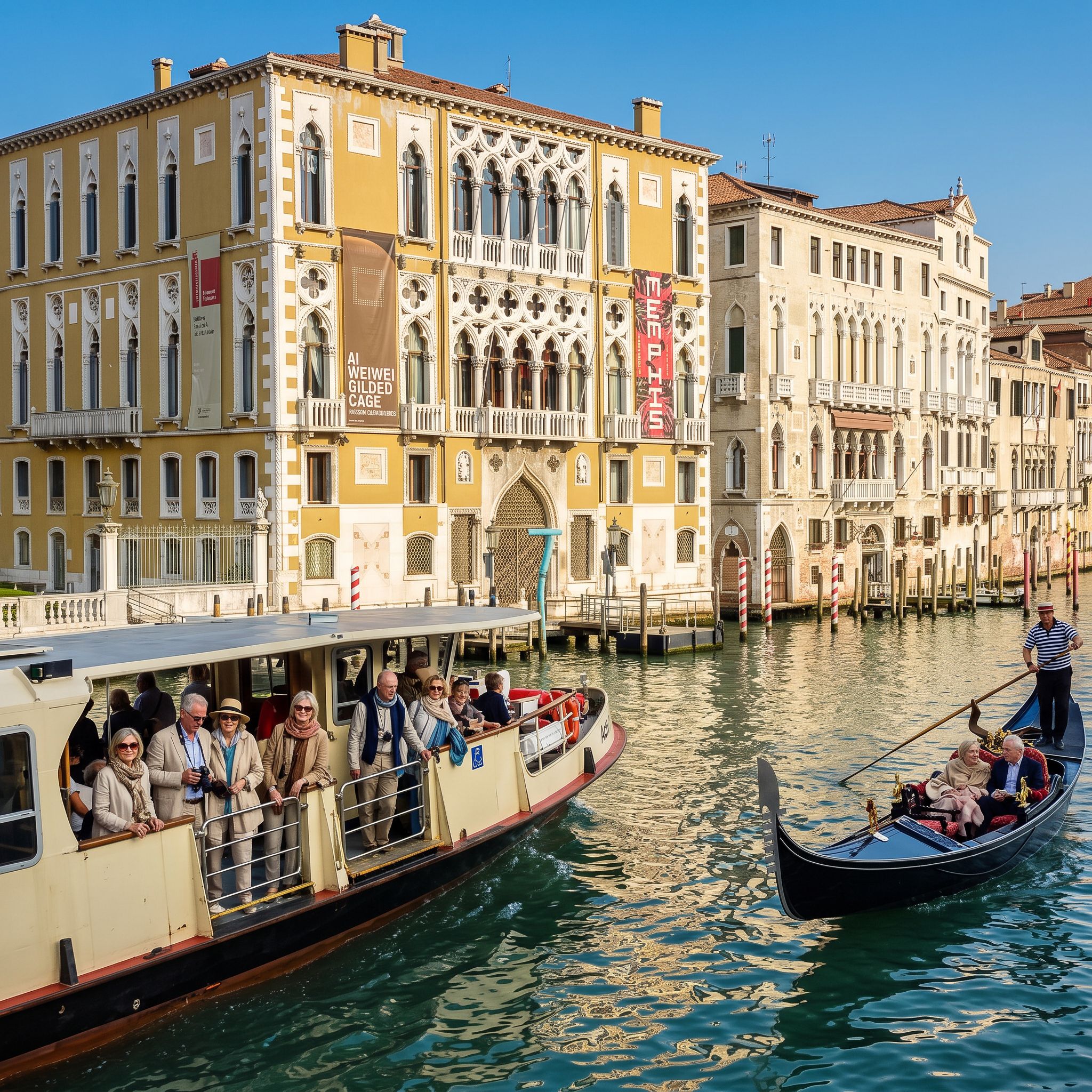
The vaporetto is the most reliable way to move around Venice with limited mobility. The Comune di Venezia states that all vaporetto landing stages are accessible to disabled users, and that lines 1 and 2 on the Grand Canal take up to four wheelchairs at a time. Line LN to Lido and the Cavallino–Punta Sabbioni littoral is also accessible.
One recent accessible-travel guide goes further, saying that over 95% of ACTV stops and lines in the historic centre have step-free floating docks, while the municipality itself confirms full accessibility for landing stages and key lines. The two do not contradict each other on the practical point: major hubs such as Piazzale Roma, Ferrovia, Rialto and San Marco are generally wheelchair-accessible, but not every stop is.
Staff assistance at docks and on boarding is repeatedly mentioned in forum posts as making a real difference for older or mobility-limited travellers. A Rick Steves forum contributor offered the single most useful piece of operational advice: use a vaporetto pass to get off, walk a manageable area, and reboard, rather than trying to cross multiple canals on foot.
Fares are unusually generous for disabled travellers. The municipality states that wheelchair users pay €1.50 for a 75-minute ticket, with the companion travelling free, and that this covers every ACTV waterborne service except routes 16, 19 and the Casinò route. A Venezia Unica disability card can be requested on arrival. The exact fare policy should be confirmed at an official ACTV or Venezia Unica counter before travel.
| Crossing | Access status | Condition or note |
|---|---|---|
| Ponte della Costituzione (Calatrava) | Accessible crossing, wheelchair lift | One source says a key or activator can be requested at the Piazzale Roma tourist office |
| Scalzi bridge | Ramp on one side | One of the four strategic crossings |
| Ponte delle Guglie | Half-height steps | Negotiable in a wheelchair with a companion; a sign warns a companion is required |
| Rialto bridge | Steps only | Not the accessible crossing |
| Accademia bridge | Steps only | Not the accessible crossing |
| Vaporetto lines 1 and 2 | Up to 4 wheelchairs at a time | Grand Canal route; landing stages accessible per the municipality |
| Vaporetto line LN | Accessible | Links the city with Lido di Venezia and Cavallino–Punta Sabbioni |
When does a water taxi beat walking?
A water taxi (motoscafo) beats walking whenever the destination sits in an area the municipality classifies as reachable only by motoscafo or facilitated bridge, or when the last stretch from the vaporetto stop to your door involves stepped bridges. One source notes that the city's accessible routes are designed to reduce bridge crossings, and that private boat transport can complement them for reaching major attractions.
The Comune di Venezia runs a specific scheme for this. To hire a car or a motoscafo with a driver for transporting people with disabilities, the municipal administration has issued five authorisations, with at least two units available 24 hours a day. Booking goes through the Centro Operativo Telecomunicazioni e Videosorveglianza of the Polizia Municipale on 041 2747332, which provides the contact details of the company available to carry out the requested service.
There is also a broader regional programme. The "Accessibilità a Venezia – annualità 2025" project gives people with disabilities, including non-residents, equal opportunity to enjoy the city by providing transport with equipped vehicles and a personalised accompaniment service. It covers water transport and accompaniment with an equipped vehicle for people with disabilities and non-ambulatory elderly people, land transport with an equipped vehicle for routes on the mainland, and specific accompaniment that can be carried out by two operators jointly, including to access the landing stages of normal scheduled services. People with disabilities, reduced motor capacity, or elderly people with loss of autonomy are eligible, whether resident in the Comune di Venezia or not.
Where can you find accessible restrooms and a place to rest?
The municipal accessibility map lists information points at Santa Lucia Station, Piazzale Roma, San Marco Ascensione, San Marco Venice Pavilion / Giardini ex Reali, Lido Gran Viale S. M. Elisabetta, Cavallino Treporti / Punta Sabbioni, and Marco Polo Airport arrivals hall. Note that the Lido Gran Viale information point is listed as open from 1 June to 30 September only, so it is seasonal.
On rest stops, a Rick Steves forum contributor recommended a cane with a seat and building in café or meal breaks, precisely because benches are not always available. Another suggested pacing the day around sitting down frequently and returning to the hotel for an afternoon rest. These are forum suggestions, not official guidance, but they match the terrain.
For a slower half-day, a spa visit can work well as a rest day between walking days; our guide to a spa day in Venice covers what to expect. For meal breaks, the city's bacari are a natural rhythm-setter, and our piece on cicchetti and the bacaro crawl explains how that works.
When is the easiest time of year to visit?
Spring and autumn are the most comfortable seasons for limited mobility, especially April to June and September to October, because temperatures are milder and crowds are lighter. Summer heat makes moving around more physically demanding, and winter acqua alta can temporarily block step-free routes.
According to recent limited-mobility guidance, those two windows are repeatedly identified as the most comfortable for travellers with reduced mobility. The same body of guidance warns that summer heat raises the physical cost of every movement, and that winter high water can interrupt step-free routes.
Acqua alta is most common from late October to early March, with November and December the most active months, according to a vaporettoticket.com page. Another source describes high-water events as an autumn and winter phenomenon, rare from April through September. Water transport access can be affected by high tides and low pontoons, so service conditions can change on acqua alta days.
One seasonal note matters specifically for wheelchair users: the raised flood walkways used during acqua alta are not always wheelchair accessible. The city publishes tide and accessibility resources, which is worth checking in the days before a winter trip.
What do fares, passes and museum entry cost?
Wheelchair users pay €1.50 for a 75-minute ACTV ticket, with one companion travelling free, covering every waterborne service except routes 16, 19 and the Casinò route. On museum entry, the civic museums' 2026 pricing page says seniors 65+ are in a reduced category and people with disabilities plus one carer are free.
The reduced vaporetto fare is stated by the municipality and by Venezia Unica, and a Venezia Unica disability card can be requested on arrival. The exact fare policy should be confirmed at an official ACTV or Venezia Unica counter before travel, since conditions can change.
On the museum side, the 2026 civic museum pricing page sets out the categories: reduced pricing for children and youth aged 6 to 14, students aged 15 to 25, seniors 65+, Rolling Venice Card holders, ISIC card holders, and Senior+Junior groups. Free categories include children aged 0 to 5, people with disabilities plus one carer, Venice residents and Venice-born visitors, ICOM members, licensed Italian guides and school teachers (maximum two per group). Free and reduced categories require ID at the museum entrance.
One caveat worth carrying: tourist senior discounts are not documented on the official municipal or Venezia Unica pages surfaced here. Ask at the ticket desk.
On the access fee, the 2026 trial period ended and, from 27 July 2026, the access fee is no longer in effect, according to the Access Fee page. Senior exemptions are not documented on the exemptions page.
For a fuller picture of what a comfortable Venice trip costs, including accommodation and meals, see our guide to what a comfortable Venice trip costs.
What help is available in an emergency?
Venezia Unica states the European emergency number is 112. A recorded Venice guide also lists 118 for medical emergencies, 115 for fire and 113 for state police. For older travellers, 112 is the safest all-purpose number, with 118 appearing in Venice travel guidance for medical help.
The municipality's disability page notes that special lagoon units, including hydro-ambulances adapted for disabled and non-ambulatory people, are active. That is a local emergency transport service, not a named hospital.
The accessibility PDF lists city contacts including Città per tutti and the Ufficio Eliminazione Barriere Architettoniche; these are assistance contacts rather than emergency numbers.
For information before you go, the municipality directs visitors to city tourist offices and online contact channels for disability-related services. The accessibility guide identifies the ACTV office at Piazzale Roma and the Venice Santa Lucia Station tourist office as practical contact points for assistance and onward connections. Public-transport information for people with reduced mobility is centralised through the municipality's Hello Venice contact point and ACTV information services.
How should you plan the trip?
Plan route by route, not by distance. Check the bridge crossings between your nearest vaporetto stop and your accommodation door before you book, because even a short distance can involve multiple steps. Concentrate your days on the mapped accessible spine and use water transport for anything longer.
Several sources say to plan route by route rather than by distance, because even short distances can involve steps, steep inclines, or bridges without ramps. The city's accessible network helps, but it does not eliminate the need to detour, use water transport, or avoid some districts entirely.
On where to base yourself, forum contributors suggest that hotels near San Marco, Vallaresso or San Zaccaria can reduce bridge crossings, and that waterfront locations are best for getting around. Hotel-by-hotel access is outside the scope of this guide and has its own dedicated coverage; for the wider question of which part of the city suits you, our guide to choosing your sestiere sets out the neighbourhood differences.
Venice is manageable for many seniors if travel is concentrated on the official accessible routes, vaporetto connections and a small number of key bridges. It remains a city where steps and bridge crossings are the norm rather than the exception. The most reliable strategy is to stay on the mapped accessible spine, avoid relying on Rialto or Accademia for crossing the Grand Canal, and treat many side streets as not suitable for wheelchairs or unstable walking.


