
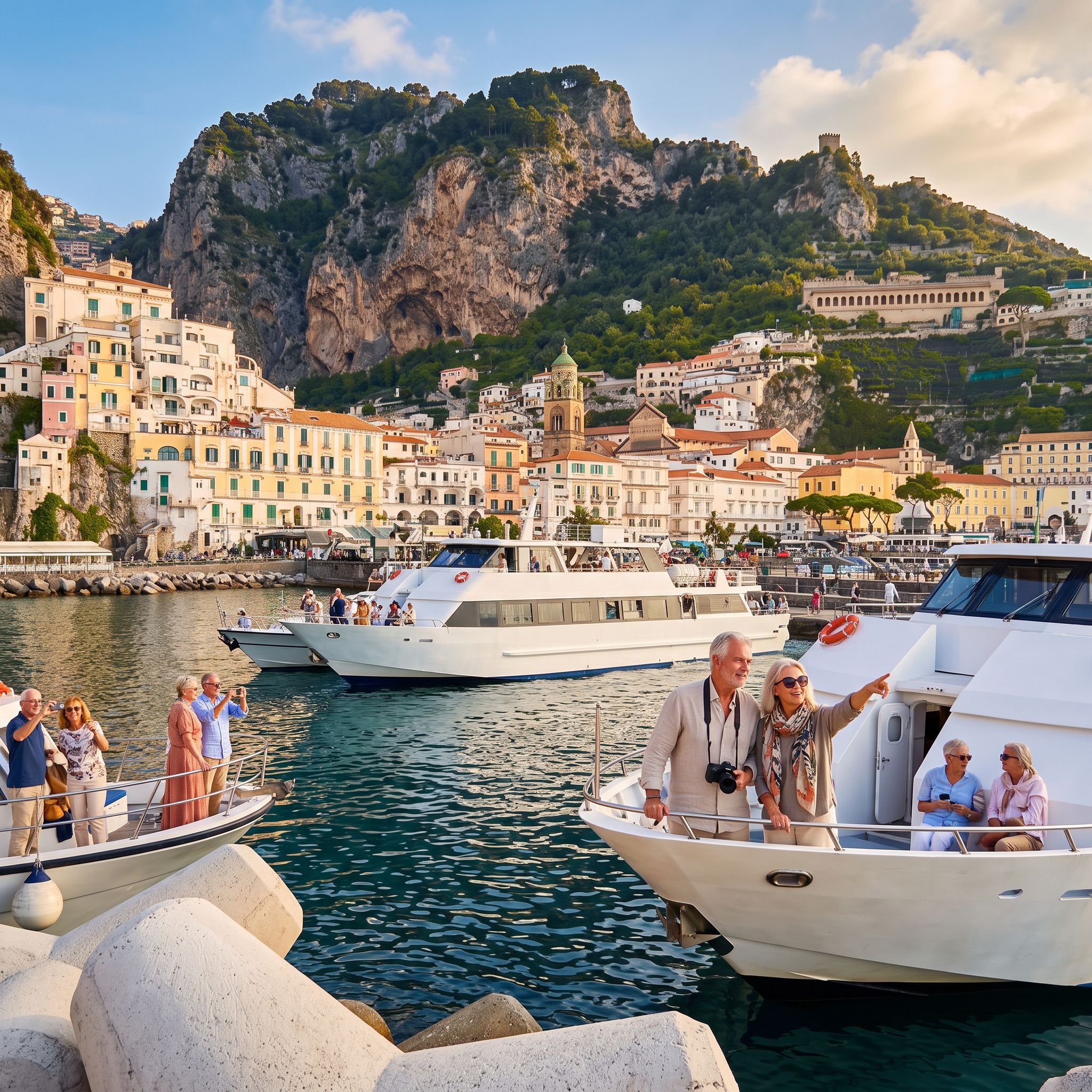
The Amalfi Coast rewards travellers who time their visit with care. May and late September to October offer the warmth most visitors want without the crushing heat and congestion of July and August. For travellers aged 50 to 70 who value comfortable walking conditions and unhurried sightseeing, these shoulder windows deliver the coast at its most appealing.
The coast's narrow lanes, steep stairways and cliff-hugging roads become genuinely difficult when summer crowds swell. Winter brings its own challenges, with many hotels, restaurants and ferry services closing down. Understanding the rhythm of each month helps you plan a trip that matches your priorities, whether that means swimming in warm seas or strolling through quieter villages.
 AI-edited
When is the best time to visit the Amalfi Coast?
May and September stand out as the best months for most travellers, offering warm daytime temperatures around 22°C to 26°C with moderate crowds. Late September through October provides a quieter alternative, though October brings more rain and changeable weather.
Month-by-month guides consistently rank May and September as ideal. One detailed guide for Amalfi itself rates May as "Ideal" with average highs of 22°C, and September as "Ideal" with 26°C averages. Both months carry moderate crowd levels rather than the high congestion of summer. The same guide rates October as "Great" with 22°C averages and low crowd levels, making it a strong choice for those who prioritise space over guaranteed sunshine.
For travellers who find summer heat uncomfortable, the shoulder seasons solve a real problem. July and August average 29°C in Amalfi, and the combination of heat and crowds on narrow lanes can make sightseeing genuinely taxing. The elevated trails, including the Path of the Gods, offer cooler conditions than the coast road itself, which matters when summer temperatures peak.
What is May like on the Amalfi Coast?
May delivers warm days around 22°C, lemon groves in bloom and full seasonal services, with crowds that remain manageable for most of the month. It is repeatedly named one of the best months to visit, though late May can see crowds building.
May sits in a sweet spot. The weather is warm enough for comfortable sightseeing and even early swimming, while the summer crush has not yet arrived. Multiple guides describe May as one of the best single months for the coast. The lemon groves are in bloom, flowers line the footpaths, and the seasonal ferry services are running at fuller capacity after their Easter restart.
One caveat applies. May is not reliably quiet. Crowds start building by late May, and some years the spring season still feels packed, particularly around Italian public holidays. The days around April 25 and May 1 bring Italian visitors "out in droves," as one travel forum contributor noted. If you can travel in early to mid-May rather than the final week, you will find noticeably more space.
What is September like on the Amalfi Coast?
September keeps summer warmth with average highs of 26°C while crowds ease noticeably after the first half of the month. Several sources rate it the best overall month, balancing sea temperatures, sunshine and manageable visitor numbers.
September offers the warmest sea of the shoulder season. The water has been heated through July and August, so swimming remains genuinely pleasant. One guide notes that September is high in early September and becomes more moderate later in the month, meaning the period after the 15th feels very different from peak summer.
The Costa d'Amalfi tourism district reported that July and August 2025 were down 8 to 10 percent in presences year on year, framing September and October as the new "peak" months for the area. This shift suggests that savvy travellers have already discovered what the guides recommend. September still carries moderate crowds, but without the peak-season frenzy of August.
What about October for warmer days and lighter crowds?
October averages 22°C with low crowd levels, making it a strong shoulder choice, though rain increases significantly. Early October can be delightful, but the weather becomes more changeable as the month progresses.
For travellers who prioritise space over guaranteed sunshine, October rewards patience. Average rainfall rises to 89mm in Amalfi, compared with just 24mm in July, so you will likely encounter some wet days. But between showers, the coast offers warm sunshine, lighter crowds and a more relaxed pace.
Amalfi itself records average daytime highs around 19°C in October, with the broader region seeing about 66°F. The larger towns, including Amalfi and Sorrento, remain active through October, with hotels, restaurants and ferry services still running at near-full capacity. Smaller villages begin to wind down as the month progresses, so base yourself in a larger town if you want the widest choice of services.
When should I avoid the Amalfi Coast?
Avoid July and August if you dislike intense heat and dense crowds, and avoid November through February if you want open hotels, restaurants and ferries. January and February see only 20 to 30 percent of hospitality businesses open.
July and August bring average highs of 29°C in Amalfi, with August described as "crushing" peak season. The narrow lanes of Positano and Amalfi become difficult to navigate, and the coast road experiences heavy congestion. The sea is at its warmest, which appeals to swimmers, but the trade-off in heat and crowds is substantial.
Winter presents the opposite problem. November through March sees many businesses closed or partly closed, with ferry and hydrofoil services sharply reduced. One travel guide notes that only 20 to 30 percent of hotels and restaurants remain open in January and February. A visitor to Amalfi in November described the town as "literally deserted." If you want the full coast experience with open churches, shops and restaurants, winter is not the time.
How do ferry schedules change through the year?
Ferry and hydrofoil services run at full capacity from spring through early autumn, with many services not operating from November to March. Summer services begin after Easter each year.
The ferries are the lifeline of the coast, connecting Amalfi, Positano, Sorrento and Capri. One travel guide notes that summer ferry services begin after Easter, marking the seasonal restart of coastal transport. Through the main season, from roughly April to October, services run frequently along the coast.
From November to March, many ferries and hydrofoils do not run at all. This dramatically affects how you move between towns. Without ferries, you rely on the winding coast road and SITA buses, which makes day trips between villages slower and more complicated. If ferry travel is part of your planned itinerary, confirm the schedule for your specific travel dates before booking.
How does the terrain affect older travellers?
The Amalfi Coast involves a lot of uphill and downhill walking, with steps and steep lanes throughout. Exact accessibility details are not documented coast-wide, so check each town and property individually.
The coast's beauty comes from its dramatic cliffs and vertical villages, which means walking conditions are demanding. One guide notes that the terrain involves "a lot of uphill/downhill walking," which matters for older travellers and anyone with limited mobility. Positano in particular requires navigating many steps to reach the beach from the upper town.
Sorrento is often suggested as a more comfortable base for older travellers because it is less hectic and more visitor-friendly. Ravello is singled out as easier than the steeper villages, since you can take a bus or taxi up to the town, which is described as "charming and not too hilly." For detailed guidance on mobility across the coast, see our dedicated guide on how accessible the Amalfi Coast is for older travellers.
What accessibility provisions exist in Amalfi?
Amalfi operates an inclusive beach from June to October, with a section of Marina Spiaggia reserved for people with disabilities or motor difficulties. Assistance is free and provided by a local social cooperative.
The municipality of Amalfi has created a dedicated accessible area on the west side of Marina Spiaggia beach. According to the official Visit Amalfi information page, this section is "equipped and reserved for people with disabilities or motor difficulties to experience the sea in full freedom and serenity." The service operates from June to October each year.
Assistance at the inclusive beach is completely free of charge and entrusted to the L'Alveare Social Cooperative, which provides orientation and organises access. This represents a meaningful provision for travellers with mobility challenges who want to enjoy the sea. For broader health and practical concerns during your visit, our guide to health, pharmacies and peace of mind on the Amalfi Coast offers useful planning information.
What should light sleepers consider when booking?
Guest reviews across Amalfi and nearby Minori repeatedly mention street noise, scooters and rubbish collection at dawn. Rooms facing away from the street or with adequate soundproofing make a significant difference.
Reviews on Tripadvisor for Amalfi-area properties describe a consistent pattern. Constant street noise, scooters passing at all hours and rubbish-collection noise at dawn feature in multiple accounts. Some guests reported that rooms were "not soundproof at all" and that balcony doors do not insulate sound effectively. Others noted that street noise largely disappeared after about 9 or 10 pm, with one hotel described as a "ghost town" at night.
The practical guidance is straightforward. When booking, ask for a room away from the street and the bar, and confirm whether the property has adequate soundproofing. Some reviews note that newer rooms had better accessibility and likely better insulation than older sections. For a fuller picture, our roundup of the quietest hotels on the Amalfi Coast for light sleepers identifies properties where guests consistently report good sleep.
How do I plan the perfect shoulder-season trip?
Base yourself in a larger town like Amalfi or Sorrento, book early for May and September, and confirm ferry schedules for your dates. Pack layers for October and reserve the inclusive beach access if you need it.
For a May visit, book accommodation early, as this popular month fills quickly. Choose Amalfi or Sorrento as your base for the widest range of open restaurants and services. For late September or October, you have more flexibility, but confirm that your preferred hotels remain open, as some smaller properties close after mid-October.
Distances between towns are manageable. Amalfi to Ravello is 6.9 kilometres by road, about 10 minutes with clear roads. Amalfi to Sorrento railway station is 47 kilometres, about 60 minutes with clear roads. Amalfi to Minori is 4.2 kilometres, and Amalfi to Cetara is 15 kilometres. These figures assume free-flowing traffic, which you will rarely find in July and August but can reasonably expect in May and October.
For dining recommendations during your stay, consult our guide to the Amalfi Coast's finest restaurants and seaside cafes. The shoulder seasons offer the best opportunity to secure tables at sought-after establishments without the summer rush.


