
Chiang Mai rewards timing more than almost any city in Southeast Asia. The northern capital's appeal rests on cool mornings, temple courtyards, mountain views and long dinners outdoors, and every one of those pleasures depends on which month you choose. Get the window right and the city is mild, dry and clear. Get it wrong and you are walking through heat and smoke. For travellers aged 50 to 70, the difference is not cosmetic. It decides whether a morning at Doi Suthep is a highlight or a struggle, and whether the air is kind to older lungs.
The good news is that the best window is long and well documented. November through early February delivers the cool, dry conditions most visitors hope for, with January often singled out for the clearest skies. The difficult window is equally well documented: March and much of April, when agricultural burning pushes air quality into unhealthy territory and heat peaks. This guide sets out the month-by-month picture so you can plan around both.
When is the best time to visit Chiang Mai?
The most comfortable window runs from November to February, with late November through early February the strongest choice for travellers aged 50 to 70. December and January are typically the driest and coolest months. November is frequently named as the single best month, when the rains have ended, skies clear and the cool season begins.
Chiang Mai's climate splits into three broad phases: a cool, dry season from November to February; a hot, smoky season from late February into April; and a monsoon season from roughly June to October. The cool season is the one to aim for. The Thailand weather-by-month guide published by Visit Thailand Today on 6 July 2026 records Chiang Mai's coolest nights in January, at 16°C, and its driest month as February, with 10 mm of rain.
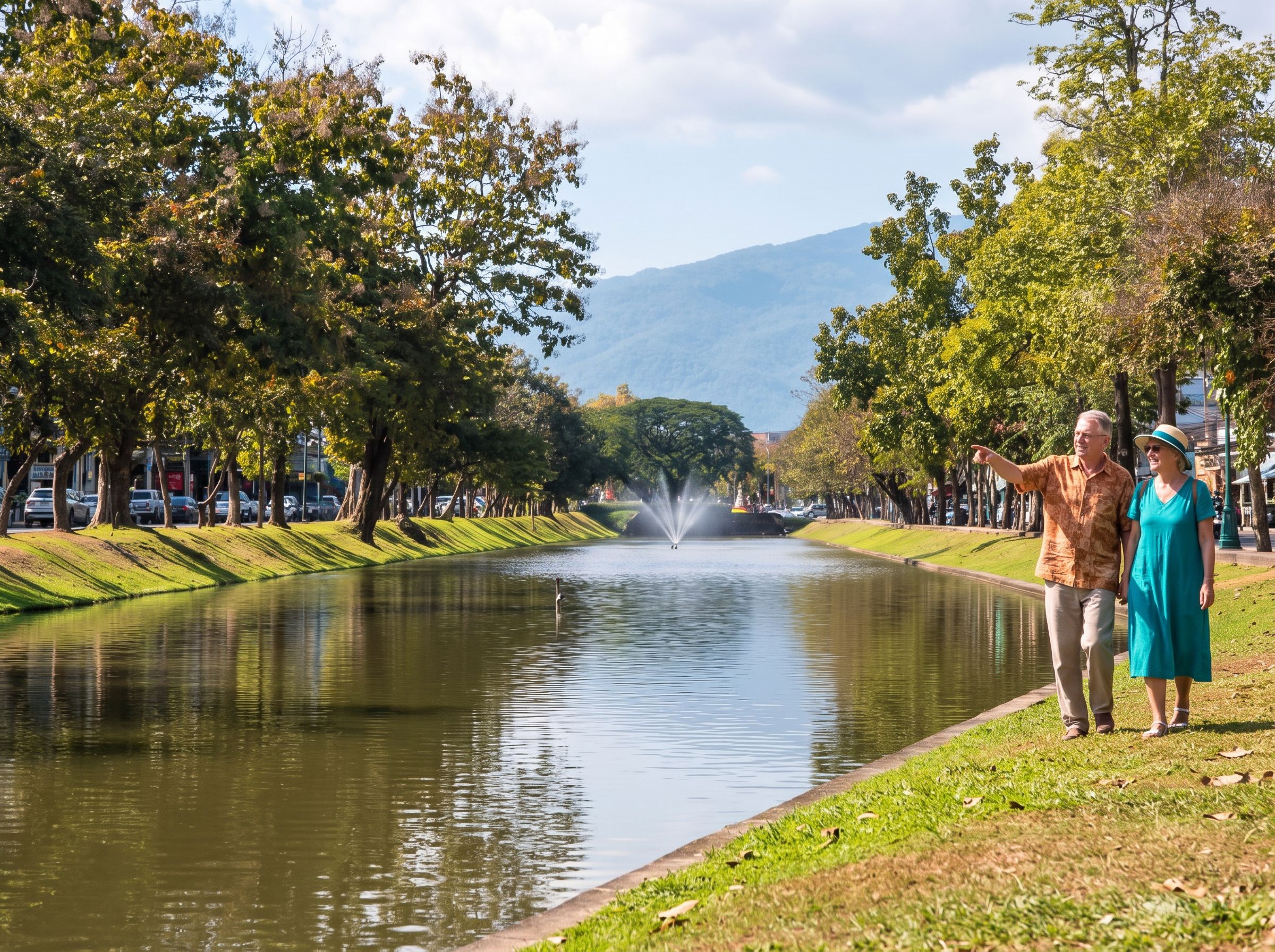
That same source describes Chiang Mai in November at 31°C by day with 20°C nights, clean air and landscapes still green from the monsoon. It calls this stretch arguably Thailand at its absolute best. For a reader in their fifties or sixties, the combination matters: warm enough for light clothing, cool enough for a full day on foot, and clear enough to actually see the mountains that frame the city.
 AI-edited
What is Chiang Mai like month by month?
November to February brings mild days, cool nights and low rainfall. March and April turn hot and hazy, with April the hottest month at an average high of 37°C. May begins to clear the smoke as the first rains arrive. June to October is the monsoon, wettest in August at 223 mm.
The figures below come from the Chiang Mai station climate normals (WMO 48327) published by Visit Thailand Today, which stands in for the north including Chiang Mai, Chiang Rai and Pai. Average annual rainfall is about 1,139 mm. The table gives average high, average low, rainfall and average daily sunshine hours.
| Month | Avg high | Avg low | Rainfall | Sunshine |
|---|---|---|---|---|
| January | 30°C | 16°C | 11 mm | 8.3 hrs |
| February | 33°C | 17°C | 10 mm | 9.0 hrs |
| March | 35°C | 20°C | 20 mm | 8.6 hrs |
| April | 37°C | 23°C | 54 mm | 8.4 hrs |
| May | 35°C | 24°C | 168 mm | 7.0 hrs |
| June | 33°C | 25°C | 118 mm | 4.9 hrs |
| July | 32°C | 24°C | 149 mm | 3.7 hrs |
| August | 32°C | 24°C | 223 mm | 3.6 hrs |
| September | 32°C | 24°C | 207 mm | 5.1 hrs |
| October | 32°C | 23°C | 124 mm | 6.3 hrs |
| November | 31°C | 20°C | 41 mm | 7.6 hrs |
| December | 29°C | 17°C | 14 mm | 7.7 hrs |
Read the table for the shape of the year rather than the decimals. December is the coolest month by day, at 29°C, with January close behind and the coolest nights of the year at 16°C. February is the driest, at 10 mm, and also the sunniest, at nine hours a day. April is the hottest, at 37°C, and August the wettest, at 223 mm. Humidity follows the rain: February's air is the driest of the year at 58%, while August and September sit at 82%.
For anyone weighing a monsoon visit, the trade-off is real but manageable. June to October brings frequent afternoon showers, higher humidity and wetter outdoor conditions, with August and September the heaviest. In exchange, the air is generally cleaner once the first monsoon rains arrive, the landscape is at its greenest, and prices and crowds ease. Travellers who can accept a shower-heavy afternoon and prefer to avoid smoke altogether may find the wet season suits them better than the hot season does.
Why should you avoid March and April?
March and April are the burning season, when agricultural fires push Chiang Mai's air quality into unhealthy or hazardous ranges. March is usually the worst month, with the AQI regularly exceeding 150 and sometimes passing 300. Mountain views disappear and the heat peaks at the same time.
This is the single most important planning fact for older travellers. By late February, agricultural fires begin degrading Chiang Mai's air quality. Visit Thailand Today notes that conditions in February are usually still moderate but trending worse, and that the north's humidity falls to 58%, the driest air of the year. From there, the burning season peaks in March, when Chiang Mai's AQI regularly exceeds 150 and sometimes reaches 300 or more, a level the source describes as hazardous territory that cancels the mountain views entirely.
The health dimension is documented rather than speculative. Chiang Rai Times reported on 19 February 2026 that a health authority warned over rising PM2.5 levels in Chiang Mai. The practical implication for readers with asthma, heart or lung conditions is straightforward: this is the window to avoid if respiratory comfort matters. Even for those without a diagnosed condition, several guides describe visibility dropping sharply and the mountains washing out to a dull grey.
April compounds the problem. It is the hottest month, with an average high of 37°C, and the haze risk continues. Several published guides place April daytime highs around 35 to 38°C. The rains that finally clear the smoke usually arrive in May, when 168 mm of rain begins to wash the air.
How does Songkran affect a spring visit?
Songkran, the Thai New Year water festival, runs from 13 to 15 April, three days of nationwide water fights. It lands in the hottest and smokiest part of the year, and it brings major crowds, higher prices and disrupted movement through central Chiang Mai and the Old City.
Songkran is a genuine bucket-list experience, with Chiang Mai's moat circuit named as one of its epicentres. It is also the one reason some travellers still visit in April despite the heat and haze. The practical consequences are worth planning around rather than discovering on arrival.
Local coverage during Songkran reported key sites such as Khu Muang and Tha Phae Gate filled with visitors despite the heat and haze. For a reader aged 50 to 70, the festival is a factor in three ways: crowds at the major sites, pressure on hotel rates and availability, and movement through the city becoming slow and wet. None of that makes April a bad choice for everyone. It does mean the month should be chosen deliberately, for the festival, rather than by default.
If the festival calendar is what draws you, the city's wider cycle of celebrations is a subject in its own right and has its own dedicated guide. This article stays with weather and air quality.
Which months give the clearest skies?
December and January are repeatedly described as the driest and coolest months and give the strongest odds of clear air. November also ranks highly, with clean air and green landscapes. Late February begins to deteriorate as haze builds, so early February is more dependable than late.
Clear skies matter in Chiang Mai because so much of the appeal is vertical. They also note that mountain viewpoints and trails are often affected by haze during the burning season. A clear January morning and a hazy March morning at the same viewpoint are different experiences.
November has its own argument. It sits at the end of the rains, so the landscape is still green, the air is clean, and the cool season is beginning. It is also the month when Yi Peng and Loy Krathong fall, which brings crowds and higher demand alongside the lantern displays. Travellers who want the best balance of weather and lower crowd pressure are often pointed to late October to early November, or late January to early February.
How should older travellers handle the heat and humidity?
Chiang Mai's cool season is genuinely mild, with January nights at 16°C and February humidity at 58%. The hot season is a different matter: April averages 37°C by day. Planning around mornings, shade and hydration makes the difference, and the cool months require very little adaptation.
For most of the November to February window, heat is not the constraint it is elsewhere in Thailand. December days average 29°C and January 30°C, with nights cool enough for a light layer. February is the driest month of the year at 58% humidity, which makes walking and sightseeing far more comfortable than the monsoon months at 82%.
The Old City is the easiest area to walk, because it is flat. Outside the walled centre, sidewalks are often narrow, uneven, obstructed, or have ramps that are not reliably usable, so Chiang Mai is only moderately accessible overall. That detail is documented in more depth in our guide to how accessible Chiang Mai is for older travellers, which covers terrain and mobility in detail.
Heat management in the hot season is a matter of timing rather than avoidance. Early mornings and late afternoons are the workable hours, with the middle of the day spent indoors or in shade. Emergency numbers for the Chiang Mai city area are documented as 1669 for medical emergency or ambulance, 191 for police, 199 for fire and rescue, and 1155 for the Tourist Police, who provide English-language support.
Is the rainy season worth considering?
June to October is the monsoon, with frequent afternoon showers and the heaviest rain in August at 223 mm and September at 207 mm. In exchange, the air is generally cleaner once the rains arrive, the scenery is at its greenest, and crowds and prices ease. It suits travellers who accept showers.
The monsoon is not a washout. Rainfall concentrates in afternoon downpours rather than all-day drizzle, and the sunshine figures show why: August averages 3.6 hours of sun a day and September 5.1, against nine hours in February. Mornings are often usable, with the rain arriving later.
The compensation is air quality. Once the first monsoon rains arrive, the smoke clears, and the months from June onward are generally cleaner than the hot season. For a reader whose priority is breathing comfort rather than guaranteed sunshine, the wet season is a defensible choice, particularly July and early October, which sit either side of the heaviest rain.
Food and water precautions matter more in the warmer, wetter months, and our guide to food and water safety in Chiang Mai for the over-50s covers what to check. If a rainy-season visit appeals, the city's dining rooms are a strong wet-afternoon option, and our round-up of Chiang Mai's finest restaurants and riverside dining is a useful starting point.
When is the best value window?
Late October to early November and late January to early February offer good weather with slightly lower crowd pressure than peak season. December and January are the busiest and most expensive. The monsoon months of June to October bring the lowest demand.
Chiang Mai's peak travel season coincides with its best weather, which is no accident. November is described as the start of the cool season and peak travel season, and the combination of clear skies and festival activity draws visitors from across the world. Rates are indicative and vary by season and booking channel, so it is worth comparing directly rather than relying on any single figure.
The shoulder periods are the practical compromise. Late October to early November catches the tail of the rains and the start of the cool season, before the peak surge. Late January to early February sits after the holiday rush and before the haze builds. Both offer most of the weather benefit with somewhat less pressure on hotels and sites.
If quiet matters more than sunshine, the choice of accommodation does as much work as the month. Reviews of Chiang Mai hotels repeatedly favour quieter, centrally located Old Town properties over those near the airport flight path or the Nimman nightlife area, where aircraft and bar noise are recurring complaints. Our guide to the quietest hotels in Chiang Mai sets out where light sleepers tend to rest best.
How do you plan around air quality?
Treat air quality as the primary filter, then weather as the second. Aim for late November through early February. If travel must fall between late February and April, check AQI forecasts before booking and consider a mask for outdoor activity. Conditions vary year to year.
Several sources place the burning season from mid-February through April, with March the most consistently polluted month. Travellers report that conditions vary sharply from day to day even within that window, and that rain can clear the smoke for a day or two.
For those with asthma or heart and lung conditions, the guidance from traveller reports is to be especially cautious and to consider a KN95 or KF94 mask for outdoor activity during the smoky months. That is planning information, not a verdict on the city. Chiang Mai is a temple, food and culture destination of real depth, and the cool season shows it at its best.
The city's own tourism authority publishes opening schedules for its markets and attractions, including some that operate on Saturday-only or Sunday-only evening timetables, which is worth checking against your dates. The Chiang Mai Province official tourism page is the place to confirm current schedules before you travel.


