
Located in the heart of the Austrian Tyrol, the Zillertal valley offers a winter escape that doesn't demand expert skiing or exhausting climbs. For active travellers aged 50 to 70, this is a place where the snow experience is measured in quiet walks along cleared paths and the laughter of a toboggan run under floodlights. The valley's infrastructure—from the barrier-free Zillertalbahn railway to lift-assisted mountain access—makes it a practical choice for those who want winter magic without the strain of high-altitude exertion.
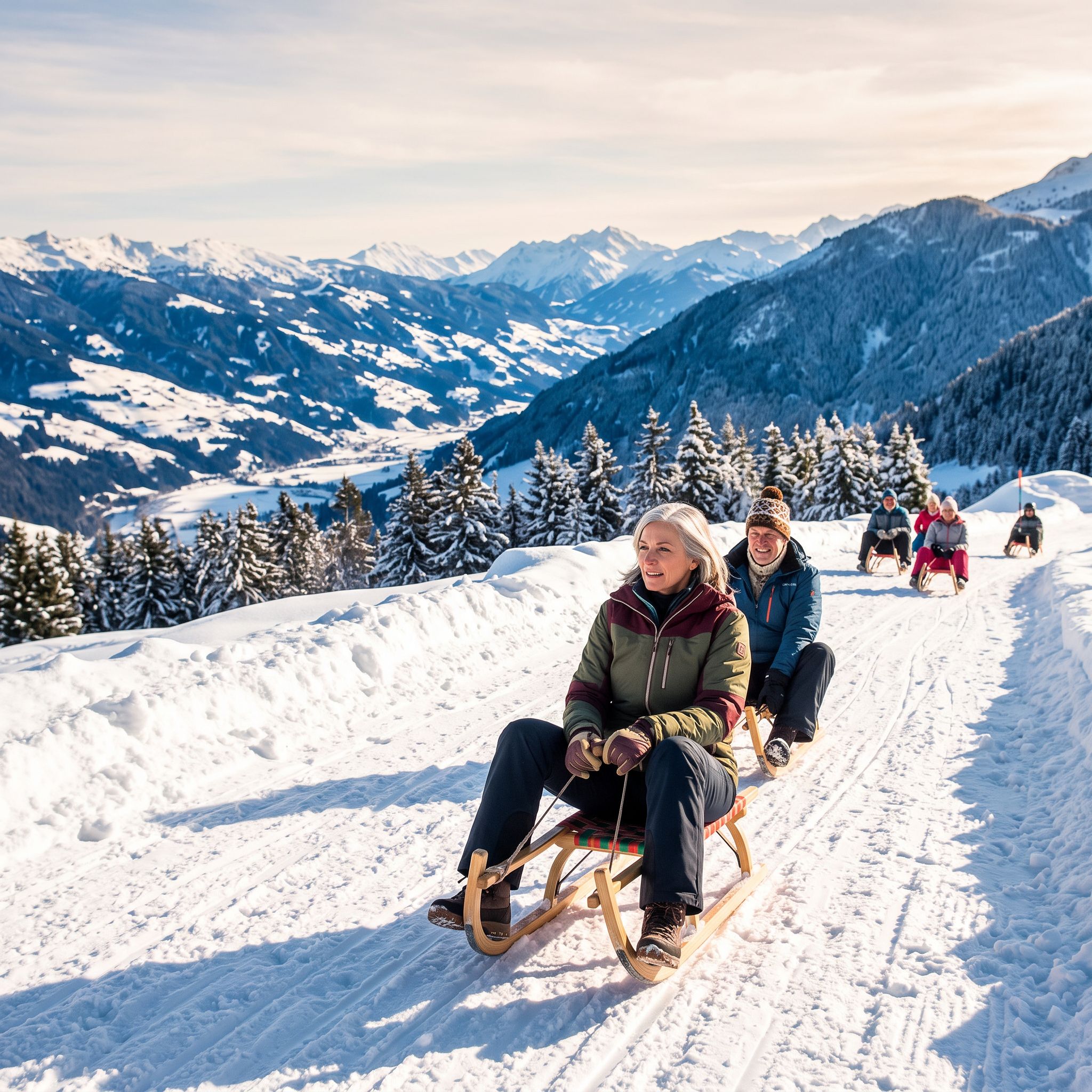
Which toboggan runs are best for beginners and older first-timers?
The Gerlosstein toboggan run at Hainzenberg is the standout choice for older beginners: a 7 km descent reached by cable car, graded easy to medium, with floodlit evening sessions on select days. Shorter family runs like Krummbachtal (1.5 km) offer gentler alternatives for those building confidence.
The Zillertal promotes over 45 km of toboggan runs across the valley, but not all suit first-timers. The Gerlosstein run, accessed via the Gerlossteinbahn cable car from Hainzenberg, removes the most physically demanding part—the uphill climb. Guests consistently report that the run is long but manageable, with a mix of gentle curves and straight sections that allow you to control your speed. As of the 2024/2025 winter season, the run operates daily except Wednesday and Sunday evenings, with floodlighting until around 9:00 PM on open nights.
For those who prefer shorter descents, the Krummbachtal run in the Zillertal Arena is a 1.5 km floodlit option that families and older riders find less intimidating. The Finkenhof run in Wald is described by tourism officials as especially suitable for children, making it a safe choice for grandparents introducing grandchildren to the sport. Both runs have gentle gradients and are well-maintained throughout the season.
How do I hire a sledge, and what should I know about equipment?
Sledge hire is straightforward at most lift stations and mountain huts. Expect to pay around €8–€12 per day for a standard wooden sledge, with helmets available for an additional €3–€5. Many rental shops near the Gerlossteinbahn and in Mayrhofen offer multi-day discounts.
Most toboggan runs in the Zillertal have rental points at the base or summit. At Gerlosstein, you can hire a sledge at the valley station before riding the cable car up, or at the mountain hut near the run's start. The standard Tyrolean wooden sledge—a "Rodel"—is sturdy and forgiving, with steel runners that grip well on packed snow. For older riders, consider asking for a sledge with a braking aid (a simple metal lever that presses against the snow), which adds control on steeper sections.
Helmets are not mandatory on most runs but are strongly recommended, especially for first-timers. Recent guest reviews note that the Gerlosstein run has some hairpin turns and stone retaining walls, so a helmet provides peace of mind. Wear waterproof trousers and gloves; the snow can be wet, and you'll be sitting on the sledge for 20 minutes or more. Walking poles are useful for the short walk from the cable car to the run's start, particularly if snow conditions are soft.
What are the best winter walking paths for active seniors?
The Easy Trail Mayrhofen-Hippach is the valley's premier winter walk for older travellers: a 24.5 km route with no significant climbs, clearly signposted, and suitable for year-round use. The Zilleruferweg along the valley floor offers flat, wheelchair-friendly paths ideal for a gentle afternoon stroll.
The Zillertal tourism board advertises over 460 km of cleared winter hiking trails, but the Easy Trail stands out for its accessibility. Running from Mayrhofen to Hippach and back, this route follows the Ziller river on a wide, packed-gravel path. It's designed for walkers of all abilities, with benches every few hundred metres and several huts serving warm drinks along the way. As of July 2026, the trail is maintained daily, even after fresh snowfall, and is suitable for walking in sturdy hiking boots or winter boots with good grip.
For a shorter option, the Zilleruferweg between Zell am Ziller and Mayrhofen offers a 6 km flat promenade that secondary sources describe as wheelchair-friendly. While I couldn't verify this directly from official tourism material, the path is well-used by locals and visitors alike. The Ginzling Winter Magic route in the Zillertal Alps Nature Park provides a quieter, scenic alternative with snowshoe routes and cross-country tracks, though some sections have gentle gradients that require moderate fitness.
How accessible is the Zillertal for travellers with limited mobility?
The valley floor is highly accessible: the Zillertalbahn railway is largely barrier-free with low-floor access, and major stations like Jenbach, Zell am Ziller, and Mayrhofen are step-free. Mountain lifts vary, so confirm specific cable car accessibility before booking.
The Zillertalbahn connects the valley's main towns from Jenbach to Mayrhofen, with trains running every 30–60 minutes in winter. The railway is promoted as barrier-free, with ramps and level boarding at principal stations. For inter-town travel, this is the most comfortable option—no driving, no parking, and heated carriages. The Zillertal Card or Active Card includes free public transport and daily cable car journeys, making it a cost-effective choice for a week's stay.
On the mountain, the Gerlossteinbahn cable car has step-free access to the boarding area, but the summit station may have a short flight of stairs to reach the toboggan run start. The Penkenbahn in Mayrhofen and the Rosenalmbahn in Zell am Ziller are modern gondolas with level boarding and heated cabins, suitable for winter walkers who want to reach higher trails without exertion. For detailed accessibility information, check the Gerlosstein toboggan run official page for current lift specifications.
"I'm 68 and was nervous about tobogganing, but the Gerlosstein run was perfect. The cable car took us up, and we took it slow on the way down. My wife, who has arthritic knees, managed fine with walking poles on the flat valley walks." — David K., traveller from Canada
What safety tips should older first-timers know before tobogganing?
Start conservatively: test your speed on the first gentle section before committing to faster descents. Wear a helmet, keep both feet on the sledge's front runners for steering, and avoid runs that are icy or crowded. Check opening conditions on the same day via the official tourism website.
Forum discussions among older travellers reveal a common surprise: toboggan runs can feel faster than they look. One Rick Steves forum member estimated a run could take under 5 minutes at speed, with the uphill return also taking under 5 minutes on a short course. For the Gerlosstein run, the descent typically takes 20–25 minutes at a relaxed pace, but the long run means you encounter varied conditions—packed snow, occasional ice patches, and hairpin turns with stone retaining walls.
Key safety practices for older riders:
- Check the run's difficulty rating before going. The Zillertal Arena website marks runs as easy, medium, or difficult. Beginners should stick to easy runs like Finkenhof or Krummbachtal.
- Avoid evening sessions on your first try if you're uncertain. Floodlit runs are beautiful but shadows can hide icy patches. Try a daytime descent first to learn the terrain.
- Use a braking sledge if available. Rental shops near Gerlosstein offer sledges with a hand-operated brake lever that gives you precise control.
- Dress in layers with a waterproof outer shell. You'll generate heat during the descent but cool quickly at the bottom. A warm hat and gloves are essential.
For winter walking, the main hazard is ice. A Fodors forum contributor warned that when trails are iced, they become "very slippery and a bit dangerous," recommending micro-crampons or very good shoes. The Fodors forum on tame Swiss Alpine hikes offers similar advice for winter walking in the Alps: stick to groomed paths, carry poles, and start earlier than you think you need to.
Where should I base myself for the best winter walking and tobogganing?
The Fügen–Kaltenbach–Zell am Ziller–Mayrhofen corridor offers the best combination of flat valley walks, accessible transport, and beginner-friendly toboggan runs. Mayrhofen is the largest town with the most services, while Zell am Ziller provides a quieter base with direct lift access.
Mayrhofen is the valley's hub, with a pedestrianized centre, numerous hotels, and the Zillertalbahn terminus. The Easy Trail starts here, and the Penkenbahn gondola provides access to higher winter walking routes. For a more relaxed atmosphere, Zell am Ziller offers the Rosenalm beginner area with practice lifts and covered conveyor belts—ideal for those who want gentle mountain access without crowds. Fügen is home to the Erlebnistherme Zillertal, a barrier-free thermal spa that serves as a warm refuge on cold days.
Accommodation choices vary in accessibility. Recent guest reviews note that some hotels have no lift, steps to dining rooms, or steep approaches. When booking, verify specifics: elevator access, step-free entry, walk-in showers, and quiet room placement (street-facing rooms can be noisy). Properties like Hotel Theresia in Mayrhofen and Mia Alpina in Zell am Ziller receive consistent praise for their accessibility features and friendly service.
| Location | Best For | Difficulty | Lift Access | Evening Operation |
|---|---|---|---|---|
| Gerlosstein, Hainzenberg | Tobogganing (7 km run) | Easy/Medium | Cable car | Yes (except Wed/Sun) |
| Easy Trail, Mayrhofen-Hippach | Winter walking (24.5 km) | Easy | None needed | Daylight only |
| Krummbachtal, Zillertal Arena | Tobogganing (1.5 km) | Easy | Short walk | Yes (floodlit) |
| Zilleruferweg, Zell am Ziller | Flat valley walk (6 km) | Easy | None needed | Daylight only |
| Rosenalm, Zell am Ziller | Beginner ski/toboggan area | Easy | Gondola | Limited |
What should I pack for a winter trip focused on walking and tobogganing?
Pack waterproof trousers and gloves for tobogganing, sturdy winter boots with good tread, micro-crampons for icy paths, and walking poles if you have knee concerns. A small daypack with a thermos of hot tea and snacks will make your walks more comfortable.
Winter in the Zillertal valley typically sees temperatures between -5°C and 5°C from December to March, though higher elevations can be colder. Layering is key: a thermal base layer, fleece mid-layer, and waterproof outer shell work for both walking and tobogganing. For the toboggan run, waterproof trousers are non-negotiable—you'll be sitting on snow, and wet jeans will chill you quickly.
Footwear matters more than most travellers expect. Forum discussions among older walkers emphasise that winter trails can be "packed firm" and walkable in hiking boots, but ice changes everything. Micro-crampons (like Kahtoola Nanospikes or similar) weigh next to nothing and can be slipped on in seconds. Walking poles provide stability on uneven terrain and reduce strain on knees during descents—one forum poster with arthritic knees said she "would not get out of the gondola without hiking poles."
For those interested in exploring beyond the valley floor, our guide to Half-Day Hikes in the Zillertal Alps for Active Over-50s offers routes that combine winter walking with scenic mountain views. And if you're considering a full winter sports holiday, Skiing the Zillertal in Your 50s and 60s covers gentle slopes and smart pacing for those who want to try downhill skiing as well.


