
Lake Como has earned a reputation as one of Italy’s most expensive destinations, and for good reason. But a comfortable trip here doesn’t require a billionaire’s budget. With smart choices about where you stay, how you move, and when you visit, you can enjoy this stunning lake without financial regret. This guide breaks down exactly what you’ll spend, where the money goes, and how to avoid the common pitfalls that inflate costs for travellers aged 50–70.
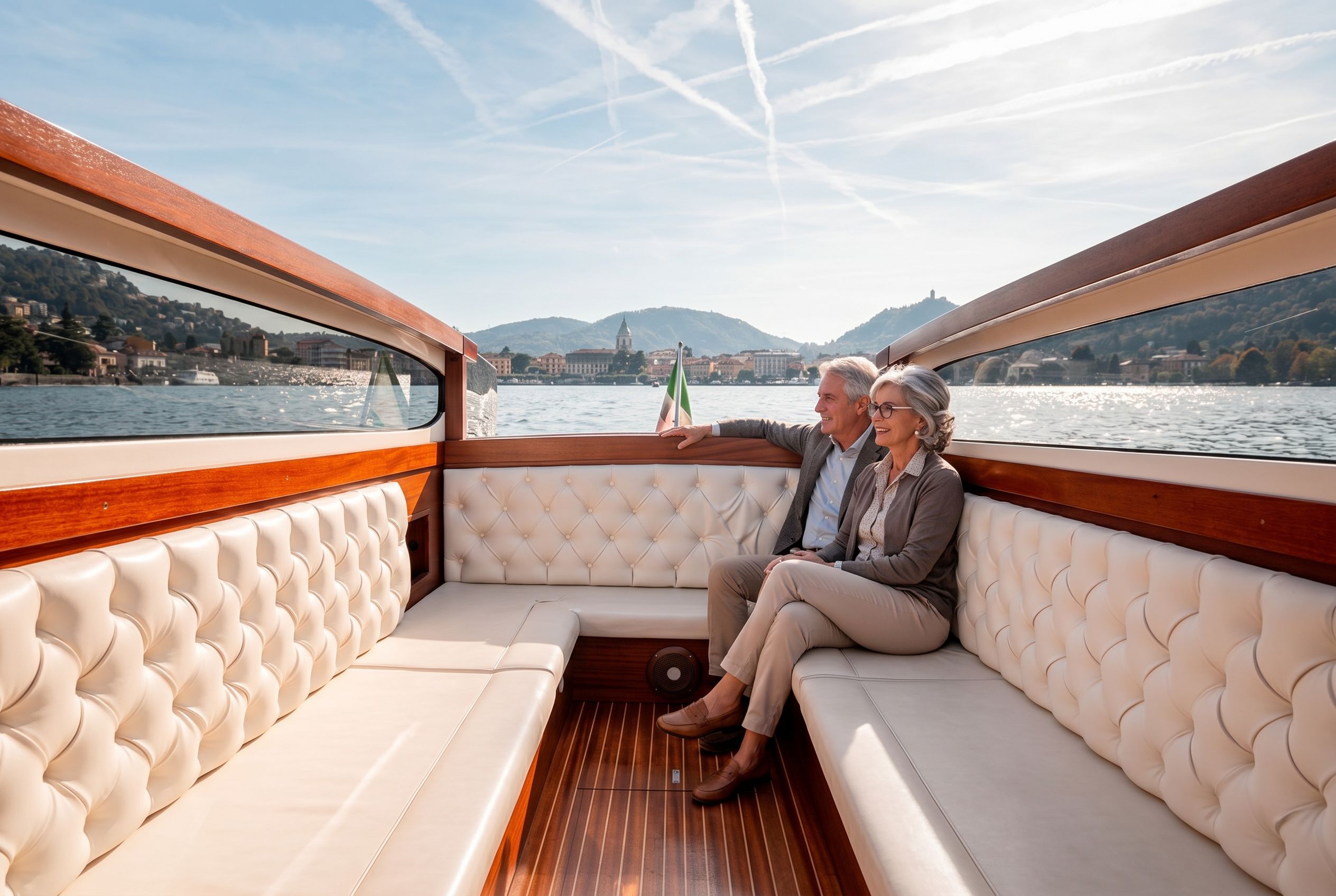 AI-edited
What is a realistic daily budget for a comfortable trip?
A comfortable Lake Como trip for travellers aged 50–70 typically costs between €220 and €300 per person per day, depending on your accommodation tier and dining choices. This covers a 4-star hotel with breakfast, mid-range lunches and dinners, ferry tickets, and entry to one or two villas. For a more economical but still pleasant version — a three-star room or B&B, casual meals and the same ferry pass — budget €130–€160 per day.
Tourlane’s cost analysis for a 2026 trip puts the average per-person daily spend at about $365 for a mid-range trip and about $220 for a budget-conscious but comfortable version. Those figures are quoted in US dollars, exclude flights, and the mid-range version assumes a mid-size rental car. The same analysis lists 2–3 star hotels and B&Bs from about $90 a night, 4-star hotels and apartments from about $120, and 5-star hotels and resorts from about $600, and notes that rates rise sharply over the summer holidays. Accommodation is therefore the variable worth planning around: booking early, and looking a street or two back from the water, moves more money than any other single decision.
How much should I budget for hotels?
Accommodation is your largest expense. A comfortable 4-star hotel with breakfast will cost €180–€300 per night. Luxury grand hotels like the Grand Hotel Tremezzo or Grand Hotel Victoria run €500–€2,000 per night, while a good 3-star option can be found for €90–€150. The sweet spot for value and comfort is the €180–€280 range.
The Grand Hotel Victoria in Menaggio (Viale Benedetto Castelli 9/13) is the five-star option on the western shore and stands at 4.6 out of 5 on Google from 674 reviews as of August 2026. Its 1,500-square-metre spa is the draw: the hotel lists Finnish and infrared saunas, steam baths, emotional showers, a salt room and a 20-square-metre heated indoor pool, plus an outdoor pool in the garden. The neighbouring Victoria Beach Club is charged separately — the hotel’s own list of guest benefits offers 10% off admission rather than free entry. For a quieter base, Varenna’s Albergo Milano (Via XX Settembre 35) is around €280 a night with breakfast, but the owners state plainly that their historic buildings have steps and are not equipped for guests with limited mobility. The four-star Grand Hotel Menaggio (Via IV Novembre 77) sits a short walk from the ferry pier. One cost that never shows up in a room rate is the comune tourist tax, payable at check-out: at the Albergo Milano it is €2.00 per person per night.
For a deeper look at which town suits your travel style, see our dedicated guide: Choosing Your Base on Lake Como: A Town-by-Town Guide for Travellers 50–70.
| Tier | Price per night (€) | Typical properties |
|---|---|---|
| Budget-friendly | €90–€150 | 2–3 star hotels, B&Bs in Menaggio or Colico |
| Comfortable mid-range | €180–€300 | 4-star hotels in Varenna, Menaggio, Bellagio |
| Luxury grand hotel | €500–€2,000+ | Grand Hotel Tremezzo, Grand Hotel Victoria, Il Sereno |
What do ferries and local transport cost?
Public ferries are the most senior-friendly and cost-effective way to explore the lake. Varenna, Bellagio and Menaggio all fall in the same fare band (stretch 3), so a one-way ordinary boat ticket between them costs €5.50, or €4.40 for travellers over 65 from Monday to Friday. The one-day free-circulation ticket for that stretch is €17.50, or €14.00 with the over-65 reduction, and covers unlimited trips between the three towns. A Trenord single from Milano Centrale to Varenna-Esino is €7.40, so under €15 return.
Navigazione Laghi runs the public ferry network and has equipped its ships and main piers with portable step-free ramps since 2016; it has also installed tactile routes and maps at some wharfs. The operator is candid about the limits: not every wharf is easy to reach with a wheelchair — it names Villa Carlotta, Blevio and Pognana — and boarding can be restricted at the captain’s discretion, so it is worth confirming a specific sailing in advance. The ferry is also easier than the bus: ASF line C130 (Como–Nesso–Bellagio) takes about 69 minutes end to end on the 2026 summer timetable, and line C110 runs Como–Argegno–Menaggio–Colico along the western shore, both on narrow lakeside roads where standing is common in high season. One easily missed saving: between 9 June and 13 September 2026 ASF carries passengers free of charge on the C110 after 19:00 between Argegno and Menaggio, every day of the week.
Private water taxis are available for door-to-door access if mobility is a concern, but they are expensive: Taxi Boat Varenna prices its private boat services from €300, a rate that covers the boat for one to five people, and states that transfer prices depend on the pick-up and drop-off points. Its shared one-hour group tour starts at €60 per person. For most travellers, the one-day ferry pass is the best value. Avoid renting a car unless you are staying in a remote apartment; the train-plus-ferry combination is more efficient and less stressful.
How much should I budget for meals?
A comfortable dining budget is about €70–€100 per person per day, covering a casual lunch (€15–€25), a three-course dinner (€44–€70), and coffee or gelato. A fancy dinner at a lakeside restaurant runs €50–€100 per person, while a simple pizza or pasta meal costs €11–€20.
Local specialties like carpaccio with polenta or fresh lake fish are affordable mid-range options. For a memorable but not extravagant evening, look for restaurants offering a menu turistico (fixed-price menu) for around €30–€40. Aperitivo is still good value: an early-evening spritz normally comes with nibbles at no extra charge. Bar La Cambusa on Piazza Martiri della Libertà in Varenna is the best-known address for it, which carried a Google score of 4.7 across 3,969 reviews in August 2026.
For a full exploration of the region’s cuisine, see our guide: What to Eat Around Lake Como: A Food-Lover’s Guide for Travellers 50–70.
“Despite the fact that Lake Como is known to be a touristy place, I think we found one of the restaurants that is value for money and still tasty! The standouts for me were the cappuccino and their pizza! The staff were also very friendly and kind.” — one Google reviewer on Bar La Cambusa in Varenna, May 2026
What do villa tickets and activities cost?
Villa entry is no longer a rounding error. In 2026 Villa Carlotta charges €17.50, reduced to €15.00 for over-65s with ID. At Villa del Balbianello the FAI asks €15 for the park alone and €25 for the park plus the compulsory 50-minute guided tour of the interior. Villa Monastero in Varenna charges €15.00 for garden and house museum, €11.00 for over-65s, or €13.00 and €10.00 for the garden alone. Private boat tours are the biggest splurge, with published two-hour rates starting at €260 for the whole boat and running to €500–€600. Tourlane puts the most popular activities, such as a wine-cellar tour with tasting, at about $40–$95 per person. Villa Carlotta also grants a ticket-office discount if you show a same-day ASF bus or Trenord train ticket.
For a detailed look at the gardens and what to expect in terms of walking and accessibility, read our guide: The Villa Gardens of Lake Como: A Senior’s Guide to Carlotta, Balbianello, Melzi, and Monastero.
Where is Lake Como dear versus reasonable?
Lake Como is most expensive in Bellagio, especially for accommodation and lakeside dining. Menaggio and Varenna offer better value for hotels and restaurants. Colico, at the northern end, is the most affordable base, with cheaper accommodation and less tourist traffic. The lake is widely regarded as dearer than Lake Garda or the Italian Riviera, though no published study puts a reliable figure on the gap.
Como’s reputation as the more glamorous of the two lakes is part of what drives its prices; Fodor’s comparison of Lake Garda and Lake Como is a useful second opinion. However, you can mitigate this by staying in Menaggio (often the cheapest of the three main towns) or choosing a hotel a 10-minute walk from the lakefront rather than directly on the water. Tourlane’s own observation is the useful one here: restaurants directly on the water are considerably pricier than snack bars and pizzerias a street or two behind the promenade.
Sample daily budgets for three travel styles
| Category | Frugal (€130–€160) | Comfortable (€220–€300) | Luxury (€1,000+) |
|---|---|---|---|
| Accommodation | 3-star B&B (€90) | 4-star hotel (€180) | 5-star grand hotel (€600+) |
| Breakfast | Included | Included | Included |
| Lunch | Pizza or panini (€12) | Trattoria meal (€20) | Lakeside restaurant (€40) |
| Ferry day pass | €17.50 | €17.50 | Private boat, 2 h (from €260 per boat) |
| Villa entry | Villa Monastero garden (€13) | Villa Carlotta (€17.50) | Balbianello villa + park (€25) |
| Dinner | Casual meal (€18) | 3-course dinner (€55) | Fine dining (€100+) |
| Gelato/coffee | €5 | €8 | €15 |
| Daily total | €155.50 | €298 | €1,040+ |
How accessible is Lake Como for travellers with mobility concerns?
Lake Como’s accessibility is mixed. The Greenway of Lake Como—11.2 km through Colonno, Sala Comacina, Ossuccio, Lenno, Mezzegra, Tremezzo and Griante, walkable in about three and a half hours—is rewarding but not level: the operator describes alternating stretches of paved road, tracks and cobbled steps, and states it cannot be walked with a wheelchair. Most village centres are harder still, with steep hills, cobblestone streets and stair-like paths. Menaggio and Varenna have flat promenades along the water, while Bellagio’s Salita Serbelloni is a challenging uphill climb.
Many shops and restaurants have steps, and public toilets are scarce. The most reliable starting point is the accessible-tourism itinerary that Regione Lombardia’s tourist board publishes for Lake Como: it covers five towns — Como, Lecco, Bellagio, Varenna and Menaggio — and the board states that conditions at each point of interest were verified on site by accessible-tourism specialists rather than taken from brochures. Hotels are the weak spot. Several well-known houses document nothing at all about step-free entrances or accessible bathrooms, so ask the property in writing before you book instead of relying on a listing.
What healthcare and pharmacy options are available?
Pharmacies (farmacia) are easy to find in Como, Bellagio and Varenna and are marked by a green cross, a symbol Italian law reserves for pharmacies; the one on night duty must keep its green cross lit. For the central lake the nearest hospital with a 24-hour emergency department is the Ospedale Erba-Renaldi in Menaggio (Via Virginia Casartelli 7); the regional hub is the Ospedale Sant’Anna at Via Ravona 20 in San Fermo della Battaglia, immediately outside Como. The European emergency number is 112; for non-urgent medical help in Lombardy, dial 116117.
Ensure you have travel health insurance covering Italy. EU citizens can use their EHIC card for basic public healthcare, but private insurance is recommended for non-EU seniors. In Como itself, the Antica Farmacia Internazionale at Via Domenico Fontana 13 runs a self-diagnosis service, blood-pressure measurement and an osteopath service, and is open Monday to Saturday from 08:00 to 19:30 without a lunch break. Hours are shorter in the smaller lakeside villages, so a basic first-aid kit is still worth packing.
What should I pack for a July visit?
July temperatures regularly reach 28°C to 32°C (82°F–90°F) with high humidity and afternoon thunderstorms. Pack lightweight, breathable fabrics (linen or cotton), a light rain jacket, a sun hat, high-UV sunglasses, and a reusable water bottle. Sturdy, non-slip walking shoes with good arch support are essential for cobblestone streets and steep hills.
Consider bringing a lightweight folding stool for rest stops, as benches can be sparse on steep village paths. If you plan to walk the Greenway, take proper walking shoes rather than trainers: the operator lists cobbled steps and uphill stretches along the route. For ferry travel, a light jacket is useful for breezy decks. Italy has free public fountains, so a reusable bottle saves money and reduces plastic waste.
When is the best time to visit for comfort and value?
September is the ideal month: the summer heat softens to 18–24°C, crowds thin out noticeably after the first week, and prices begin to drop. May is a close second, with blooming gardens and temperatures of 15–22°C. July and August are peak season, when temperatures regularly reach 28–32°C, accommodation prices hit their annual peak and ferry queues are at their longest. From November the lake enters its quietest period, and between November and February many hotels, restaurants and ferry services cut their hours or close entirely.
According to Bellagio Boat Tour’s 2026 month-by-month guide, September and October offer the best overall balance of pleasant weather and thinner crowds, with September the single most recommended month. If you must travel in August, book accommodation months in advance to secure mid-range prices; last-minute searches often force travellers into expensive luxury options or lower-quality lodgings.
What common cost pitfalls should I avoid?
The biggest cost traps are: booking last-minute in high season (July and August accommodation rates are the year’s highest), dining at lakeside restaurants in Bellagio without checking menus first, and relying on taxis (a Como cab starts at €5.00, or €7.50 on Sundays, public holidays and after 22:00, then adds €1.15 per kilometre inside the city and €2.30 beyond it; the town hall’s maximum fixed fare from Como to Menaggio is €105). Also, avoid renting a car unless absolutely necessary—parking is expensive and traffic is heavy. Stick to ferries and trains.
A high room rate is no guarantee of a good night. The Lake Como EDITION in Cadenabbia, one of the lake’s newest luxury addresses, was averaging 3.9 on Google in August 2026 across 174 reviews — below the four-star Grand Hotel Menaggio a few kilometres north, which stood at 4.2 from 453. For a reliable night’s sleep, choose a 4-star hotel with modern amenities and request a room away from bar areas or street noise. The mid-range tier often offers better value than the most expensive luxury options.
Frequently Asked Questions
Is Lake Como more expensive than Lake Garda?
Yes, Lake Como is generally the dearer of the two for accommodation, dining and activities, though no published study puts a reliable percentage on the gap. Lake Garda offers similar scenery with lower prices, especially in towns like Desenzano or Sirmione. However, Lake Como’s unique charm and historic villas justify the premium for many travellers. If budget is a primary concern, consider splitting your trip between the two lakes.
Can I visit Lake Como on a day trip from Milan?
Yes, a day trip is feasible and cost-effective. The Trenord train from Milano Centrale to Varenna-Esino takes about 64 minutes, runs hourly and costs €7.40 each way. From Varenna, you can take the ferry to Bellagio and Menaggio. A day trip costs roughly €60–€85 per person (train, one-day ferry pass, lunch and one villa entry). However, you’ll miss the evening atmosphere, which many travellers find the most magical time.
Are there senior discounts for ferries or trains?
Both offer one, and neither depends on residency. Trenord, which runs the Milan–Varenna line, sells single tickets at 20% off the Lombardy regional fare to anyone aged 65 or over. On the water, Navigazione Laghi applies its reduced fare 3.20 to passengers over 65 from Monday to Friday, weekends and public holidays excluded: the one-day central-lake ticket drops from €17.50 to €14.00, and a single crossing from €5.50 to €4.40. Regional fares in Lombardy are fixed, so booking early does not make the train cheaper.
What is the cheapest town to stay in on Lake Como?
Colico, at the northern end of the lake, is the most affordable base, with cheaper accommodation and less tourist traffic. Menaggio is generally the cheapest of the three main central towns (Varenna, Bellagio, Menaggio) for lodging. Staying a street or two back from the lakefront is the standard way to cut the room rate; Tourlane makes the same point in its 2026 cost check.


