
Salzburg rewards the traveller who packs with intention. This is a city of grand squares and narrow lanes, of Mozart's birth house and hillside fortresses, where the current of daily life flows along the Salzach River. For those of us with a few decades of living behind us, the difference between a glorious day and an exhausting one often comes down to what sits in our suitcase and, more critically, what sits on our feet.
Salzburg is not a city you conquer; it is a city you stroll through, pause in, and savour. The practicalities of packing, however, can make or break that experience. This guide focuses entirely on what to bring, what to wear, and how to move comfortably through this most walkable of Austrian cities.
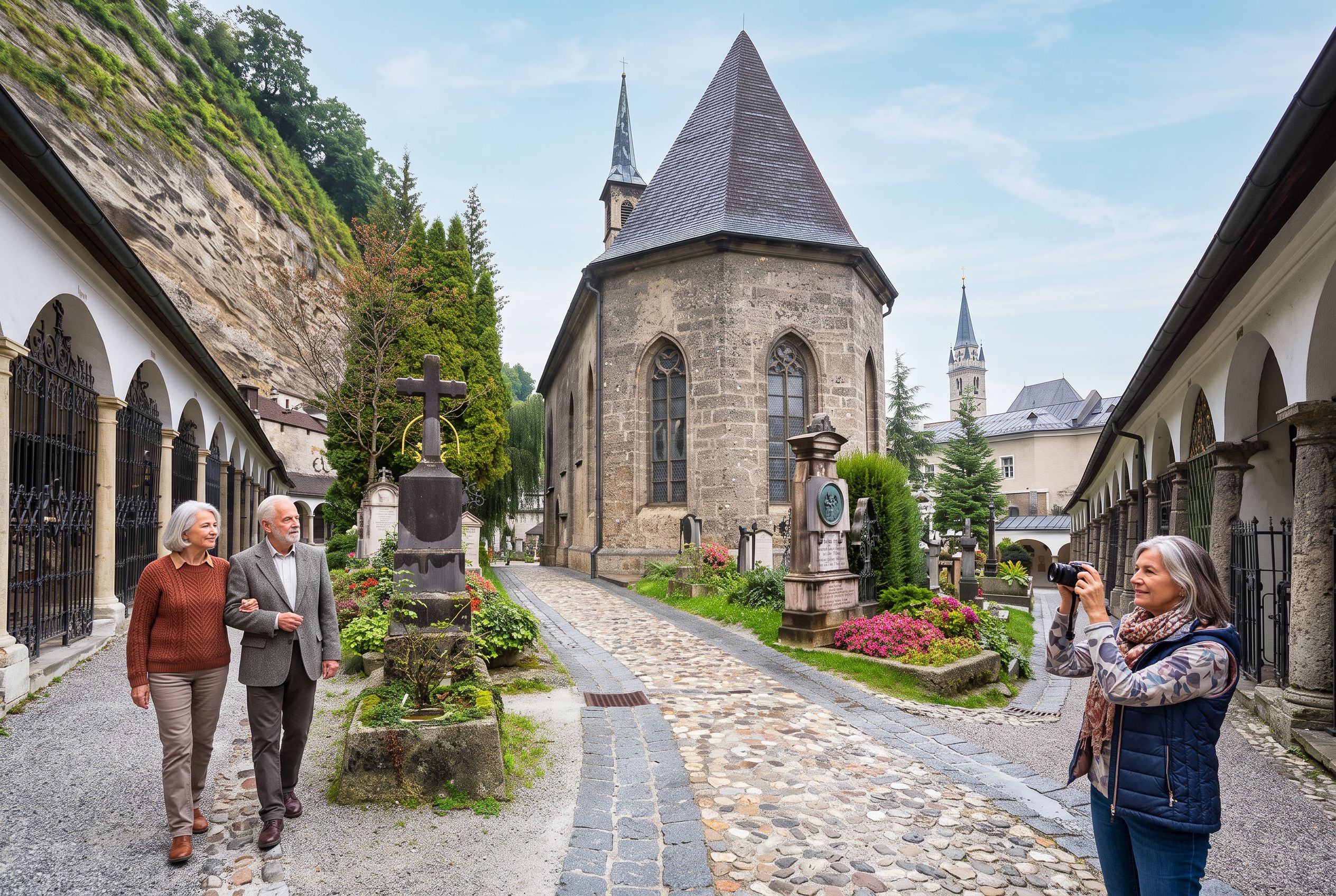 AI-edited
What shoes should I pack for Salzburg's cobbled streets?
Pack one pair of well-broken-in walking shoes with grippy, supportive soles, and consider a second, slightly dressier pair for evenings. The cobblestones of the Altstadt are beautiful but unforgiving, and the climb to the fortress demands traction more than style.
Salzburg's old town is a UNESCO World Heritage site, and that designation comes with a price: the original stone surfaces remain. Cobbles, uneven flagstones, and the occasional worn step are part of the charm, but they ask a lot of your feet and ankles. Hohensalzburg Fortress makes the same point in its own visitor advice: it recommends good footwear because there are gravel paths, steep stone steps and bumpy paving to negotiate.
The advice that circulates among travellers over 50 lands in the same place: a supportive shoe or trainer with real tread, presentable enough for dinner and forgiving enough for a day on stone. If you would rather try before you buy, the old town and the streets across the river have shoe shops within a few minutes of each other, among them ECCO at Getreidegasse 8, mia shoes on Rathausplatz, and HARTJES and Rieder Shoe a few doors apart on Linzer Gasse.
If you are visiting between November and March, consider waterproof boots rather than trainers. Wet cobbles are slick cobbles, and the traction of a proper boot sole makes a meaningful difference. In summer, a sturdy walking sandal with a closed toe and good arch support can work, but many travellers over 50 find a lightweight shoe more versatile.
How hard is the climb to Hohensalzburg Fortress?
The fortress operator puts the footpath from the old town at about 100 metres of climb and 15 to 20 minutes on foot. It is partly gravelled and steep in places, and it mixes bumpy paving with steep stone steps, so it asks for proper shoes rather than nerve. The Festungsbahn funicular offers a welcome alternative.
The walk up Festungsgasse is a workout. It is doable for many fit seniors, but it will test your knees and your lungs. The surface changes underfoot — gravel in stretches, uneven paving elsewhere, stone steps in between — and none of it rewards a smooth-soled shoe. Some travellers in their sixties and seventies make the climb with confidence; others regret not taking the funicular.
The Festungsbahn is the easiest way to reach the fortress, and it has been doing the job since 1892. It leaves from the valley station at Festungsgasse 4 in the heart of the old town, runs every ten minutes, and covers its 198.5 metres of track in 54 seconds. Once at the top the operator is candid about what waits: the fortress has a great many steps and slopes, though the panorama terrace and the bastion by the mountain station are open to everyone, and a lift in the bell tower reaches the courtyard, the armoury exhibition and the tavern. The views over the city and the Alps beyond are extraordinary.
"If you are looking for a quick way to get to the top of the fortress without the steep hike, the FestungsBahn (the funicular) is the way to go." — a review left on Google in March 2026
What kind of weather should I prepare for?
Salzburg's climate is changeable year-round, with rain possible in any month. Pack layers you can add or remove through the day, plus a light waterproof shell or compact umbrella. Summer afternoons can be warm, but evenings cool quickly.
According to the official climate normals published by GeoSphere Austria for the Salzburg Airport station over the 1991–2020 reference period, daytime highs average about 4°C in January and 6°C in February, rising to 23–25°C in the peak summer months of June through August. Rain falls in every month — even February, the driest, averages 42 mm — and the wettest months are June, July and August, each near 150 mm. This is not a city where you can assume sunshine just because the calendar says summer.
The practical approach is a layering system. Start with a short-sleeve or light long-sleeve base, add a sweater or fleece, and top with a water-resistant jacket. This combination handles everything from a cool morning to a warm afternoon to a sudden shower. In winter, swap the base for thermal layers and add a warm coat, hat, gloves, and scarf.
For a sense of what to expect in each season, our guide to when to visit Salzburg for fine weather and fewer crowds breaks down the monthly averages and crowd patterns in detail.
| Season | Daytime High | Essential Items |
|---|---|---|
| Winter (Dec–Feb) | 4–6°C | Thermals, warm coat, hat, gloves, waterproof boots |
| Spring (Mar–May) | 11–20°C | Layers, light rain jacket, comfortable walking shoes |
| Summer (Jun–Aug) | 23–25°C | Light layers, rain protection, sun hat, sunscreen |
| Autumn (Sep–Nov) | 9–20°C | Mid-weight layers, fleece, rain jacket, sturdy shoes |
What should I wear to a concert at the Festspielhaus or Mirabell Palace?
Pack one smart-casual outfit for evening performances. Salzburg's concert culture is elegant but not stuffy; a blazer or dress with comfortable shoes will see you through any venue.
Salzburg is a city of music, and you will likely find yourself at a concert, a recital, or a performance at one of the historic venues. The dress code is best described as "smart casual with a European accent." Men are comfortable in a blazer with dark trousers; women in a dress or elegant separates. You will not need a tuxedo or evening gown, but you will feel out of place in hiking gear.
The key is to choose a concert outfit that also works for a nice dinner. A pair of dark, comfortable trousers, a silk or cotton blouse or shirt, and a lightweight jacket or wrap will serve you well. For shoes, consider a low-heeled dress shoe or a smart flat that you have already broken in. Your feet will thank you when you walk back to your hotel through the lamplit streets.
For a full rundown of the performance calendar, see our guide to Salzburg's concerts and festivals through the year.
What kind of luggage works best in the old town?
Choose a lightweight suitcase with smooth-rolling wheels and a comfortable carry strap, or a backpack if you prefer. You will encounter cobbles, steps, and narrow pavements between your transport stop and your hotel.
The walk from Salzburg's Hauptbahnhof to the old town is roughly 2 kilometres, or 20–30 minutes at a brisk pace. That is a manageable distance with light luggage, but a struggle with a heavy, awkward bag. Many hotels are located on streets where taxis cannot pull up directly to the entrance, so be prepared to wheel your case over cobbles for at least a short stretch.
Forum travellers over 50 consistently recommend packing light enough to manage your own luggage. A carry-on-sized roller bag with sturdy wheels is the sweet spot for most. If you are staying in one of the grand hotels like the Sacher or the Bristol, staff will help with your luggage on request — the Bristol asks you to arrange it through reception — but you will still need to navigate the approach.
For a detailed look at one of Salzburg's most iconic hotels, including its accessibility features, read our Hotel Sacher Salzburg dossier.
How accessible is Salzburg's public transport?
The vast majority of Salzburg's public transport vehicles have low-entry doors and a wheelchair ramp the driver folds out on request, and all 108 trolleybuses kneel and carry at least one wheelchair space. The old town itself is less straightforward due to cobbles and narrow lanes, but the funicular solves the fortress problem.
Salzburg AG, the city's transport operator, draws a distinction worth knowing. Every one of its stations has barrier-free access to the station area; what is not step-free everywhere are the platforms, and only at two of them, Bergheim and Anthering. The operator expects all platforms on the Lokalbahn to be reachable barrier-free from autumn 2026. Its trolleybuses carry LED displays of the next stop and spoken announcements in German and English. If you use a wheelchair, raise a hand as the bus pulls in: the driver lowers the vehicle, steps out and folds down the ramp at the second door. This is genuinely helpful for travellers who want to reduce walking between sights.
Since 1 May 2025 every overnight guest in the province of Salzburg receives a Guest Mobility Ticket. You do not have to buy it or ask for it: your accommodation issues it digitally or as a PDF at check-in, and it covers all public transport across the province for the whole of your stay. It is funded by a mobility fee of €0.50 per person per night for guests aged 15 and over, added to the accommodation tax and rising to €1.10 from 1 May 2027. One exception to note: the ticket does not cover the Festungsbahn, so the ride up to the fortress still needs its own ticket.
For the fortress, the Festungsbahn funicular is the accessible option: the operator states plainly that the footpath is not barrier-free because of its steepness. One date belongs in the diary, though. The funicular closes for overhaul from 11 January to 14 March 2027, and again briefly from 9 to 13 November 2026 — the longer closure is itself accessibility rebuilding work, which is little comfort if you are in Salzburg that February.
What if I need a pharmacy or medical help?
Pharmacies (Apotheke) cluster in and around the old town, and the central ones stay open straight through the working day: their published weekday hours fall between 07:30 and 19:00 with no midday closure, plus Saturday mornings. For emergencies dial 112; Landeskrankenhaus Salzburg on Müllner Hauptstraße is the main hospital.
It is wise to note the closest pharmacy to your hotel on arrival, and to ask your hotel staff about the nearest walk-in clinic if you need non-emergency care. Outside opening hours you are not stranded: around 220 pharmacies across Austria are on duty every night, weekend and public holiday, and the free health line 1450 will tell you which one is nearest to you. The universal European emergency number is 112 and works from any phone; 144 reaches an ambulance directly.
For a more detailed look at healthcare options, see our guide to health, pharmacies and peace of mind in Salzburg.
What is the essential Salzburg packing list?
Beyond shoes and layers, pack a day bag with water, blister care, a power bank, and a small umbrella. Carry some cash in euros for small purchases, and bring a European plug adapter for your electronics.
Here is a consolidated list based on what seasoned travellers and local experts recommend:
- Footwear: One pair of broken-in walking shoes, one pair of evening shoes, extra socks
- Layers: Short-sleeve tops, a sweater or fleece, a light waterproof jacket
- Weather protection: Compact umbrella, sun hat and sunscreen for summer, gloves and scarf for winter
- Day bag: Small backpack or cross-body bag, refillable water bottle, power bank, blister plasters
- Essentials: Passport, travel insurance details, some cash in euros, European plug adapter
Austria runs on 230 V at 50 Hz with Type F (Schuko) sockets, which also accept the two-pin Type C plug, so bring an adapter if your devices use anything else. For a local view of what the ground actually demands of your feet, Hohensalzburg Fortress answers the equipment question directly in its official visitor FAQ.
| Option | Distance / Duration | Difficulty |
|---|---|---|
| Footpath via Festungsgasse | ~100 m of climb, 15–20 min | Gravel, bumpy paving, steep stone steps |
| Festungsbahn funicular | 54 seconds, every 10 min | Step-free to the panorama terrace |
What is the smartest way to pack for a short Salzburg trip?
Plan for three to four days with a carry-on suitcase and a day bag. Choose versatile pieces that mix and match, and remember that laundry services are widely available if you need a refresh mid-trip.
Many experienced travellers over 50 recommend packing fewer clothes and doing a small laundry load rather than hauling a heavy suitcase. This is especially sound advice for Salzburg, where the walking itself is the main activity and you will want to change shoes and socks frequently.
If cutting the walking is part of your plan, Salzburg's tourist board sets out the city's barrier-free mobility options in detail, from low-entry buses to wheelchair taxis.
Salzburg is a city that rewards preparation. With the right shoes, the right layers, and a sensible approach to luggage, you will be free to focus on what matters: the music, the mountains, and the quiet joy of a city that has been welcoming travellers for centuries.


