
Salzburg rewards the traveller who times their visit with intention. This baroque city of fortress-topped hills and riverfront promenades logged 3.29 million overnight stays in 2025, yet the difference between a July afternoon in the Old Town and a September morning could not be more pronounced. For travellers aged 50 to 70 who value unhurried sightseeing, comfortable walking temperatures, and the chance to actually hear the bells of Salzburg Cathedral without a crowd's chatter, the calendar matters enormously.
The good news: Salzburg's quietest and most pleasant windows align neatly with the European shoulder seasons. Late spring and early autumn deliver the mild, settled weather that makes this walkable city a joy, while avoiding the festival crush and summer heat that transform the Altstadt into a human river. This guide walks you month by month through what to expect—the rain, the cold, the crowds, and the golden windows in between—so you can plan a visit that feels like a discovery rather than a queue.
 AI-edited
What's the single best month for a balanced visit?
September is the strongest single-month choice for travellers over 50: daytime highs average close to 20°C, rainfall eases after the summer peak, and the Salzburg Festival crowds have dispersed while the weather remains genuinely pleasant for walking.
Multiple travel guides and climate sources converge on September as Salzburg's sweet spot. One independent Salzburg travel guide puts it plainly: things slow down after the summer rush, and the weather stays pleasant into September and early October. The climate record says the same. GeoSphere Austria's 1991 to 2020 normals give September an average daytime high of 19.9°C at Salzburg airport and 20.4°C at the Salzburg-Freisaal station in the city, with monthly rainfall down to 145 mm from August's 193 mm—and the Salzburg Festival closes on 30 August, so September inherits the good weather without the peak of demand.
Early October runs a close second. One Google reviewer described the Mirabell Gardens in May 2026 as "incredibly peaceful before about 8.30-9.00 a.m," adding that afterwards "the huge groups of tourists started appearing from everywhere" — the same rhythm applies across the city, and it is far easier to work with once the peak months are behind you. The key advantage of September and early October is that you can walk the river promenade, climb to the fortress via funicular, and linger in Mirabell Gardens without feeling rushed or jostled.
How bad is the summer crowd crush, really?
July and August are Salzburg's busiest months by a significant margin, driven by the Salzburg Festival and European summer holidays; the Old Town can feel overwhelming, and the festival alone occupies six weeks, from 17 July to 30 August in 2026.
The Salzburg Festival, which in 2026 runs from 17 July to 30 August, draws classical music lovers from around the world. While the festival itself has its own dedicated guide in our magazine, its crowd impact on the city is worth understanding. Accommodation prices spike, restaurants require reservations days in advance, and the Getreidegasse shopping street becomes a slow-moving procession.
Forum travellers consistently warn that July and August should be avoided unless the festival is your primary purpose. The weather in these months is warm—average daytime highs of 24-25°C—but this is also the wettest stretch of the year: June, July and August each average more than 180 mm of rain against 64 mm in February, so you may trade crowds for showers.
For travellers who value unhurried exploration, the summer months present a real challenge. The fortress queues stretch longer, the Mirabell Gardens lose their tranquillity, and even the quieter side streets of the Altstadt fill with day-trippers. If your schedule is flexible, the shoulder seasons offer a fundamentally different—and far more pleasant—experience.
When is Salzburg at its quietest?
January and February are Salzburg's least crowded months, and the city's own tourism review calls February the stronger of the two for arrivals and overnight stays; however, this quiet comes with cold temperatures, shorter daylight, and the real possibility of snow and ice on cobblestones.
If crowd avoidance matters more than warmth, the deep winter months deliver. Salzburg's own tourism statistics show the scale of the swing: the city counted 3,288,513 overnight stays across the whole of 2025, while January and February 2026 together brought 364,759. November, outside the Advent market period, offers similar tranquillity.
The trade-off is significant. Average daytime highs run 3-4°C in January but 6-7°C in February, and overnight lows sit below freezing in both months. Snow is possible, and the city's historic cobblestone streets can become slippery. Check the funicular before you commit to a winter date: the FestungsBahn is out of service for maintenance from 11 January to 14 March 2027, and again from 9 to 13 November 2026. The walking path, the outdoor areas and the museums stay open in the meantime, but the ride up does not. Low cloud can obscure the views in any case. Many visitors find the cold manageable with proper layering, but it does limit the pleasure of lingering outdoors.
For travellers aged 50 to 70, the practical question is whether you prefer a quiet city with cold weather or a moderately busy city with pleasant temperatures. The answer will shape your entire experience. If you do choose winter, invest in non-slip footwear and plan indoor-heavy itineraries around the city's excellent museums and cafes—topics covered in our guide to Salzburg's historic cafes and restaurants.
Is late spring a good compromise?
April and May offer mild temperatures—average daytime highs near 16°C rising to 19°C—with significantly fewer visitors than summer, though rainfall is a genuine factor, with May the first of the genuinely wet months.
Late spring is a strong alternative for travellers who want greenery and moderate crowds. The Mirabell Gardens burst into bloom, the river promenade comes alive, and the city feels fresh after winter.
The caveat is rain. Spring in the Alpine foothills is changeable, and May averages about 170 mm against 92 mm in April. Pack a lightweight rain layer and plan flexible itineraries that can shift between outdoor sights and indoor attractions.
April after Easter offers a particularly quiet window, but check the date of Easter before you book: the Salzburg Easter Festival runs from 20 to 29 March in 2027, a short second peak that lifts hotel demand before the city empties again. Once it is over, the city emerges from winter, the crowds have not yet arrived, and the temperatures are workable for walking—though you will want a warm jacket. For travellers who prefer cooler conditions and don't mind occasional showers, this is a compelling option.
Does autumn offer the best of both worlds?
September and October combine mild, often stable weather with a marked drop in visitor numbers once the festival and the European summer holidays are over, making early autumn a reliable choice for travellers who want comfortable sightseeing without the summer crush.
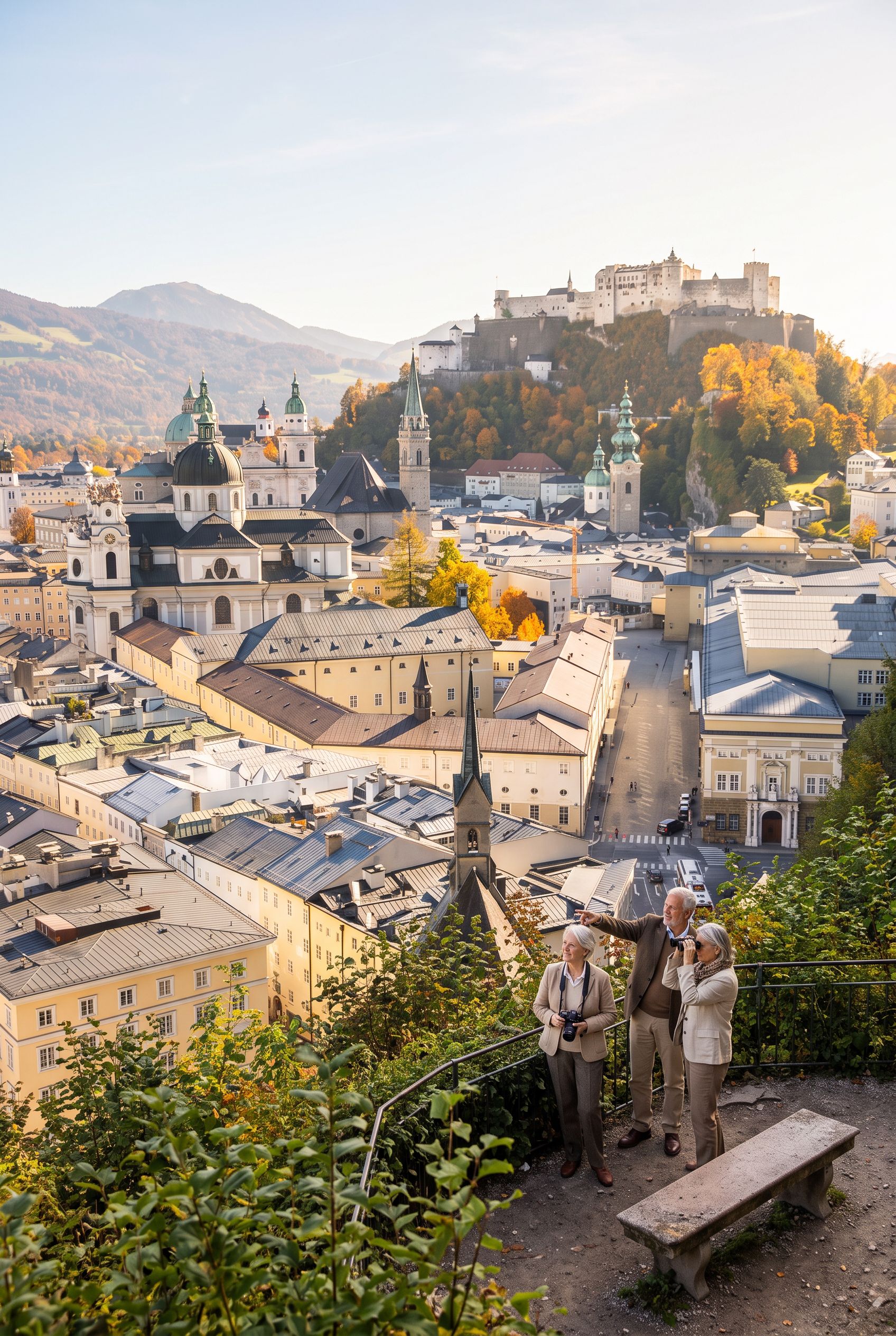
Autumn in Salzburg is a study in golden light. The fortress catches the low sun, the gardens take on amber tones, and the city's cafe culture feels particularly inviting. September maintains average daytime highs close to 20°C, while October eases to 14-15°C—still perfectly comfortable for walking with a light jacket.
According to Salzburg walking tour guidance on seasonal timing, the period from mid-September through October is favoured by travellers seeking a relaxed pace. The Salzburg Festival has ended, the summer holiday crowds have departed, and the Advent market rush has not yet begun. This creates a rare window of calm in a city that is otherwise busy for much of the year.
One practical note on shopping: Austria's opening-hours act allows shops to trade Monday to Friday from 6 a.m. to 9 p.m. and on Saturdays from 6 a.m. to 6 p.m., and they stay shut on Sundays and public holidays. Sights and museums keep their own hours and are unaffected. This matters more in autumn when daylight hours shorten, so put shopping on a weekday and save Sunday for walking and sightseeing.
For a deeper look at where to stay during these quieter months, our guide to Salzburg's calmest hotels for light sleepers offers practical recommendations for restful nights in the city centre.
What should I know about winter and the Advent markets?
December is popular but not quiet—the Advent markets draw substantial crowds, and while the festive atmosphere is magical, it is not a low-crowd period; January and February are quieter but significantly colder.
The Salzburg Advent markets are among Europe's most atmospheric, and the two best known keep very different hours. The Christkindlmarkt on Domplatz and Residenzplatz opens on the second-to-last Thursday in November and runs to 1 January—19 November 2026 to 1 January 2027 for the coming season—from 10 a.m., closing at 8.30 p.m. Monday to Thursday and 9 p.m. on Fridays and Saturdays. The smaller market in the fortress courtyard opens on Advent weekends only: Friday to Sunday plus 8 December, 11 a.m. to 7 p.m., from 27 November to 20 December 2026. Both attract visitors in large numbers, particularly at weekends.
For travellers who want the festive experience without the extreme cold, the first two weeks of December tend to be more manageable than the pre-Christmas rush, and weekdays are markedly quieter than weekends. There is a catch to the weekday plan: the fortress market opens only on Advent Fridays, Saturdays and Sundays plus 8 December, so a Tuesday in the Old Town finds the Domplatz market running and the fortress courtyard shut.
If you choose January or February, you will find the markets closed—the Christkindlmarkt runs to 1 January, then the squares empty—but the city virtually to yourself. Mozart Week brings some classical music visitors: in 2027 it runs from 21 to 31 January. The cold is real—average daytime highs of 3-4°C in January and 6-7°C in February—but the light on the snow-covered fortress can be breathtaking, and the museums are blissfully uncrowded.
How much does rain actually matter?
Salzburg receives meaningful rainfall throughout the year, with the wettest months running from May to August; however, rain rarely lasts all day, and the city's indoor attractions—museums, churches, cafes—are well-suited to intermittent showers.
The 1991 to 2020 climate normals published by GeoSphere Austria show rain in every single month at the Salzburg-Freisaal station: from 64 mm in February to 193 mm in August, and about 1,494 mm across the year. The practical implication is that you should pack for variable conditions regardless of when you visit, and plan your itinerary with flexibility.
For travellers over 50, the rain matters most for walking comfort. Cobblestone streets become slippery when wet, and the climb to the fortress—if you choose to walk rather than take the funicular—becomes more challenging. The city's trolleybus network, with ramps that fold out for wheelchairs on request, offers a reliable alternative when the weather turns.
A lightweight, packable rain jacket is essential. An umbrella is useful in the Old Town's narrow streets, though the wind off the river can make it awkward. Waterproof footwear is non-negotiable—the difference between a pleasant day and a miserable one often comes down to dry feet.
What should I pack for comfort?
Layered clothing is the key to Salzburg comfort in every season: a base layer, a mid-layer for warmth, and a waterproof outer shell will serve you from April through October, while winter demands significantly more insulation.
For the shoulder seasons, pack as follows:
- Footwear: Broken-in walking shoes with good grip for cobblestones; waterproof options for wet days
- Layers: Light merino or synthetic base layer, fleece or light sweater, waterproof shell
- Accessories: Sun hat for clear days, light scarf for cooler evenings
- Day bag: Small backpack or cross-body bag for camera, water bottle, and rain layer
For winter visits, add a proper insulated coat, gloves, a warm hat, and thermal layers. The cold in January and February is penetrating, and you will spend more time outdoors than you might expect—the city's beauty is best experienced on foot.
Where you stay changes how much walking a Salzburg day actually demands. As of August 2026, Hotel Schloss Mönchstein on the Mönchsberg holds a Google rating of 4.8 from 604 reviews, and the house counts use of the Mönchsberg lift and the fortress funicular among the services included in the room rate—which turns the descent to the Old Town into a lift ride rather than a hill. The Radisson Blu Hotel Altstadt on Rudolfskai, rated 4.3 on Google from 831 reviews, sits inside the Old Town directly on the Salzach, so the river promenade begins at the door.
How does accessibility factor into timing?
Salzburg's public transport is well-suited to travellers with mobility considerations—the vast majority of the city's trolleybuses have low-entry doors and a fold-out ramp—but the Old Town's cobblestones and stepped entrances require planning regardless of season.
Salzburg runs trolleybuses rather than trams, and the city's tourism board states that the vast majority of vehicles have low-entry doors and a wheelchair ramp that folds out on request. ÖBB place Salzburg Hauptbahnhof in accessibility category 1—independent use is possible, with no significant obstacles in the access areas or on the platforms—and the station has both lifts and escalators.
The fortress is best reached by funicular, which saves a steep climb, but note the maintenance windows: the FestungsBahn does not run from 11 January to 14 March 2027, or from 9 to 13 November 2026. The Mönchsberg ridge offers an alternative perspective, with the funicular at one end and the MönchsbergAufzug at the other, about a 30-minute walk apart, with excellent views and fewer crowds than the streets below. The lift starts at Anton-Neumayr-Platz and, in 2026, runs Mondays from 8 a.m. to 7 p.m. and Tuesday to Sunday from 8 a.m. to 9 p.m. The 2026 fares are €3.40 for a single ride and €4.80 for a return, and the Salzburg Card includes one free trip.
For travellers who prefer to minimise walking, taxis are readily available, and the walk from the main station to the Old Town takes about 20 minutes. Trolleybus lines 1, 2, 3, 5 and 6 cover the same stretch in 10 minutes—the easier choice with luggage. Hotel location matters: a central property saves significant daily walking.
The quietest months also tend to be the most accessible in practical terms—fewer crowds mean more space to navigate cobblestones and more available seats on public transport. September and October offer this advantage alongside pleasant weather, making them the ideal choice for travellers who want both comfort and calm.
"A must see for anyone visiting Salzburg. The fun starts with a short funicular ride (unless you desperately want to walk up)… Arriving early will allow you to wander more freely and get your photos without crowds." — a guest wrote on Google about Fortress Hohensalzburg in May 2026
What health considerations should I plan for?
Salzburg is a safe, well-serviced city with excellent medical infrastructure, but travellers over 50 should plan for pharmacy access, comfortable walking distances, and the physical demands of cobblestone streets.
For a detailed look at medical services, pharmacies, and peace-of-mind planning, our practical guide to health and pharmacies in Salzburg for travellers over 50 covers what you need to know. Key points include carrying any prescription medications in your hand luggage, knowing the location of your hotel's nearest pharmacy, and ensuring your travel insurance covers medical care in Austria.
The city's walking demands are cumulative rather than extreme. The Old Town core is compact, but the cobblestones and gentle hills add fatigue over a full day. Forum travellers caring for older companions recommend morning sightseeing, a hotel rest between 2 and 4 pm, and selective use of taxis and public transport to conserve energy.
Bathroom access in older buildings can be an issue—some historic restaurants and attractions have steep or narrow stairways to facilities. It is worth asking ahead when booking restaurants, particularly for travellers with mobility concerns.
When should I book for the best experience?
For September and October visits, book accommodation three to four months in advance; for January and February, you can often find excellent last-minute deals, but confirm that your preferred hotel has an elevator and accessible features.
The shoulder seasons are increasingly popular with discerning travellers, and the best hotels fill quickly. The quietest months offer more flexibility, but they also carry the risk of winter weather affecting your plans. Consider booking refundable rates and watching the forecast in the week before departure.
For the Advent markets, book by early autumn—the festive period is busy, and central accommodation commands premium rates. If you want the market experience without the full crowd, target the first week of December on weekdays.
Whatever month you choose, Salzburg rewards the traveller who plans for comfort: good shoes, layered clothing, and a flexible itinerary. The city's beauty endures through all seasons, but the right timing transforms a good visit into an unforgettable one.


