
Tuscany’s kitchen is built on bread, beans, olive oil, and patience. The dishes that define this region—ribollita, pappa al pomodoro, bistecca alla Fiorentina—were never designed for show. They were born from the cucina povera, the thrifty cooking of farmers and sharecroppers who turned stale bread and garden vegetables into meals worth crossing the Atlantic for. For travellers aged 50 to 70 who care about what lands on the plate, Tuscany rewards those who know where to look: morning markets, family-run trattorie, and towns that still eat by the season.
This guide stays firmly on the food—the dishes, the places to try them, the market days, and how to tell a welcoming trattoria from a tourist terrace. We will not wander into high-end restaurant reviews or hotel dining; those deserve their own space. What follows is the Tuscany that locals actually eat in, organised so you can plan your days around lunch rather than the other way around.
 AI-edited
Which Tuscan dishes should I actually seek out?
Focus on the classics that define the region: ribollita, pappa al pomodoro, pici, bistecca alla Fiorentina, lampredotto, and cantucci with Vin Santo. These are the dishes Tuscans grow up eating, and they appear on menus from Florence to Pienza with regional variations worth exploring.
Tuscan food is regional by design. The official tourism board describes it as a network of local specialities rather than a single national menu—Florence claims lampredotto and bistecca, Siena is known for pici and panforte, the coast produces cacciucco, and the inland valleys specialise in soups like ribollita and pappa al pomodoro. Understanding this map helps you order with intention.
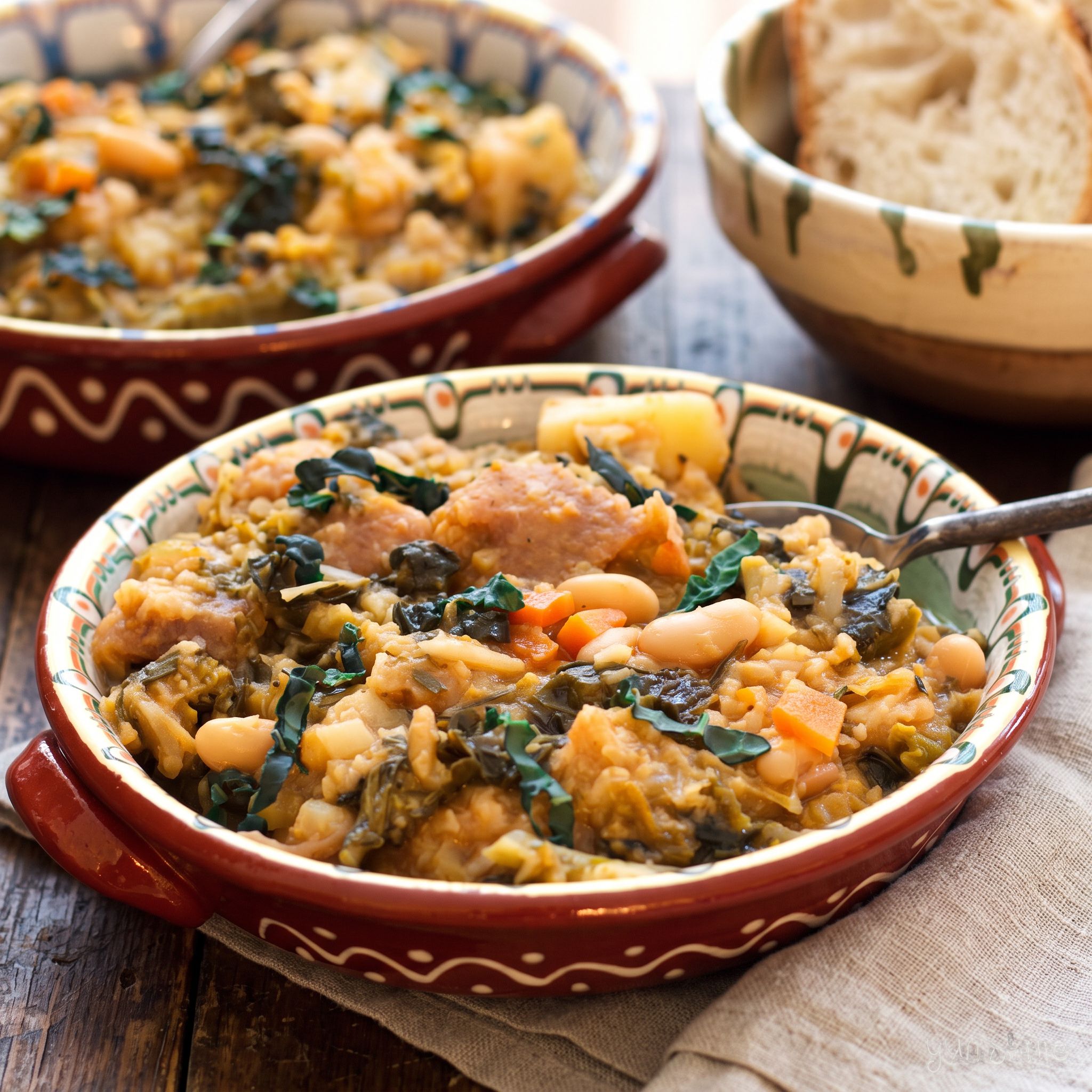
Ribollita, meaning “reboiled,” is a bread-and-vegetable soup that tastes better on the second day, which is why it was traditionally reheated. It is especially suited to cold winter days, according to Fodor’s guide to eating in Florence and Tuscany. Pappa al pomodoro is its summer cousin—tomato, bread, basil, and olive oil cooked into a thick, comforting stew. Both are vegetarian by nature and appear on nearly every traditional menu.
Pici, the hand-rolled thick pasta from the Siena area, is usually served with garlic and tomato sauce (pici all’aglione) or a rich ragù. Bistecca alla Fiorentina is the region’s most famous meat dish—a thick T-bone, traditionally from Chianina beef, served very rare. Lampredotto, made from part of the cow’s stomach, is the classic Florentine street food, often sold from food carts near the Mercato Centrale. And no meal ends properly without cantucci—almond biscuits—dipped in Vin Santo, the sweet dessert wine.
Where can I try ribollita and pappa al pomodoro at their best?
Look for trattorie and osterie that change their menu by season. Ribollita appears most reliably in winter months, while pappa al pomodoro shines in summer when tomatoes are at their peak. Both are common in Florence, Siena, and the smaller hill towns.
The key is finding places that call themselves “Trattoria” or “Osteria” rather than “Ristorante.” The label describes a format, not a rank: the smaller, family-run rooms cook a shorter menu, change it with the season, and pour wine from producers a few valleys away. That is where the regional dishes are done properly, rather than in the larger restaurants around the main squares.
In Florence, the area around Sant’Ambrogio Market offers several trattorie that serve both soups daily. In Siena, look for places near the university district rather than the Piazza del Campo. In smaller towns like Greve in Chianti or Castellina, the agriturismi—working farms that serve meals—often prepare ribollita with vegetables from their own gardens. The Osteria di Fonterutoli, on Via Gaetano Donizetti in the Fonterutoli hamlet just outside Castellina in Chianti, is a regular recommendation; a Google review from July 2026 sums it up as “very - very nice food and excellent (!!!!) service.”
As of August 2026, the Osteria di Fonterutoli holds a Google rating of 4.5/5 from 777 reviews, with guests consistently praising the attentive service and the staff’s willingness to explain dishes. The house describes its wide terrace as looking out through olive trees and vines towards Siena, and the large tree the patio is built around turns up in review after review. One practical point matters more than the setting: the kitchen serves every day of the week, but only from 12.30 to 2pm and again from 7.30 to 9pm. Reservations are strongly recommended; walk-ins risk not getting a table in the main dining area.
How do I order bistecca alla Fiorentina without regret?
Bistecca alla Fiorentina is a thick T-bone steak, traditionally from Chianina beef, served very rare—what Italians call “al sangue.” It is priced by weight (usually per 100 grams or per kilo), and one steak easily feeds two people. Specify your preferred doneness clearly, because “rare” here means very rare indeed.
This is the dish that divides visitors. Some call it the best steak of their lives; others find the rare preparation confronting. The traditional serving is barely seared on the outside and cool in the centre. If you prefer it more cooked, say so explicitly when ordering—recent guests at Trattoria da Burde in Florence note that the steak is served very rare unless specifically requested otherwise.
Trattoria da Burde, a historic family-run establishment since 1901, is located outside the city centre near the airport. As of August 2026, it holds a Google rating of 4.4/5 from 2,521 reviews, with the Florentine steak the most frequently praised dish—many call it the best they have ever had. The restaurant’s own listing gives lunch from Monday to Saturday, dinner only on Friday evenings, and Sunday closed, so checking hours in advance is essential. It is a taxi ride from the centre, and getting a taxi back can be difficult, so plan accordingly.
One guest wrote on Google in November 2024: “Traditional old trattoria we had some fresh pasta and cold cut to start. We also try the chicken liver. The food is simple and good. I recommend more this kind of place that the tourist trap in the center.”
“Wow this was an incredible find. Amazing food and atmosphere. Wonderful staff. A must for those that want a real and authentic meal or drink.” — Google review, May 2025
Expect to pay a premium for bistecca—this is not a budget dish. Prices vary by butcher and restaurant, but a steak for two typically runs into the higher end of a meal budget. The wine list at da Burde is described as exceptional, with a deep selection of Tuscan wines at fair prices, and the staff are known for their willingness to explain pairings.
What makes pecorino di Pienza special, and where do I find it?
Pecorino di Pienza is a sheep’s milk cheese from the Val d’Orcia, aged anywhere from a few weeks to over a year. Young pecorino is soft and milky; aged versions become firm, salty, and intense. It is best enjoyed with local honey, pear, or a drizzle of chestnut honey.
Pienza, a small hill town in southern Tuscany, is the cheese’s spiritual home. The town’s main street is lined with shops selling pecorino in every stage of aging, alongside local honeys and preserves. This is also where you will find the regional speciality of pecorino paired with pear—a classic Tuscan combination that appears on many menus as a starter or dessert.
For the full experience, visit the weekly market in Pienza or stop at one of the caseifici (cheese shops) on the main street. Many offer tastings, and the shopkeepers are usually happy to explain the differences between stagionato (aged) and fresco (fresh) varieties. One question is worth asking at the counter: whether a cheese is made from raw milk (latte crudo). Italy’s health ministry names older people, alongside children, pregnant women and anyone immunosuppressed, as the groups that should take particular care with unpasteurised milk and the cheeses made from it — a reason to ask, not a reason to walk past. If you are basing yourself in the Val d’Orcia, consider a half-day trip to Pienza specifically for cheese—it is a compact, walkable town that rewards a slow visit.
For those planning a broader Tuscany itinerary, our guide to Tuscany’s highlights for the over-50s includes Pienza and the Val d’Orcia as a recommended stop, with practical notes on walking and accessibility.
How do I properly enjoy cantucci and Vin Santo?
Cantucci are twice-baked almond biscuits, and Vin Santo is a sweet dessert wine. The ritual is simple: dip the biscuit into the wine until it softens, then bite. The combination is served at the end of nearly every traditional Tuscan meal.
The biscuits are dry by design—they are meant to be dunked. Vin Santo, meaning “holy wine,” is made from dried grapes and ranges from golden to amber. In Florence, you will find cantucci in every pasticceria, but the best versions are often served in trattorie that make them in-house. Ask if the cantucci are “fatti in casa” (homemade) before ordering.
Some restaurants serve cantucci with a glass of Vin Santo as a complimentary digestif at the end of the meal, especially if you have ordered a full multi-course dinner. Others charge separately. Either way, this is the proper Tuscan way to end a meal—sweet, unhurried, and best enjoyed with coffee.
For a more complete picture of Tuscan food culture, including where to find the best markets and historic cafés, Fodor’s Tuscany restaurant coverage offers a useful overview of dining options across the region.
How do I tell a welcoming trattoria from a tourist terrace?
Look for menus written in Italian first, tables filled with locals, and a chalkboard listing the day’s specials. Tourist terraces typically have laminated menus in four languages, staff who push the “special” of the day, and prices that reflect the view rather than the cooking.
Several reliable signals separate the two. A trattoria that has been feeding the same families for decades rarely needs to advertise. The menu will be short, seasonal, and handwritten. The wine list will feature local producers rather than national brands. And the service, while possibly brisk, will be warm and personal.
Tourist terraces, by contrast, cluster around major sights—the Duomo in Florence, Piazza del Campo in Siena, the tower square in San Gimignano. They rely on foot traffic and one-time visitors. The food is not necessarily bad, but it is rarely memorable. The rooms worth eating in are small and their service windows short, so booking even an hour or two ahead is worth the trouble.
Recent guest feedback across Tuscany highlights a recurring issue: rushed pacing. In Siena and Florence, several reviewers reported feeling pushed through courses or hurried toward dessert. If you want a relaxed meal, book early (7:00 or 7:30 pm) and tell the staff you are not in a hurry. Most trattorie will accommodate a slower pace if you ask.
Which market days should I plan my trip around?
Florence’s Mercato Centrale is the best all-weather option: the food hall upstairs opens daily, while the produce stalls downstairs trade Monday to Saturday. Sant’Ambrogio Market, open Monday to Saturday mornings, offers a more local feel. In smaller towns, weekly markets are morning-focused and often finish by early afternoon.
The Mercato Centrale in Florence is the region’s most famous food market, housed in the original 19th-century iron-and-glass hall that the regional tourism board credits to the architect Giuseppe Mengoni. Its two floors keep different hours, and that catches people out. The ground floor, where the stalls sell produce, meat, cheese and bread, has traded since 1874 and opens Monday to Friday from 7am to 3pm and Saturday from 7am to 5pm, but closes on Sunday. The first-floor food hall, a modern set of counters with shared seating, is open every day from 9am to 11pm. On a Sunday, then, come for lunch upstairs rather than for shopping downstairs — either way it stays the easiest place in the city to combine a seat, a local meal and a little sightseeing in one stop.
Sant’Ambrogio Market, also in Florence, is smaller and more local, and strictly a morning affair: Monday to Saturday, 7am to 2pm, closed on Sunday. It is the place to buy seasonal produce, sample fresh cheese, and watch Florentines do their daily shopping. The surrounding streets are lined with trattorie that serve market-fresh ingredients.
Outside Florence, San Gimignano holds its weekly market every Thursday from 8am to 1.30pm across Piazza Duomo, Piazza della Cisterna and Piazza delle Erbe, while Greve in Chianti fills Piazza Matteotti every Saturday morning with a market the regional tourism board traces back to the 1300s. Il Pagliaio, the small-producer and craft market in that same Greve square, is a monthly event running from 9am to 6pm rather than a weekly morning one. Il Mercatale, the covered farmers’ market often listed alongside them, is not in San Gimignano at all but in Montevarchi in the Valdarno, where it trades Monday to Saturday, 8.30am to 1.30pm and 4pm to 8pm. In Livorno, the Mercato delle Vettovaglie, built in 1894, is one of the largest covered markets in Europe. Most weekly town markets do pack up in the early afternoon, so visit before lunch — but check the day before you build a drive around one.
For those planning a multi-day itinerary, our guide to choosing your base in Tuscany can help you decide whether to stay in a city with daily markets or a smaller town with a weekly one.
What should I expect to pay for a meal in Tuscany?
Expect to pay €15–€25 per person for a two-course lunch at a trattoria and €30–€50 for a full dinner with wine. Bistecca is sold by weight rather than by portion: Trattoria da Burde lists €5.50 per 100g, or €6.50 for Chianina, so a kilo shared between two runs to €55–€65 for the steak itself. Prices are indicative and vary by season and booking channel.
Here is a rough breakdown of what you might expect, based on typical Tuscan pricing:
| Meal type | Price band | What to expect |
|---|---|---|
| Lunch at a trattoria | €15–€25 | One course plus water or house wine |
| Dinner with wine | €30–€50 | Two courses, dessert, half-litre of wine |
| Bistecca meal | €35–€50 | Shared steak sold by weight, a side and wine |
| Street food (lampredotto) | €5–€8 | Sandwich from a food cart |
| Market snack | €8–€15 | Cecina, schiacciata, or a light bite |
These are indicative ranges, not fixed prices. Seasonal demand, location, and whether you book through a hotel concierge can all affect the final bill. As a rule, restaurants in Florence’s historic core cost more than equivalent places in residential neighbourhoods or smaller towns.
Weekday lunches are usually the best value and the most relaxed, and the published menus bear that out. At Trattoria da Burde a bowl of ribollita or pappa al pomodoro is €10.50, fresh pici €13.50, a roast or stew with a side €17.50 and a plain side €4.00 — so a soup with a plate of fresh pici comes to €24, and a lighter two-plate lunch to €14.50. At the Osteria di Fonterutoli, an estate restaurant rather than a village trattoria, starters run €15–€19, pasta €18–€20 and mains €22–€32, with a €3 cover charge per person on top and still water at €2. Both sets of figures are the houses’ own, published in August 2026, and the gap between them is the honest answer to what a Tuscan lunch costs.
How does the season affect what I can eat?
Tuscany eats by the season. Ribollita is a winter dish, pappa al pomodoro and panzanella are summer staples, and autumn brings truffles, chestnuts, and game. Plan your menu around the weather and you will eat better.
Spring (April–May) offers the first artichokes, fava beans, and asparagus. Summer (June–August) is tomato season—pappa al pomodoro and panzanella are at their peak, and the coastal areas produce cacciucco, a seafood stew. Autumn (September–October) is harvest time: truffles from San Miniato, chestnuts from the Mugello, and wild boar in pasta sauces. Winter (November–March) is ribollita season, along with hearty meat dishes and the region’s famous olive oil, freshly pressed in November.
Regione Toscana’s own tourism report puts almost 70% of arrivals and 76% of overnight stays in the second and third quarters — April to September — and calls the pattern a marked seasonality concentrated in the spring and summer months. For food travellers, this means that the quietest—and often most authentic—eating happens in the shoulder seasons, when menus reflect what is actually growing rather than what tourists expect.
If you are planning a winter visit, our guide to the thermal baths of Saturnia and Bagno Vignoni pairs well with a food-focused itinerary—a warm lunch followed by a soak is a perfect cold-weather combination.
What practical tips will make my food travels smoother?
Book restaurants in advance, especially in Florence and Siena. Carry cash for markets and small trattorie. Learn a few Italian food phrases. And remember that lunch is the main meal—dinner is often lighter and earlier than in other parts of Italy.
Reservations are increasingly competitive in Florence, Siena, and coastal resort towns, above all in the spring and summer months when most of the year’s visitors arrive, and around local festivals. Even a same-day booking an hour or two ahead improves your chances of a good table. For popular places like Trattoria da Burde, which has limited opening hours, booking days in advance is wise.
Most weekly markets are cash-only, and some smaller trattorie do not accept cards. Carry enough cash for market purchases and small meals. And be prepared for the Italian lunch rhythm: many restaurants close between 2:30 and 7:00 pm, and kitchens often stop taking orders by 2:00 pm. Two things make ordering easier. EU food-information rules oblige every Italian kitchen to declare the fourteen listed allergens, for unpackaged food as much as packaged, so asking is an entitlement rather than a favour. And Florence’s tap water is treated at the Anconella plant and tested against the national drinking-water limits, so a carafe of acqua del rubinetto is a reasonable request where bottled water is charged separately.
Finally, consider where you base yourself. Florence is the central hub for day trips, but Siena and Lucca are reachable by rail or bus. Siena is reachable from Florence by regional train, though the bus can set you down closer to the historic centre than the railway station does. For food-focused travellers, basing in a smaller town like Greve in Chianti or Castellina puts you closer to the agriturismi and family-run trattorie that define Tuscan cooking.
Our guide to getting to Tuscany covers transport options in detail, including how to combine rail travel with a car rental for the countryside portion of your trip.


