
The Zillertal is one of Austria's most accessible mountain valleys, but its secured climbing routes—known as Klettersteige or via ferratas—demand a different kind of readiness. For fit, adventurous travellers aged 50 to 70 who are comfortable with heights, this valley offers some of the Tyrol's best beginner-friendly routes, guided options, and a supportive infrastructure that makes the experience safe and rewarding.
This guide is about the iron cables, the ladders, and the exposed rock faces. We will not cover ordinary hiking—that is a separate topic with its own dedicated guide in The Senior Traveler. Instead, we focus on what a via ferrata involves, which routes suit a confident over-50s traveller, and how to approach this sport with the right gear and mindset at this stage of life.
What exactly is a via ferrata, and is it for me?
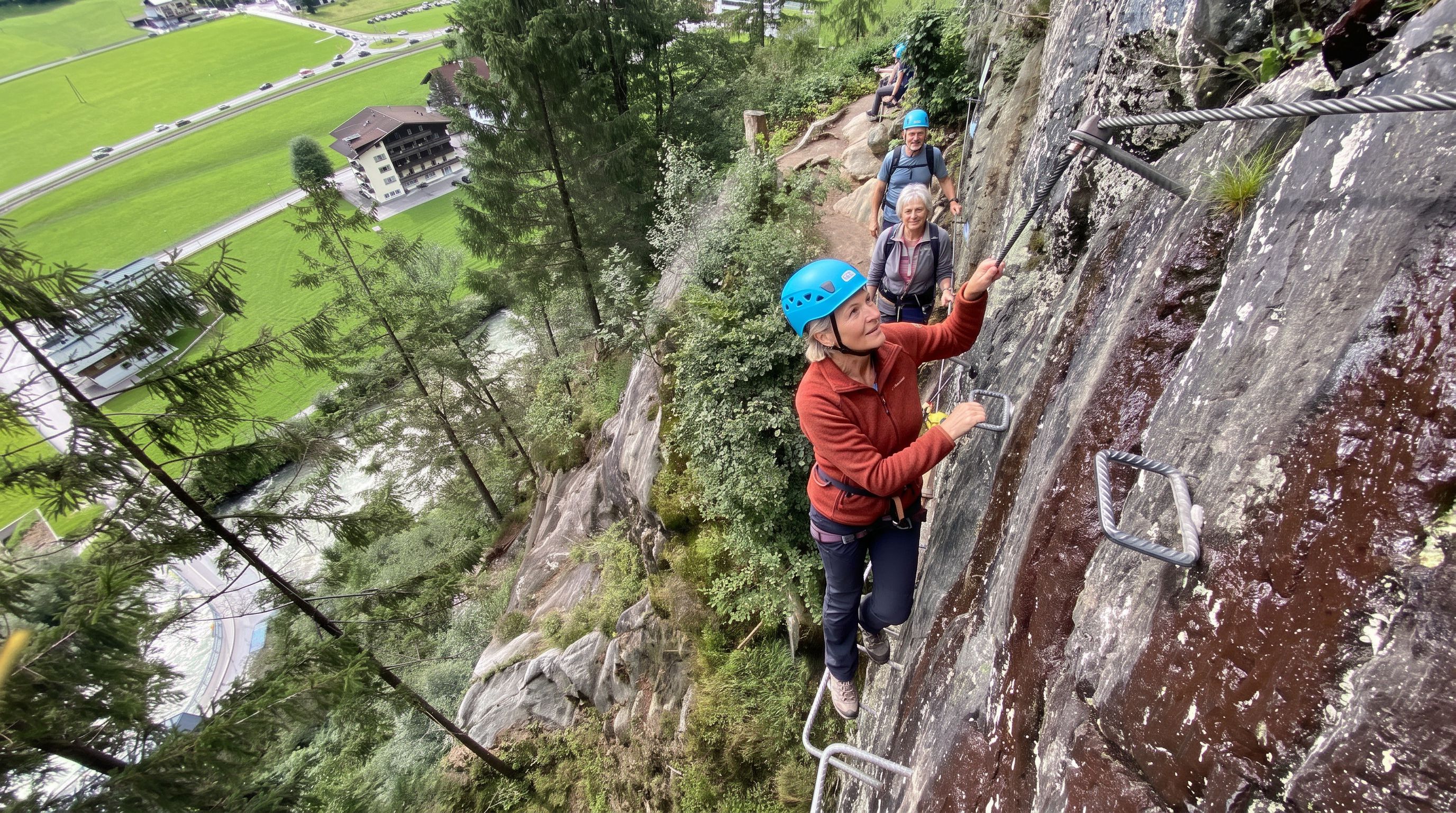
A via ferrata is a protected climbing route where a steel cable runs continuously along the rock face, allowing you to clip your harness in and move safely without needing rope skills. For fit over-50s with good balance, arm strength, and a head for heights, it is an achievable and exhilarating activity—provided you choose the right route and pace yourself.
The term "via ferrata" means "iron path" in Italian, and the concept is simple: you wear a climbing harness with two special lanyards (called a via ferrata set) that clip onto the steel cable. As you climb, you always keep at least one lanyard attached. This system means you cannot fall far, even if you slip. The route itself may involve metal rungs, ladders, and narrow ledges, but the cable is your constant companion.
For our audience, the key question is not whether you can do it—many fit 60-year-olds climb harder routes than some 30-year-olds—but whether you will enjoy it. The sport requires comfort with exposure, meaning you need to be okay with looking down at a drop of 50 metres or more. It also demands sustained concentration for one to three hours. If that sounds like your kind of challenge, the Zillertal is an excellent place to start.
Which Zillertal via ferratas are best for confident over-50s?
Three routes stand out for our demographic: the Huterlaner Klettersteig in Mayrhofen (rated B/C, 2–2.5 hours, 200 metres of climbing), the Knorren-Nadel near the Penken lift (rated A/B, about 60–90 minutes), and the Talbach via ferrata in Zell am Ziller (graded A to D/E with easy entry sections). All three offer guided options and are widely recommended for first-timers.
The Huterlaner Klettersteig is the most popular choice for good reason. Located just minutes from the centre of Mayrhofen, it follows a rocky ridge with moderate exposure and several sections that let you build confidence gradually. As of July 2026, guest reviews on platforms like HolidayCheck rate it 4.5 out of 5 stars from over 200 reviews, with consistent praise for its manageable difficulty and scenic position above the valley floor. Recent guests note that the route has clear signage and several points where you can rest or turn back if needed.
The Knorren-Nadel Klettersteig is shorter and technically easier, making it ideal for a first outing or a warm-up. It starts near the top of the Penken cable car, meaning you save energy on the approach. The route climbs about 120 vertical metres and takes roughly an hour on the cable section. Guests consistently report that the exposure feels manageable and that the rock is well-equipped with good holds.
The Talbach via ferrata in Zell am Ziller offers something different: it runs alongside a waterfall, providing shade and a cooling breeze on hot summer days. The route is divided into sections of increasing difficulty, with a practice area at the start and multiple emergency exits. This design means you can climb the first section (rated A/B) and then descend if you feel you have had enough. As of July 2026, Google rates it 4.7 out of 5 stars from 163 reviews, and Tripadvisor gives it 4.7 from 69 reviews. Guests particularly mention the two suspension bridges—one about 25 metres long and another about 35 metres—as highlights.
What gear do I need, and can I rent it?
You need four essential items: a climbing harness, a via ferrata lanyard set (often called a Y-set or energy-absorbing lanyard), a helmet, and sturdy approach shoes or light hiking boots. All of these can be rented from local outfitters in Mayrhofen, Zell am Ziller, and at the base of most routes, typically for €12–€15 per day.
Do not attempt a via ferrata with a standard climbing rope and carabiners. The via ferrata set is specially designed with an energy-absorbing system that reduces the force on your body in the event of a fall. A regular climbing lanyard does not have this feature and can cause serious injury. Rental gear from reputable operators is well-maintained and properly fitted.
Beyond the technical gear, bring a small backpack with water, snacks, sunscreen, and a light windproof jacket. The weather in the Zillertal can change quickly, especially on exposed ridges. Gloves are also recommended—the steel cable can be rough on hands, and metal rungs can feel cold or slippery. Many experienced climbers wear lightweight cycling or work gloves.
Guided tours typically include all equipment in the price. For example, one operator in Mayrhofen offers a Huterlaner beginner tour for €65 per person, lasting about two hours, with rental gear included. Another guide service lists tours from March to October, with prices from €65 to €80 per person depending on group size, and includes harness, via ferrata kit, and helmet rental.
Should I hire a guide, or go independently?
For your first via ferrata, hire a guide. For subsequent outings on easy routes, you can go independently if you are confident with the gear and have good route-finding skills. The Zillertal has several certified mountain guide services that specialise in beginner and family tours, and the cost is modest compared to the safety and confidence you gain.
The evidence from traveller forums is clear: even experienced hikers and climbers recommend a guide for the first outing. One recurring piece of advice is to "start easier than you think" and to choose a route that takes no more than about an hour on the cable section itself. A guide handles the route-finding, sets a safe pace, and can help you through sections that feel intimidating. They also carry emergency equipment and know the local weather patterns.
If you have done a few via ferratas elsewhere and feel comfortable, the Zillertal's beginner routes are well-marked and straightforward to navigate independently. The Knorren-Nadel and the first section of the Talbach are particularly suitable for self-guided outings. Just be sure to check the weather forecast, start early, and carry a map or have the route downloaded on your phone.
One practical note from guest reviews: the emergency exit paths near the start of the Talbach route are described as overgrown and potentially hazardous. If you plan to use them, do so with care, or better yet, choose a guided tour that knows the safe descent routes.
"I did the Huterlaner with a guide on my first day, and it made all the difference. By the second day, I felt confident enough to try the Knorren-Nadel on my own. The guide taught me how to clip efficiently and how to read the rock for good holds. Worth every euro." — David K., traveller from Canada
When is the best time for via ferrata in the Zillertal?
The main via ferrata season runs from late May to early October, with July and August offering the most reliable conditions. The Huterlaner route is explicitly listed as open from May to October, and guided tours operate from March to October depending on snow conditions. The Talbach route is open from March to October, also depending on snow.
Early summer (June) and early autumn (September) are ideal for our demographic. The weather is stable but not too hot, the routes are less crowded, and the light is beautiful for photography. July and August are peak season, meaning more people on the routes and potentially warmer temperatures, but the higher cable cars and shaded routes like the Talbach remain comfortable.
Avoid via ferrata after rain or snow, as wet rock becomes dangerously slippery. Forum users consistently stress checking the forecast and choosing a clear, beautiful day. If there has been rain in the preceding days, allow time for the rock to dry—especially on north-facing routes that stay in shadow.
For those who also enjoy winter activities, the Zillertal offers excellent tobogganing and winter walks for active over-50s, a separate adventure that pairs well with a summer via ferrata trip.
How fit do I need to be, and how should I prepare?
You need good upper-body strength for pulling yourself up sections, solid balance for narrow ledges, and cardiovascular endurance for the approach hike and the sustained effort of climbing. A reasonable benchmark: if you can do 10 pull-ups, hike uphill for an hour with a light pack, and feel comfortable on a ladder 10 metres above the ground, you are ready for beginner routes.
The via ferrata itself is not the only physical demand. Many routes require an approach hike of 20 to 60 minutes, often uphill on uneven terrain. The descent can also be tiring on the knees. Forum users caution that the "approach hike and descent may take as much effort as the cable section itself," so check the total time for the outing, not just the climbing part.
Preparation in the months before your trip should include: regular strength training focusing on pulling exercises (rows, lat pulldowns, pull-ups), core stability work, and hiking on uneven terrain with elevation gain. If you have access to a climbing gym, practicing on vertical walls with good holds will build specific strength and confidence.
For a gentler introduction to the valley's mountain scenery, consider the half-day hikes in the Zillertal Alps for active over-50s, which offer stunning views without the exposure of a via ferrata.
How do I get to the routes, and what about accessibility?
The best bases for via ferrata access are Mayrhofen and Zell am Ziller, both served by the Zillertalbahn railway from Jenbach. The Huterlaner route is a short walk from Mayrhofen centre. The Knorren-Nadel is reached via the Penken cable car. The Talbach route has free parking and is a 50-metre walk from the car park.
Mayrhofen is the valley's lively hub and a practical base for sightseeing and climbing. The village is compact and walkable, with the two main lifts (Penkenbahn and Ahornbahn) about a 10-minute walk from the lower end of town. A regular bus service runs the length of the valley, and a free-for-skiers greenline bus provides easy trips to Hintertux Glacier.
Zell am Ziller is flatter and more compact than Mayrhofen, making it a good choice if walkability is a priority. The Talbach via ferrata is located just outside the village, with a marked approach from the Jausenstation after the Talbach bridge. Equipment can be rented at the snack bar or Zillertal Activity Center at the base.
For those who prefer valley-floor exploration, the easy valley walks and best views in the Zillertal offer a more relaxed way to experience the region's beauty.
What are the real risks, and how do I manage them?
The main risks are falling due to loss of balance or grip, being struck by falling rock, and weather-related hazards like lightning or slippery rock. All of these are manageable with proper gear, a guide, good judgment, and attention to weather forecasts. The via ferrata system is designed to prevent serious falls, but it is not risk-free.
Guest reviews and forum discussions highlight several recurring cautions. First, exposure can feel bigger than the grade suggests. Even "easy" routes can feel intimidating if you are not comfortable with heights. Second, some sections are genuinely difficult even on beginner routes. The Huterlaner has a B/C rating, and the Talbach's second section is significantly more challenging than the first, requiring good upper-body strength. Third, weather can change plans quickly—equipment is not rented if rain is forecast, and you should never attempt a route in wet conditions.
The Zillertal's climbing infrastructure is well-developed, with routes created in cooperation with local mountain rescue. Guided tours are led by state-certified or IFMGA mountain guides, and the valley's tourism bodies prioritise safety. As one local source states, "when beginners or children are in a group, their needs have highest priority."
For a different kind of mountain adventure on snow, see our guide to skiing the Zillertal in your 50s and 60s.
What does a via ferrata day cost in the Zillertal?
A guided via ferrata tour costs €65–€80 per person including equipment rental. Renting gear independently costs €12–€15 per day. Cable car access adds €15–€25 for a single ride or €25–€40 for a day pass. A self-guided day on an accessible route can cost as little as €30–€50 per person including lift and rental.
| Item | Cost (€) | Notes |
|---|---|---|
| Guided tour (Huterlaner) | €65–€80 | Includes all gear, 2–2.5 hours |
| Equipment rental (self-guided) | €12–€15 | Harness, helmet, Y-set |
| Penken cable car (return) | €22–€28 | For Knorren-Nadel access |
| Parking (Talbach) | Free | At the Jausenstation lot |
| Lunch at mountain hut | €12–€18 | Typical Tyrolean meal |
An honest read: is via ferrata right for you at this stage of life?
If you are fit, comfortable with heights, and willing to invest in a guided first outing, via ferrata in the Zillertal is an achievable and deeply rewarding activity for travellers aged 50–70. If you have any doubt about your balance, arm strength, or tolerance for exposure, start with a short guided route and be prepared to turn back if it does not feel right.
The evidence from traveller forums and guest reviews is consistent: the Zillertal's beginner routes are genuinely suitable for older first-timers, provided you take the right precautions. The Huterlaner and Knorren-Nadel are repeatedly recommended as low-risk entry points. The Talbach offers the added security of multiple exit points.
What matters most is honest self-assessment. Via ferrata is not a casual stroll. It requires sustained physical effort, mental focus, and comfort with heights. But for those who meet these criteria, the reward is extraordinary: you move through vertical terrain that few people ever experience, with the security of a steel cable and the guidance of a professional.
The Zillertal's infrastructure—modern cable cars, well-marked routes, excellent guide services, and comfortable base towns—makes it one of the best places in the Alps to try this sport. Whether you climb for one hour or three, you will finish with a sense of achievement that stays with you long after you return to the valley floor.
"I was nervous at 62, but the guide was patient and the route was easier than I expected. The moment I clipped into the cable and took my first step onto the rock, I knew I was going to love it. By the end, I felt like I could climb anything." — Sarah M., traveller from Australia


